
French language sticker packs split pretty cleanly into three use cases: reward stickers that say things like “Très bien!” or “Fantastique !”, learning sets with everyday words you stick around your space, and decorative stickers that just happen to be in French. Once you decide which of those you actually need, you can focus on concrete specs like size (small 24 mm circles vs larger labels), materials, and print quality, then compare across marketplaces—DHgate included—on price, variety, and order size instead of buying whatever looks cute first.
DHgate is an international marketplace with a broad range of sticker products from many sellers, so it can be useful if you want variety or bulk. For more structured classroom or home-learning packs, education or design-focused sites often have more targeted options.
What French Language Sticker Packs Are and How People Use Them
“French language stickers” covers anything with French text printed on adhesive labels, but buyers tend to use them in a few specific ways:
- Reward stickers for classrooms and clubs. Resources like Twinkl’s Fantastic in French printable reward stickers show the classic pattern: short encouraging phrases in French, designed to be printed onto round Avery label sheets and handed out for good work in class.Fantastic in French example shows typical classroom language and circular layout.
- Learning sets for daily practice. Some packs are built as micro flashcards you can stick onto objects. One popular format includes roughly 100-150 essential French words—things like porte, chaise, fenêtre—meant for placement around your home or office so you see and internalize vocabulary all day.Example learning set illustrates this approach.
- Decorative French text stickers. These aren’t built around pedagogy. They’re phrases, typography, or French slang used on laptops, water bottles, packaging, or journaling. For a Canadian small ecommerce brand, this is often the bucket you care about: you want French-language designs that look good on your products or inserts, not necessarily curriculum-aligned wording.
Short scenarios:
- A French teacher in Montréal prints circular reward stickers and uses them daily to reinforce effort in beginner classes.
- A bilingual household in Ottawa sticks word labels on doors, cupboards, and appliances to get kids seeing French all day without formal study time.
- A small Shopify brand in Québec City orders decorative French text stickers in bulk to slip into orders as freebies or use as branded packaging accents.
Understanding which of these scenarios matches your own is the key step before hunting for listings.
Specs That Actually Matter: Types, Sizes, Layouts, Materials
Once you know your use case, you can get specific about what to buy. The same words printed on the wrong format will feel frustrating.
Reward vs learning vs decorative: what changes
- Reward packs need:
- Small size (typically circular) so you can fit several on a page of work.
- Bright colors and simple, high-contrast fonts kids can read fast.
- Short phrases: Très bien, Excellent travail, Super !, often with icons.
- Learning packs need:
- Enough space for clear text, sometimes with a small icon or translation.
- Rectangular labels that sit neatly on surfaces like doors or containers.
- Grouping by themes (kitchen, office, school) so you can deploy them logically.
- Decorative packs need:
- Strong design: typography, illustration, or brandable shapes.
- Sizes matched to your end use (laptops vs product boxes vs envelopes).
- A style consistent with your brand (minimalist, playful, or bold).
Size and layout: why 24 mm circles show up so often
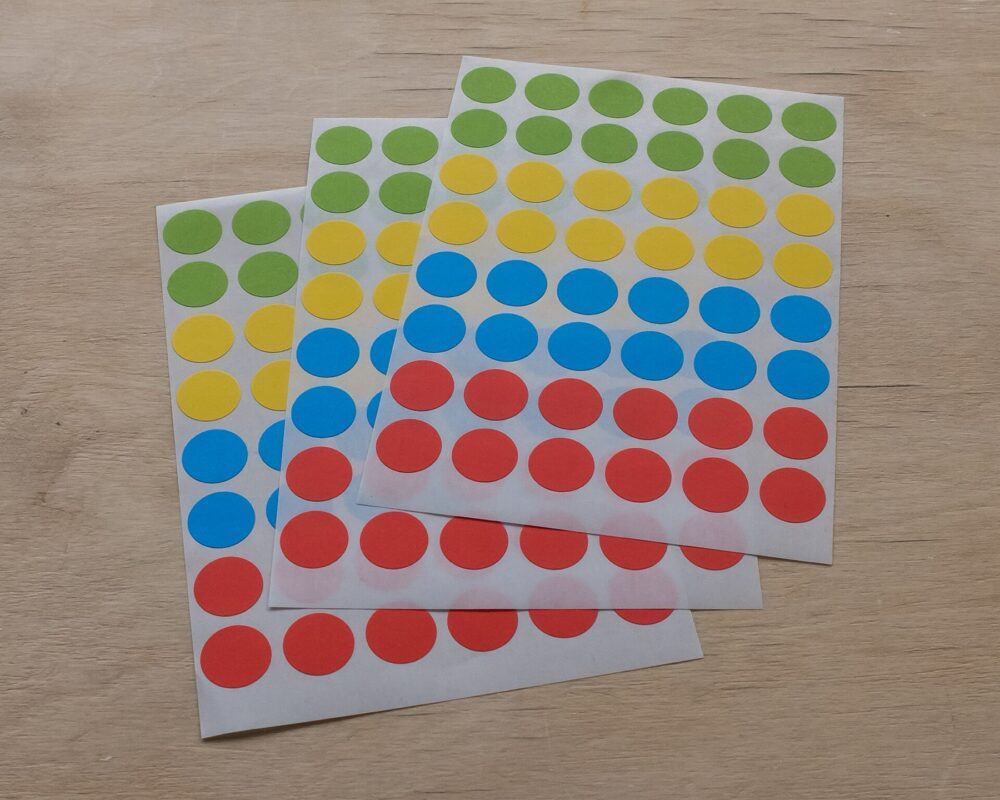
Bulk classroom reward packs often use 24 mm circular stickers, commonly sold in sets around 120 pieces with multiple designs on a sheet.A typical 24 mm reward listing shows that 24 mm size used for classroom rewards.
That size works well because:
- You can fit several stickers on one exercise page without covering student work.
- They’re large enough that short French phrases are still legible.
- Pre-cut sheets are easy to store and peel in class.
For home-learning word labels, you’ll usually want larger rectangles—big enough to read across a room. For decorative use on packaging, you may need a mix: small seals plus a few larger statement designs.
Here’s how those specs line up against common uses:
| Use case | Typical size/layout | Good for… |
|---|---|---|
| Classroom rewards | ~24 mm circular on sheets | Stickers on homework, charts, cards |
| Home/office word labels | Medium rectangular labels | Doors, cupboards, equipment |
| Decorative brand stickers | Mixed sizes, custom layouts | Packaging, laptops, merch |
Material and durability choices
Material matters less for a one-off reward sticker stuck to a worksheet than for a label sitting on your fridge for months:
- Paper stickers are fine for short-term use (classroom sheets, notebooks).
- Vinyl or laminated stickers make more sense for walls, appliances, and tumblers that get wiped or handled often.
- Adhesive strength should match the surface. For painted walls or furniture, look for “removable” or “low-tack” labels so you can peel them without damage.
For Canadian buyers and small ecommerce sellers, that often translates to paper for rewards and branding inserts, and vinyl for anything long-term or customer-facing on products.
Buying Criteria Across Marketplaces, Including DHgate
Once you’ve narrowed format and material, the remaining decision is where to source and how to compare options. Here are the criteria that matter specifically for French language sticker packs.
1. Language accuracy and tone
Stickers are tiny; you don’t have room to correct mistakes. Before you commit to any listing:
- Zoom in on product images and read every French word. Watch for spelling, accents (é, è, ê, ç), and grammar.
- Decide if the tone fits your context. Classroom stickers skew to formal encouragement; decorative designs may use slang or internet abbreviations. That’s fine on a water bottle, less so on a Grade 3 reward chart.
2. Print and material quality
For each option, look for clues about:
- Resolution: Are edges crisp in photos, or do letters look fuzzy?
- Color: Do colors look saturated but not muddy? Sticker photos that show banding or dull areas often mean lower print quality.
- Finish: Matte works better for writing on stickers; glossy stands out more on packaging but shows fingerprints.
Education-focused platforms (like Twinkl’s printable reward sheets) often prioritize legibility and classroom practicality. Marketplaces with many independent designers may give you more variety but less consistency from pack to pack.
3. Variety, pack structure, and bulk suitability
Think about how many distinct designs you need and how you’ll use them:
- Reward packs often list number of designs and total stickers (e.g., around 120 pieces across several phrases at roughly 24 mm). That helps you estimate how long a pack will last in your classroom or club.
- Learning packs with ~100-150 words give broad coverage but may not match your exact curriculum; check word lists in photos or descriptions.
- Decorative packs for resale should offer a consistent visual style and clear pack contents so you can plan product photography and bundle structure.
DHgate, described in its own editorial as an online marketplace connecting buyers and sellers worldwide and offering a wide range of products at competitive prices, tends to shine when you want lots of styles or large quantities across sticker categories.DHgate marketplace description and a sticker-focused blog piece about varietysticker variety context both emphasize breadth. That can be attractive if you’re a Canadian ecommerce seller testing different French designs in small runs.
For more education-specific packs, sites built for teachers or language learners usually give clearer information about word lists, age levels, and printable formats.
4. Platform tradeoffs and practical checks
When you compare DHgate with other marketplaces or education/design platforms, keep the tradeoffs specific:
- DHgate and similar global marketplaces: good for variety, bulk options, and cross-border sourcing. You’ll likely see many sticker categories, but you need to scrutinize product photos and descriptions yourself.
- Education platforms: better for structured classroom resources, printable templates, and age-appropriate phrasing, often with sizes tuned for worksheets and behaviour charts.
- Design/print-on-demand sites: often strongest for decorative French designs and branding-friendly artwork; usually flexible on pack size or custom designs.
For DHgate specifically, DHgateWiki’s existing sticker coverage recommends taking time with seller ratings, listing photos, and descriptions before you buy, especially for any sticker category.Editorial checks for decals and toner lays out general listing-level habits that apply just as well to French language stickers.
If you decide DHgate is relevant for your French sticker search, you can also lean on broader DHgateWiki platform guides—for instance, understanding what DHgate is and how the marketplace works, how to find trusted sellers on DHgate, and using a DHgate order-readiness checklist before checkout—to support your decision.
The net effect: pick the sticker type first (reward, learning, or decorative), dial in the size and material to match where you’ll stick them, then decide whether you need the structured word lists and age guidance you’ll typically find on education-led sites, or the variety and pricing flexibility you can get from cross-border marketplaces like DHgate.