
If you start from your project and work backward, choosing chunky or jumbo yarn and matching needles is straightforward: decide whether you want a dense, structured fabric (like a sweater) or an open, drapey one (like a loose blanket), pick the yarn weight that suits that goal, then choose a needle size in the recommended range and test a quick swatch before committing to a large or bulk order. For big craft hauls or small ecommerce stock, you can discover options on mainstream platforms like Walmart and Etsy, niche yarn sites, and broad DIY marketplaces such as DHgate, then stick with the channels that give you consistent yarn feel and sizing.
Chunky vs Jumbo Yarn: What You’re Actually Buying
Chunky, super bulky, and jumbo aren’t just marketing adjectives; they’re widely used weight categories for thick, fast-knitting yarns. In a common U.S. system, bulky or chunky is category 5, super bulky is category 6, and jumbo is category 7. Bulky and super bulky are the usual choices for cozy blankets, quick scarves, hats, and oversized sweaters because they knit up quickly and still behave like typical yarn with standard needles.
Jumbo yarn is different. It’s often rope-like or extra-thick chenille and is frequently used for arm-knitting or very large statement blankets rather than everyday garments. Because of its size, you’re either working with specialty giant needles or no needles at all (arm or finger knitting). Jumbo yarn creates bold, chunky stitches and visually dramatic pieces, but it can be heavy, and subtle shaping (like fitted sweater sleeves) is harder.
As a buyer or small seller, think of it this way:
- Bulky (5) – Good for thick but wearable sweaters, big scarves, smaller blankets.
- Super bulky (6) – Often used for “chunky blanket” trends and quick winter accessories.
- Jumbo (7) – Best for arm-knit throws, pet beds, and decorative, oversized projects.
If your project idea sounds more like furniture or a statement decor piece than clothing, you’re probably in jumbo territory.
Matching Yarn Weight to Needle Size and Fabric Feel
Thicker yarns need larger needles, and how far you push that size affects the fabric. Guidance from chunky blanket tutorials and needle-size discussions shows super bulky yarn often pairs with very large needles — roughly US 19-50 (about 15-25 mm), depending on how compact or airy you want the stitches.
Here’s a simple, project-focused table for bulky and jumbo-scale yarns:
| Use case | Yarn weight | Typical needle range (US) | Fabric feel goal |
|---|---|---|---|
| Everyday scarf | Bulky (5) | 9-11 | Warm but flexible |
| Chunky hat | Bulky (5) | 9-11 | Structured, holds ribbing |
| Sofa or lap blanket | Super bulky (6) | 13-19 | Thick, cozy, not too stiff |
| Bed-sized blanket | Super bulky (6) | 19-50 | Plush but drapey |
| Arm-knit throw | Jumbo (7) | 25+ or arms | Very large, sculptural |
These ranges are guidance, not rules. Swatching — knitting a small test square — is what keeps you from wasting an entire skein on the wrong feel. Chunky blanket guides like Craftiche’s overview and DHgate’s chunky blanket article both emphasize experimenting with needle size until the fabric looks and drapes the way you want.
How needle size changes the fabric
Editorial guidance on chunky blankets and bulky projects highlights a clear trade-off:
- Smaller needles with chunky or super bulky yarn pack stitches tightly, making a denser, heavier fabric that traps heat and holds its shape.
- Larger needles with the same yarn give you looser, airier fabric with more drape and more visible gaps between stitches.
For a bed-sized blanket, many makers choose very large needles (in the US 19-50 band) with super bulky yarn to avoid the blanket becoming unmanageably heavy while still covering the bed. For a chunky sweater, sweater guides stress staying closer to the smaller end of the bulky/super bulky range so the fabric can support seams and ribbing without stretching out.
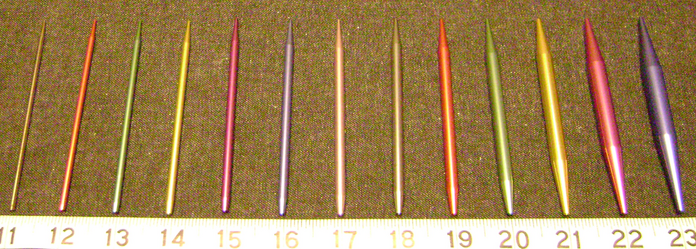
Blanket vs sweater: a quick scenario
- Chunky blanket: Super bulky (6) yarn with US 19-35 needles can produce big, plush stitches and a blanket that still drapes over the body or couch. Pushing into US 50 and using the same yarn tends to create more decorative, airy results with pronounced gaps.
- Oversized sweater: Bulky (5) yarn with US 9-11 needles gives a fabric that’s thick but structured enough to support seams and ribbing. Going far above that range for a sweater usually makes the fabric too loose and transparent for practical wear.
Choosing needle type for large projects
Large yarn isn’t just about diameter — it changes how practical different needle types are. Needle guides on bulky yarn recommend:
- Large circular needles for big blankets. They hold many stitches comfortably and distribute weight across the cable instead of hanging everything off two straight needles.
- Straight needles for chunky scarves, panels, or smaller projects, where the stitch count stays manageable.
- Arm-knitting (no needles) with jumbo yarn when the diameter exceeds what most commercial needles offer, or when you want extremely large stitches for statement throws.
If you plan to sell finished blankets or kits, pick needle sizes that produce a fabric feel you can replicate reliably and list the exact range (for example, “works best on US 19-25 circular needles”) so customers know what to expect.
Where to Discover Chunky & Jumbo Yarn Options (Including DHgate)
Chunky and jumbo yarn plus oversized needles are widely available online, but the right platform for you depends on whether you prioritize brand consistency, unique aesthetics, or low-cost experimentation.
- Big-box and mass retailers (e.g., Walmart): Often carry popular chunky chenille and jumbo blanket yarns in standard colors, plus large plastic or wood needles, so they’re practical for predictable reorders and clear labeling.
- Niche yarn sites and specialty shops: Sites focused on yarn and knitting, such as The Knitting Needle Guide and sweater-focused resources, emphasize reliable gauge information, clearer fiber details, and matching needle recommendations. These are helpful when your business depends on repeatable results across many projects.
- Maker marketplaces (Etsy and similar): Here you’ll find hand-dyed bulky yarn, unique jumbo blends, or custom needle sets. This suits small sellers building a differentiated product line — for example, a limited run of jumbo hand-knit throws with distinctive colorways.
- Broad DIY marketplaces such as DHgate: DHgate is described in its own editorial materials as a platform connecting global buyers to Chinese suppliers for a wide range of DIY and craft inputs, with cost-effective pricing especially for bulk craft sourcing. That makes it a candidate when you want to experiment with inexpensive materials, assemble your own kits, or source non‑branded chunky yarn and large tools at scale.
Because DHgate is a general materials marketplace rather than a yarn-specialist site, it’s best treated as a discovery channel for options rather than the place you go for a specific, named yarn line. US buyers and small ecommerce businesses can browse listings, compare descriptions, and — before committing to a large order — buy small quantities or samples, then stick with whichever platform delivers the texture, thickness, and repeatability their projects rely on.
For additional DHgate platform context, use Find trusted sellers on DHgate, and Review the DHgate order-readiness checklist.
For additional DHgate platform context on how the marketplace works overall, you can use What DHgate is and how the marketplace works and related DHgateWiki explainers when you’re ready to compare seller checks and ordering steps beyond product choice.