
If you’re choosing rubber extrusion profiles for a sealing project, start by matching the material to the environment, then choose a profile shape that suits the gap, and finally size it for the right compression. For most outdoor doors and windows, a weather‑resistant EPDM D or bubble profile is common; for high‑temperature equipment, silicone is more realistic. You can source these off‑the‑shelf from specialist rubber manufacturers or marketplaces, and include wholesale‑oriented platforms such as DHgate in your search when you’re comparing bulk, commodity profiles against more customised options.
What rubber extrusion profiles are and where they actually get used
A rubber extrusion profile is a continuous length of rubber with a defined cross‑section, produced by pushing uncured rubber through a die and curing it. These profiles then act as seals, gaskets, and edge protectors.
Industrial guides point out that sealing profiles sit around us all the time: they protect the edges of doors, windows and machinery from damage and help block dust, dirt and moisture, while also damping vibration and noise in some applications.Extruded rubber door seals overview
Two broad constructions matter:
- Dense (solid) rubber profiles – used where you need mechanical strength, wear resistance, or firm clamping (e.g., U‑channels gripping sheet metal edges).
- Sponge/foam profiles – used as compressible seals that conform to gaps, such as hollow D, P, and bubble profiles that compress to close a door or hatch.
You’ll see these in:
- Building and glazing – window and door frame seals, glazing gaskets.
- Automotive and marine – door and boot seals, edge trims, hatch seals.
- Machinery and electronics – cabinet doors, equipment enclosures, vibration dampers.
For an Australian buyer, the same logic applies whether you’re sealing a farm shed door, a food‑processing machine, or an electronics enclosure that needs dust control.
Matching material, shape and size to your sealing job
Selection guides from rubber manufacturers recommend a sequence: define the application, then choose polymer, hardness/form (dense vs sponge), profile shape, and dimensions.Practical selection logic Below is a compact way to work through that.
1. Choose the material: EPDM vs silicone for typical seals
Industrial comparison sources emphasise that EPDM and silicone behave differently under heat, weathering and chemicals.EPDM vs silicone comparison
- EPDM
- Strong choice for outdoor seals: very good resistance to UV, ozone and general weathering.
- Common in door/window seals, automotive door gaskets, and general building profiles.
- Typical for -40°C up to moderately high temperatures (exact ratings are supplier‑specific).
- Silicone
- Better for high‑temperature and some food/medical environments (again, specifics are supplier‑dependent).
- Used in oven doors, high‑heat equipment, and certain electronics that see heat cycling.
For a standard residential or commercial door or window in Australia, EPDM is usually the material you’ll compare first. For anything that regularly sees high heat, a silicone profile is more appropriate even if the shape is similar.
2. Pick a profile family that matches the gap
Guides to extruded shapes highlight a handful of common geometries: U‑channels, solid and hollow D profiles, and P/bubble seals.Shape overview
Here’s a compact table to connect common shapes with typical uses:
| Profile shape | Construction | Typical use |
|---|---|---|
| U‑channel | Dense | Edge protection and light sealing on sheet metal or glass edges |
| Solid D | Dense | Short compression seals, bump stops, vibration damping |
| Hollow D | Sponge/foam | Door and hatch seals needing consistent compression |
| P‑profile | Sponge/foam head, dense stem | Door seals where the stem fits in a groove; bubble compresses to seal |
| Bubble seal | Sponge/foam | Window/door perimeter seals, glazing gaskets |
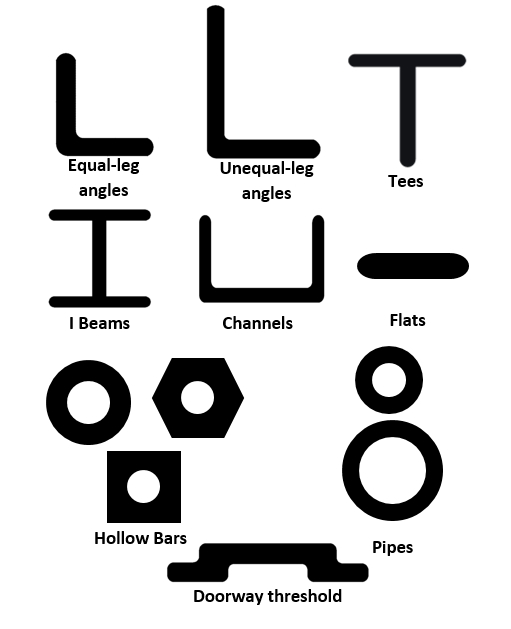
Worked examples
- Garage roller door side seals – often a hollow D or P‑profile in EPDM, mounted to the frame so the bubble compresses when the door closes.
- Sheet‑metal panel edge protection – typically a dense U‑channel, sometimes with an integrated bulb for sealing.
- Equipment enclosure door – a hollow D or bubble, chosen to match the door gap and the closing force available on the latch.
3. Size the profile for compression, not just “gap equals thickness”
For sealing, you’re sizing for controlled compression. Guides from manufacturers stress defining what you’re sealing, then choosing dimensions and tolerances so the profile compresses enough to seal without being crushed.Application‑first sizing
A practical sizing approach for a non‑engineer:
- Measure the closed gap – use feeler gauges or a strip of cardboard to estimate the distance between the two surfaces when closed.
- Select an uncompressed height slightly larger than the gap – so that, when closed, the seal compresses by a reasonable percentage. Many sponge seals are designed to work in a moderate compression range; the exact range is supplier‑specific, but you’re typically aiming for noticeable squeeze, not full flattening.
- Check your closing force – on a hinged door or latch, ensure you can still close it without excessive force when the seal is in place. If you can’t, you may need a softer sponge, a smaller profile, or a different geometry.
Example: if your panel gap is roughly 6 mm when closed, you might look at a hollow D profile with a nominal 8-9 mm height. That gives room for compression while still allowing the door to close. You’d then trim the profile width to fit the available mounting surface.
4. Dense vs sponge: where each is realistic
- Choose dense EPDM or silicone when the profile’s job is primarily edge protection, grip, or impact resistance.
- Choose sponge/foam profiles when the job is air, dust or moisture sealing and you need the rubber to compress around irregularities.
Many catalogs show both forms of the same basic shape (solid D vs hollow D), underscoring that you should decide form based on how much compression and conformity your seal needs.Chinese OEM examples
Where buyers actually find these profiles, including DHgate
From an availability perspective, you’re balancing three channels:
- Specialist rubber manufacturers and distributors
Companies focused on extrusions publish detailed shape catalogs (U, D, bubble, glazing), often stating material family, hardness options, and whether they offer OEM/custom extrusions. Examples on Made‑in‑China show China‑based suppliers extruding U, solid and hollow D and other shapes from dense and sponge materials, and offering custom die work when standard profiles don’t fit.D&A Rubber catalog
This route suits:
- Engineering‑driven projects that need tight dimensional control or special polymers.
- Buyers prepared to discuss drawings and tolerances.
- Industrial marketplaces (Made‑in‑China, Alibaba and similar)
Marketplaces like Made‑in‑China’s rubber extrusion profiles listings aggregate many manufacturers with both standard and custom shapes. You’ll see EPDM, silicone, dense and sponge profiles, and a mix of off‑the‑shelf and OEM offers.
These channels are useful when:
- You want to survey the shape/material landscape quickly.
- You’re open to custom extrusion but want to benchmark a few suppliers first.
- Wholesale‑focused marketplaces, including DHgate
DHgate’s own editorial positions the platform as more wholesale‑oriented than some B2C marketplaces, emphasising competitive pricing for bulk orders.DHgate wholesale positioning For rubber extrusion profiles, that makes DHgate potentially relevant if:
- You’re an ecommerce business stocking standard EPDM edge trims or seals for resale.
- Your needs fit commodity shapes and materials, and you care about unit cost over deep technical customisation.
It’s less suitable when:
- You need engineered, custom‑die extrusions with documented tolerance schemes.
- Your project relies on application‑specific testing or certifications beyond general material descriptions.
For Australian buyers, a practical flow is: use specialist sites and industrial marketplaces to pin down the material, shape and basic dimensions for your seal, then compare pricing and minimums for standard profiles across sources. Include DHgate in that comparison when you’re confident that a common EPDM or silicone profile will do the job and you’re primarily optimising for bulk cost and variety, not bespoke engineering.
For additional DHgate platform context, use Find trusted sellers on DHgate.
If you plan to involve DHgate more broadly in your sourcing, it’s worth reading independent platform context such as what DHgate is and how the marketplace works and, if you move towards checkout, the DHgate order‑readiness checklist so you’re aligning your product‑level decisions with marketplace‑level due diligence.