
Easy shipping services are tools and platforms that take the manual work out of fulfilment: they pull in your orders, compare multi‑carrier rates, generate labels, help with customs paperwork, and give end‑to‑end tracking, so you’re not juggling separate courier sites for every parcel. For a UK buyer or small ecommerce business sourcing internationally, these platforms sit alongside marketplaces and supplier sites (including places like DHgate, where the shipping experience varies by seller and listing) to make cross‑border delivery simpler and more predictable.
For most UK small sellers, the decision isn’t “which courier” but “which type of shipping platform” to use on top of couriers. Some tools are pure software; some act more like logistics partners; some are technical APIs your developer plugs into your stack. Choosing the right layer has more impact on your workload than debating Royal Mail vs DHL.
What “easy shipping” platforms actually do for UK ecommerce
“Easy shipping” in practice means:
- You can compare rates and services from multiple carriers in one place.
- Labels and tracking numbers are created automatically from your orders.
- Cross‑border shipments include the right customs data and tax settings.
- Customers get reliable tracking links without you cutting and pasting.
Multi‑carrier shipping software like ShippingEasy is a good example. It’s built for online sellers to pull in ecommerce orders, print shipping labels, and access discounted rates across different carriers, all from a single dashboard. That’s a software layer sitting on top of couriers.
Easyship goes a step further for ecommerce: it offers courier comparison, label generation, tracking, and cross‑border support, aiming to cover the whole journey from checkout to international delivery. That matters if you ship from the UK to the EU, US, or Asia and need flexible options for duties and transit times.
Technical API platforms such as EasyPost are different again. They provide shipping APIs that connect to multiple carriers, automating label creation, tracking, and rate shopping inside your own systems rather than giving you a standalone app. That fits businesses with in‑house development or custom order management.
For UK‑specific needs, services like ParcelHero act as parcel delivery brokers, offering access to major carriers with international options and UK‑focused pricing. Logistics providers such as Easy Delivery sit closer to the physical movement of goods than to pure label printing.
Platform types and how they work step by step
Several platform models overlap under the “easy shipping” label. Here’s how they actually work in a typical UK ecommerce workflow.
1. Carrier API layers (EasyPost and similar)
With an API‑first platform like EasyPost, your developer connects your ecommerce stack (for example, a custom site or ERP) directly to multiple carriers through one interface.
Basic workflow:
- Customer places an order on your site.
- Your system calls the API to fetch rates from different couriers and service levels.
- The customer chooses an option; your site stores the choice and cost.
- When you’re ready to ship, your system calls the API again to create a label and tracking number.
- Tracking updates come back through the API and can be shown in your order portal or emails.
This model suits tech‑heavy businesses that want complete control over checkout logic and shipping rules, but it’s overkill if you’re a micro‑seller on Shopify without developers.
2. Shipping software dashboards (ShippingEasy, Easyship)
Shipping software tools are built for non‑technical merchants. They connect to platforms like Shopify, WooCommerce, Amazon, and eBay and give you a unified back‑office.
Workflow with a tool like ShippingEasy:
- Orders sync from your sales channels into the software.
- You batch‑select orders and see rate options from connected carriers.
- You pick services, print labels, and stick them on packages.
- The software writes back tracking numbers to your store and sends customer emails.
With Easyship, the same idea extends more formally into cross‑border:
- You can compare couriers on price, speed, and service.
- The platform guides you through customs data entry.
- You generate labels and tracking from within the same system.
The trade‑off is: you accept the platform’s way of doing things in exchange for speed and much less manual work.
3. Logistics and shipping solution providers (Easy Delivery, ParcelHero)
Logistics providers and parcel brokers are closer to “managed shipping” than software alone.
A UK‑focused broker like ParcelHero typically:
- Gives you an online booking interface for parcels.
- Offers rates across major carriers for domestic and international routes.
- Handles some of the operational relationship with carriers on your behalf.
A logistics provider such as Easy Delivery positions itself less as a label app and more as a solutions partner, combining shipping arrangements with broader logistics services. This can cover consolidation, storage, or coordination across routes.
If your pain point is physical movement of goods (pallets, mixed freight) rather than ecommerce parcel admin, this category is often a better fit than label software.
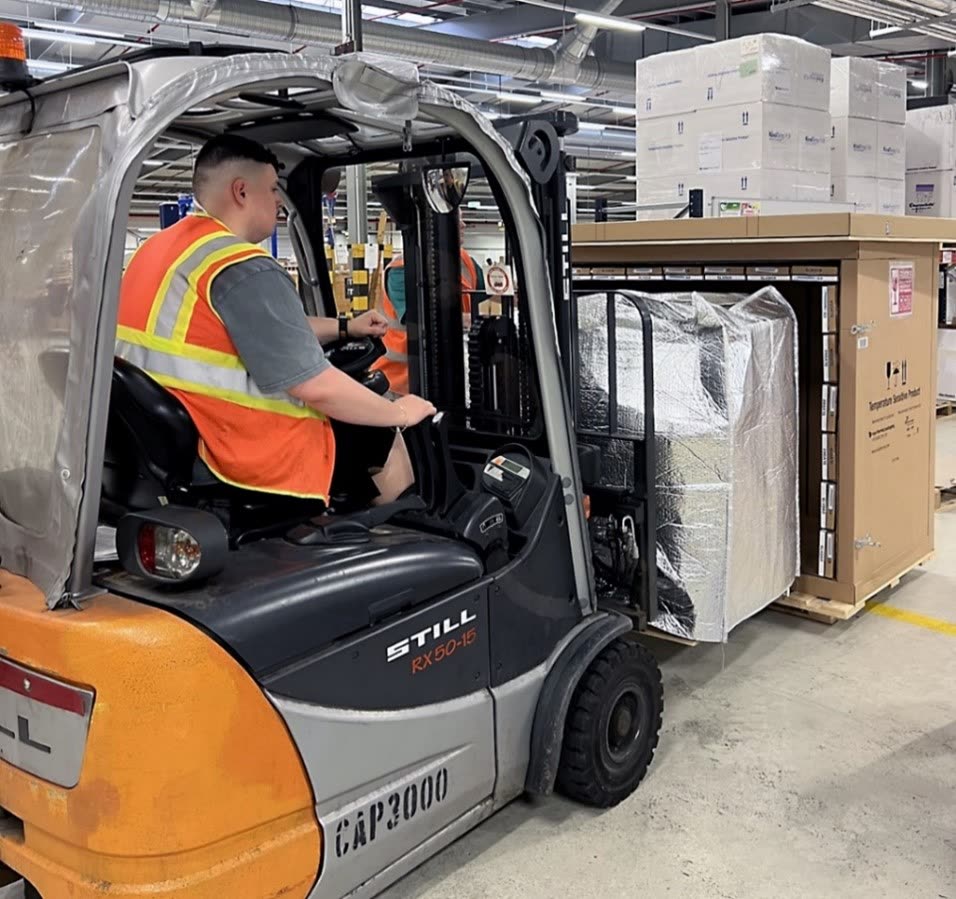
Comparing platform options for UK cross‑border shipping
For a UK seller or buyer, the choice is less about brand names and more about which platform type aligns with your volume, tech skills, and risk tolerance.
Here’s a compact comparison of common platform types:
| Platform type | Tech skill needed | Cross‑border help | Typical use case in the UK |
|---|---|---|---|
| Carrier API (e.g. EasyPost) | Developer or agency | Depends on your own implementation | Custom site needing deep checkout control |
| Shipping software (ShippingEasy, Easyship) | Low–medium (config, no coding) | Built‑in rate comparison, labels, tracking | Shopify/eBay/Amazon sellers doing parcels |
| Parcel broker (ParcelHero) | Low | Choice of international services, booked per shipment | Occasional or mixed parcel shipping |
| Logistics provider (Easy Delivery) | Low–medium (planning) | Case‑by‑case solutions, often beyond parcels | Brands needing coordinated logistics |
Scenario callouts for UK sellers
1. Micro‑seller shipping 10-40 orders a month You’re on Shopify or Etsy, mostly sending parcels within the UK plus occasional EU/US orders.
- A multi‑carrier shipping software tool is usually the most efficient starting point.
- It removes manual label creation and gives you basic rate comparison without needing a developer.
2. Growing brand with multi‑channel sales You sell via your own site, Amazon, and perhaps wholesale. Orders are in the hundreds per month, with regular exports.
- Shipping software with strong ecommerce integrations (like Easyship) can centralise labelling, tracking, and cross‑border workflows.
- As you grow, you may combine this software with a parcel broker or logistics provider for special shipments or negotiated arrangements.
3. Marketplace‑heavy business Most inventory flows through marketplaces such as Amazon, eBay, or overseas platforms.
- Start by understanding what each marketplace already provides (e.g., integrated shipping programmes) and where you’re left to organise shipping yourself.
- Use shipping software or a parcel broker for the channels that don’t give you integrated shipping, so you’re not stuck manually booking every parcel.
How to match a platform type to your risk appetite
A final decision filter is risk: not just in cost, but in operational dependence.
- Single‑platform dependency risk: If you rely entirely on one shipping platform and it has an outage or changes terms, your fulfilment pauses. API‑based setups spread this risk but require more technical oversight.
- Carrier concentration risk: Easy shipping tools make it simple to lean heavily on one courier. For international orders, it’s healthier to use platform tools to diversify carriers by region and service level, not just chase the lowest rate.
- Customs and tax risk: Cross‑border features are helpful, but they don’t remove regulatory responsibility. Treat duties, VAT, and customs documentation as variable and double‑check what’s being declared for higher‑value or regulated items.
If you want simplicity and accept some dependence, a shipping software dashboard is usually the best balance. If you want more control and can invest in development, an API‑driven approach lets you design shipping logic exactly for your UK and international mix.
The key is to choose the level of abstraction that fits your current business, knowing you can later layer brokers or logistics partners on top rather than betting everything on one tool or courier.