
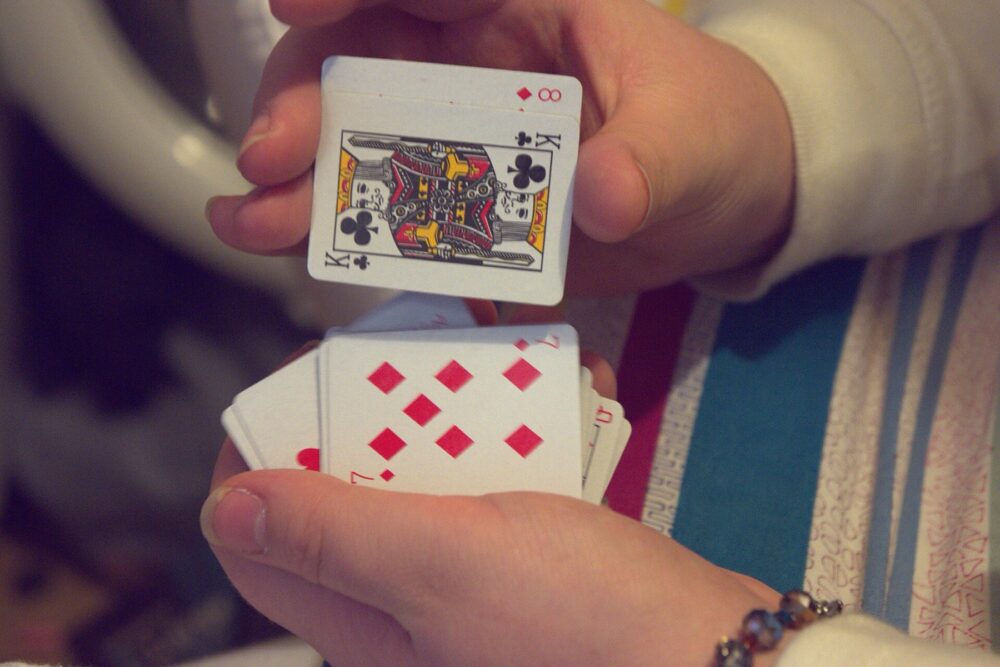
Mini playing cards are compact decks around half the size of standard cards, used as travel games, party favors, kids’ items, and props for card tricks. In Australia, you’ll usually get the best balance of price, reliability, and choice by matching your needs to three broad routes: local retail marketplaces like Amazon.com.au and eBay, specialist card and magic shops, and wholesale-style or cross-border marketplaces for bulk novelty stock. Beginners who just want a few fun decks can stay entirely local; small ecommerce sellers planning to resell mini decks may need to mix local and cross-border sourcing.
Mini Playing Cards and the Buying Landscape in Australia
Mini playing cards are sold both as no-name novelties and as branded decks. Many are roughly half the footprint of a normal poker card, so they’re easy for kids to hold and fit into travel tins or goodie bags. Some mini decks, such as fairy-themed sets from Rex London, lean heavily into the gift/novelty market, while others mirror full-size designer or magic decks.
For Australian buyers, the main platform types that actually stock mini decks are:
- Retail marketplaces – Amazon.com.au lists a wide range of mini playing cards, including multi-deck packs clearly aimed at party favors and beginner-friendly novelty use (for example, packs of many tiny decks bundled together).
- General marketplaces – eBay hosts multiple sellers offering mini cards, often with options to buy lots or multipacks that suit events or low-tier resale.
- Specialist card/magic retailers – sites such as Art of Conjuring carry branded mini decks like Black Roses Sunny Days or Bicycle minis aimed at magicians and enthusiasts.
- Local Aussie retailers and novelty shops – chains and independents including BIG W and Campbells Online list mini decks, sometimes with licensed themes such as SpongeBob.
If you’re buying a couple of decks for kids or travel, those local and marketplace options usually cover what you need without involving international shipping or import complexities.
How Different Platform Types Work for Mini Decks and Multipacks
Each platform type handles mini playing cards a bit differently in terms of pack formats, order size, and how you interact with sellers. This matters both for beginners and for small ecommerce businesses.
Retail marketplaces: Amazon.com.au and similar
On Amazon.com.au, mini playing cards are typically listed like any other consumer product. You’ll see:
- Single novelty decks – themed mini sets for kids or travel.
- Multipacks – for example, listings that bundle many tiny decks into one pack clearly positioned for party bags or classroom rewards.
- Mixed-size listings – some pages combine standard and mini decks, so you need to check the description to confirm you’re getting the smaller format.
Operationally, you’re buying from third-party sellers or Amazon’s own inventory using a standard retail checkout. Minimum order quantities (MOQs) are usually just one unit, even if that “unit” is a bag of 10-20 mini decks.
General marketplaces: eBay
On eBay, mini playing cards appear as individual listings from many sellers. Because eBay is more open-ended, you’ll find:
- Varied pack sizes – from single mini decks to bulk lots (for example, dozens of mini packs sold together for events).
- Price spread and quality variation – some are generic low-cost novelties, others are branded minis.
- Location mix – sellers may be in Australia or overseas, affecting transit time and customs exposure.
You’re dealing directly with individual sellers. Bulk buying is more common here than on a typical retail marketplace, but you still often can buy just one listing at a time if you’re a consumer.
Specialist card and magic retailers
Card-focused shops and magic studios target hobbyists and performers more than casual party planners. Offers typically look like:
- Branded mini decks – e.g., Black Roses Sunny Days mini cards listed by Art of Conjuring, or mini Bicycle decks sold through magic/card sites.
- Limited runs or collector-oriented designs – themes that echo full-size designer decks.
- Higher per-deck pricing but more consistent handling quality – stock weight and finish are chosen for shuffling and cardistry, not just novelty.
These platforms operate as standard online shops: you buy individual decks, sometimes with small bundle discounts, but they rarely offer large, ultra-cheap multipacks for party favors.
Local Aussie retailers and novelty shops
Local stores such as BIG W and Campbells Online list mini decks primarily as toys or gifts:
- Licensed brands – SpongeBob and other character decks.
- Simple novelty minis – often generic designs in bright packaging.
- Single or small multipacks – suitable for stocking fillers or one-off gifts.
MOQs are retail-style (buy one or a couple), and you get straightforward domestic shipping. For a small ecommerce business, these can double as test inventory sources if you’re validating demand without committing to large imports.
Wholesale-style and cross-border marketplaces
Beyond domestic options, cross-border marketplaces connect you to factories and trading companies offering playing cards and novelties in bulk. Some platforms list mini cards among broader game/novelty categories. DHgate, for example, is a cross-border marketplace that carries a range of playing card products and novelty styles, with individual sellers posting their own listings. If you explore this route for mini cards, you need to treat each seller’s offer as its own deal: check product photos, descriptions, pack counts, and terms before committing.
Because these platforms often expect higher quantities, they make more sense once you’re past the “trial” phase and know you can move larger volumes of mini decks.
A Quick Comparison of Platform Types for Mini Cards
Here’s a compact view of how the main platform routes differ for Australian buyers and small sellers.
| Platform type | Typical use case | Pack formats you’ll see | Order size tendency |
|---|---|---|---|
| Retail marketplaces (Amazon.com.au) | Beginners, casual buyers, party planners | Single decks, themed minis, consumer multipacks | Very low; 1 unit per order |
| General marketplaces (eBay) | Event buyers, small resellers, bargain hunters | Single decks, bulk lots, mixed bundles | Flexible; from single lots to bulk |
| Specialist card/magic shops | Magicians, collectors, card hobbyists | Branded mini decks (e.g., Black Roses, Bicycle minis) | Low; per-deck purchases |
| Local Aussie retailers/novelty | Parents, gift buyers, trial inventory for micro-sellers | Licensed character decks, simple minis | Retail; 1-3 units typical |
| Cross-border marketplaces (incl. DHgate) | Small ecommerce sourcing in bulk | Large lots of playing/novelty cards, sometimes mini formats | Higher; bulk-focused |
This table doesn’t cover buyer protections or refund processes for any specific platform; instead, it focuses on how each route generally structures mini card offers and order sizes.
Choosing the Right Platform for Beginners vs Small Ecommerce Sellers
For beginners and casual buyers in Australia (party bags, kids’ travel games, small gifts):
- Start with local retail marketplaces and shops. Amazon.com.au, eBay filters set to Australian sellers, BIG W, and similar outlets let you buy 1-2 products with predictable domestic shipping and no import paperwork.
- If you care about handling quality (for tricks or cardistry), look at specialist retailers that stock mini versions of established brands like Bicycle or Black Roses.
For small ecommerce sellers testing or scaling mini card resale:
- Use local retailers and marketplaces to test themes and price points in low quantities. Branded minis from specialist shops can position your store as premium; generic multipacks from Amazon.com.au or eBay can fill the budget/party niche.
If your use is light and domestic, you don’t need cross-border sourcing at all; the local landscape is broad enough. If your business model depends on hundreds or thousands of mini decks per month, the optimal route is usually a hybrid: validate locally, then selectively add cross-border suppliers once your demand and cashflow justify the extra complexity.
For broader context on how different marketplaces operate, you can compare platform structures in more detail in online marketplaces and shopping platforms and see how DHgate stacks up against other cross-border sites in DHgate vs AliExpress, Alibaba and Temu. If you’re new to DHgate itself, What DHgate is and how the marketplace works explains its general model before you decide whether it belongs in your mini card sourcing mix.