
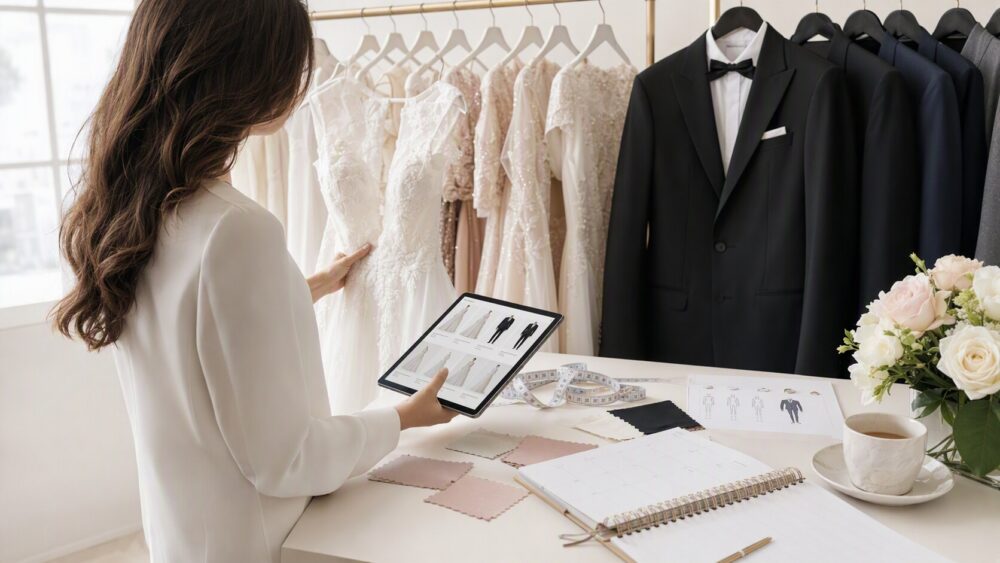
Quick answer:Wedding and formalwear can be difficult to buy online because fit, fabric, color, construction, and delivery timing all matter. Use DHgate and other marketplaces to compare styles, but make the final decision only after checking your measurements against the seller’s chart, reviewing recent buyer photos, confirming processing and shipping time, and getting clear answers about the selected garment
Wedding and formalwear is a broad category, but the buying logic is consistent: start with the event, then narrow by silhouette, fabric, fit, and how much tailoring you can accept. A wedding dress, bridesmaid dress, tuxedo, suit, evening gown, or ceremony accessory all serve different roles, but each one depends on the same core checks—construction, measurements, color, and timing. If you get those right early, you can compare listings with more confidence and avoid choosing on photos alone.
What Counts as Wedding & Formalwear?
Wedding and formalwear includes garments and accessories worn for ceremonies, receptions, galas, proms, black-tie events, and other dress-up occasions. In practice, that usually means bridal gowns, bridesmaid dresses, mother-of-the-bride dresses, evening gowns, suits, tuxedos, dress shirts, vests, ties, pocket squares, veils, wraps, and occasion shoes or jewelry.
What makes this category different from everyday apparel is the amount of planning it requires. The item has to work with an event date, a dress code, a color palette, and often a specific fit expectation. A formal garment is rarely a casual impulse buy; it is usually tied to a calendar, a photo moment, and a need for predictable presentation.
Short answer: wedding and formalwear is a timing-sensitive category where style, fit, and finish matter more than simple size labels.
Main Styles, Fabrics, and Fit Variables
The main style choices usually start with silhouette. For dresses, common shapes include ball gown, A-line, mermaid, sheath, tea-length, and two-piece styles. For men’s formalwear, the key choices are suit versus tuxedo, slim versus regular fit, and whether the look is classic, modern, or statement-driven.
Fabric changes both appearance and comfort. Chiffon drapes softly, satin reflects more light, tulle adds volume, lace adds texture, organza creates structure, velvet feels heavier and more seasonal, and crepe gives a smoother, cleaner line. In suits, fabric weight and lining affect how the garment hangs and how formal it reads.
Fit variables matter just as much as style. For dresses, the most useful measurements are bust, waist, hips, hollow-to-floor, shoulder width, sleeve length, and desired hem length. For suits, check chest, shoulder, waist, sleeve length, inseam, jacket length, and pant rise. Custom sizing can help, but only if the seller provides a clear measurement chart and you measure carefully.
Short answer: the most important selection variables are silhouette, fabric, measurement accuracy, and how much tailoring the garment will need.
When Each Style Makes Sense
Different wedding and formalwear styles work better in different settings.
A-line and tea-length dresses are often easier to move in and can suit civil ceremonies, courthouse weddings, rehearsal dinners, and semi-formal receptions. Ball gowns and fuller silhouettes fit more traditional ceremonies, formal venues, and photo-forward events. Mermaid and sheath styles create a closer fit and are often chosen when the goal is a more defined shape.
For bridesmaids, a suitable choice is usually the one that balances color consistency, comfort, and a fit range that works across the group. For evening gowns, the event dress code matters more than bridal tradition, so neckline, fabric sheen, and length become the main style signals.
For men, tuxedos are generally associated with more formal dress codes, while suits are more flexible for weddings, business-formal events, and evening celebrations. Accessories can shift the look quickly: a vest, tie, pocket square, or bow tie can move a suit toward formal without changing the base garment.
Short answer: choose the style that matches the event formality, the amount of movement you need, and how much alteration you are willing to do.
What to Check Before You Order
Before buying wedding or formalwear online, focus on the listing details that affect the final result, not just the headline photo.
Start with the product description. Look for fabric type, lining, closure style, sleeve construction, train length, embellishment details, and whether the garment is ready-made or custom-sized. Then compare the size chart against your own measurements, not your usual U.S. size. If the listing does not explain how the garment is built, that is a sign to slow down and ask for more detail.
Next, examine the seller record and the review pattern. Recent buyer photos are more useful than polished listing images because they show how the garment looks in real conditions. Read the negative reviews first and look for repeated comments about sizing, color, fabric feel, stitching, or delivery timing. A single complaint is less useful than a repeated pattern.
Finally, check the practical order details: processing time, shipping method, return terms, and whether the seller can answer measurement questions clearly. For formalwear, a clear reply is part of the evaluation because it tells you whether the seller understands the garment you are trying to buy.
For a fixed event date: work backward from the date you need to wear the garment. Allow time for seller questions, measurement confirmation, processing, shipping, possible alterations, and a backup option if the item does not fit, differs from the listing, or arrives later than expected.
Short answer: the most important pre-order checks are fabric, measurements, buyer photos, processing time, and how clearly the seller answers questions.
How to Search and Buy on DHgate
Use DHgate as a search-and-compare tool, not as a shortcut around product research. The goal is to refine the listing set until the visible details match your event needs.
- Start with a specific search phrase. Add style words such as mermaid, A-line, tea-length, tuxedo, suit, bridesmaid, or evening gown, plus fabric or occasion terms like satin, lace, civil wedding, reception, or black-tie.
- Open several product pages. Open several product pages. Compare the title, photos, size chart, fabric notes, closure type, and processing time. The current product page is where the useful detail lives.
- Compare visible listing details across sellers. Look at measurement charts, buyer photos, and the wording used for fabric and construction. If you are comparing multiple DHgate listings, keep the same style and occasion in view so you are not mixing different garment types.
- Message the seller before ordering. Ask for real photos, confirmation of fabric, lining, and measurements, and whether the item can be made to your size. Keep the conversation on DHgate so the order record stays together.
- Check delivery and order terms. Review processing time, shipping method, and the seller’s stated return or dispute path before you place the order. For wedding and formalwear, timing matters as much as the garment itself.
- Place the order only after you have your measurements ready. Save your size chart, screenshots, and seller messages. If the item arrives, you will want the original listing details available for comparison.
- Retain your order record. Keep screenshots of the listing, the size chart, the seller’s replies, and the checkout confirmation. That record is useful if you need to compare what was promised with what was delivered.
On DHgate, the practical advantage is visibility: you can search broad terms, then narrow by style, fabric, and occasion until the listing details line up with your needs. Search results can help you discover related styles, but they do not confirm current stock, the selected variation, fabric, measurements, processing time, shipping cost, or transaction outcome. Make the final decision using the current product page, the seller’s answers, and your own measurements.
Short answer: search broadly, compare closely, ask specific questions, and save every order detail before you buy.
Practical checklist: what to verify before ordering
| Check | What to look for | Why it matters |
|---|---|---|
| Listing details | Fabric, lining, closure, sleeve style, train length, embellishments | Helps confirm the garment matches the event and your expectations |
| Measurements | Bust, waist, hips, hollow-to-floor, shoulder width, sleeve length | Size labels can vary; measurements are more reliable than standard sizing |
| Seller signals | Recent reviews, buyer photos, response quality | Shows how clearly the seller describes and supports the item |
| Timing | Processing time and shipping method | Wedding and formalwear are date-sensitive purchases |
| Policies | Return, exchange, and dispute terms shown on the listing | Lets you understand the order path before checkout |
| Order record | Listing screenshots, size chart, selected variation, seller messages, and checkout confirmation | Gives you a clear record of what was shown and agreed before you placed the order |
FAQ
Can I treat a marketplace search result as proof that the exact item is available?
No. Search results can help you discover related styles, but they do not confirm current stock, the selected variation, fabric, measurements, processing time, shipping cost, or transaction outcome. Open the current listing and verify those details before ordering.
What should I ask the seller before ordering?
Ask for fabric details, lining, measurements, closure type, and whether the item can be made to your size.
Why are buyer photos useful?
They show how the garment looks in real conditions and can reveal fit, color, and finish details that listing photos may not show.
What matters most for wedding and formalwear fit?
Accurate body measurements and the seller’s size chart matter more than your usual clothing size.
Should I save anything before checkout?
Yes. Keep screenshots of the listing, size chart, seller messages, and order confirmation.
Next step
If you are comparing options, open a few related listings, match them against your measurements, and message the seller with specific questions before placing an order.
Sources and further reading
- DHgate blog source: https://www.dhgate.com/blog/?p=12321
- DHgate blog source: https://www.dhgate.com/blog/?p=27448
- DHgate blog source: https://www.dhgate.com/blog/?p=67879
- DHgate blog source: https://www.dhgate.com/blog/?p=67977
- DHgate blog source: https://www.dhgate.com/blog/?p=12297
- U.S. Customs and Border Protection: https://www.cbp.gov/trade/basic-import-export
One thought on “Buying Wedding & Formalwear on DHgate: Selection, Seller Checks and Shopping Tips”