
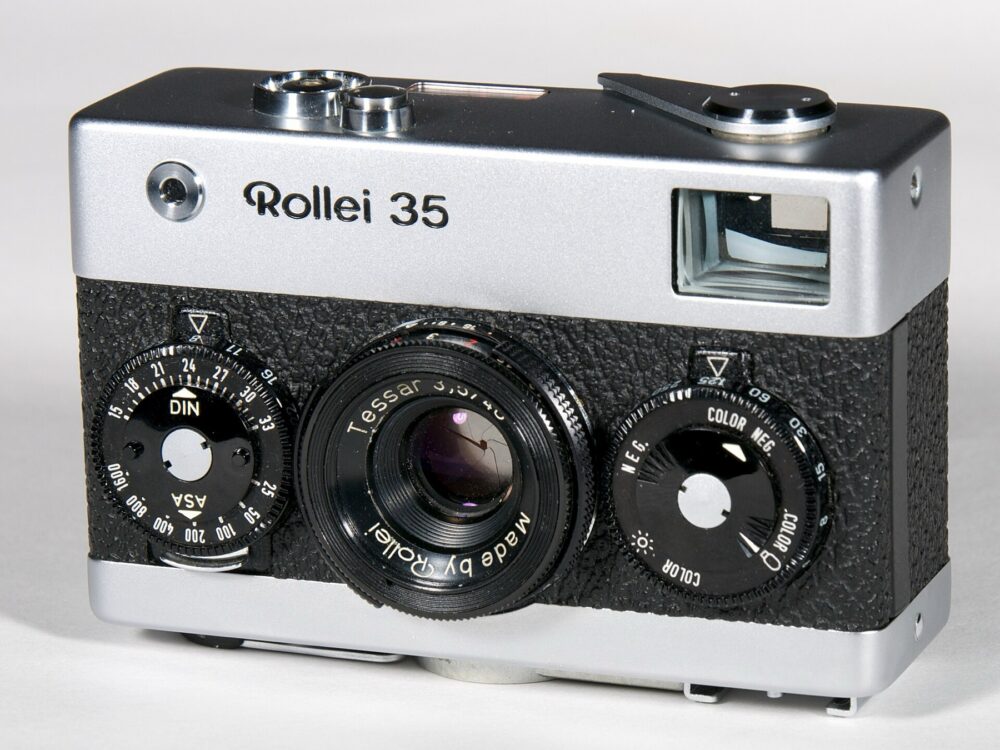
No Rollei 35 model is an autofocus camera: the series uses manual, scale-based focusing. If autofocus is essential, this vintage line is not a match; if you meant the Rollei 35 series generally, it can be an affordable street-shooting option, but the sticker price is only half the story. For Australian buyers and small resellers, total cost depends on the variant, servicing, and whether you buy locally or import. A cheap, unserviced Rollei 35 that needs shutter or meter work can cost more overall than a pricier, tested copy. The Rollei 35 specification guide describes the separate distance scales and manual focusing approach (Rollei 35 specifications).
The good news: if you target the right variants (often the Rollei 35 or 35S), accept some cosmetic wear, and buy from a seller who has already had the camera checked, you can get a compact, full‑frame 35mm street camera for a reasonable outlay. The rest of this guide unpacks those tradeoffs.
What Really Drives the Cost of Owning a Rollei 35 for Street Photography
The Rollei 35 series, introduced in the mid‑1960s, is known for being one of the smallest full‑frame 35mm cameras with solid German engineering and very pocketable dimensions.Rollei 35 specifications That compact design is great for street work, but you’re buying a vintage mechanical object, not a new point‑and‑shoot.
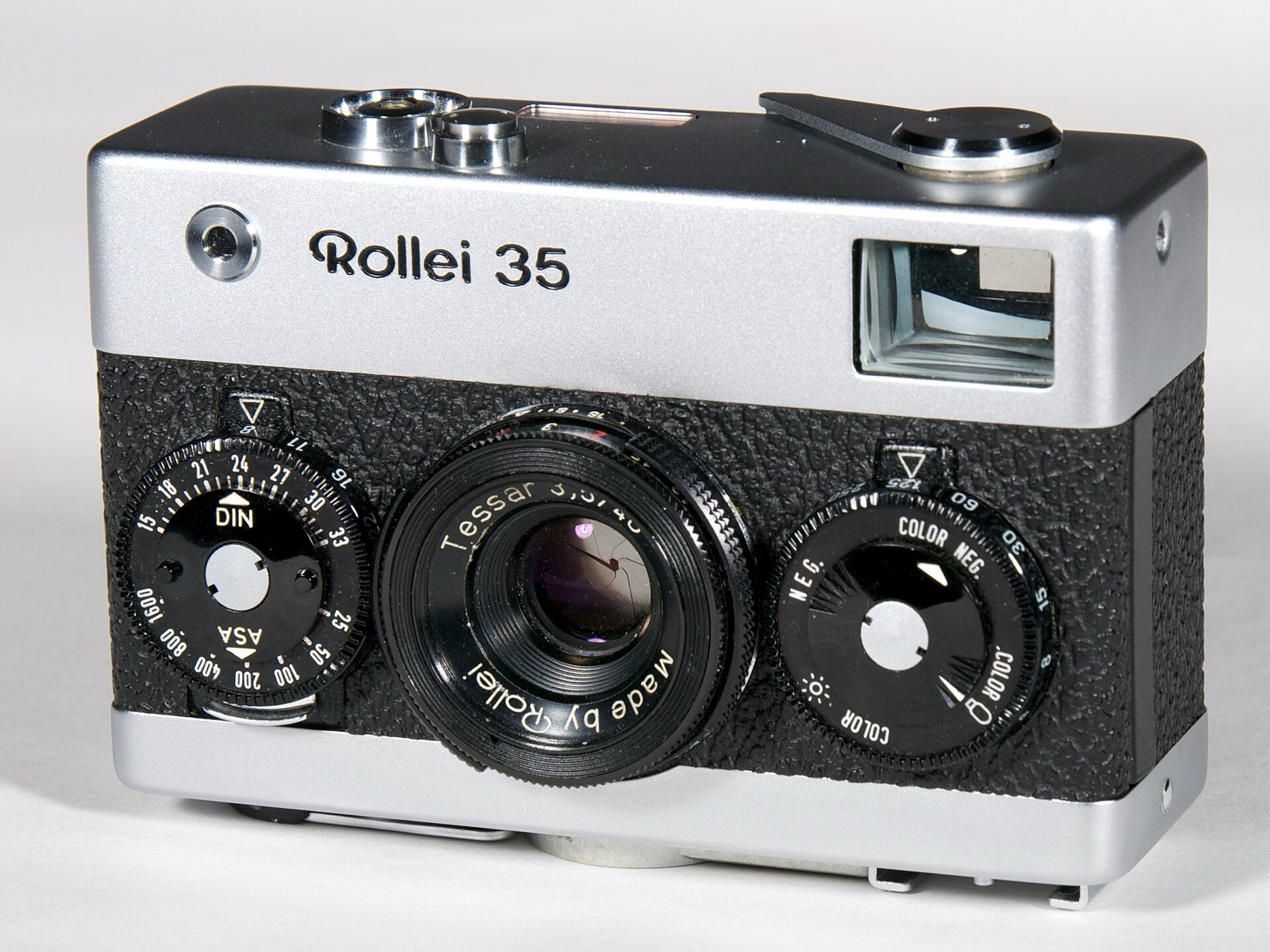
Photo: Don DeBold, “Rollei 35 Camera,” licensed CC BY 2.0 via Wikimedia Commons.
For budgeting, think in layers:
- Purchase price – Marketplace listings typically span from lower three‑figure AUD prices for user‑grade examples up to significantly higher prices for mint, Germany‑made or collectible variants. The moment you cross into “collector condition,” you’re paying for cosmetics and provenance more than street‑shooting utility.
- Servicing (CLA and repairs) – Many Rollei 35 bodies are 40-50+ years old. Before buying, have the shutter, meter, and light seals checked; any servicing should be budgeted separately. That check can materially change your total cost.
- A camera with no service history is cheaper upfront but riskier; factor in a meaningful extra buffer for servicing.
- A camera with recent CLA by a known technician is more expensive but often cheaper overall once you add likely repair costs.
- Meters on older 35 and 35S bodies can be inaccurate or dead. If you’re comfortable metering by phone/app, you can treat a dead meter as a price lever.
- Accessories – Street use doesn’t demand a full collector kit, but certain small items matter:
- Lens cap and case: nice, not critical. Missing ones shouldn’t add much to your budget.
- Strap: given how small the camera is, a wrist or neck strap is very practical; budget for a replacement if needed.
- Filters: Rollei 35 uses compact 24.5mm filters; original Rollei filters can be costly, but generic alternatives are cheaper.
- Film, batteries, and ongoing use – Rollei 35 cameras take 35mm film, which in Australia is not cheap per roll. You also need to consider:
- Battery: models with built‑in meters were designed around now‑obsolete mercury cells; modern substitutes work but meters may not be perfectly calibrated.
- Film costs: if you’re shooting street regularly, your film budget will soon exceed the camera purchase price.
- Shipping, taxes, and import charges – Cross‑border sourcing can look cheaper until you add freight and customs:
- Shipping from Europe, Japan, or the US often pushes the total price well above the camera’s raw listing.
- Imports to Australia may attract GST or duties depending on value and seller setup; always include this in your mental budget.
For a single street shooter in Australia, treat the headline price as only one part of your eventual spend; shipping and any servicing can materially increase the total.
Price Differences Across Rollei 35 Variants and Conditions
Across the series, the core street‑photography traits stay similar: compact body, 40mm lens, scale focusing, and fully manual operation.Rollei 35 specifications But variants differ in lens type, meter design, and era of production, which nudges both price and usability.
Here’s a compact, budget‑focused comparison:
| Variant | Typical lens & meter | Street‑use traits (editorial) | Relative price band* |
|---|---|---|---|
| Rollei 35 (orig) | 40mm f/3.5 Tessar, CdS meter | Slightly slower lens, classic rendering; very compact and robust. | Often mid‑range for user grade; higher for mint Germany‑made. |
| Rollei 35S | 40mm f/2.8 Sonnar, CdS meter | Faster lens for low light; popular among street shooters; still fully mechanical (Rollei 35 specifications) | Commonly above original 35 for clean copies; collectible versions can be high. |
| Rollei 35SE | 40mm f/2.8 Sonnar, updated electronic meter | Later production; more modern meter design; still compact. | Often priced at a premium for clean, later bodies. |
| Budget variants (B, etc.) | Simpler lenses, stripped features | Cheaper, but some guides warn about reliability and build compromises. | Lower prices, but riskier for heavy use. |
\*Price band is relative editorial judgment based on current marketplace patterns; exact figures vary widely by seller and condition.
Key value patterns for street shooters on a budget:
- Lens choice vs. price – The Sonnar 40mm f/2.8 on the 35S and 35SE is often praised for sharpness and speed, which provides a faster f/2.8 aperture for dim scenes (Rollei 35 specifications). The Tessar 40mm f/3.5 on the original Rollei 35 is slower but still capable; the camera often costs a bit less in comparable condition.
- Meter importance – Many street photographers either zone‑focus and overexpose slightly or use a phone app for metering. If you’re comfortable doing that, you can buy a body with a weak or dead meter for less and treat it as a manual camera.
- Condition grading – Marketplaces and specialist sites usually divide cameras into “user grade,” “excellent,” and “mint/collectible.” User grade bodies with honest cosmetic wear but good mechanics are the sweet spot for budget street shooting. Mint Germany‑made examples command a collectible premium that doesn’t add much real‑world street value.
- High‑risk cheap variants – Some cheaper 35B or similar models were built to a lower spec, and reviewers have flagged them as less reliable long‑term. A low upfront price can mask higher failure risk.
If you want one camera to shoot for years, a Rollei 35 or 35S in user‑grade condition, ideally with recent service, is usually better value than chasing the cheapest possible variant.
Choosing a Sourcing Channel and Cutting Total Cost Safely
For Australian buyers and small ecommerce sellers, where you source the camera affects risk, verification workload, and landed cost more than model choice.
Channel patterns for Rollei 35 sourcing
1. Local camera shops (AU) Independent camera stores and photo collectives often carry a handful of tested vintage bodies. They typically:
- Charge more upfront than peer‑to‑peer marketplaces.
- Offer at least basic functional testing and clear grading (user vs excellent).
- Sometimes include short warranties or return options.
You’re paying for lower risk and less hassle, which can be sensible if you only need one good shooter.
2. Specialist refurbishers and online dealers Refurbishers that focus on film cameras often list Rollei 35 bodies that have already had a CLA or partial overhaul. Patterns here:
- Higher purchase price, but less chance of hidden shutter or meter issues.
- Detailed descriptions of service performed and remaining quirks.
- Better suited for resellers who want predictable inventory quality.
For a small ecommerce business, buying fewer units in known condition can be safer than chasing the very lowest prices.
3. Global marketplaces (eBay, Japanese platforms, DHgate, etc.) Large marketplaces provide the widest supply but also the widest range of condition honesty. You’ll see everything from pristine SE bodies to questionable “untested” bargains.
DHgate is one of several marketplaces where film cameras or related accessories can appear. If you consider any such platform, treat each listing as its own project:
- Confirm the exact model (35 vs 35S vs SE vs budget variants) from photos, not just titles.
- Look for clear images of lens, top plate, and shutter area to judge external wear.
- Ask the seller whether the shutter, advance, and meter have been tested recently.
For cross‑border buying in general, Compare DHgate with AliExpress, Alibaba and Temu is useful context on how different marketplaces handle sourcing and what tradeoffs they imply.
Practical tactics to keep costs down
Whether you’re a single shooter or a small reseller, these specific moves help control total cost without cutting corners:
- Prioritize function over cosmetics – A Rollei 35 with brassing, small dents, or missing case but a smooth shutter and advance is a better budget buy than a mint body with unknown internals.
- Ask explicitly about service history – Even on marketplaces, many sellers know whether a camera has had a CLA. Phrase questions in concrete terms: “Has the shutter or meter been serviced in the last 5 years?”
- Accept a weak meter if you can meter externally – Treat meter condition as a negotiable price factor. If you’re comfortable using Sunny 16 or a phone app, this can shave a meaningful amount off the sticker.
- Bundle purchases as a reseller – For small ecommerce operations, buying two or three user‑grade bodies from the same trusted source spreads shipping and customs cost and lets you discard or resell any problematic unit.
- Time purchases around currency and freight – For Australian buyers, exchange rate swings and sales events on international platforms can move your landed cost significantly. If your use case is flexible, watch for favorable periods rather than buying on impulse.
If you ultimately decide the risk and maintenance of a Rollei 35 don’t fit your budget, consider more modern compact film cameras or digital compacts for street work. But if you’re prepared to budget for a decent user‑grade body plus at least a basic CLA, a Rollei 35 can still be a street‑friendly classic that earns its keep.