
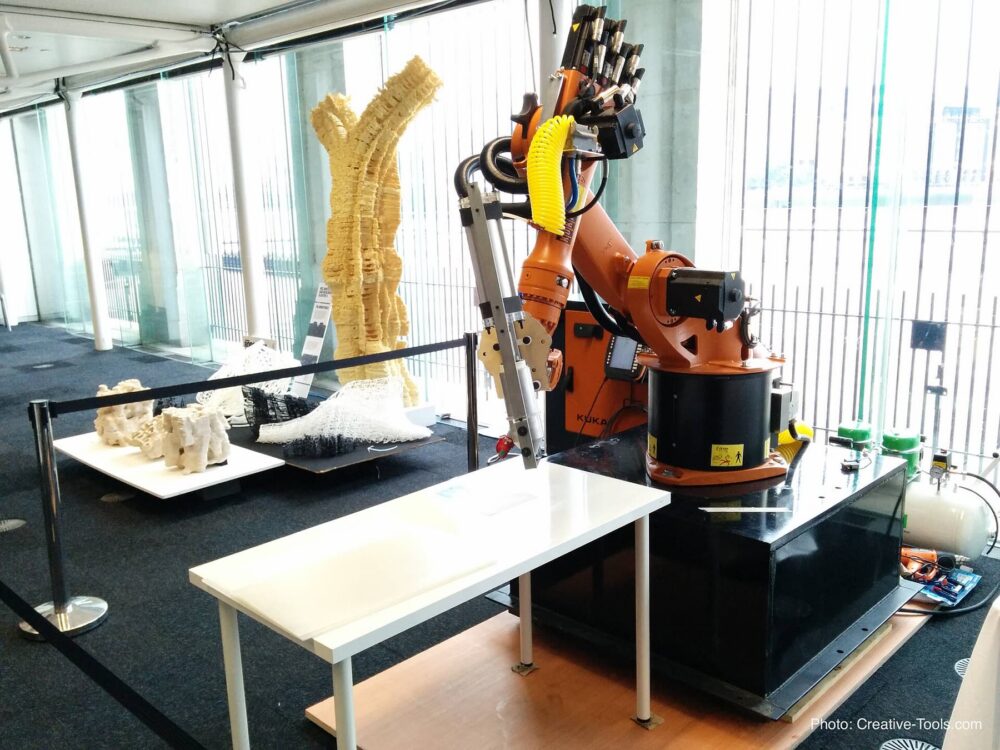
Large-format 3D printers aimed at advanced hobbyists and small shops can be relatively affordable, but true industrial large-scale machines are major capital purchases. Once you get into roughly one-cubic-meter build volumes (BigRep-style systems, or industrial printers from companies like Massivit and Stratasys), you’re in professional territory where hardware is only part of your budget; you also pay in floor space, power, materials, and maintenance. For many small ecommerce businesses, owning a prosumer large-format FDM printer makes sense, while industrial machines often pencil out only if you’re running them hard.
How Much Does Large-Scale and Industrial 3D Printing Actually Cost?
The cost jump from a standard desktop printer to large-format and industrial systems comes from several layers:
- Hardware: Large-format printers are primarily defined by their bigger build volume and larger frames, which must stay rigid and precise over a much wider area. Editorial guides on large-format machines describe beds around 500 × 500 × 500 mm as “large” for prosumer FDM, and highlight models like the BigRep ONE with build volume around 1005 × 1005 × 1005 mm as industrial-grade equipment suitable for big prototypes and functional parts.Source
- Materials: Bigger prints consume more filament, resin, or powder. Some industrial systems use high-performance polymers, photopolymer resins, or engineered powders that are significantly more expensive per kilogram than standard PLA.
- Space and infrastructure: A standard desktop printer lives on a workbench. An industrial machine with hundreds of liters of build volume, like the systems showcased on BigRep’s large-format page, or the large-scale printers listed by Massivit, needs dedicated floor space, ventilation, stable power, and sometimes climate control.
- Labor and expertise: Bigger jobs mean longer print times, higher risk of failure, and more complex setup. You either learn to run the machine yourself or pay a specialized operator.
The key takeaway: moving to large-scale printing is less about the sticker price of the printer and more about committing to an operating budget that supports the hardware.
Why Do Some Big 3D Printers Cost Thousands While Others Run Into Six Figures?
Large-format and industrial printer prices spread out because you’re not just paying for size; you’re paying for technology, materials, and reliability at scale.
1. Build volume and frame design As build volume increases, the frame, motion system, and bed design must prevent sagging and vibration across the entire area. DHgate’s own editorial guide on large-format printers explains that these machines have much larger beds and frames, engineered specifically to keep prints accurate from corner to corner.Source That kind of mechanical stability is cheap at desktop size and progressively harder at half-meter and meter-scale volumes.
2. Printing technology Different technologies dominate different tiers:
- FDM (filament-based): Often the most accessible and affordable entry point for large-format printing. Editorial sources highlight prosumer FDM machines such as Creality’s large-format models and the BigRep ONE as examples of how FDM scales from hobby to industrial use.SourceSource
- SLA (resin) and DLP: Large-format resin printers offer higher accuracy and smooth surfaces, often used for detailed models and molds. Larger vats, more precise optics, and robust enclosures push costs upward.
- SLS (powder-bed): Uses lasers to sinter plastic or other powders. Industrial SLS machines are aimed squarely at end-use parts and complex geometries; their lasers, powder handling, and safety systems make them professional investments.
- Binder jetting and pellet extrusion: Binder jetting spreads powder and selectively binds it, sometimes for large architectural or color models. Pellet extrusion systems feed plastic pellets instead of filament, often to reduce material cost and boost print speed for large structural parts.Source
As DHgate’s editorial overview notes, each of these technologies trades off cost, accuracy, and material versatility, with FDM typically being the more approachable starting point for budget-conscious buyers.Source
3. Materials and application focus Industrial printers from brands like Massivit and Stratasys are marketed around specific professional applications—large display models, tooling, high-strength prototypes. They emphasize advanced materials and repeatable results over casual tinkering. That positioning, and the engineering to support it, pushes these systems into true industrial price territory compared with prosumer large-format machines.
4. Service, uptime, and ecosystem At the industrial end, you’re paying for integration and support—onboarding, spare parts availability, and sometimes software ecosystems. A small ecommerce brand may not need that level of service; a factory that depends on the printer to hit production deadlines usually does.
Here’s a simple way to think about the price tiers without quoting exact numbers:
| Printer tier | Typical build volume (example) | Tech focus (common) | Who it suits |
|---|---|---|---|
| Desktop hobby | ~200-250 mm cube | FDM / small resin | Makers, small prototypes |
| Prosumer large-format | ~300-500 mm bed dimensions | FDM (mostly) | Small ecommerce, sign shops |
| Industrial large-format (BigRep-style) | Around 1000 mm cube (e.g., BigRep ONE)Source | FDM, pellet extrusion | Professional prototyping, tooling |
| Industrial specialty (Massivit/Stratasys) | Large, application-specific volumes | FDM, advanced processes | Manufacturing, large display, aerospace |
The tradeoff is straightforward: more size, more technology, more assurance—and more budget.
Owning a Large Printer vs Using Industrial 3D Printing Services
For a small U.S. business, the most practical decision isn’t “Which industrial printer should I buy?” but “Should I buy any large printer or just pay services when I need big parts?”
Industrial and large-scale 3D printing services exist specifically for companies that don’t want to own enormous machines. A service-focused article from RapidDirect notes that outsourcing large-format jobs can be more cost-effective for businesses with occasional or low-volume needs, because you avoid the capital expense and ongoing overhead while still getting access to big build volumes.Source
Think through three scenarios:
- You regularly print medium-to-large parts (up to ~500 mm): A prosumer large-format FDM printer can be a good investment. Guides on large-format printers often point to models like the Creality CR-10 S5—with around 500 mm build dimensions—as an affordable way to handle sizeable prints in-house, provided you’re willing to tune and maintain the machine.Source
- You sometimes need huge parts (close to a meter): That’s BigRep/Massivit territory. If those jobs are rare, ordering from a specialized service may cost less over a few years than owning an industrial machine that mostly sits idle.
- You need mission-critical, high-performance parts: Industrial printers marketed by companies like Massivit and Stratasys are built for reliability and advanced materials.SourceSource In many cases, using established service bureaus that run such equipment gives you access to their expertise and quality systems without taking on the full capital risk.
From a budget perspective, a good rule of thumb is:
- Buy a prosumer large-format printer when you have ongoing demand, can live with some tinkering, and your parts fit in the half-meter range.
- Use industrial printing services for very large or specialized jobs unless you can keep an industrial machine reasonably busy.
DHgate fits into this picture only on the prosumer side. It’s one of several marketplaces where you can source large-format FDM printers from cross-border sellers. If you explore that route, treat the hardware price as just one line item and estimate the full landed cost—international freight, customs, and any brokerage fees—then compare that to domestic options. Our articles on finding wholesale suppliers on DHgate and comparing DHgate with AliExpress, Alibaba and Temu can help you sanity-check marketplace choices.
Keeping Your Large-Scale 3D Printing Budget Under Control
You don’t need exact price quotes to make smart decisions; you do need a disciplined way to avoid false economies.
- Be suspicious of ultra-low hardware prices
DHgate’s own editorial on 3D printer stores warns that extremely low prices can signal subpar printers or even counterfeit components and suggests weighing price against brand reputation, warranty, and support.Source The same logic applies regardless of marketplace or retailer. If a large-format system costs dramatically less than comparable models, ask yourself where the corners were cut.
- Model your yearly operating cost, not just purchase cost
Draft a simple one-year budget that includes filament/resin/powder, spare parts, and your time (or staff time) to operate and troubleshoot the printer. Compare that against the quotes you’d get from large-format printing services for the same workload.
- Match technology to your actual use case
If you’re printing display props and big cosplay parts, FDM large-format is often enough. If you need crisp, detailed molds, resin may be worth the premium. SLS, binder jetting, or pellet extrusion make sense only when their specific strengths line up with your products.
- Start smaller, then scale your hardware
Many businesses start with a prosumer large-format FDM machine as a “trial balloon.” Once you have clear data on part demand and print hours, you’ll be in a better position to judge whether an industrial system is justified or if services remain the better buy.
Large-scale 3D printing can absolutely pay off for a small ecommerce brand—but only if the type of machine, ownership model, and sourcing channel match the business you actually have, not the one you imagine.