
If you want cookware that looks good, cooks evenly, and doesn’t wreck your budget, start with a small set of versatile pieces in durable materials, then pick the online channel whose full cost—item price, shipping, and any import fees—fits your risk tolerance. For most US home kitchens and small resale operations, a core trio (a 10-12″ skillet, a medium saucepan, and a larger pot or Dutch oven) in stainless steel or cast iron, plus one non-stick pan for eggs, will usually give better value than a huge cheap set you barely use.
Home cooks and small resellers both save more by understanding what drives real cost, mixing materials for performance, and timing purchases around strong promotions instead of simply chasing the lowest sticker price.
What Really Drives the Cost of Cookware for a Home Kitchen
Sticker price is only one part of what you pay for cookware. The real cost is a mix of materials, build quality, piece count, design, and how—and where—you buy.
1. Material and construction
Common budget-friendly materials—stainless steel, cast iron, non-stick, and ceramic—are priced differently because they perform differently and age differently.
- Stainless steel: Often mid-priced and known for durability. Multi-ply bases or full-clad walls (layers of metal bonded together) tend to heat more evenly than thin single-layer stainless, but cost more.
- Cast iron: Can be very affordable relative to its lifespan. Bare cast iron is typically cheaper than enameled, but both can last years if cared for.
- Non-stick: Price varies with coating quality and pan thickness. Budget non-stick may cook nicely at first but can wear out faster than premium coatings.
- Ceramic: Often positioned as an easy-clean option at moderate prices. Some budget ceramic lines can chip or lose slickness over time.
Budget cookware may trade down in thickness, cladding, and coating quality. That can show up as uneven heating, hot spots, warping, or coatings that lose non-stick performance sooner than higher-end lines.
External reviews and buying guides for home cookware, such as this overview of key cookware types and performance considerations, consistently highlight material and construction as major cost and performance drivers.
2. Piece count vs. actual use
A 15-piece set looks like a deal, but many of those “pieces” are lids or tiny specialty pots. If you mostly fry, boil pasta, and make soups, you’ll get more value from:
- 1 good skillet (stainless, cast iron, or non-stick)
- 1-2 saucepans (small and medium)
- 1 larger pot or Dutch oven
Every extra pot you rarely use increases cost without adding much performance. Guides that lay out “essential cookware” for home kitchens, such as this 10-piece essentials list, generally echo this small, versatile core.
3. Design and aesthetics
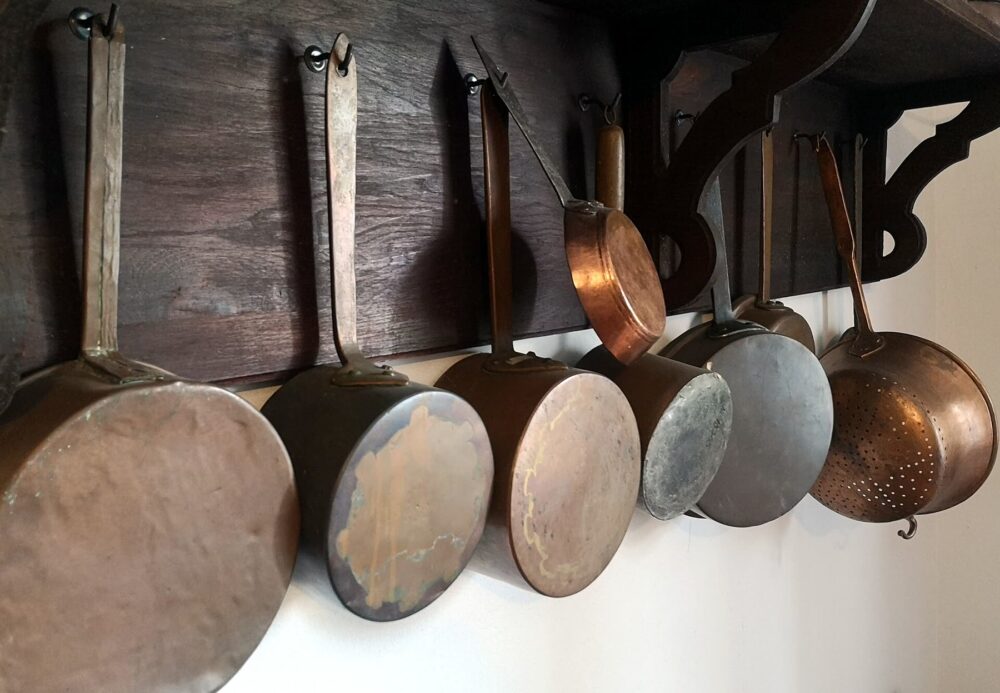
Colorful ceramic exteriors, matching knobs, copper accents, and glass lids all add cost. For a budget buyer, aim to prioritize functional upgrades—sturdy handles, flat bottoms for even contact, oven-safe construction—before spending on styling.
If you resale, strong aesthetics are more valuable because they help listings stand out, but only if the underlying build is good enough to avoid returns.
4. Online vs. in-store pricing
Large online retailers often have lower prices and wider selection than physical stores because they don’t carry the same overhead and buyers can compare options quickly. Brand editorial on budget cooking tools notes that online sellers commonly feature broader assortments and sharper prices, especially during promotions.
This convenience is part of why budget cookware sets are so heavily promoted on sites like Amazon and big-box retailers’ websites.
5. Shipping and, for cross-border, potential import costs
For most domestic US orders, shipping is rolled into the price or shown at checkout. If you buy from overseas sellers or cross-border marketplaces, factor in:
- Shipping method (economy vs. expedited)
- Potential customs, tariffs, and import fees on larger or higher-value shipments
These can erase a low sticker price if you don’t plan ahead, especially for small resellers receiving bulk shipments.
Material, Set Size, and Timing: Getting the Best Price–Performance Mix
The fastest way to overspend on cookware is to buy the wrong material in too many pieces at the wrong time of year. You can flip that script.
How common materials behave on a budget
Use this quick comparison table as a scan-friendly tool for choosing budget materials:
| Material | Typical budget strengths | Typical budget drawbacks |
|---|---|---|
| Stainless steel | Durable, good for searing and sautéing | Thin pieces can heat unevenly or scorch easily |
| Cast iron | Excellent heat retention, can last many years | Heavy; needs seasoning or enamel care |
| Non-stick | Very easy release, great for eggs and delicate foods | Coating can wear faster; usually not ideal for very high heat |
| Ceramic | Attractive, easy to clean when new | Surface can chip or lose slickness over time |
For a small home kitchen, a smart budget mix is:
- Stainless or cast iron for high-heat tasks and dishes you want to brown.
- One non-stick or ceramic skillet for eggs, pancakes, and sticky foods.
Home cooks rarely need full matching sets in one material. Mixing gives you better performance for the same money.
How many pieces you actually need
If you cook several nights a week, a good baseline is:
- 10-12″ skillet
- 2-3 qt saucepan
- 5-6 qt pot or Dutch oven
Small ecommerce sellers often do better focusing on these core pieces instead of big boxed sets; single pans in popular sizes are easier to ship and photograph, and buyers know exactly what they’re getting.
Use timing to your advantage
Cookware discounts cluster around big sales periods. Retailers often feature promotions and bundles on cookware and kitchen appliances during major holidays and seasonal events. Brand editorial about kitchen tools notes that promotions typically increase around major holidays and gift seasons.
In practice, that means:
- Watching for bundles that combine a core pan with a few extras at a modest premium.
- Holding off on large set purchases until seasonal promotions, rather than buying full price mid-year.
US buyers commonly see strong cookware deals from late fall into early winter, but smaller promotions pop up year-round on big marketplaces and retailer sites.
Choosing the Best Online Channel for Attractive, Affordable Cookware
You have four main online paths: large marketplaces like Amazon, big-box retailers’ sites, specialty cookware shops, and cross-border marketplaces.
Large marketplaces and big-box retailers
Platforms such as Amazon and big-box sites like Walmart’s online store often feature budget cookware sets and recognized brands at promotional prices. They’re strong options when you want:
- Fast comparison of brands, materials, and customer reviews.
- Frequent deals on entry-level stainless, non-stick, and ceramic sets.
- Easy access to replacement pieces if a single pan fails.
The tradeoff: styling can be more generic, and deeper discounts may rotate quickly, so you need to watch price history and reviews instead of assuming the current “deal” is actually good value.
Specialty cookware sites
Specialty stores and brand-direct sites often focus on higher-end lines. For a strict budget, they’re most useful when:
- You’re hunting outlet or clearance sections for last season’s colors.
- You care more about long-term durability and precise performance than lowest initial price.
This route suits small resale businesses that want to build a reputation around specific brands or materials instead of the lowest cost per pan.
Cross-border marketplaces and where DHgate fits
Cross-border marketplaces give US buyers access to manufacturers and wholesalers directly, often at lower per-unit costs. Dhgate is one example: it’s a marketplace where manufacturers and wholesalers offer products directly to buyers, which can reduce the price of kitchen tools and cookware versus buying through a domestic retailer.
That potential saving comes with extra homework:
- Check product descriptions carefully for actual materials and weights.
- For business buyers, estimate customs and import fees before placing larger orders; for example, you can use an internal resource on customs and tariffs to understand how duties may affect landed cost.
If you need a deeper breakdown of total landed cost and sourcing structure when comparing DHgate with other channels, see the budget-focused guides on cost to source cookware on DHgate and the total cost comparison for cookware on DHgate vs. other channels within DHgateWiki.
Practical Cost-Optimization Moves for Home Buyers and Small Resellers
You don’t need complex spreadsheets to buy cookware smartly. A short, focused checklist goes a long way.
For home kitchens
- Build around 3-4 essential pieces, then add only what solves a real cooking problem.
- Mix materials: durable stainless or cast iron for daily high-heat work, one non-stick or ceramic pan for sticky foods.
- Shop online retailers where it’s easy to compare multiple brands and read reviews, using holiday and seasonal sales to buy sets or higher-ticket pieces.
For small ecommerce sellers
- Start with one or two hero products in popular sizes (10-12″ skillet, 5-6 qt pot) instead of full sets.
- Choose materials that balance durability with shipping practicality—thick cast iron is robust but heavy; mid-weight stainless is often easier to ship.
- If exploring cross-border sourcing, test small quantities first, then scale only after you’re confident in actual build quality and total landed cost.
If you consistently favor versatile pieces and durable materials, and time your purchases around strong online promotions, you’ll typically spend less over several years than if you chase the cheapest big set or buy trendy non-stick collections that need frequent replacing.