
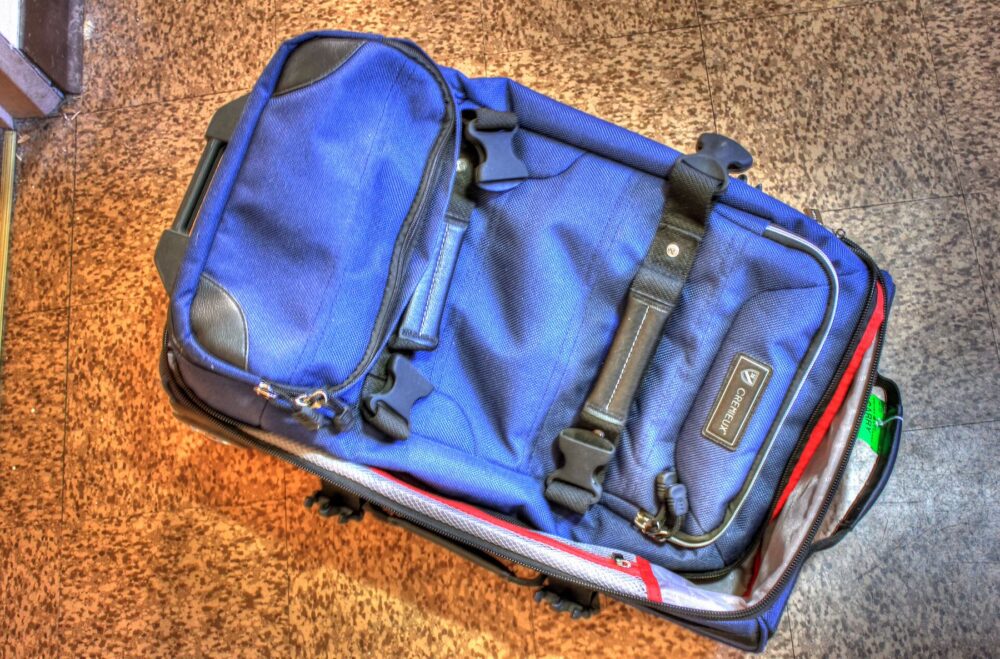
LuggageWorks is not another Amazon seller or fashion luggage label. It’s a specialist brand that designs durable, highly functional rolling bags and accessories for airline professionals like pilots and flight attendants, with a clear focus on performance over style.Source If your priority is a bag that survives constant commuting through airports and tight airline size rules, LuggageWorks can make more sense than a generic suitcase from a marketplace. If you travel occasionally or care more about aesthetics and price, a mainstream brand or marketplace often fits better.
This article uses LuggageWorks as a case study: understanding what a pro-grade luggage brand offers, how that differs from retail marketplaces, and what that means for Canadian buyers and small ecommerce sellers choosing a buying channel.
How LuggageWorks Fits Into the Online Luggage Market
LuggageWorks describes itself as a company specializing in durable, functional luggage for airline professionals, particularly pilots and flight attendants.Source It built its reputation on bags that can live in cockpits and crew rooms rather than just holiday resorts.
On its official site, LuggageWorks’ catalog centers on rolling bags and related luggage, with designs that emphasize rugged materials, simple organization, and practicality.Source These bags tend to prioritize:
- Strong frames and wheels for constant airport use
- Straightforward pockets sized for charts, headsets, laptops or uniforms
- Compatibility with the typical dimensions airline crews work under
That puts LuggageWorks in a different lane than the average luggage listing on Amazon or eBay, where shoppers are often comparing colorways, nesting sets, and fashion branding first. Generic online guides and social discussions about luggage consistently highlight durability, airline size and weight limits, and features like spinner wheels and TSA-friendly locks as top buying criteria. LuggageWorks leans hard into that durability and airline-compatibility side, with less emphasis on trendy looks or matching sets.
For you as a buyer, the key takeaway is this: LuggageWorks is a specialist brand site, not a marketplace. You’re choosing their specific design philosophy, not browsing a wide spectrum of styles and price points.
Avoiding Lookalike “LuggageWorks” Shops
Search results show various domains with LuggageWorks-like names (for example, multiple “luggageworks…shop” URLs), but they do not clearly establish themselves as the official brand.Source To avoid buying from a site that’s simply capitalizing on the name:
- Start from the official domain: luggageworks.com
- Cross-check the About or Contact pages for consistent branding and history
- Be cautious about shops whose only connection is a similar name but no clear link back to the main brand
For a niche, pro-grade brand, this verification step matters more than for big consumer brands that have obvious, well-known domains.
Platforms for Buying Luggage: Pro Brands vs Marketplaces
You have four broad types of platforms for buying or sourcing luggage and travel bags online:
1. Specialist Brand Sites (Like LuggageWorks)
These are the official sites of brands that design and sell their own products. LuggageWorks is a clear example: it offers a focused lineup of rolling bags and related luggage built for airline crews.Source
What defines this route:
- Narrow product focus, often on a specific user group or use case
- Design decisions driven by performance, not mass-market fashion
- Direct relationship with a single brand’s catalog
For buyers who know they need a bag that behaves like crew luggage, this concentration is an advantage rather than a limitation.
2. Retail Marketplaces (Amazon, eBay, etc.)
Retail marketplaces host many brands and independent sellers under one roof. Luggage guidance found through Amazon and eBay shopping articles highlights the same basic factors: durability, size, weight, wheels, and locks, but notes that quality and seller reliability can vary.
You’ll typically see:
- Huge assortment: from unknown brands to major names
- Mixed build quality and materials
- A spectrum of prices and features, from cheapest possible suitcase to premium sets
Because marketplaces are so broad, your experience depends heavily on individual product pages and sellers rather than a unified brand standard.
3. Supplier and Brand Aggregator Sites
Besides marketplaces, there are sites that curate multiple luggage brands or act as online retailers for many labels. They aren’t as open as a marketplace, but they still present a range of options.
This route suits buyers who want variety but prefer someone else to pre-select a group of brands.
4. Cross-Border Sourcing Marketplaces
Cross-border marketplaces connect buyers directly with overseas manufacturers and wholesalers. Editorial guidance on travel bags from DHgate’s blog stresses durability, airline restrictions, organization and security as key factors,Source mirroring mainstream luggage advice but aimed at buyers considering bulk purchases.
These platforms are typically used for:
- Small ecommerce businesses seeking wholesale or OEM luggage
- Buyers willing to trade time and verification effort for lower unit prices
They require more legwork to vet suppliers and confirm that product specs match airline and traveler needs.
How These Platform Types Differ
Here’s a concise comparison grounded in how they operate, not in specific policies:
| Channel type | Product focus | Breadth of choice | Who it suits best |
|---|---|---|---|
| Specialist brand site | One brand’s designs (e.g., crew bags) | Narrow but deep in one niche | Airline crews, frequent business travelers |
| Retail marketplace | Many brands and sellers | Very broad, variable quality | Casual travelers, bargain hunters |
| Brand aggregator/retailer | Curated multi-brand catalog | Moderate, pre-filtered | Style-conscious buyers, gift shoppers |
| Cross-border sourcing marketplace | OEM/wholesale-focused luggage | Broad at supplier level | Small resellers, private-label brands |
Choosing the Right Channel for Your Travel Bag Needs
Your travel patterns and goals matter more than any single platform’s marketing. Use these scenarios to decide where LuggageWorks and its peers fit versus marketplaces.
Scenario 1: Airline Crew or Weekly Business Flyer
If you’re a pilot, flight attendant, or you fly for work every week:
- Airline rules around carry-on size and gate-check risk are a daily reality.
- Bags see constant stress: being rolled through terminals, lifted into overhead bins, squeezed into crew storage.
In this profile, LuggageWorks’ durability and functionality-first design directly aligns with your needs. Choosing a specialist brand like LuggageWorks means accepting higher upfront cost and fewer style options in exchange for a bag that’s purpose-built for your environment.
Marketplace luggage can still work, but you’ll need to dig carefully through listings to confirm materials, frame construction, wheel type, and exact dimensions. Generic “travel sets” that look great in lifestyle photos often aren’t engineered for day-in, day-out crew usage.
Scenario 2: Occasional Leisure Traveler
You fly a few times a year, mostly for vacations, and want a bag that looks good, fits airline rules, and doesn’t feel like overkill.
Retail marketplaces and multi-brand retailers usually make more sense here:
- Plenty of mid-priced luggage sets and carry-ons
- Options to match your aesthetic (colors, prints, matching family sets)
- Ability to prioritize price and appearance over extreme durability
You can still apply pro-grade criteria from sources like DHgate’s luggage articles — size/weight, durable materials, wheels, locks — but you don’t have to buy at the niche-pro end of the market to be happy.Source
Scenario 3: Canadian Small Ecommerce Seller Testing a Luggage Line
You’re not just buying one suitcase; you’re trying to stock or private-label travel bags for customers.
Here the channel choice is more strategic:
- Direct from a specialist brand like LuggageWorks: best if you’re reselling to a niche audience (e.g., pilot gifts, crew stores) and can work within that brand’s catalog and terms.
- Retail marketplaces: useful for initial demand testing using dropship-style models, but margins and brand differentiation are limited.
For cross-border sourcing, you’ll want to build your own checklist: confirm materials and construction details, validate product dimensions against Canadian carriers’ published limits, and order test samples before committing to bulk inventory.
If your target customer is airline professionals, using LuggageWorks or similar pro brands as a benchmark — even if you eventually source OEM alternatives — is smart. Their catalog shows what the market already trusts for hard use.
How to Think About Your Next Luggage Purchase
Instead of starting with “Amazon vs brand site,” start with how your bag will be used:
- Frequency and intensity of travel: The more you fly, the more a specialist brand like LuggageWorks earns its price.
- Airline constraints: Carry-on dimensions and weight limits should be non-negotiable; verify product measurements before you click buy.
- Role and identity: If your job is in the airline world, carrying gear built for that world is often more practical than generic luggage.
- Business vs personal goals: Resellers weigh margins, differentiation, and sourcing risk; individual travelers weigh convenience and longevity.
Once you’re honest about those factors, the best channel often becomes obvious. Pro-grade brands serve intense, constrained use cases. Marketplaces serve variety and price. Cross-border sourcing serves inventory and customization. LuggageWorks happens to sit squarely in the first bucket — and that’s exactly what makes it powerful for some buyers and irrelevant for others.
For broader context on how different marketplaces operate, you can compare routes using guides like online marketplaces and shopping platforms and read how DHgate itself works before you decide where to place your next luggage order.