
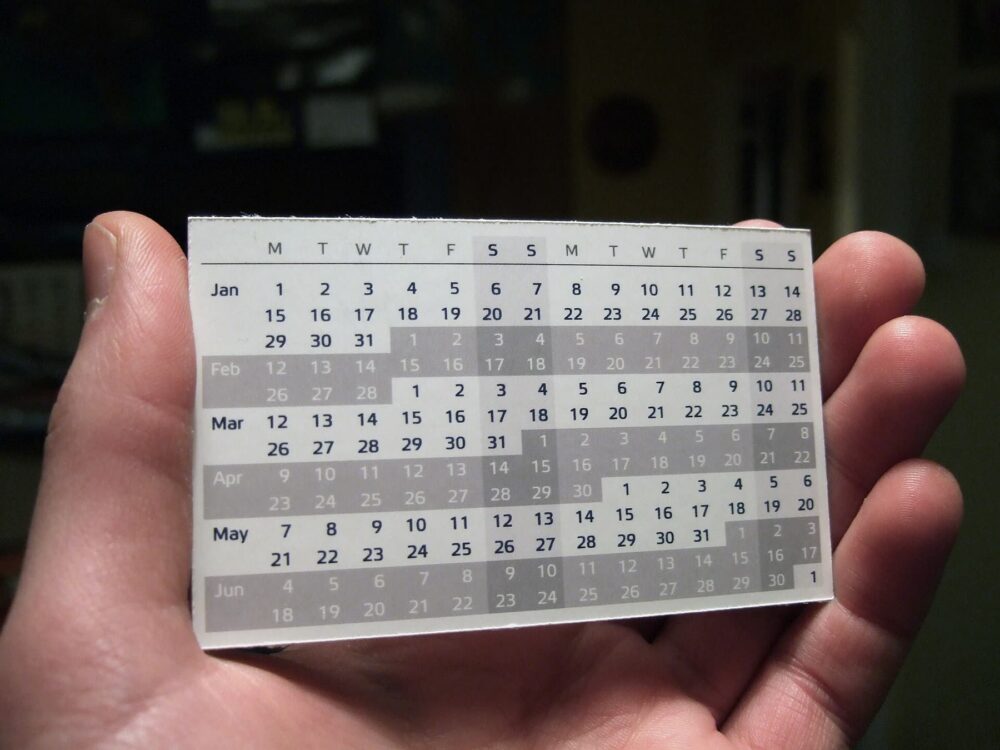
Compact calendars are small-format planners and date displays designed to fit tight spaces or travel with you. They show the same months you’d see on a standard calendar, but packed into mini wall layouts, compact desk blocks, pocket cards, and simple digital widgets. In Canada, you’ll find them at big-box retailers like Walmart.ca, on specialist calendar sites, through custom photo printers, and via marketplaces if you’re sourcing in bulk for a small ecommerce business.
For buyers, the main decision is how much writing space you truly need compared with how little physical footprint you can tolerate. For resellers, the tradeoff is between attractive, space-saving designs and whether your customers can actually use them to plan real life.
What Counts as a Compact Calendar and Who Uses Them
A compact calendar is any calendar that keeps a full-month or full-year view in a smaller footprint than a typical wall or desk calendar. Retailers position them as mini, pocket, or compact formats: small wall calendars for narrow spots, reduced-size desk calendars for crowded workstations, and pocket cards or planners for on‑the‑go reference.
People use them in a few recurring scenarios:
- Small home spaces. Apartment kitchens, dorm rooms, or shared family command centres where a big 12″×12″ wall calendar feels overwhelming.
- Busy desks. A compact desk calendar is often marketed as “space-saving,” with a small footprint that fits beside a keyboard without hiding documents, as seen in Canadian vendors such as LaserSharp.
- On-the-go reference. Pocket calendars and wallet-sized cards are popular as quick date checkers and as promotional handouts that carry a logo or contact details, like the pocket calendars promoted by Vistaprint.
- Promo items and ecommerce bundles. Small sellers sometimes include compact calendars as value-adds in stationery boxes or subscription kits because they’re cheap to ship and don’t require much packaging space.
If you mainly jot detailed notes and appointments, a compact format may feel cramped. If you just need to see the month at a glance or give customers a branded date card, compact calendars can be ideal.
Compact Calendar Formats and How They Work in Real Life
Retailers don’t use one universal standard, but common labels like “mini wall,” “desk,” and “pocket” show up repeatedly on calendar and print sites.
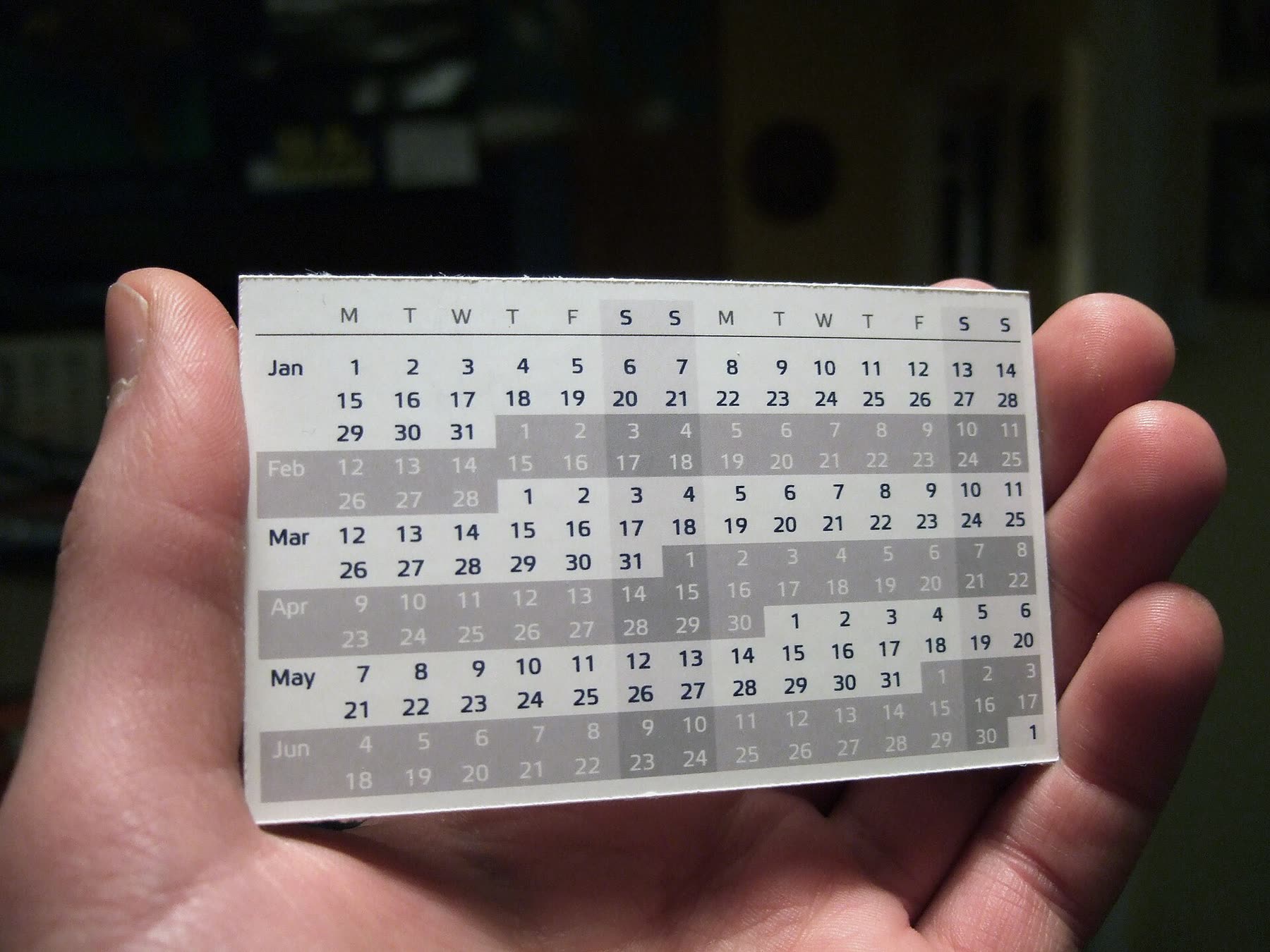
Here’s how the main formats behave in practice:
Mini wall calendars
Sites like Calendars.com group “mini wall” calendars as smaller wall formats meant for tight spaces. The squares for each day are usually smaller than in full-size wall calendars, and the artwork occupies more of the page.
Best for:
- Hallways, lockers, or kitchen corners.
- Buyers who care more about the art or theme (pets, landscapes, fandoms) than writing lots of notes.
- Resellers offering themed calendars as giftable stationery where compactness is part of the appeal.
Tradeoff: You can circle key dates, but long notes and multiple appointments per day are tough to fit.
Compact desk calendars
Canadian vendors such as LaserSharp’s desk calendar line promote small desk calendars as space-saving. These typically stand upright or sit flat and occupy just a slice of your desk.
Best for:
- Office workers who want a quick month view under or beside a monitor.
- Retail counters where staff need to check dates without pulling out a planner.
- Branding and corporate giveaways that stay visible on a desk all year.
Tradeoff: If the footprint is very small, day cells shrink. That works fine for a simple “Is this a weekday?” check but not for detailed time-blocking.
Pocket calendars and wallet cards
Print-on-demand companies like Vistaprint market pocket calendars as ultra-portable, often sized to fit a wallet or purse. You’ll usually see the entire year or several months compressed onto a card with tiny date numbers and a big area for logo and contact info.
Best for:
- Promotional handouts for real estate agents, auto shops, and local businesses.
- Ecommerce sellers adding a branded “thank you” insert that doubles as a mini calendar.
- Personal use if you only need a quick check of dates, not note-taking.
Tradeoff: Reading glasses may be required; these are reference tools, not planners.
Digital compact calendar widgets
Some apps, like the CompactCalendar month widget in the Canadian App Store, offer small on‑screen month views that sit on a phone home screen or desktop. They’re “compact” in interface, not in physical size.
Best for:
- Users who live on their phones or laptops and want a constantly visible month without opening a full app.
Tradeoff: No physical presence for promotion, and you’re limited by the app’s design rather than print choices.
Quick format comparison
| Format | Typical use case | Visibility vs. writing space | Promo suitability |
|---|---|---|---|
| Mini wall | Small walls, themed decor | Good visibility, limited notes | Strong (art-led gifts) |
| Compact desk | Crowded workspaces, counters | Moderate visibility, small note area | Strong (desktop branding) |
| Pocket card/calendar | Wallet, mailers, order inserts | Low visibility, almost no notes | Very strong (logo focus) |
| Digital widget | Phone/desktop home screens | Screen-limited, no handwriting | Weak for physical promos |
For personal use, start with how much you write; for resale, start with how and where your customers will see the calendar.
Where to Buy Compact Calendars: Retail, Custom Print, and Cross-Border Options
Compact calendars are widely available in Canada and online; the key is choosing the right channel for your needs.
Canadian big-box and general retailers
Large retailers carry plenty of compact formats alongside standard calendars:
- Walmart.ca lists items such as a “Compact Wall Calendar” under its Calendars & Planner accessories category, with nationwide online availability.
- Home Hardware offers calendars through its Shop for Calendars online experience, which can include smaller wall and desk designs.
- Amazon.ca has a dedicated Desktop Calendars & Supplies section where many listings are compact desk formats.
These channels work well if you:
- Need a few calendars quickly without custom printing.
- Want familiar brands and themes your customers already recognize.
- Prefer simple, nationwide shipping for Canadian addresses.
The downside for small ecommerce businesses is that retail calendars rarely leave margin for resale unless you bundle them into kits or add significant value (e.g., curated sets).
Specialist calendar and photo-print sites
Dedicated calendar and photo-print platforms are a strong fit if you care about specific compact formats or customization:
- Mini wall calendars. Calendars.com’s mini wall category showcases many themes specifically labelled “mini,” aimed at buyers with smaller spaces.
- Custom pocket calendars. Vistaprint’s pocket calendars let you add your logo, choose layouts, and create year-at-a-glance cards.
These channels suit:
- Local businesses that want branded compact calendars for handouts.
- Ecommerce sellers sourcing small batches of custom inserts or desk calendars to include with orders.
You trade off absolute lowest unit cost for design control and compact-format choices. For resale, factor in both print prices and your shipping costs.
Cross-border marketplaces (including DHgate)
If you’re sourcing at scale or need very low unit prices, cross-border marketplaces can be relevant. DHgate’s own editorial blog, in a general calendar-shopping guide, points to marketplaces like Amazon and eBay as useful spots to look for calendar deals, which reinforces that multi-channel shopping is normal when chasing value.
In practice, that means you might:
- Use Amazon, eBay, or DHgate to explore bulk lots of compact desk calendars or pocket cards.
- Compare unit prices against Canadian print and retail options.
For any cross-border marketplace, treat each listing as its own mini project:
- Check seller ratings, review volume, and product photos closely.
- Confirm the calendar year (current vs. outdated stock) and format size in the listing details.
If you decide DHgate is relevant for bulk sourcing, it’s worth reviewing how the marketplace works through this overview of DHgate’s model and reading guidance on finding trusted sellers and an order-readiness checklist before committing to a calendar order.
Fit notes for small ecommerce and resellers
For a small Canadian ecommerce brand, compact calendars can be:
- Add‑on merch: a mini wall or desk calendar with your artwork sold alongside notebooks.
- Free inserts: pocket calendars included with every order to keep your name visible.
Retail channels are easiest for small test runs. Custom-print sites are best once you’re confident in your design and volume. Cross-border marketplaces only start to make sense when you’re ordering larger quantities and have time to vet listings and absorb possible variation.
If you find that every compact calendar you try feels too cramped for your audience, consider upsizing to a standard wall or planner format and using compact calendars purely as lightweight promotional extras rather than main planning tools.