
Vintage house dress patterns are easiest to find today on three kinds of platforms: niche vintage pattern shops, big marketplaces like Etsy and eBay, and modern digital pattern hubs that focus on vintage-inspired designs. For a home sewist, single-pattern retailers and curated digital lists usually give the clearest sizing and instructions. For a small US apparel brand hoping to build a micro-line of house dresses, multi-seller marketplaces and reproducible modern patterns scale better than one-off originals.
This guide maps those options so you can decide where to spend your time and money—whether you just want one perfect 1940s housecoat to sew, or you’re testing a small-batch house dress line for your ecommerce shop.
What Counts as a Vintage House Dress Pattern Today?
“House dress” usually refers to the practical, at-home dresses and housecoats popular from roughly the 1910s through the 1960s. They’re typically easy to put on, cut for movement, and often feature pockets, belts, and simple closures.
Online pattern platforms mirror that history. For example, Past Patterns maintains a tag specifically for vintage house dress patterns, grouping designs by era and style in a tag-based catalog of house dresses and related garments (Past Patterns house dress tag). You’ll see:
- Early 20th-century “Edwardian” or 1910s house dresses
- 1930s Hooverettes and wrap-front day dresses
- 1940s–1950s smock-style or shirtwaist house dresses
Specialist retailers illustrate how specific these listings can be. So Vintage Patterns sells individual mid‑century patterns such as McCall’s 4165, a 1950s “easy to sew” house dress or coat pattern in a single bust size (example listing). That kind of one-pattern listing is common: you’re buying a specific envelope pattern, not a broad license.
On the other end, multi-seller marketplaces host many eras and conditions. Searching Etsy’s marketplace for vintage 1940s house dress patterns pulls up numerous listings from individual sellers across the world, covering both paper patterns and, sometimes, reprints (Etsy market view).
So in practice, “Vintage House Dress Patterns and Sewing” online breaks into:
- Original paper patterns (single-issue, era-specific, often one size)
- Reproduced or re-drafted patterns from historical sources
- Modern digital patterns that borrow vintage silhouettes but are drafted with current sizing and instructions
Each category tends to live on different platform types.
Platform Types for Finding Vintage House Dress Patterns and Sewing Resources
You’re choosing not just which pattern, but what kind of platform model you want to rely on. Here’s how the main types work.
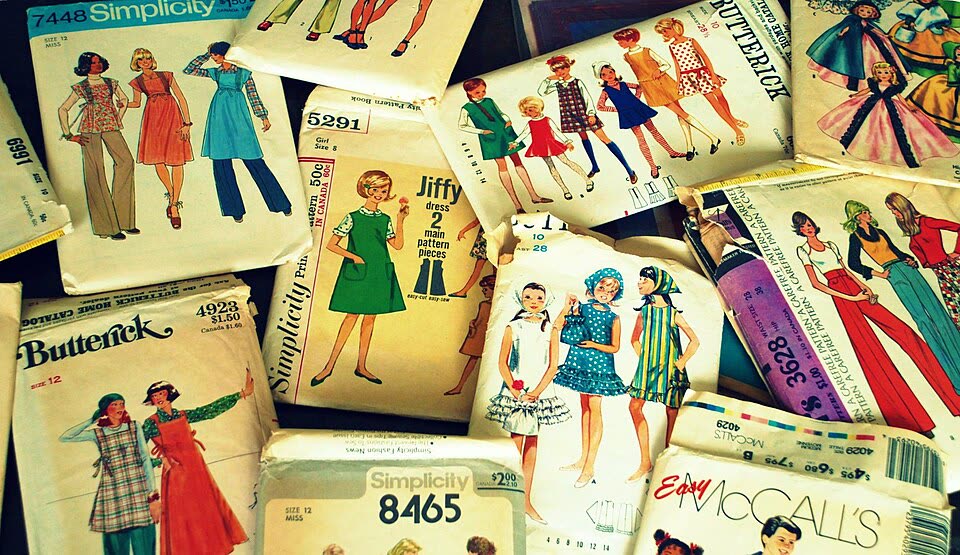
1. Specialist vintage pattern shops
These are standalone sites run by one retailer or a small team that focus on vintage and historical patterns.
Examples:
- Past Patterns with its tagged catalog for vintage house dresses (catalog tag)
- Virtual Vintage Patterns, which lists specific house dress and housecoat envelopes like Simplicity 2155 from the 1940s (Simplicity 2155 example)
- So Vintage Patterns, selling single McCall’s, Butterick, etc. house dress and housecoat patterns as individual retail items (McCall’s 4165 example)
How they usually operate:
- Single-pattern retail: one envelope per listing, usually one size and one era.
- Curated stock: the owner chooses what to carry; the catalog is narrower but more focused than a giant marketplace.
- Good for: home sewists who want a specific historical look; microbrands that need clear pattern provenance for marketing.
- Limitations: you’re not getting wholesale terms or guaranteed multiple copies of the same pattern; scaling production often means redrafting or taking patterns digital yourself.
2. General resale marketplaces (Etsy, eBay, etc.)
Platforms like Etsy and eBay are multi-seller marketplaces where thousands of independent vendors list patterns.
On Etsy, searching for vintage 1940 house dress patterns shows many pattern envelopes from different brands and sizes, all under one marketplace interface (Etsy search page). Individual listings may include details such as era, bust size, and whether pattern pieces are cut or uncut.
How they usually operate:
- Many sellers, many conditions: you’ll find pristine, incomplete, reprinted, and sometimes PDF-ified patterns in one search.
- Search-driven discovery: you filter by keywords like “house dress,” “housecoat,” and decade, then judge listings one by one.
- Good for: hunting unique designs, filling out a teaching or content collection, or sourcing a few showpiece garments for a vintage resale shop.
- Limitations: consistency is low; if you want 50 units of the same dress, an old paper pattern plus marketplace hunting probably won’t get you there.
3. Digital pattern lists and modern aggregators
Modern pattern tools focus on discovery and digital downloads rather than selling old envelopes. They’re helpful if you’re okay with vintage-inspired rather than strictly original.
- Threadloop hosts a curated Vintage Inspired House Dress pattern list, aggregating multiple modern patterns that echo house dress silhouettes (Threadloop pattern list). Each entry points to the designer’s own shop or download page.
How they usually operate:
- Aggregation, not retail: they gather links to patterns from many brands and independent designers.
- Digital or print-on-demand: most patterns you discover here are modern PDFs or current paper runs.
- Good for: home sewists who want accurate modern sizing and instructions; small brands that need patterns they can legally re-use at volume as long as they respect the license.
- Limitations: you’re getting the look of a vintage house dress more than a historically faithful reproduction; historical accuracy is designer-specific.
4. Free pattern libraries and historical project lists
Free libraries are handy if your budget is tight or you’re testing ideas before committing to paid patterns.
- AllFreeSewing maintains a Historical Sewing Patterns section that links to various historical or vintage-style sewing projects, which can include dress designs (AllFreeSewing historical section).
How they usually operate:
- Content hubs: they link out to blogs and independent pattern creators offering free or low-cost projects.
- Mixed quality and depth: some projects are quite polished, others more hobby-level.
- Good for: experimenting with silhouettes, practicing techniques, or creating content/tutorials for your audience.
- Limitations: licensing for commercial use varies; many “free” patterns are intended for personal sewing only.
Quick platform-type comparison
| Platform type | Typical offer | Best fit use case |
|---|---|---|
| Specialist vintage pattern shop | Original paper patterns, era-specific | One-off sewing, historically themed pieces |
| General marketplace (Etsy/eBay) | Mixed vintage patterns from many sellers | Unique finds, small resale curation |
| Digital pattern lists/aggregators | Modern vintage-inspired PDF/paper patterns | Repeatable production, microbrands |
| Free historical/vintage libraries | Linked projects, mixed vintage-style designs | Skill-building, low-budget experimentation |
Choosing the Right Platform Route for Your Sewing or Small Business Plan
How you source patterns should match your end game. Here’s how the platform types line up for common scenarios.
Scenario 1: Home sewist chasing a specific era
If your goal is one or two dresses for personal wear—say a 1940s housecoat for winter or a 1950s hooverette for summer—specialist shops are usually the least frustrating route.
- Start with Past Patterns’ house dress tag to narrow by era and silhouette (tagged catalog).
- Check individual listings on So Vintage Patterns or Virtual Vintage Patterns for your bust size and preferred decade (McCall’s 4165 at So Vintage; Simplicity 2155 at Virtual Vintage).
Use Etsy as a backup search tool when you can’t find the exact pattern cut you want. Because condition and completeness vary, read each listing’s description carefully and favor sellers who show clear photos of the envelope and pieces.
Scenario 2: Small ecommerce brand testing a house dress line
For a microbrand planning multiple units in several sizes, original vintage envelopes are inspiration, not scalable infrastructure.
A practical path:
- Use Threadloop’s Vintage Inspired House Dress list to discover modern patterns that capture the right silhouette in multi-size PDFs (Threadloop list).
- Buy directly from the pattern designers linked there, reviewing their terms for commercial use (many indie designers allow small-batch sales with credit, but the rules vary).
- Keep a couple of true vintage patterns from shops like So Vintage or Virtual Vintage in your archive as design references or limited-run “heritage” pieces.
For finished goods or accessories (like belts or aprons), large marketplaces can be useful sourcing channels. Etsy and eBay are the obvious options for vintage components. Cross-border marketplaces such as DHgate sometimes list vintage-inspired garments or sewing supplies; if you go that route, treat each listing as a separate vendor and verify photos, descriptions, and sizing carefully before testing any bulk order. For a deeper look at how DHgate operates overall, you can compare it with other marketplaces in guides like What DHgate is and how the marketplace works and Compare online marketplaces and shopping platforms.
Scenario 3: Content creator or educator building resources
If you run sewing classes, a YouTube channel, or a blog, your needs sit between hobby and commerce:
- Free libraries such as AllFreeSewing’s Historical Sewing Patterns page are helpful for linking audience members to accessible projects (historical projects index).
- Threadloop-style aggregators give you a ready-made list of modern patterns to recommend.
- For historically focused series, anchor each project with one or two patterns from Past Patterns or similar shops so you can discuss specific construction and era details.
Bottom line for platform choice
- Single dress, maximum authenticity → Start with specialist vintage pattern shops; use Etsy/eBay as a secondary search layer.
- Repeatable product for a small brand → Favor modern vintage-inspired patterns found through digital lists and designer shops; keep original patterns as inspiration.
- Teaching and content → Mix free historical project hubs with both modern and vintage retail patterns to give your audience options.
Once you know whether you need authenticity, scalability, or budget savings most, the right platform route for vintage house dress patterns becomes much clearer—and you can avoid chasing listings that don’t actually fit your sewing or business plan.