
Stylish dining room rugs can be affordable in Australia if you control three things: size, material, and channel. A slightly smaller rug that still keeps chair legs on the rug, a low‑pile synthetic or flatweave instead of thick wool, and a sensible choice between local retailers and online marketplaces will do more for your budget than hunting for a “deal” in the abstract. Your real spend is the rug price plus shipping, potential duty/GST on imports, and ongoing cleaning costs, so you want those working together.
A dining rug earns its keep by framing the table, making chairs more comfortable, and defining the eating zone in open‑plan spaces, as design writers at Livingetc point out. That means skimping too hard on size or choosing a material that stains easily can feel cheap fast. The goal is to look expensive while staying practical: big enough for everyday use, visually calm enough to survive food spills, and cheap enough that cleaning or replacement doesn’t sting.
What Really Drives the Cost of a Dining Room Rug in Australia
For Australian buyers, the total cost of a dining rug usually breaks down into four buckets:
- Rug price itself – Rug cost tracks size and material. A standard dining rug that fits a 6‑seater table will always cost more than a little accent mat, purely because there’s more textile. Premium fibres like wool and hand‑woven constructions push prices up significantly; machine‑made synthetics and flatweaves tend to sit at the budget end.
- Shipping and delivery – Local online rug retailers such as Miss Amara or AusRugs often show fixed shipping charges (or thresholds) at checkout. For bulky items like rugs, that can be a meaningful slice of the price. On big general marketplaces, shipping might vary by seller and method and could erase the apparent discount on the rug itself.
- Duty/GST on cross‑border orders – If you import a rug from overseas, the “landed” cost may include Australian GST and customs duty depending on value and how it’s shipped. That’s invisible on the product page but very visible once the courier or customs sends you a bill. Household buyers usually only run into this with higher‑value rugs; small ecommerce businesses importing multiples need to treat it as a line item. To keep surprises low, get familiar with how Australia treats imported homewares via resources like this DHgateWiki customs overview.
- Cleaning and maintenance – Dining areas are spill‑heavy. A rug that demands professional cleaning every time red wine hits it can be more expensive across five years than a cheaper, washable synthetic. Washable systems sold locally, such as those at Ruggable Australia, pair a low‑pile rug layer with a pad so you can machine‑wash instead of paying for a cleaner. Not every design fits every machine, but the concept shifts cost away from services and towards an upfront price premium.
For budget‑minded buyers, it’s usually smarter to accept a mid‑priced rug that you can clean cheaply than a high‑end fibre that turns each deep clean into a mini bill shock.
Size, Material and Usage: How They Push Your Price Up or Down
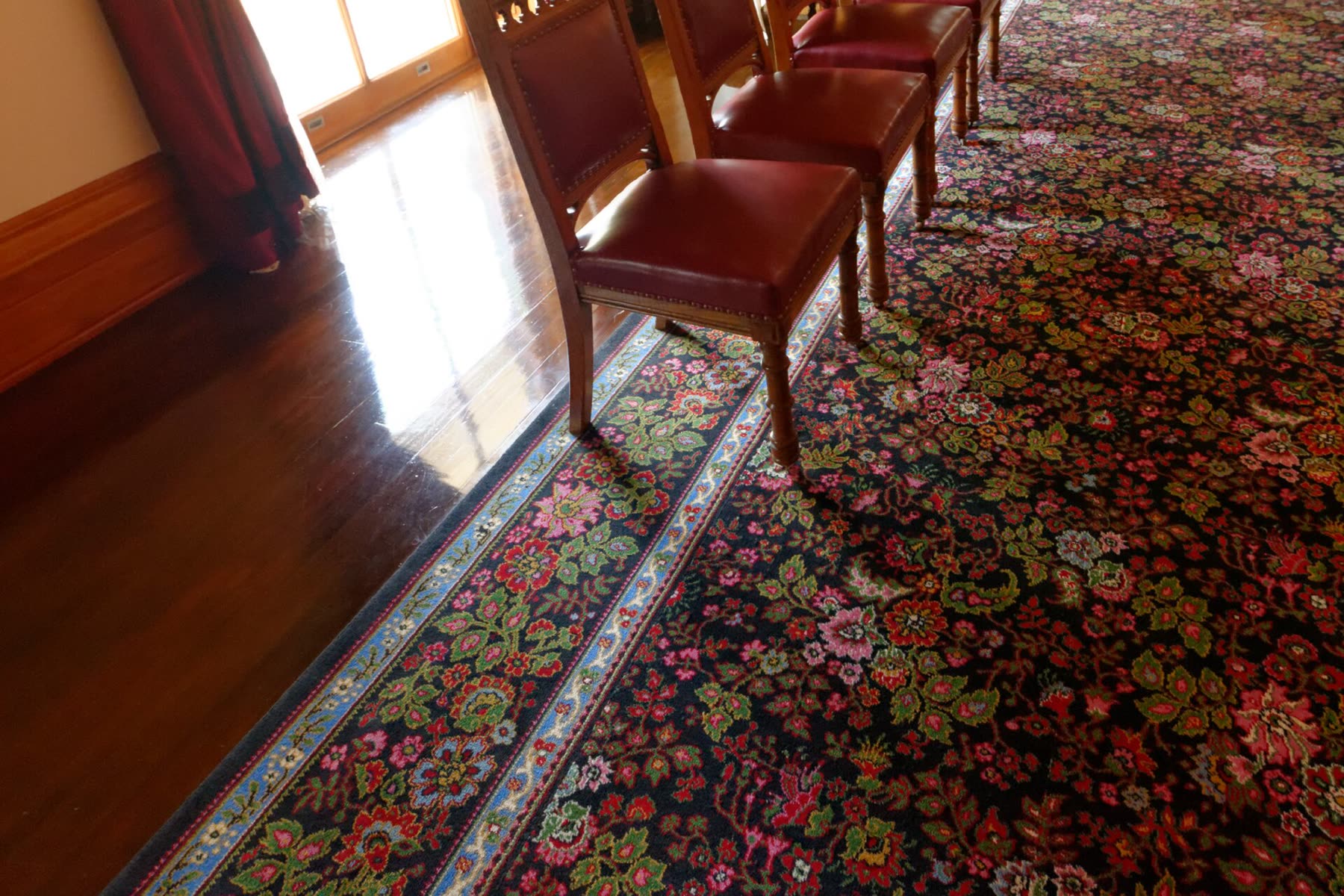
In dining rooms, size isn’t a décor preference; it’s a functional rule. Australian guides like Rug Addiction’s size guide recommend letting the rug extend roughly 60-75 cm beyond each table edge so chairs stay on the rug even when pulled out. Overseas size guides such as Eastern Oriental Rugs’ dining rug article echo that logic: you size from the table plus chair clearance, not purely from the room.
That impacts budget directly:
- Undersized rug – cheaper, but chair legs catch on the edge and the space looks cramped.
- Well‑sized rug – more textile, higher price, but much better usability.
- Oversized rug – you’re paying for area you may not need.
On most budgets, it’s worth paying for the “correct” dining size and saving money via material choices rather than cutting 30-40 cm off each side.
Material is your second big lever. Evidence‑based guides such as HomeDesignn’s material overview highlight why low‑pile synthetic or flatweave rugs are often cheaper and easier to clean than thick wool in dining areas. In practice:
| Material type | Budget impact (editorial) | Cleaning practicality (dining) |
|---|---|---|
| Thick wool pile | Higher upfront cost | Warm and luxurious but harder to spot‑clean; may need professional care |
| Low‑pile synthetics | Lower upfront cost | Generally easier to wipe or wash; good for food spills |
| Flatweave (cotton/jute) | Usually mid‑range | Less hiding place for crumbs; some fibres stain more easily |
Washable systems layer a thin, synthetic rug over a separate pad so you can remove the top and machine‑wash stains. As Ruggable Australia’s range shows, these are designed around low‑pile construction so they don’t turn into heavy, saturated masses in the wash. They often cost more than a basic polyprop rug but can be cheaper across years if you’d otherwise pay for professional cleaning.
If you host kids, pets or frequent dinner parties, the combination that normally makes financial sense is:
- Correct dining size (chairs fully on the rug);
- Low‑pile synthetic or flatweave construction;
- A pattern or mid‑tone color that hides minor stains.
Choosing the Best Sourcing Channel and Cutting Total Landed Cost
Once you know the size and material you want, the next budget decision is where to buy.
Local Australian rug retailers
Online stores like Miss Amara and AusRugs curate dining‑room‑specific collections. The upside is straightforward: you see prices in AUD, shipping is domestic, and returns tend to be simpler than shipping a rug back overseas. You also get designs tuned to Australian tastes and common room sizes.
For household buyers, this is often the least stressful way to get a mid‑priced dining rug that still feels stylish. For small ecommerce sellers looking to flip rugs locally, buying retail here usually won’t leave enough margin; you’re paying the customer price, not a wholesale one.
Global marketplaces (Amazon‑style)
Large marketplaces list everything from budget synthetics to imported wool. You can often filter by size and material and sort by price, which helps you see how much your chosen specs cost globally. However, shipping to Australia can vary heavily by seller, and you may hit longer delivery times or return friction.
This route can make sense if:
- You’re hunting for a very specific look that local stores don’t stock.
- You’re comfortable with the risk that returning a bulky rug cross‑border may be uneconomical.
Cross‑border platforms (including DHgate)
Cross‑border marketplaces such as DHgate list suppliers and manufacturers directly, which is appealing for small ecommerce businesses who want lower unit prices or custom runs. For rugs, this might help you source simple low‑pile synthetics or flatweaves that you can re‑sell domestically.
Because policies and protections aren’t standardized across every seller, you should treat each listing as a separate relationship: scrutinize product photos, ask about fibre content and pile height, confirm packaging dimensions, and factor in international freight and import charges. For a deeper sense of how DHgate stacks up against other big marketplaces, you can look at comparison pieces like this DHgate vs AliExpress, Alibaba and Temu overview.
Practical cost‑cutting tactics
Whether you’re buying one rug or a small batch, a few concrete moves help keep the total spend in check:
- Lock the size first, then hunt deals – Decide your minimum dimensions based on the 60-75 cm clearance rule, then only compare rugs that meet that. It’s a waste of time to chase a bargain on a rug that will annoy you every time you pull out a chair.
- Use material as your main budget lever – Step down from wool to low‑pile synthetic or flatweave before you start compromising on size or pattern. As guides like HomeDesignn suggest, synthetics are generally cheaper and easier to clean in dining rooms, which is exactly where you want forgiveness.
- Time your purchase to promotions – Australian rug retailers and marketplaces often run seasonal sales (end‑of‑financial‑year, Black Friday, or summer events). If your dining room isn’t being photographed tomorrow, waiting for a sale can turn a mid‑range rug into a budget buy.
- Bundle for small ecommerce sourcing – If you’re importing for resale, unit economics improve when you consolidate sizes and materials. A single, versatile low‑pile pattern in two sizes is easier to ship and market than six different designs that all require separate samples and cost calculations.
If you build your decision in that order—size, material, channel—then price comparison stops being abstract. You’re judging real alternatives that will work in your dining room, and that’s where the best value usually lives.