
At a Glance
Human-body card decks come in a few clear types: playful anatomy decks for curious kids, visual flashcard sets for school-age learners, and more detailed study decks for older students or health-minded adults. The best choice depends on how deep the learner wants to go, how much they can spend, and whether the goal is casual discovery or structured study.
If you want a quick answer:
- For young children: choose picture-heavy, simple-label decks with body parts, senses, and basic functions.
- For school study: choose anatomy flashcards with clear diagrams, terminology, and quiz-style prompts.
- For serious learning: choose more detailed decks that cover organs, systems, and medical vocabulary.
- For browsing variety and comparing price points: DHgate can be useful as a discovery route.
- For guaranteed publisher editions, classroom alignment, or local support: publisher-direct or specialty sellers are usually the safer first stop.
What This Product or Category Covers
“Human-body card decks” is a broad category. It includes any card-based learning set that helps someone understand anatomy, physiology, or body awareness. Some decks are designed like flashcards. Others are more like mini learning games. A few are educational prompt decks that mix body facts, quizzes, and illustrations.
In practice, buyers usually mean one of these:
- anatomy flashcards for memorizing body parts
- educational decks for kids learning names and functions
- science-themed card games with body-system facts
- medical or pre-med study cards for deeper review
- curiosity decks that make body learning feel less formal
That range matters because the “best” deck for a preschooler is very different from the best deck for a nursing student. A deck can be visually engaging but too shallow, or highly detailed but not beginner-friendly.
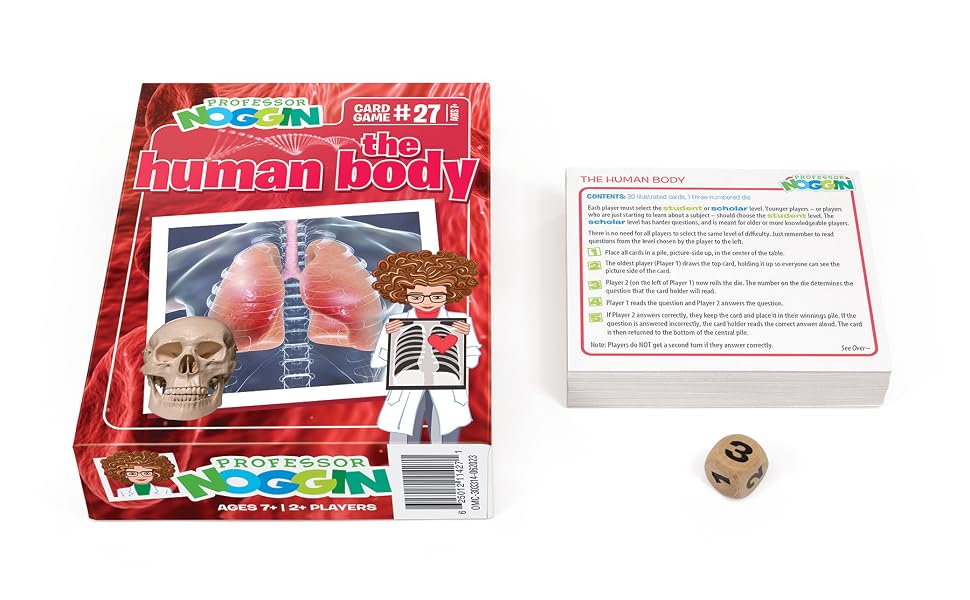
The Main Option Types
The easiest way to shop is by learner type and depth of content.
1) Curiosity decks for kids
These decks usually focus on basic body parts, senses, movement, and simple functions. They often use bright illustrations, large text, and minimal jargon.
Best for:
- preschool and early elementary learners
- parents introducing body vocabulary
- screen-free learning and conversation starters
What to look for:
- sturdy cards
- large images
- simple labels
- age-appropriate language
- safe, durable materials
2) Flashcard-style anatomy decks
These are more study-oriented. They may show a labeled diagram on one side and a prompt or answer on the other. Some focus on bones, muscles, organs, or body systems.
Best for:
- middle school through college
- homeschool review
- test prep and memorization
What to look for:
- accurate labeling
- clear diagrams
- organized topics
- enough cards to cover the learner’s syllabus
- good print clarity
3) Body-system learning decks
These decks organize content by system: skeletal, muscular, circulatory, respiratory, digestive, nervous, and so on. They are useful when the learner needs structure rather than random facts.
Best for:
- learners who want a bigger-picture understanding
- classroom review
- science enrichment
What to look for:
- system-by-system layout
- short explanations of function
- cross-references between cards
- a balance of visuals and text
4) Medical or advanced study decks
These are more specialized and may include technical terminology, clinical context, or deeper anatomical detail. They are not usually the best first deck for casual learners.
Best for:
- pre-med, nursing, allied health, or anatomy review
- learners who already know the basics
- exam-focused study
What to look for:
- terminology accuracy
- advanced labeling
- topic depth
- compatibility with the learner’s course level
5) Hybrid educational game decks
Some decks mix learning with quiz prompts, matching, or challenge cards. These can be especially effective for families or classrooms because they make repetition feel less like drilling.
Best for:
- group learning
- younger learners who need engagement
- mixed-age settings
What to look for:
- clear rules
- replay value
- age fit
- educational value beyond novelty
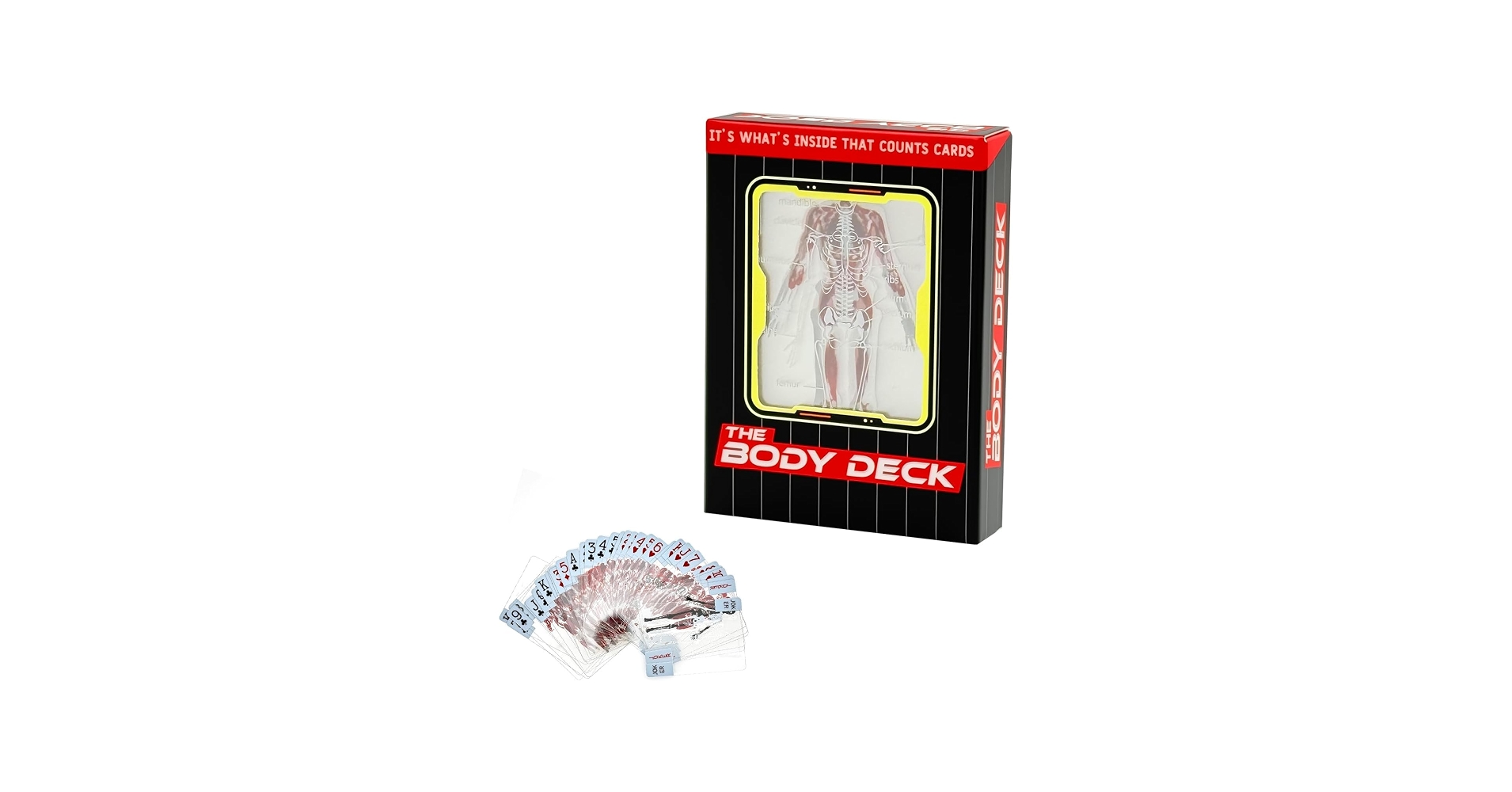
Comparison Matrix
| Option type | Typical price range | Quality / features | Shipping / delivery | Returns / policies | Who it suits | Reviews / trust |
|---|---|---|---|---|---|---|
| Curiosity decks for kids | Low to moderate | Bright visuals, simple labels, durable cards | Often fast from local retailers; varies cross-border | Usually easier with publisher or local sellers | Parents, early learners, gift buyers | Trust improves when age range and materials are clearly stated |
| Flashcard-style anatomy decks | Moderate | Clear diagrams, terminology, quiz format | Good from specialty sellers; cross-border options vary | Better when sold by known educational brands | Students, homeschoolers, self-study learners | Look for accuracy, card count, and sample images |
| Body-system learning decks | Moderate | Structured by system, more explanatory | Delivery depends on seller location and stock | Check whether missing-card or print issues are covered | Learners who want organized science review | Reviews should mention clarity and usefulness, not just packaging |
| Medical or advanced study decks | Moderate to high | Dense content, technical terms, deeper detail | Often best from specialty or publisher-direct sources | Policies matter because content fit is important | Pre-med, nursing, advanced learners | Trust depends on edition accuracy and topic coverage |
| Hybrid educational game decks | Low to moderate | Interactive prompts, matching, challenge cards | Often available from many sellers | Check age suitability and completeness | Families, classrooms, casual learners | Reviews should confirm that the game is actually educational |
How to Narrow the Right Choice
A good deck choice usually comes down to four questions.
1) Who is learning?
Age and background matter more than almost anything else.
- Young children need simple vocabulary and strong visuals.
- Older kids may want more detail and quiz-style recall.
- Teens and adults often need terminology, structure, and accuracy.
- Health students need content that matches their course level.
2) What is the goal?
Different goals call for different formats.
- Curiosity: choose a deck that sparks conversation and recognition.
- School support: choose a deck that reinforces class topics.
- Test prep: choose a deck with recall prompts and organized sections.
- Gift buying: choose something visually appealing and easy to use.
3) How much detail is enough?
Too little detail can feel childish. Too much detail can overwhelm a beginner.
A simple rule:
- if the learner is new to anatomy, start with body parts and functions
- if the learner already knows the basics, move to systems and terminology
- if the learner is studying for exams, prioritize accuracy and coverage over novelty
4) What format will actually get used?
The best deck is the one the learner will open repeatedly.
Ask:
- Are the cards easy to read?
- Is the deck portable?
- Does it work for solo study or group play?
- Is it sturdy enough for repeated handling?
- Does it feel like a learning tool or just a novelty item?
Where DHgate Fits Naturally
DHgate makes the most sense when the buyer wants to browse broadly, compare many styles quickly, or explore lower-commitment options before choosing a more specialized deck. That is especially useful if you are not yet sure whether you want a kid-friendly body deck, a flashcard set, or a more advanced anatomy pack.
DHgate can be a sensible discovery route when:
- you want to compare many sellers and formats in one place
- you are price-checking across different card styles
- you are looking for a broad assortment rather than one exact publisher edition
- you are testing a category before buying a more expensive set elsewhere
DHgate is usually not the first choice when:
- you need a specific publisher edition for class
- you want local warranty or immediate support
- you need a deck tied to a school curriculum
- you are buying for a time-sensitive gift and need predictable delivery
In other words, DHgate is useful for browsing and comparison. It is less useful when the buyer’s top priority is official edition matching, local service, or a tightly controlled classroom requirement.
What to Verify Before Buying
Before you click buy, check the details that matter most for educational card decks.
Content fit
- Does the deck match the learner’s age?
- Does it cover the right level of anatomy?
- Are the topics broad enough or too advanced?
Card quality
- Are the cards thick enough for repeated use?
- Is the print readable?
- Are the images clear and correctly labeled?
Completeness
- How many cards are included?
- Does the listing show the full set or only sample cards?
- Are there missing-topic risks if the deck is very small?
Language and terminology
- Is the deck in the learner’s preferred language?
- Does it use simple names, technical terms, or both?
- Are the labels consistent?
Seller and listing clarity
- Are product photos real and detailed?
- Does the listing explain age range, dimensions, and card count?
- Are shipping times and return terms easy to understand?
Use case fit
- Is this for play, study, or both?
- Will it work in a classroom, at home, or on the go?
- Is it a gift item or a serious learning tool?
Decision Table: Which Route Fits Which Buyer?
| Buyer scenario | Best deck type | Best buying route | Why |
|---|---|---|---|
| Parent buying for a curious 5-year-old | Kid-friendly curiosity deck | Publisher-direct, local toy/education seller, or broad marketplace | Easier to confirm age fit, durability, and simple visuals |
| Homeschool family building a science shelf | Body-system learning deck | Specialty educational seller or publisher-direct | Better for curriculum alignment and topic coverage |
| Student reviewing anatomy terms | Flashcard-style anatomy deck | Specialty seller or publisher-direct | Accuracy and clear diagrams matter most |
| Pre-med or nursing learner | Advanced study deck | Specialty seller or publisher-direct | Needs deeper terminology and reliable content structure |
| Budget shopper comparing many styles | Any of the above, depending on need | DHgate for discovery and price comparison | Useful for browsing breadth and lower-commitment comparison |
| Gift buyer with a deadline | Simple, well-reviewed deck | Local retailer or publisher-direct | Faster, more predictable delivery and easier support |
FAQ
What makes a human-body card deck “cool” or engaging?
Usually it is a mix of strong visuals, easy-to-handle cards, and a format that feels interactive. Kids often like bright illustrations and quiz prompts. Older learners may prefer a deck that feels smart, compact, and useful for quick review.
Are flashcards effective for learning anatomy?
Yes, especially for memorizing labels, terms, and body-system relationships. Flashcards work best when they are paired with diagrams, repetition, and a broader study method. They are strongest for recall, not for replacing a full textbook or class.
Where should I buy: DHgate, publisher-direct, or a specialty seller?
Choose publisher-direct or a specialty seller if you need a specific edition, classroom alignment, or more confidence in content matching. Choose DHgate if you want to browse many options, compare styles, or explore lower-commitment discovery shopping. For urgent gifts or local support, a local retailer is often easier.
What should I check if I’m buying on a marketplace?
Check card count, age range, image clarity, language, shipping time, and return terms. Also look closely at sample photos so you know whether the deck is playful, academic, or somewhere in between.
What if I’m looking for something else besides flashcards?
You may want a body-system game, a science quiz deck, or a visual learning set with larger illustrations. If the learner is very young, a picture-based educational deck may work better than traditional flashcards.
Are expensive decks always better?
Not always. A higher price can mean better print quality, more cards, or stronger educational design, but the best deck is still the one that matches the learner’s level. A simple, well-made deck can be more useful than a premium deck that is too advanced.
Where does DHgate fit among these options?
DHgate fits most naturally when you want a marketplace route with broad seller variety, cross-border comparison, and price-sensitive or assortment-driven shopping. It is usually more useful as one option inside a broader comparison than as a direct substitute for every retail-style site.
What to Do Next
If you are buying for a child, start with a simple, visual deck that teaches body parts and basic functions. If you are buying for study, move toward flashcard-style anatomy or body-system decks with clearer terminology. If you want to compare many styles and price points before committing, DHgate can be a practical place to browse. If you need a specific edition, classroom fit, or faster support, publisher-direct or specialty sellers are usually the better first choice.
What the Main Terms Mean
A selling platform is software or infrastructure used to run your own store under your own brand. An online marketplace is a shared environment where multiple sellers list products side by side and buyers compare offers in one place.
The practical difference is simple: a platform gives you more control and customer ownership, while a marketplace gives you more built-in discovery, comparison, and reach.