
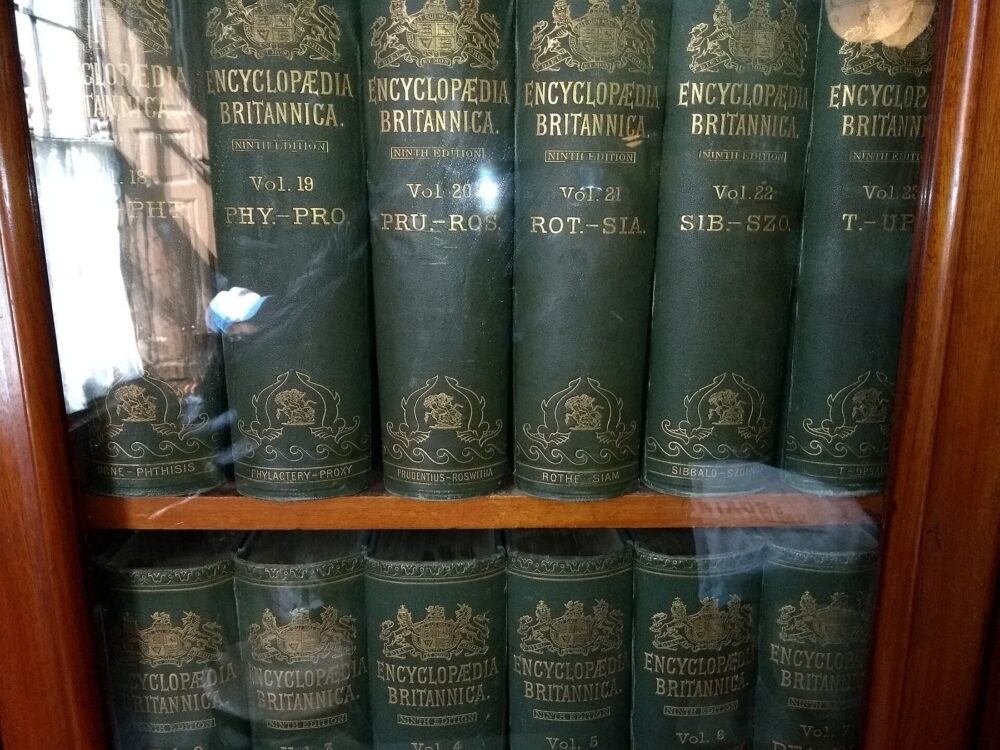
You can find mid‑century encyclopedia bookcases online, but they don’t behave like mass‑market furniture. They show up as occasional, design‑driven listings on curated vintage marketplaces, scattered finds on broad resale sites, and one‑off discoveries in local secondhand channels. If you’re a US buyer or small seller, you’ll usually get better results focusing on vintage‑centric platforms and estate/thrift routes, using cross‑border marketplaces only for adjacent styles or new production pieces.
What Counts as a Mid‑Century Encyclopedia Bookcase Today
A mid‑century encyclopedia bookcase is a specialty bookcase built to hold complete encyclopedia sets or other large‑format volumes. On curated marketplaces, you’ll see phrases like “encyclopedia bookcase,” “encyclopedia shelf,” or “compact encyclopedia bookcase” used for low, solid‑wood cases with evenly spaced shelves sized for uniform book runs.
For example, 1stDibs lists a mid‑20th‑century solid mahogany encyclopedia bookcase with simple rectangular framing, straight legs, and shelves proportioned for a run of encyclopedias rather than mixed‑size novels.Mid‑20th‑century solid mahogany encyclopedia bookcase on 1stDibs shows the typical traits: solid wood construction, clean mid‑century lines, and a footprint friendly to living rooms or studies.
Curated vintage marketplaces also carry adjacent styles that buyers often consider as alternatives:
- Mid‑century bookcase in teak by Poul Hundevad, 1960s on Chairish is taller and more open, but shares the era’s minimalist, wood‑forward aesthetic.
- Globe‑Wernicke stack barrister / lawyers bookcase on 1stDibs has glass‑fronted sections traditionally used for law books, often repurposed by buyers for encyclopedias or collectible sets.
Those listings show how marketplaces label this niche: “encyclopedia bookcase” is a real search term, but many suitable pieces hide under mid‑century bookcase, teak bookcase, or barrister bookcase.
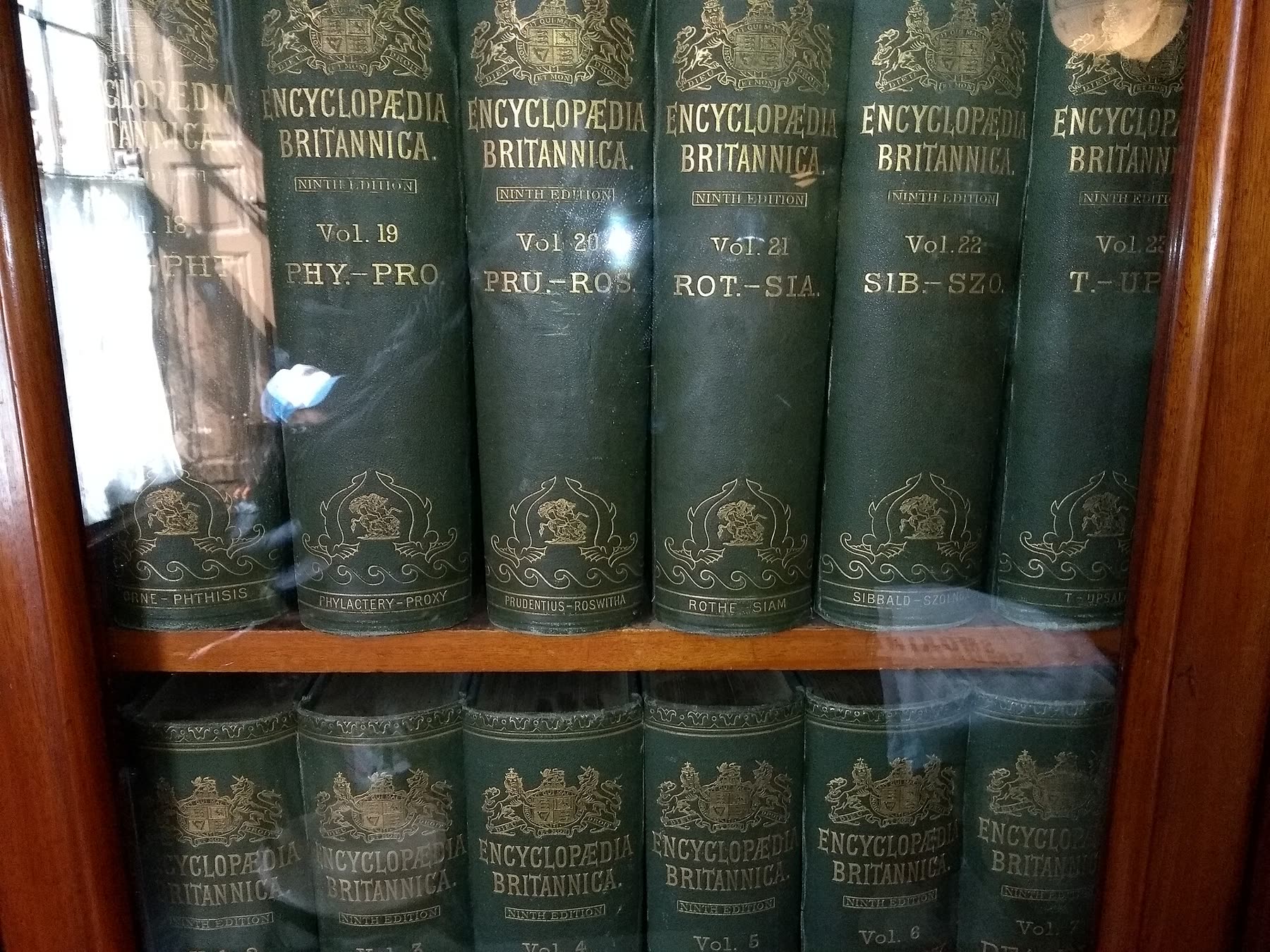
How Different Platform Types Handle Vintage Encyclopedia Bookcases
You’ll see very different patterns depending on which platform type you use.
Curated vintage marketplaces
Sites like 1stDibs and Chairish curate listings and lean heavily into design value. Mid‑century bookcases and encyclopedia shelves appear as individually photographed, description‑rich pieces. They’re typically:
- One‑offs or small runs from specific makers or regions
- Priced as decor and design objects, not utilitarian storage
- Tagged with style keywords such as “mid‑century modern,” “teak,” or “mahogany”
Curated marketplaces are strong for finding a single standout bookcase and for understanding what the market considers mid‑century encyclopedia style, but they’re not optimized for volume buying.
Mainstream resale marketplaces
Broad resale sites like eBay carry a large mix of antique and vintage shelving from individual and small‑business sellers. The eBay category for wooden antique bookcases includes:
- “Vintage mid century Danish modern wood bookshelf bookcase encyclopedia shelf”
- “Antique mission open shelf” and other early‑20th‑century cases
These platforms:
- Often show more quantity and variation than curated sites
- Mix truly mid‑century items with newer reproduction pieces
- Require more filtering and photo reading to separate design‑worthy finds from basic storage
For buyers, this is where “encyclopedia shelf” and similar keywords can reveal affordable, less‑documented pieces that still match the function.
Local secondhand routes
Estate sales, garage sales, thrift stores, and local antique shops are classic sources for vintage furniture, including bookcases. DHgate’s editorial coverage of budget furniture shopping points out yard sales, estate sales, thrift stores, and antique stores as common, budget‑friendly ways to furnish a home with older pieces.DHgate Blog on secondhand furnishings treats these as core channels for unique vintage items.
For encyclopedia bookcases, local routes matter because:
- Bulky furniture often stays local instead of crossing borders
- Sellers may not label a piece “mid‑century” or “encyclopedia bookcase” online, but you can judge construction and proportions in person
- Pricing can be less design‑driven and more “clear out the room,” especially at estate or yard sales
Wholesale and cross‑border marketplaces
General marketplaces that aggregate many vendors, including DHgate, can expose you to new or generic furniture styles and some vintage‑inspired shelving. DHgate’s own blog describes marketplace websites as a way to access furniture from various vendors across price tiers.Tips for furniture shopping on a budget references DHgate alongside thrift stores and estate sales as part of a wider mix.
However, these platforms are usually structured around repeatable SKUs and bulk or semi‑bulk orders, not single, historically specific pieces. A search for “mid‑century bookcase” or “encyclopedia shelf” may return:
- New mid‑century‑style bookcases
- Generic wooden shelving that can physically hold an encyclopedia run
They’re best viewed as design substitutes or inventory sources, not primary hunting grounds for original mid‑century encyclopedia bookcases.
Choosing the Right Platform Route for Your Bookcase Project
Different projects point you to different platforms. Here’s a practical way to match your goal to the channel type.
Quick reference: platform behavior for this niche
| Project type | Curated vintage sites (1stDibs, Chairish) | Broad resale (eBay, Facebook Marketplace) | Local secondhand (estate, thrift, garage) | Cross‑border marketplaces (DHgate, similar) |
|---|---|---|---|---|
| Find one standout mid‑century piece | Strong design selection; higher pricing | Possible but requires digging | Occasional gems; unpredictable | Mostly new mid‑century‑style, not true vintage |
| Build small resale inventory (3-10 pcs) | Limited; curation keeps volume low | Best balance of quantity and variety | Good if you regularly shop local sales | Better for new stock, not vintage |
| Keep costs low for functional shelving | Often pricier relative to utility | Wide price range; bargains possible | Often lowest prices; sweat equity needed | Competitive for new generic bookcases |
This is editorial judgment based on how each channel typically operates, not a guarantee of specific inventory or prices.
If you’re a US buyer furnishing your own space
- You want design and provenance. Start with 1stDibs and Chairish, searching “mid‑century bookcase,” “encyclopedia bookcase,” and related terms. Use these listings to calibrate what authentic pieces look like and what sellers highlight in descriptions (wood species, era, maker).
- You’re happy with period style but flexible on exact provenance. Move to eBay or similar resale sites and reuse the same keywords. Expect rougher photos and less polished copy, but more varied price points. Many “encyclopedia shelf” listings sit in the mid‑tier between purely functional and gallery‑grade.
- You mainly care about function and cost. Lean into estate sales, thrift stores, and garage sales, where solid wood shelving is common. Judge the case by dimensions and sturdiness, then style it with your encyclopedia set at home.
If you’re a small ecommerce seller or reseller
Your challenge is balancing acquisition cost, shipping practicality, and buyer appeal.
- For one‑off, higher‑ticket inventory: Curated sites and local auctions can be sources, but margins will be tight once you add transport. They make sense if you’re building a brand around mid‑century furniture and willing to photograph and describe each piece in depth.
- For steady but varied vintage inventory: Mainstream resale platforms (including eBay) and regular rounds of estate and thrift shopping often work better. You can acquire a mix of encyclopedia‑friendly bookcases and related pieces like barrister shelves, then resell via your own online shop or marketplaces.
- For new, mid‑century‑style shelving: Cross‑border marketplaces such as DHgate can play a role when you want repeatable stock with a mid‑century look rather than original historical pieces. Treat them as suppliers for inspired‑by designs and check each listing’s materials, dimensions, and seller history carefully before planning your catalog.
If you’re still mapping out which online marketplace models exist and how they differ in general, it’s worth reading broader explainers like Compare online marketplaces and shopping platforms and the overview of what DHgate is and how the marketplace works before committing to a sourcing route.
The key is matching the rarity of mid‑century encyclopedia bookcases to the platform type: expect genuine period pieces to surface in curated vintage channels and local secondhand venues, with broad resale sites supplying most of the serendipitous online finds and cross‑border marketplaces filling the gap with new mid‑century‑style shelving rather than true vintage.