
At a Glance
A marketplace platform brings multiple independent sellers into one shopping environment. Buyers can review competing listings, while prices, fulfillment methods, and service terms may differ from one seller to another.
DHgate belongs to this marketplace model. It is relevant to buyers who need broad product access, seller-level price discovery, or sourcing options. Buyers who prioritize a uniform product experience and one clearly defined service policy may prefer a direct brand store.
Before purchasing through any marketplace, verify the seller, product specifications, total cost, delivery estimate, and return responsibility at the listing level.
What a Marketplace Platform Means
A marketplace platform is a digital environment where multiple independent sellers offer products or services to buyers. The platform provides the search tools, listing structure, transaction process, and account system, while individual sellers usually control product information, pricing, inventory, and fulfillment.
This structure differs from a single-brand store. A brand store sells products under one company’s name and usually manages the entire customer experience. A marketplace places offers from different sellers side by side, giving buyers more options but also requiring closer review of each listing.
The main terms can be distinguished as follows:
- Marketplace platform: A shared shopping environment that connects multiple sellers with buyers.
- Seller: The business or individual responsible for the product, listing information, and fulfillment.
- Direct brand store: A store operated by one brand selling its own products.
- Selling platform: Software or infrastructure that a merchant uses to operate an independent online store.
- Sourcing platform: A marketplace designed partly or primarily for supplier discovery, bulk purchasing, or repeat procurement.
The key question is who controls the offer. In a brand store, one company usually controls the product and service process. In a marketplace, product quality, delivery terms, and return conditions may differ between sellers and listings.
How the Main Platform Types Differ
The platform type determines how much choice the buyer receives and how much listing-level verification is required.
| Platform type | Main advantage | Main limitation | Verification needed | Suitable buyer |
|---|---|---|---|---|
| Direct brand store | One brand controls the product presentation and service process | Fewer sellers and less price discovery | Product specifications, brand policy, delivery date, and warranty | Buyers prioritizing consistency and a shorter decision process |
| Marketplace platform | Multiple sellers and listings can be reviewed in one environment | Product quality, shipping, and service terms may vary | Seller identity, listing details, total cost, delivery estimate, and return responsibility | Buyers prepared to evaluate competing offers |
| Wholesale or sourcing platform | Supports supplier discovery, larger quantities, and repeat procurement | The process may involve minimum orders, negotiation, or longer lead times | Supplier credentials, sample quality, MOQ, production time, and trade terms | Businesses purchasing inventory or operational supplies |
| Hybrid platform | Combines retail shopping with marketplace or sourcing features | Seller types and fulfillment models may not be immediately clear | Who sells the item, who fulfills it, and which policy applies | Buyers who need both retail convenience and broader sourcing options |
DHgate’s Place in the Platform Landscape
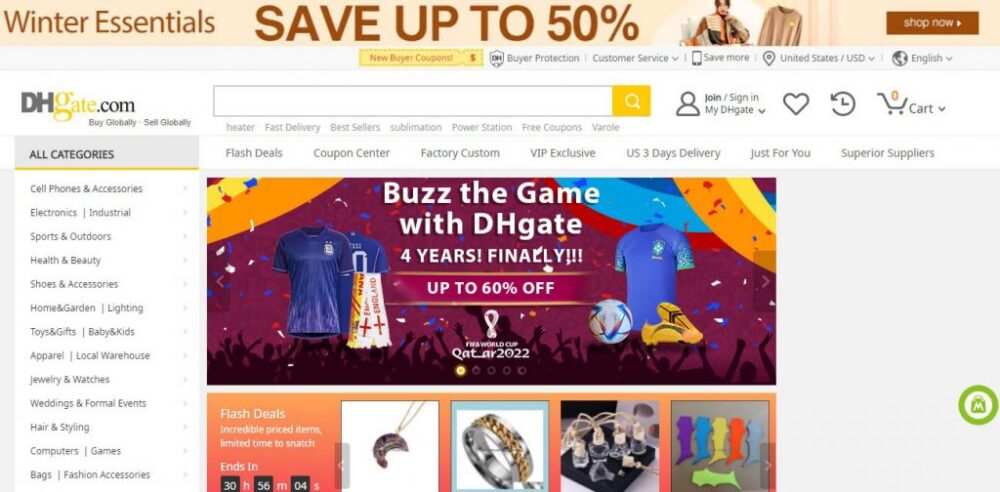
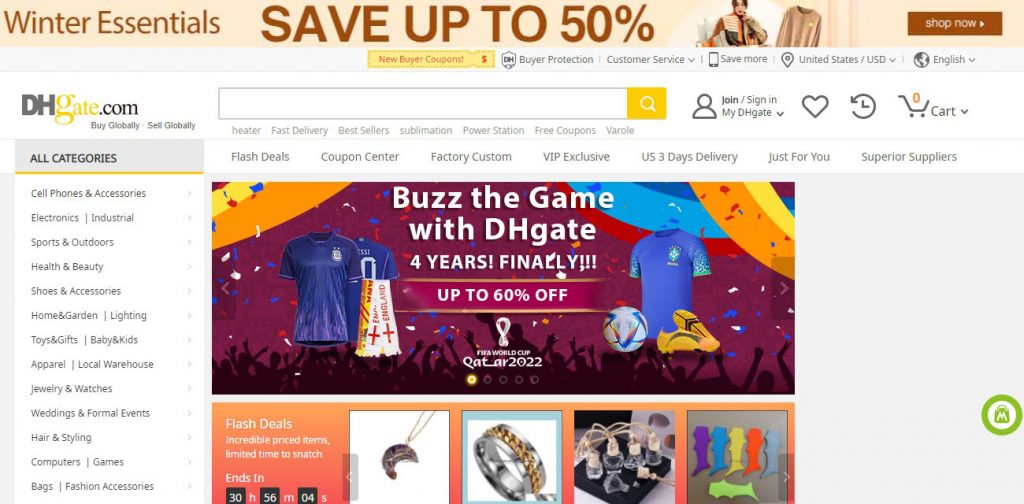
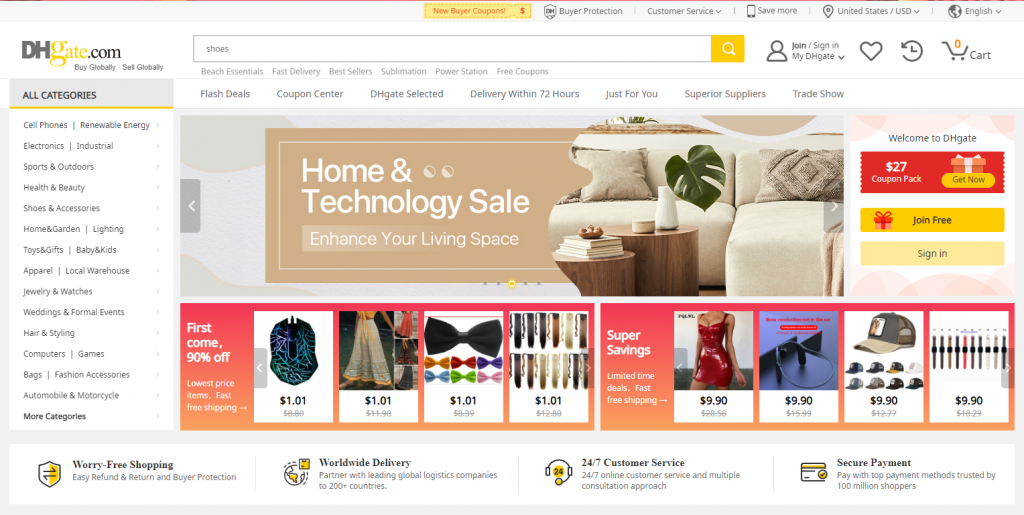
Within the framework above, DHgate operates as a marketplace where buyers encounter listings from different sellers rather than one standardized product catalog.
Its main value lies in seller and listing discovery. Buyers can review alternative prices, product variations, order quantities, shipping origins, and seller terms without limiting the search to one brand. This structure can support product research, cross-border purchasing, and sourcing activities.
The same structure also creates variation. Product descriptions, dispatch times, return conditions, and seller communication may differ between listings. A buyer should therefore evaluate the individual seller and offer instead of treating every DHgate transaction as identical.
DHgate is most relevant when:
- several sellers offer comparable products;
- product variety or sourcing flexibility matters;
- the buyer is prepared to review listing-level terms;
- order quantity, shipping origin, and total cost have been confirmed.
A direct brand store may be more appropriate when product standardization, one service policy, or a shorter decision process matters more than seller choice.
What to Verify Before Using It
Verify the following information at the seller and listing level before checkout. This is especially important when sellers are independent and the experience can vary from listing to listing.
| What to verify | Why it matters | What to look for |
|---|---|---|
| Seller identity | Helps you understand who is actually fulfilling the order | Seller profile, business details, listing consistency |
| Product description | Reduces mismatch between expectation and reality | Materials, dimensions, variants, included items |
| Shipping timeline | Prevents surprises on delivery speed | Estimated dispatch time, transit estimates, tracking availability |
| Return terms | Clarifies what happens if the item is not right | Return window, condition requirements, who pays return shipping |
| Reviews and ratings | Helps you compare seller performance | Recent feedback, volume of reviews, pattern of complaints |
| Total cost | Avoids hidden budget issues | Item price, shipping, taxes, and any extra fees |
| Communication responsiveness | Signals how easy it may be to resolve issues | Response time, clarity, and completeness of answers |
Confirm the seller, specifications, total cost, delivery estimate, and return responsibility before payment.
FAQ
Is the marketplace platform always the seller?
No. The platform may provide the listing and transaction system while an independent seller supplies and ships the product. Check the seller name and fulfillment information on the individual listing.
Does the lowest listing price mean the lowest total cost?
Not necessarily. Compare the item price together with shipping charges, taxes, possible duties, order quantity, and return costs.
Are return terms the same across all marketplace listings?
Not always. Return eligibility, claim deadlines, product-condition requirements, and return-shipping responsibility may differ by seller, product, and transaction. Read the terms attached to the listing before checkout.
What to Do Next
- Select the platform type that matches the purchase: a brand store for a standardized experience, a marketplace for seller-level choice, or a sourcing platform for larger or repeat orders.
- Review the seller, product specifications, total cost, dispatch estimate, and return responsibility.
- Save the listing and applicable policy terms before checkout, especially for high-value, customized, bulk, or cross-border orders.
10 thoughts on “What Is a Marketplace Platform, and Where DHgate Fits”