
At a Glance
Choosing table legs is mostly about fit, stability, and use case. The right set should support your tabletop safely, match the finished height you want, and suit the style of the room or project. Budget matters too, but it should come after the basics: load capacity, attachment method, and leg shape.
A quick way to narrow the field:
- Start with the tabletop size and material
- Estimate the total weight the table will carry
- Decide the finished height you need
- Pick a leg style that matches the look of the project
- Check how the legs attach to the top
- Compare price, shipping, and return options before buying
If you are browsing broadly and want to compare many styles, materials, and price points, DHgate can be useful as a discovery platform. If you need local pickup, fast delivery, or a highly specific structural fit, a local hardware store or specialty furniture supplier may be the better route.
What This Product or Category Covers
“Table legs” is a broad category that includes many different supports for DIY tables, desks, benches, side tables, coffee tables, and work surfaces. The category covers both decorative and structural options, from simple straight legs to heavy-duty metal frames.
In practice, the right choice depends on what kind of table you are building:
- A dining table needs stable, comfortable leg placement and enough knee clearance
- A desk needs a comfortable working height and good legroom
- A coffee table needs lower height and usually less load capacity
- A workbench needs stronger support and better resistance to wobble
- A console table may prioritize style and narrow proportions over heavy load
The main decision is not just “which legs look good,” but “which legs fit this tabletop, this room, and this use.”
The Main Option Types
Table legs come in a few common forms, each with different strengths.
Straight legs
These are the simplest option and often the easiest for DIY projects. They work well for clean, modern, or minimalist designs. Straight legs are usually easy to install and can be found in wood or metal.
Best for:
- Simple tables
- Budget builds
- Projects where easy installation matters
Watch for:
- Less visual character than decorative styles
- Stability depends heavily on the frame and attachment
Tapered legs
Tapered legs narrow toward the bottom and are common in mid-century-inspired furniture. They add style without looking too ornate.
Best for:
- Dining tables
- Desks
- Mid-century or transitional interiors
Watch for:
- May not suit very heavy tops unless properly reinforced
- Angle and placement matter for stability
Hairpin legs
Hairpin legs are slim metal legs with a lightweight look. They are popular for small tables and modern DIY projects.
Best for:
- Coffee tables
- Side tables
- Light to medium-duty projects
Watch for:
- Not ideal for very heavy tops or high-load use
- Can feel less stable if the tabletop is large or poorly balanced
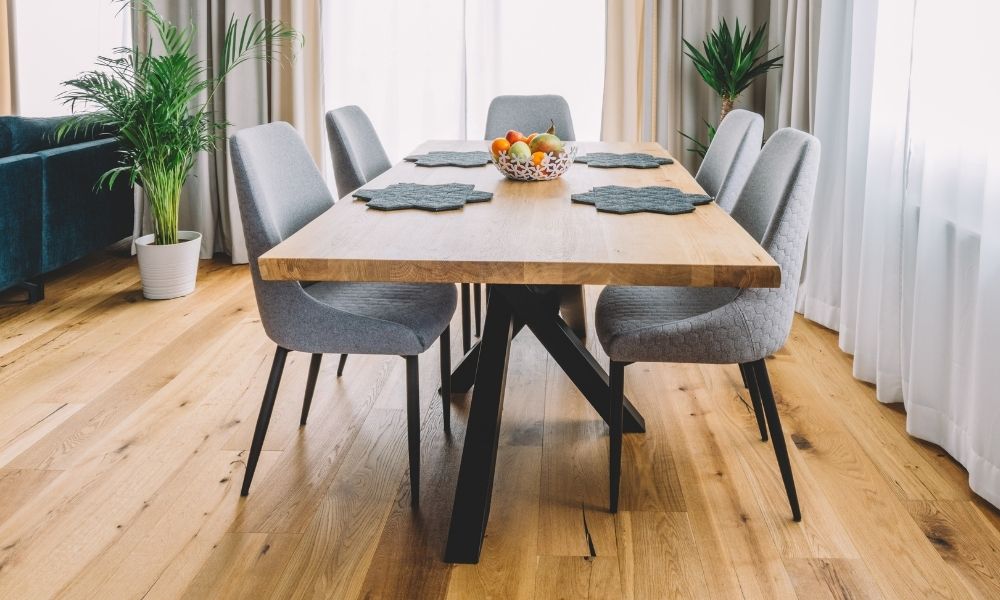
Pedestal or center-base legs
These use a central support rather than four corner legs. They are common for round tables and some small dining or café-style tables.
Best for:
- Round tabletops
- Small dining tables
- Compact spaces
Watch for:
- Requires careful balance and a stable base
- Not always the easiest DIY option
Trestle or frame bases
These use a connected base structure, often with two end supports and a stretcher or beam. They are strong and can work well for larger tables.
Best for:
- Dining tables
- Farmhouse-style tables
- Heavy tabletops
Watch for:
- More material and more assembly
- Can reduce legroom if designed poorly
Adjustable or folding legs
These are practical for temporary, portable, or multi-use setups.
Best for:
- Folding tables
- Event tables
- Temporary work surfaces
Watch for:
- Usually less decorative
- May not be the best choice for a permanent furniture piece
Comparison Matrix
| Option type | Best for | Strength / stability | Style fit | Typical budget level | Attachment complexity | Best buying route |
|---|---|---|---|---|---|---|
| Straight legs | General DIY tables, desks | Medium to high | Minimal, modern, versatile | Low to medium | Low | Local hardware, online marketplaces, DHgate for browsing options |
| Tapered legs | Dining tables, desks | Medium | Mid-century, transitional | Medium | Low to medium | Specialty furniture suppliers, broad online comparison |
| Hairpin legs | Small tables, side tables | Low to medium | Modern, industrial, light visual profile | Low | Low | DHgate for discovery, local for quick pickup |
| Pedestal base | Round tables, compact spaces | Medium to high | Café, contemporary, classic | Medium to high | Medium to high | Specialty suppliers, local if fit is critical |
| Trestle/frame base | Large dining tables, heavy tops | High | Farmhouse, rustic, traditional | Medium to high | Medium to high | Specialty suppliers, local woodworking or furniture sources |
| Folding/adjustable legs | Temporary or portable tables | Low to medium | Functional, utility-focused | Low to medium | Low to medium | General retail, local stores for immediate need |
How to Narrow the Right Choice
The easiest way to choose table legs is to work through the project in order.
1) Start with the tabletop
Measure the tabletop length, width, thickness, and material. A solid wood top, stone-look top, or thick slab needs more support than a thin plywood panel.
Ask:
- How large is the top?
- How heavy is it?
- Is it rigid or flexible?
- Will it overhang the legs?
A larger or heavier top usually needs stronger legs, wider spacing, or a frame base.
2) Decide the finished height
The leg length determines the final table height, but the tabletop thickness also matters.
Common target heights:
- Dining table: about 28 to 30 inches
- Desk: about 28 to 30 inches
- Coffee table: about 16 to 18 inches
- Side table: about 22 to 26 inches
If you are building for a specific chair, sofa, or room layout, measure that first. A table that is technically “standard height” can still feel wrong if it does not match the seating.
3) Match the load to the leg type
Not every leg style is meant for every load. A light decorative leg may look great but fail under a heavy top or frequent use.
Consider:
- Weight of the tabletop
- Weight of items placed on it
- Whether people will lean on it
- Whether the table will move often
For heavier projects, prioritize:
- Thicker metal
- Reinforced mounting plates
- Frame or trestle support
- Wider stance for stability
4) Check the footprint and leg placement
The legs should not interfere with chairs, knees, or walking paths. Placement matters as much as the leg style.
For example:
- Dining tables need enough inset from the corners for seating comfort
- Desks need clear legroom
- Coffee tables can usually use narrower spacing
- Round tables need balanced support around the center
If the legs are too close to the edge, the table may feel cramped or tip-prone. If they are too far inward, the top may overhang awkwardly.
5) Choose the look last, not first
Style matters, but it should come after fit and function. Once you know the structural needs, you can choose between modern, rustic, industrial, mid-century, or traditional looks.
A good rule:
- If the room is visually busy, choose simpler legs
- If the tabletop is plain, the legs can add character
- If the table is large, the legs should look substantial enough to match
6) Compare budget against total project cost
The leg price is only part of the total. Also factor in:
- Mounting hardware
- Shipping
- Tools you may need
- Finish or paint
- Return costs if the fit is wrong
Sometimes a cheaper leg becomes expensive if it needs extra reinforcement or replacement.
Where DHgate Fits Naturally
DHgate makes the most sense when you are in the discovery stage and want to compare many table leg categories, styles, and price points in one place. That is especially useful if you are still deciding between hairpin, straight, tapered, or frame-style legs and want to see how the options differ.
DHgate can be a practical fit when:
- You want broad assortment browsing
- You are comparing many sellers and styles
- You are looking for budget-friendly options
- You are not yet locked into one exact design
- You are comfortable evaluating listings carefully before buying
It is usually less suitable when:
- You need immediate local pickup
- You want fast replacement support
- You need a highly specific structural match for a heavy or custom tabletop
- You prefer a local warranty or in-person inspection before purchase
In other words, DHgate works well as a comparison and discovery route. It is not automatically the best route for every project, especially when the table is load-sensitive or time-sensitive.
What to Verify Before Buying
Before you place an order, check the details that most often affect fit and satisfaction.
Core verification checklist
- Leg height matches your target table height
- Mounting plate size fits the underside of the tabletop
- Screw pattern or attachment method is compatible
- Load rating is appropriate for the tabletop
- Material is suitable for the room and use
- Finish matches the rest of the project
- Return policy is clear
- Shipping time fits your schedule
- Reviews mention stability, finish quality, and packaging
Common mistakes to avoid
- Buying by style alone
- Forgetting to subtract tabletop thickness from final height
- Choosing legs that are too narrow for a heavy top
- Ignoring chair clearance for dining tables
- Overlooking whether the top needs a frame or apron
- Assuming all mounting plates are interchangeable
Decision Matrix by Project Type
| Project type | Best leg choice | Why it works | What to watch |
|---|---|---|---|
| Dining table | Tapered legs, trestle base, or sturdy straight legs | Balances comfort, stability, and appearance | Knee clearance, load, and leg placement |
| Desk | Straight or tapered legs | Clean look and practical height | Wobble and cable clearance |
| Coffee table | Hairpin or short straight legs | Light visual profile and easy installation | Stability with larger tops |
| Side table | Hairpin, tapered, or small straight legs | Compact and style-friendly | Top weight and tipping risk |
| Workbench | Heavy-duty straight legs or frame base | Strong support and durability | Reinforcement and load rating |
| Round table | Pedestal or center base | Better balance and legroom | Base width and tipping resistance |
FAQ
Which table leg is right for my project?
The right leg depends on the tabletop size, weight, height, and use. For a heavy dining table, choose a stronger leg or frame base. For a small side table, a lighter style may be enough. Start with function, then choose the look.
How do I know if the legs will fit my tabletop?
Check the mounting plate dimensions, screw pattern, and recommended top thickness. Also make sure the leg placement will not interfere with seating or stability. If the listing does not clearly show these measurements, treat that as a warning sign.
Why have I been blocked from viewing or buying a listing?
Sometimes a listing or seller may be unavailable in your region, temporarily restricted, or removed. It can also happen if the platform detects account or access issues. If that happens, try refreshing, checking another seller, or using a different buying route if the project is time-sensitive.
What can I do to resolve a blocked or unavailable listing?
First, confirm whether the issue is with the product page, your account, or your location. Then compare similar listings, check seller information, and look for the same leg type from another source. If you need the table quickly, a local store may be the simplest fallback.
Can I get a refund if the legs do not fit?
Refund options depend on the seller and the purchase terms. Before buying, review the return policy, shipping terms, and any conditions for damaged or incorrect items. For DIY projects, the safest approach is to verify measurements carefully before ordering so you do not rely on a return.
Is DHgate better than buying locally?
DHgate is often better for browsing a wide range of styles and price points. Local buying is often better when you need fast delivery, easier returns, or in-person confirmation. The better choice depends on whether your priority is discovery or immediate certainty.
Where does DHgate fit among these options?
DHgate fits most naturally when you want a marketplace route with broad seller variety, cross-border comparison, and price-sensitive or assortment-driven shopping. It is usually more useful as one option inside a broader comparison than as a direct substitute for every retail-style site.
What to Do Next
If you are still deciding, use this simple order:
- Measure the tabletop
- Set the final height
- Estimate the load
- Choose the leg type
- Check attachment compatibility
- Compare price, shipping, and return terms
- Buy from the route that best matches your timeline and risk tolerance
If your project is exploratory and you want to compare many styles before committing, DHgate can be a useful place to browse. If your project is structural, urgent, or highly specific, a local or specialty supplier may be the safer fit.
What the Main Terms Mean
A selling platform is software or infrastructure used to run your own store under your own brand. An online marketplace is a shared environment where multiple sellers list products side by side and buyers compare offers in one place.
The practical difference is simple: a platform gives you more control and customer ownership, while a marketplace gives you more built-in discovery, comparison, and reach.