
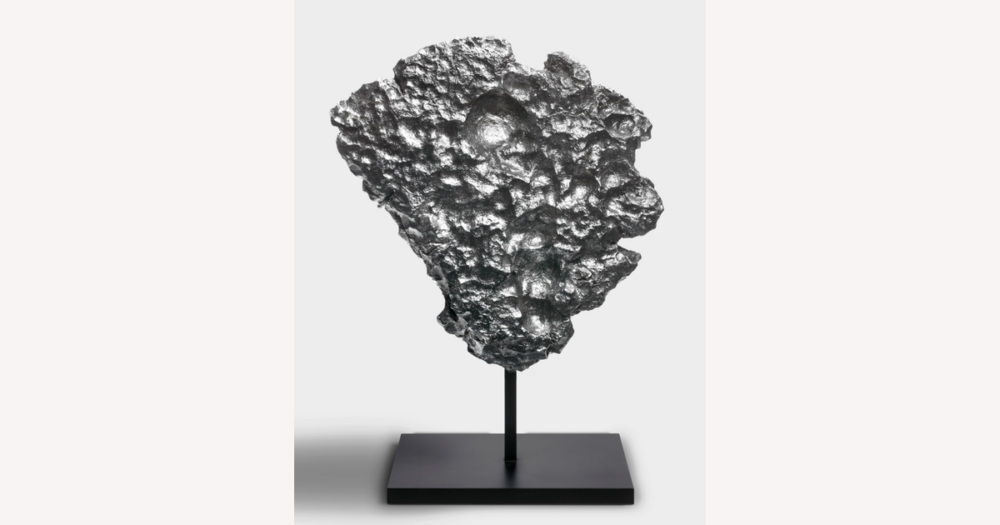
Gibeon meteorites rarely have one “correct” price; instead, small fragments, mid-size etched slices, and larger sculptural pieces fall into loose price bands that shift with weight, form, finish, and documentation. This guide uses specialist‑dealer examples and DHgate‑style buyer checks to help you benchmark any Gibeon offer you find, so you can tell whether a listing’s price and order terms look reasonable before you commit.
Typical price ranges for Gibeon meteorites
For Gibeon meteorites, most collectors will see prices spread across a few broad, illustrative bands rather than one fixed “correct” number. Very small gram-level fragments or thin slices often show up in the low tens of US dollars, while mid‑size etched slices weighing a few tens of grams can run from the high tens into the low hundreds. Larger, visually striking slices or sculptural iron masses in the hundreds of grams commonly reach the high hundreds and can extend into the low‑thousands. These ranges come from a snapshot of specialist‑dealer offers, not DHgate‑specific data or a comprehensive global survey, so any listing you see on DHgate may sit higher or lower depending on its exact specs and seller.
Weight and specimen type are the most reliable anchors for judging whether a price feels broadly plausible: tiny fragments, small–medium slices with limited face area, and heavier slices or sculptural masses occupy different bands because you are paying for more mass and more display impact. Gibeon is a well‑known iron meteorite, and prices reflect collector demand plus the cutting, etching, and polishing work needed to turn raw metal into an attractive specimen, not just the scrap value of the iron itself.
As a cautious buyer, I would use these bands as a sanity check for obviously out‑of‑line prices given the stated weight, form, and finish, not as strict rules or guarantees. A piece that is far cheaper or far more expensive than these rough ranges should prompt a closer look at its description, preparation level, and seller track record on DHgate before you judge it as a bargain or a premium collectible. Remember that shipping, taxes, and any custom work such as jewelry mounting can add noticeably to your total cost, and no single platform or retailer—including DHgate—sets the definitive market value for Gibeon meteorites.
How specimen size, form, and finish affect Gibeon meteorite prices
Once you have a rough sense of price bands, the real decision is whether a particular Gibeon specimen’s traits justify the number you see. Weight in grams or kilograms is the simplest driver: more mass usually costs more, but the price per gram shifts with how attractive and usable the piece is. A compact slice with a broad, clean face or a sculptural individual that looks good from multiple angles will generally command more money than an irregular offcut of the same weight because it works better as a display object or jewelry source.
Form and finish add another layer. Common forms include small fragments, whole sculptural individuals, flat slices, and cut components for jewelry. On top of that, finishes can range from raw or roughly cut pieces through unetched cut faces, etched surfaces that reveal Widmanstätten‑like metallic patterns, high polishing, and fully jewelry‑ready blanks or completed items. Each preparation step involves extra labor and some loss of material, so a well‑etched slice with crisp patterns or a heavy iron with polished faces typically costs more than a comparable raw fragment that has seen little work.
Documentation also influences price. Listings that consistently state Gibeon or Namibia origin, mention an iron‑meteorite classification, or reference certificates from recognized meteorite dealers often sit above similar‑looking pieces without paperwork because collectors are partly paying for perceived provenance and authenticity. Documentation is still a signal rather than proof, and on DHgate you are more likely to encounter informal descriptions than lab‑style reports, so it should be weighed alongside the specimen’s appearance and the seller’s history rather than treated as a guarantee.
Putting these factors together, a lower‑cost profile might be a very small, roughly cut fragment with minimal finish and sparse description, while a higher‑cost profile could be a mid‑size etched slice showing clear patterns or a heavy sculptural iron with polished faces and credible origin notes. I would personally rather buy a slightly smaller or less flashy Gibeon piece with clear weight, dimensions, finish details, and origin information than a much larger, under‑described specimen offered at a similar price, but you can adjust that trade‑off to match your own collecting priorities.
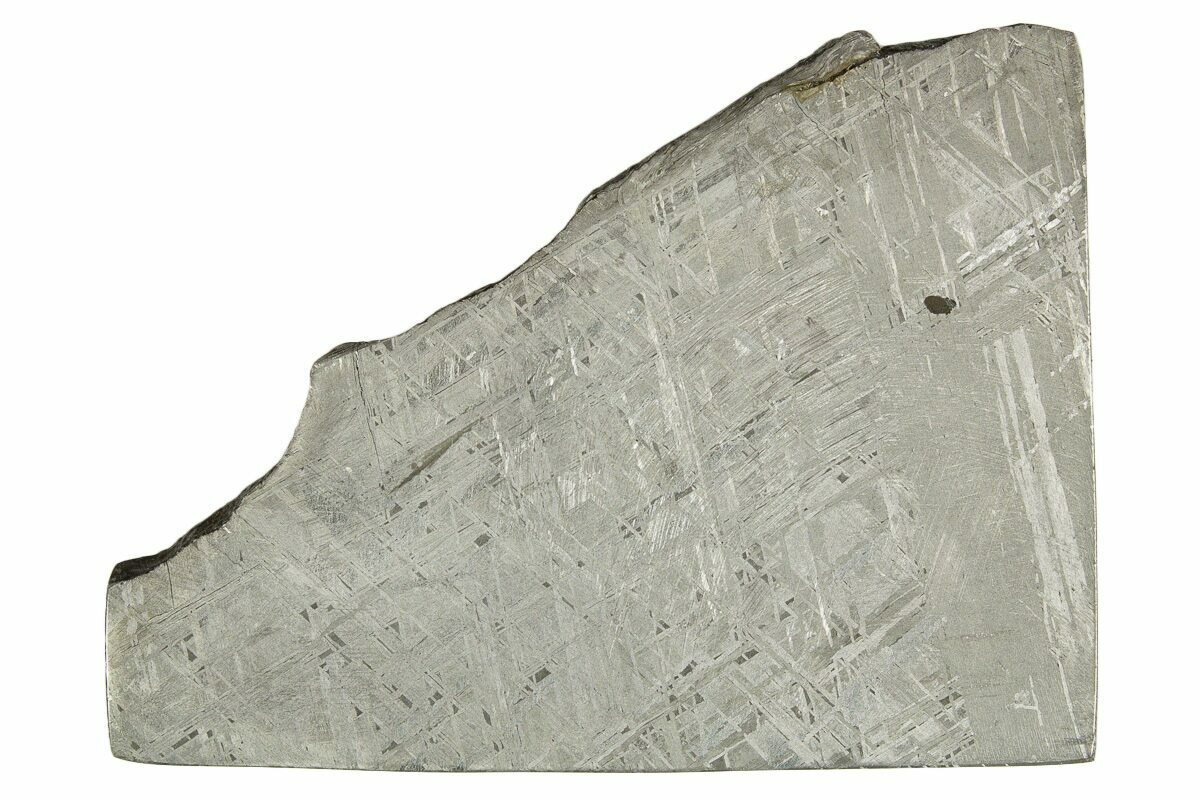
A flat, etched Gibeon iron meteorite slice with a broad metallic face and visible internal patterning, illustrating the kind of display‑ready finish that usually commands higher prices than rough fragments.
Using DHgate seller and listing details to judge a price
On DHgate, the price on a Gibeon meteorite listing only becomes meaningful once you read it alongside the seller’s track record and the clarity of the specs. Strong seller ratings, a solid number of completed orders, and written feedback that mentions accurate descriptions or good communication make it more reasonable to trust that the asking price matches the stated weight, finish, and origin. I would look for feedback on similar collectible or “meteorite” items rather than on unrelated products, because it tells you more about how the seller handles this niche.
The listing itself should spell out key details: exact weight in grams, basic dimensions, whether the piece is a fragment, slice, sculptural individual, or jewelry component, and what finish you are paying for (raw, polished, etched with visible patterning, jewelry‑ready). Those details should line up across the title, photos, and description; if the text promises an etched slice but the photos show an unetched lump, or the origin switches between regions, that inconsistency undercuts any claim that the price is fair for a Gibeon specimen.
Clear order terms also affect how much risk you are taking at a given price. Transparent shipping costs, realistic delivery windows, and straightforward return or refund policies make it easier to accept a mid‑range or higher price, because you know what will happen if the item arrives damaged or materially different from the description. A slightly more expensive listing from a long‑established DHgate seller with clean feedback and well‑explained policies is, in my view, often a better choice than a cheaper offer from a new or vague seller whose terms are hard to interpret, especially when you are buying a collectible object rather than a commodity.
DHgate’s buyer protection and dispute mechanisms mainly help when the item you receive does not match the listing—wrong weight, different finish, or a substitute object—and they are your backstop for non‑delivery or clear misdescription. They do not compensate you for simply paying more than another collector might think a fairly described specimen is worth. Your job is to judge whether the listed weight, form, finish, and origin plausibly support the price band you expect for that kind of Gibeon piece, and then rely on DHgate’s protections only if the seller fails to deliver what was promised. Personally, I would prioritize sellers with substantial, recent positive feedback on similar items and accept modest price differences in exchange for clearer specs and protections, while a more risk‑tolerant collector might deliberately take chances on newer sellers to chase unusual pieces.
Red flags in Gibeon meteorite listings and what to do about them
- Missing or very vague weights and dimensions. Phrases like “about” or “approximate” without specific numbers make it impossible to judge size or compare prices per gram. If you cannot tell whether you are paying display‑piece money for a tiny fragment, the price is effectively opaque.
- Generic or stock‑looking photos. Images that appear to be catalog shots reused across multiple listings, or that do not show the actual specimen from several angles, make it hard to evaluate finish, patterns, or imperfections. For a collectible iron meteorite, you should be able to see the real object you are paying for.
- Imprecise material descriptions. Listings that only say “space rock,” “iron stone,” or similar vague terms without mentioning Gibeon, an iron classification, or Namibia‑style origin notes weaken confidence that the piece is genuinely tied to the Gibeon field rather than just meteorite‑inspired metal.
- Heavy reliance on dramatic rarity language or extraordinary origin stories combined with very low prices or steep, time‑limited discounts. When a listing leans on “ultra rare,” “museum‑grade,” or unbelievable backstories while charging less than typical bands for similar‑looking pieces, it is a signal to be cautious about both the description and the price claims.
- Each of these red flags makes it harder to decide whether the asking price is reasonable for a Gibeon meteorite of known weight, form, and finish. Without concrete specs and honest photos, you cannot meaningfully compare the offer with other specimens or judge whether you are overpaying for an ordinary object.
- On DHgate, a practical response is to ask the seller for precise weight, clear dimensions, and additional photos of the actual piece, then review their history selling similar items and read neutral or negative feedback closely. If those checks do not resolve your doubts, the safer financial choice is usually to walk away rather than chase an eye‑catching bargain with unclear details; in a collectible category, passing on a dubious listing is often less costly than discovering later that the low price came with hidden compromises.
How much authenticity confidence you can expect without lab testing
Definitive meteorite authentication normally relies on expert examination and, in some cases, laboratory analysis of structure and composition. Online listings on DHgate or anywhere else are not lab reports, and an editorial guide cannot certify that any individual piece is genuinely Gibeon; what you can work with are patterns of plausibility rather than proof.
Useful non‑technical signals start with good visuals and consistent descriptions. Close‑up photos that clearly show metallic structure and etched patterns similar to known iron meteorite figures, repeated mention of Gibeon or Namibia origin in both the title and description, and a seller history of offering meteorites or related collectibles with coherent, detailed write‑ups all make a listing more plausible. On DHgate, I would pay attention to whether the seller seems to specialize in this niche rather than treating “meteorites” as a random add‑on.
Those signals are still only partial reassurance. Photos can be carefully chosen or reused, origin notes can be copied from other listings, and even a long catalog of past sales does not guarantee that every item is correctly identified. Certificates or “COAs” work the same way: documents tied to recognized meteorite institutions or well‑known dealers may carry more weight, but generic certificates with no clear source are easy to generate and should never override vague specs, weak photos, or inconsistent descriptions elsewhere in the listing.
Price and paperwork on their own also do not prove authenticity. Misidentified or misleading pieces can be sold cheaply to tempt impulse buyers or expensively to signal fake “museum‑grade” status, so a high or low asking price is just one clue to interpret alongside structure, origin claims, and seller behavior, not a verdict.
My own posture is to treat Gibeon meteorites bought through broad online marketplaces as interesting collectible iron objects with plausible authenticity, not as fully documented scientific specimens. If strong proof matters—for example, for serious collection or resale—then I would rather pay more to established meteorite dealers, or seek expert appraisal, than rely solely on DHgate listing details. This guidance is general and principle‑based; it does not mean that any specific DHgate seller has been vetted, and you should always make your own judgment before trusting a listing.
Quick checklist before buying a Gibeon meteorite on DHgate
- Check the specimen specs. Confirm exact weight, measurable dimensions, and the stated form (fragment, slice, sculptural piece, or jewelry component), plus any mention of finish or etching so you know what kind of Gibeon‑style object you are paying for.
- Sense‑check the price. Compare the asking price with the rough bands for similar size and type discussed earlier, watching for numbers that feel unusually high or low for that specific weight, form, and finish profile.
- Review authenticity signals. Examine photos closely for clear metallic structure and patterns, read origin and material descriptions for consistency, and note any documentation or seller history with meteorites or related items rather than unrelated goods.
- Assess seller trust. Look at ratings, sales volume, and detailed buyer feedback, focusing on comments about accurate descriptions, communication, and reliable delivery, especially on other collectible or “meteorite” listings.
- Confirm order protections. Check shipping cost and timeframe, understand the return and refund policy, and see how DHgate’s dispute coverage would apply if the item arrived damaged, poorly finished, or different from the listing specs.
- Use a cautious cutoff. If a listing fails more than one of these checks—unclear specs, shaky authenticity signals, weak seller history, or limited protections—I would treat that as a reason to skip it, even when the price looks attractive, and keep this checklist in mind as a quick routine while browsing.
Using DHgate prices alongside specialist meteorite dealers
DHgate is sensible to use as one data point for Gibeon meteorite prices: it exposes a wide range of asking prices, listing styles, and buyer feedback, which helps you see how different sellers frame size, finish, and origin. It is not, however, a substitute for specialist meteorite dealers when you care deeply about authenticity assurance or nuanced expertise.
Marketplace prices on DHgate are shaped by seller experience, competition, and marketing tactics as much as by specimen quality. A specialist dealer’s prices are more likely to reflect rigorous sourcing, documentation, and appraisal work—things like careful classification, provenance records, and long-term reputation in the meteorite community—so their numbers often carry more informational weight even when they look higher at first glance.
You can still use DHgate constructively: look across listings to get a rough feel for what very small fragments, mid‑size etched slices, and larger display pieces are commonly offered for; pay attention to how sellers describe weight, dimensions, polish or etching, and origin; and apply the red flags and checklist from earlier sections to spot vague specs or aggressive rarity language that make a price harder to trust.
If you then see a clearly documented specimen from a specialist dealer priced noticeably above median DHgate levels for superficially similar pieces, that premium may reflect authentication work and provenance rather than simple price inflation. I’m comfortable treating DHgate as a broad benchmark and as a venue for lower‑stakes, smaller purchases, but for major acquisitions or when authenticity confidence is crucial, I would lean on established meteorite dealers and expert communities instead. In either case, neither DHgate nor specialists offer guaranteed investment value—Gibeon meteorites are collectibles with subjective pricing, not assured appreciating assets—and it is safer to keep the comparison qualitative than to assume one channel is always cheaper or more expensive than the other.