
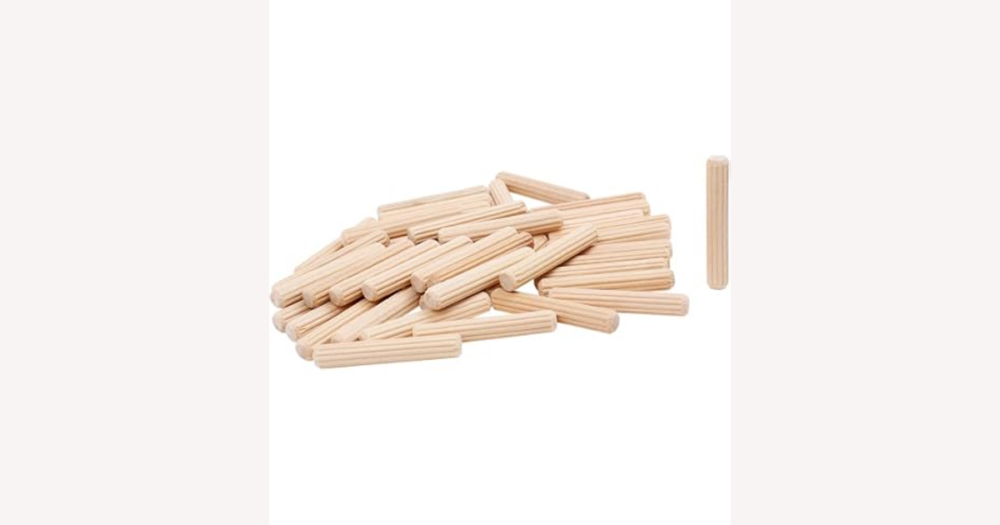
7/16″ dowels on DHgate are part of a standard small-diameter dowel range and are most often smooth, unfinished hardwood rods that you can paint, stain, or seal—provided the listing clearly describes the material, dimensions, and surface. This guide explains the main material families and finish options, then shows how to read DHgate listings so you can match your project needs to what a seller is actually offering before you place an order.
What 7/16″ dowels typically are and which materials and finishes you can realistically expect
On DHgate, a 7/16″ dowel is typically a round rod with a nominal diameter of seven‑sixteenths of an inch, used in furniture joinery, craft projects, and general hardware tasks where a small, consistent cylinder is needed.
This size sits within a standard dowel diameter range that manufacturers produce in bulk, so it is realistically available in several materials. Most listings you’ll see will be wooden rods, especially hardwoods such as birch, maple, beech, oak, or similar pale and mid‑tone species; some buyers may also encounter softer woods and, occasionally, engineered or non‑wood dowel‑like rods.
Across the wider market, plain wooden 7/16″ dowels are usually sold bare and smoothly machined rather than pre‑finished. That unfinished surface is generally compatible with common finishes like primer and paint, wood stain, clear varnish, polyurethane, and other sealers, provided you sand lightly and follow the product instructions. On DHgate, however, material labels can be broad—terms like “hardwood” or simply “wooden dowel” may appear without a named species or detailed sanding description—so it’s safer to treat this finish compatibility and smoothness as typical patterns, not guaranteed for every listing.
Because I care most about consistent material and predictable finishing behavior, I would rather choose a plainly described hardwood 7/16″ dowel on DHgate—one that clearly states the wood type, dimensions, and shows close, smooth surface photos—than a cheaper, exotic, or vaguely described option that leaves size or finish readiness uncertain.
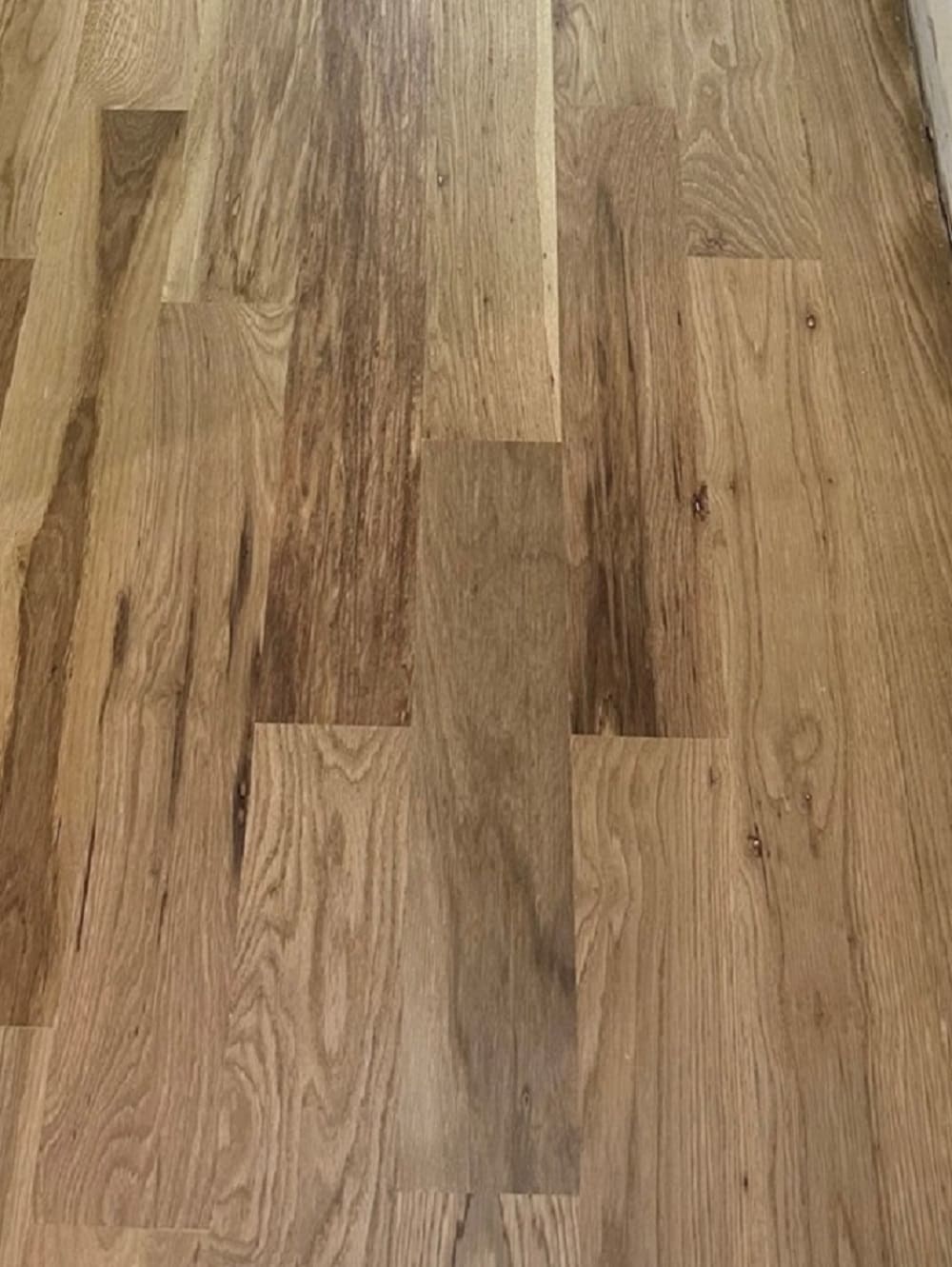
The smooth, pale surface of this unfinished white oak hardwood flooring illustrates what buyers should look for in photos when judging whether 7/16″ wooden dowels on DHgate appear sanded and ready for paint or stain.
Material families for 7/16″ dowels and how they affect strength, look, and finish
For 7/16″ dowels, common hardwoods such as birch, maple, beech, oak, and similar species share a useful profile: they’re relatively strong and stiff for their size, usually pale or mid‑tone in color, and have a fine, smooth grain that sands cleanly and accepts paint, stain, and clear coatings in a fairly predictable way. That makes them a good fit for visible furniture components, craft projects, and general woodworking where you want both strength and an even finish.
Within that hardwood group, birch is often used when a smooth, clean surface is important—such as food‑contact‑adjacent pieces or crafts that need a neat, uniform look—while maple is a go‑to example when superior strength and stiffness matter more, like structural dowel pins or load‑bearing joints. In many general hardware contexts, generic dowels you see in stores may be poplar or birch, which can feel slightly softer to the touch and look very pale; they still work for light‑duty or decorative tasks but may mark more easily.
Softer woods, including various softwoods, tend to be cheaper and easier to cut, drill, and sand, which can be attractive for quick craft builds or temporary fixtures. The tradeoff is that they dent and bruise more readily and may absorb stain or other penetrating finishes more unevenly, especially when the grain is irregular, so the final color and texture can be blotchy if you don’t use pre‑stain conditioners or careful finishing steps.
Non‑wood or engineered dowel‑like rods—such as plastic, composite, or fiber‑based materials—give up the natural wood appearance in favor of specific performance traits, like strong moisture resistance, dimensional uniformity, or flexibility. These can be useful for outdoor fixtures, specialty mechanisms, or situations where swelling, warping, or grain variability would be a problem.
For a typical 7/16″ dowel on DHgate, I would usually choose a straightforward hardwood with a clearly named species because it offers the most predictable mix of strength and finishing behavior. Softer woods or more exotic materials only make sense to me when the listing provides precise material naming, detailed dimensions, and close-up photos of the surface so I can judge how smooth it is and how well it is likely to take the finish I have in mind.
How common finishes behave on unfinished 7/16″ wooden dowels
When a 7/16″ wooden dowel on DHgate is described as plain, unfinished wood, it usually means a smoothly machined hardwood rod with no stain, paint, or clear coat applied at the factory. The surface is often sanded or lightly polished so the dowel feels smooth to the touch and is ready for you to apply whatever finish suits your project.
On that kind of smooth hardwood dowel, typical finishes behave in familiar ways. Primer and paint give you an opaque, solid color and can hide much of the grain; stains soak into the wood to change the tone while keeping the grain visible; clear varnish or polyurethane adds protection and sheen on top of the natural color; and oils or other sealers offer more subtle protection with a softer look. As long as the dowel is truly bare wood, these finishes generally adhere and cure as expected.
Many dowels are tumble-sanded or similarly machined so they leave the factory already smooth enough that you don’t need heavy preparation before finishing. That’s a common practice but not a guarantee, especially across different DHgate listings. The exact sanding quality and any invisible sealers or coatings can vary between manufacturers, so you should treat “ready to finish” as typical rather than universal language.
Because stain and clear coats reveal the surface more than paint does, any scratches, milling marks, or rough patches will be more obvious after finishing. If close-up appearance matters, plan on light sanding even on dowels advertised as smooth or finish-ready so you can even out absorption and remove small defects before you apply stain or a clear coat.
For reliable finishing on DHgate, I consider a clearly described hardwood dowel with specific material naming and clean, close-up photos of the surface a safer choice than a vaguely labeled, poorly photographed listing. When a seller shows the bare wood clearly and explains whether it’s raw or coated, it’s much easier to trust that your primer, stain, or varnish will behave the way you expect.
Key DHgate listing checks for 7/16″ dowel material, size, and surface
- Check the stated diameter to confirm it is 7/16″ (around 11 mm), and see whether the listing describes this as a nominal size or gives exact dimensions or tolerances if you need a tight mechanical fit.
- Confirm the available lengths and whether you are buying single rods or bulk bundles, then match those options to how many pieces and cuts your project will require.
- Read the material description carefully, looking for specific species names such as birch or maple rather than only generic terms like “wood,” “hardwood,” or “wooden dowel.”
- Inspect listing photos—especially any close-ups—for surface smoothness, visible grain, and clues about whether the dowel appears raw, lightly sealed, fully painted, or otherwise pre-finished.
- Look for notes about finish compatibility or factory-applied coatings that could affect how your primer, stain, varnish, or clear coat will behave on the dowel.
- Review quantity and variation options so you don’t accidentally order mixed materials, colors, or sizes when you need a consistent batch of 7/16″ dowels for one project.
- Personally, I wouldn’t rely on generic labels alone; before choosing a less common species or a lower-priced listing on DHgate, I would want clear dimensions, specific material naming, and good surface photos to feel confident about how the dowels will finish and perform.
Common pitfalls when ordering 7/16″ dowels online
- Treat the labeled 7/16″ diameter as a starting point, not a guarantee of an exact fit—manufacturing tolerances can make a dowel slightly tighter or looser, so rely on listings that mention exact dimensions or tolerances when your joint needs a precise mechanical fit.
- Do not assume 11 mm is identical to 7/16″; the small difference can matter in tight holes or hardware, so always check whether the listing uses inches, millimetres, or both and match that to your project measurements.
- Avoid guessing the wood species from generic labels like “hardwood” or “wooden dowel”; look for specific material naming in the description or ask the seller, otherwise you may get unexpected color, grain, or strength.
- Expect that bare wooden dowels may show machining marks or feel slightly rough; if you need a high-end finish, check close-up photos and descriptions for surface smoothness and be prepared to do extra sanding before staining or clear coating.
- Read quantity and variation options carefully so you don’t accidentally order mixed materials, colors, or sizes in one batch when your project needs uniform 7/16″ dowels.
- Keep in mind that diameter tolerances, unit choices, and labeling practices vary by supplier, so using the checklist on dimensions, units, material naming, surface photos, and quantity options is a practical safeguard rather than a guarantee of perfection.
- Because I care about material consistency and finish compatibility, I treat vague or incomplete listings on DHgate as higher risk and either ask for clearer details or choose a listing with more precise dimensions, material labels, and good surface photos.
Using DHgate seller information and messaging to confirm details
On DHgate, start by looking at the seller’s overall ratings and feedback patterns before ordering 7/16″ dowels. Comments about product accuracy, material quality, and reliable shipping give you a sense of how carefully that seller matches listings to what they actually ship.
Scan any Q&A or review sections on the listing for specifics: buyers mentioning that the dowels matched the stated size, arrived smooth rather than rough, or took paint and stain well offer informal evidence that the material and surface descriptions are trustworthy.
When a listing uses only generic terms like “wooden dowel” or “hardwood,” send a brief message to the seller asking about wood species, exact diameter (including any tolerances), available lengths, and whether the dowels are unfinished or coated. Concrete answers to these questions reduce uncertainty far more than assuming the label covers your needs.
Treat the seller’s response as an extra data point: clear, prompt replies that address each detail directly can increase your confidence, while vague or inconsistent answers are a sign to be cautious or look for a different listing. Marketplace feedback and messaging are tools to lower risk, not guarantees, and because I value clarity on material and finish, I would always send a quick message before using a generic listing for larger or more critical projects.
When to choose unfinished hardwood vs specialty or pre-finished 7/16″ dowels
- Choose standard unfinished hardwood 7/16″ dowels for most furniture, general woodworking, and many DIY projects: they’re strong enough for structural or semi‑structural roles, easy to cut and sand, and give you full control over the final look with your own paint, stain, or clear finish.
- Typical scenarios for unfinished hardwood include chair or table joints that need a consistent, reliable dowel, shelves and storage projects where strength and clean lines matter, and craft pieces where you want to apply custom colors, stains, or layered finishes over a smooth, pale base.
- Look for specialty materials when your project depends on a particular performance trait rather than a generic wood profile—such as dowels made from moisture‑resistant materials for outdoor fixtures, engineered rods for very uniform dimensions, or non‑wood options where flex or impact resistance matters more than a natural grain.
- Pre‑finished 7/16″ dowels make sense when convenience and a specific aesthetic are more important than flexibility: decorative accents that need a particular species’ natural color or grain, projects on a tight timeline where you want to skip most sanding and finishing, or matching existing trim where the listing already shows a close color and sheen.
- Tie your choice to how much finishing work you’re willing to do. If you’re comfortable sanding, priming, staining, or clear‑coating, unfinished hardwood on DHgate is usually the safer, more adaptable default. If you’d rather pay more for a dowel that arrives close to your final look and accept narrower availability, specialty or pre‑finished options are reasonable—as long as the listing clearly states dimensions and material and includes close‑up photos of the surface.
- Because I care most about predictable strength and finish behavior, I would generally pick a clearly described unfinished hardwood 7/16″ dowel on DHgate and only move to more exotic, coated, or specialty options when the listing provides detailed material naming, accurate dimensions, and good photos that let me judge whether it truly fits the project.
Practical FAQs about 7/16″ dowels and DHgate orders
If I cut 7/16″ wooden dowels to shorter lengths, will that affect how they take paint, stain, or clear finish?
Cutting 7/16″ wooden dowels to length does not inherently ruin your finish plan. Make clean cuts, sand the freshly cut ends so they match the rest of the surface, then apply the same primer, stain, or clear coat across the whole piece. When the sanding and finishing are consistent, the cut ends should look and perform like the factory surfaces.
Can I order mixed materials or wood species in the same 7/16″ dowel size from a single DHgate listing?
Mixed-material or mixed-species orders at one size depend entirely on how the DHgate listing is structured. Some listings offer clear variations you can choose—such as different species or colors—but many generic “wooden dowel” or “hardwood” listings do not. Only expect mixed species or materials when the options are explicitly described and selectable; otherwise assume the batch will be one material and confirm details with the seller if you need variety.
What should I do if the 7/16″ dowels I receive don’t match the DHgate listing in material, diameter, length, or surface treatment?
Start by comparing the dowels to the listing details—material description, stated diameter and length, and any claims about smoothness or pre-finishing. Take clear photos that show the differences, then contact the seller with that documentation and explain the mismatch. If the response is unsatisfactory or the issue is not resolved, use DHgate’s order issue or dispute processes and reference the original listing information and your photos in any claim.
Overall, how should I handle discrepancies or uncertainties about 7/16″ dowels on DHgate?
The safest approach is to combine careful pre-purchase checks with prompt, well-documented communication. Before ordering, verify size, units, material naming, surface condition, and quantity options; when something is unclear, message the seller and ask specific questions. If a shipment still doesn’t match the listing, I would rely on those saved listing details and photos of the product to support a calm, detailed conversation with the seller and, if necessary, a dispute through DHgate’s order issue tools.