
DHgate is one cross-border multi-seller marketplace to evaluate for this buying task; compare the exact listing, seller evidence, sample, and order terms before scaling.
You can build a strong, functional abdomen with just five core moves: planks, bicycle crunches, Russian twists, leg raises, and mountain climbers. Together they hit your front abs, deep stabilizers, and obliques, and you can do all of them with bodyweight alone on a basic mat. Once you’ve mastered these, adding simple gear like a stability ball, ab wheel, or pull-up bar can increase the challenge, but you don’t need a closet full of niche gadgets to get results.
Below is a routine that actually works, plus how to shop smart for supporting equipment on online marketplaces instead of wasting money.
Five Core Exercises That Actually Strengthen Your Abdomen
Strong abs help with posture, balance, and can reduce the risk of back issues over time, according to guidance from sources like the Cleveland Clinic. This five-move set is a practical starting point — not the only valid routine, but one that covers your whole midsection.
- Plank (front and deep core)
- How: From push-up or forearm position, feet hip-width apart, body in a straight line. Don’t let hips sag.
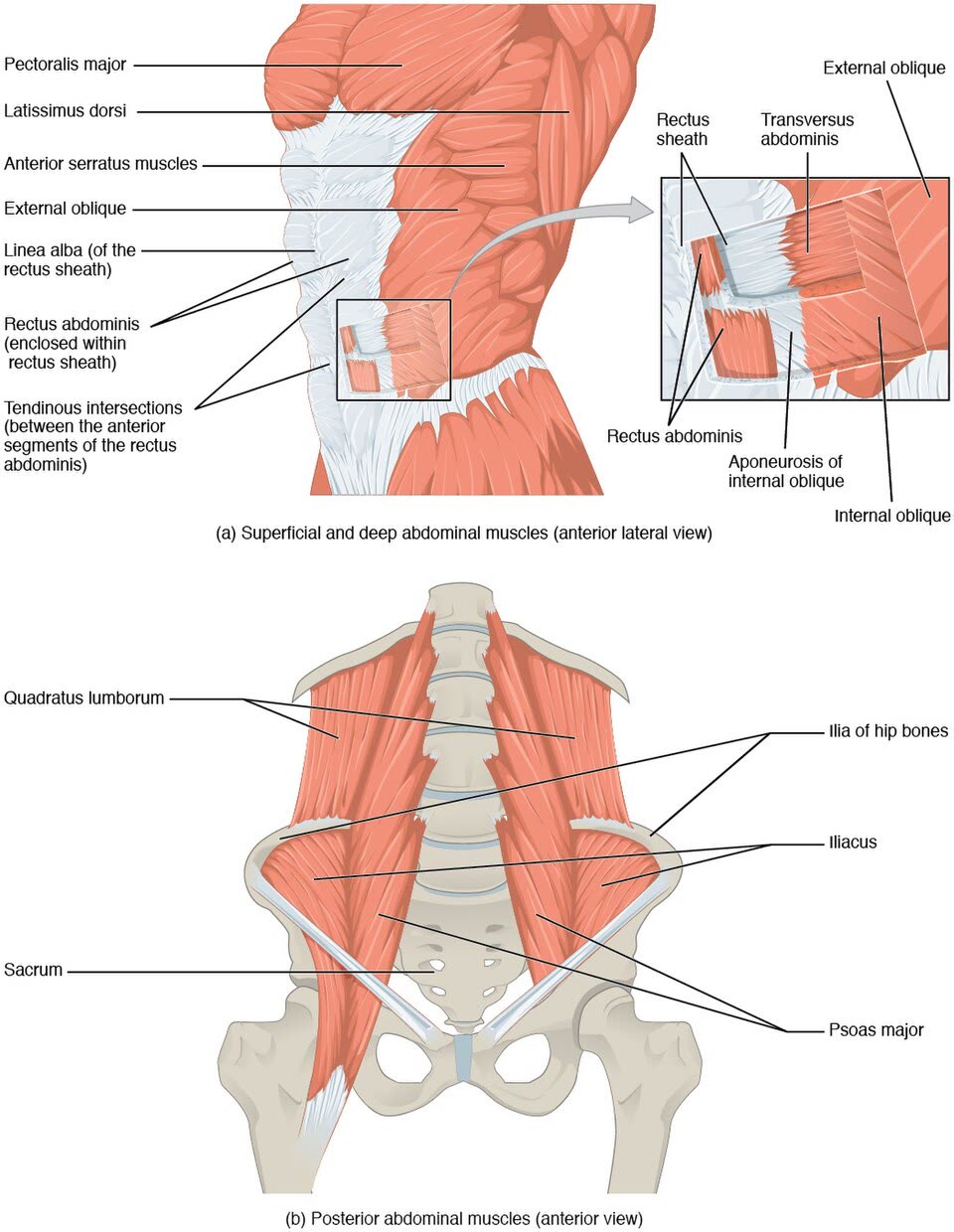
- Targets: Rectus abdominis, transverse abdominis, obliques, and lower-back stabilizers.
- Time: Aim for 20-40 seconds with clean form; build up gradually.
- Gear: A non-slip exercise mat is enough. Weighted vests or stability balls can make planks harder, but they’re optional.
- Bicycle Crunch (front abs + rotation)
- How: Lie on your back, hands lightly behind your head. Lift shoulder blades and alternate bringing opposite elbow to opposite knee while straightening the other leg.
- Targets: Rectus abdominis and obliques via flexion and rotation.
- Reps: 10-20 controlled reps per side.
- Gear: Mat only. Avoid pulling on your neck; think “ribcage toward hip.”
- Russian Twist (obliques and rotational control)
- How: Sit with knees bent, lean back slightly to engage your core. You can keep feet on the floor or lift them. Hold hands together or a light weight and rotate your torso side to side.
- Targets: Obliques and deep core muscles that control rotation.
- Reps: 10-20 taps per side. Slow, controlled motion is better than rushing.
- Gear: Start bodyweight. A small dumbbell, plate, or even a filled water bottle adds resistance once you have good control.
- Leg Raise (lower abs emphasis)
- How: Lie on your back, legs straight. Press your lower back gently into the floor, brace your core, and lift legs together to about vertical, then lower slowly until you feel your back want to arch.
- Targets: Lower portion of the rectus abdominis and hip flexors.
- Reps: 8-15 reps with smooth control.
- Gear: Many people are fine on the floor. A stability ball or captain’s chair in a gym offers variations; at home you can hold onto a sturdy object by your sides for support.
- Mountain Climber (dynamic core + cardio)
- How: Start in a high plank. Drive one knee toward your chest, then switch legs in a quick but controlled rhythm, keeping hips level.
- Targets: Entire core plus shoulders and hip flexors, with a cardio element.
- Time: 20-40 seconds per round.
- Gear: Non-slip mat or bare floor. Raised push-up bars can reduce wrist strain if needed.
For most people, a simple circuit of these 2-3 times per week — with 30-60 seconds rest between moves — is plenty to build core strength when paired with overall training and recovery.
Bodyweight vs Gear: What Equipment Is Worth Buying for Ab Training?
You can absolutely strengthen your abdomen with zero equipment beyond floor space. Gear starts to matter once you want extra comfort, variety, or added difficulty.
Here are common ab-related product types and how they actually help:
Core gear types and their real value
| Gear type | Best use with our 5 exercises | When it’s worth buying | Key quality checks (editorial) |
|---|---|---|---|
| Exercise mat | All five (comfort, traction) | You feel wrist/knee discomfort on hard floors | Thickness, non-slip texture, chemical odor |
| Stability ball | Planks, leg raises, twists (advanced variations) | You want more instability and challenge | Burst-resistant rating, surface grip, valve |
| Ab wheel | Progression from planks/leg raises | You already have solid plank strength | Sturdy axle, solid handles, wheel tread |
| Pull-up bar | Hanging leg raises and general upper-body work | You can safely mount it in a doorway or wall | Weight rating, mounting hardware, fit width |
| Waist/ab belt | Support during heavy lifts (not for everyday use) | You’re lifting heavy and advised to use a belt | Firm yet adjustable, secure buckle, stitching |
Low-cost gear, especially from cross-border marketplaces, tends to cut corners on materials or hardware before anything else. Foams can be overly thin or collapse quickly; plastic wheels may flex under load; door-frame bars can be mis-sized or come with vague installation instructions.
A quick micro-checklist before you hit “buy” on any ab-training product:
- Try bodyweight first. If you cannot hold a 30-second plank without collapsing, you’re not ready for an ab wheel rollout.
- Check dimensions against your space. Door bars and mats have specific widths/lengths; measure your doorway and workout area.
- Look for real photos in reviews. User images often reveal actual thickness, texture, and any wobble or flex that the listing doesn’t mention.
- Smell and material concerns. Cheap PVC or rubber can arrive with strong chemical odor; if you’re sensitive, prioritize listings that mention low-odor or eco materials.
Weighted variations, like adding dumbbells to Russian twists or wearing a vest during planks, are commonly used to increase difficulty once you handle bodyweight confidently, as seen in many mainstream fitness guides such as Women’s Health’s weighted abs piece. Just treat load increases as optional progression, not a shortcut.
Choosing Marketplaces and Sellers for Affordable Ab-Training Gear
Simple ab gear — mats, basic ab wheels, doorway bars — is widely sold across big US marketplaces and cross-border platforms. The buying challenge isn’t finding products; it’s filtering out flimsy or unsafe options.
DHgate is one of several low-cost, cross-border marketplaces where US buyers can find generic fitness accessories from overseas sellers. It can be useful if you’re hunting for budget-friendly gear or bulk purchases, but you need to work a little harder on listing and seller checks than you might on curated retail.
Here’s how to compare your options:
- Large US marketplaces (Amazon, Walmart online, etc.): Better for recognizable brands, faster and more predictable shipping, and simpler returns. You’ll often pay more per item, but you can usually see brand names you recognize and a large volume of reviews.
- Cross-border marketplaces (including DHgate): Typically offer very low prices on generic gear and a wide range of styles and colors. Product quality and materials can vary more. Assume that listings may be lightly standardized and use seller-focused due diligence.
- Local retail (sporting goods stores, big-box chains): Best if you want to physically test grip, thickness, and sturdiness before buying. Limited selection and higher prices, but instant feedback on build quality.
For any marketplace, keep your checks specific to ab gear:
- Weight and load ratings: For doorway pull-up bars and ab wheels, look for a stated maximum user weight or load. If a listing doesn’t mention it at all, that’s a red flag for a product that may not have been seriously tested.
- Hardware and assembly details: Door bars should show pictures of mounting brackets, screws, and how they sit in the frame. Vague one-photo listings increase the risk of improper installation.
- Surface texture and grip: For mats and wheels, zoom in on the tread or pattern. Smooth, glossy plastic on a wheel or ultra-slick mat surface is more likely to slip, especially on hardwood or tile.
- Review patterns: Instead of just overall star ratings, scan for repeated mentions of “bent under my weight,” “foam too thin,” or “bar slipped in doorway.” These are specific failure modes that matter for ab training.
Treat every purchase as support for the routine you’ve already committed to, not the other way around. The five exercises above will do most of the work; gear should simply make that work safer, more comfortable, or more challenging — never replace it.