
Preserved flowers are real blooms that have been treated so they look almost fresh for months or even years, with very little care. Florists and brands describe them as natural flowers that undergo a preservation process—commonly a glycerin‑and‑water solution that replaces the flower’s own moisture and helps it stay soft and colorful instead of drying out and becoming brittle.Source If you want long‑lasting decor or a gift that doesn’t wilt in a week, preserved flowers can make more sense than fresh. And if you’re shopping online, DHgate is one of several marketplaces where you might source preserved flower products, alongside local florists and platforms like Etsy.
This guide focuses on how preserved flowers actually work, what product formats exist, how to recognize quality from photos and descriptions, and how DHgate fits into the buying landscape for U.S. shoppers.
Preserved Flowers 101: What They Are and Why People Buy Them
Preserved flowers start as real, fresh blooms. They’re usually harvested at peak color, then dehydrated and placed in a bath made from glycerin, water and other additives. Over days or weeks, that solution travels up the stem and replaces the natural sap and water inside the petals. The result is a bloom that keeps much of its original shape, texture and color instead of shriveling.
Drying is different. Air‑dried or silica‑dried flowers lose most of their moisture, which leaves the petals papery and fragile, with more muted tones.Source Preserved blooms stay softer and tend to hold richer color, so visually they sit much closer to fresh flowers.
Because of that, preserved flowers are especially popular for:
- Long‑lasting gifts (for example, a boxed rose that still looks good months later).
- Low‑maintenance home decor where you don’t want to replace stems every week.
- Wedding bouquets or event arrangements you’d like to keep as a physical memento.
They are still delicate—rough handling can break petals, and colors can fade under strong light—but you avoid the daily watering and fast wilting of fresh arrangements.
What Preserved Flower Products Look Like (and How to Judge Them)
Retailers and florists offer preserved flowers in several formats, from simple stems to elaborate keepsakes.Source
Common formats you’ll see online:
- Single preserved roses in boxes or domes. Often sold as individual gifts.
- Mixed preserved arrangements. Bouquets or centerpieces combining roses, hydrangea, foliage and fillers.
- Wedding keepsakes. Preserved versions of bridal bouquets or pressed arrangements framed behind glass.
- Decor and art. Shadow boxes, wall frames or resin pieces incorporating preserved blooms.
- Loose blooms for DIY. Sets of stems or heads marketed for crafting and custom decor.
A marketplace listing for a set of preserved roses, for example, might show 12 individual rose heads meant for DIY arrangements, clearly labeled as “preserved roses” and packaged together in a protective box.Source
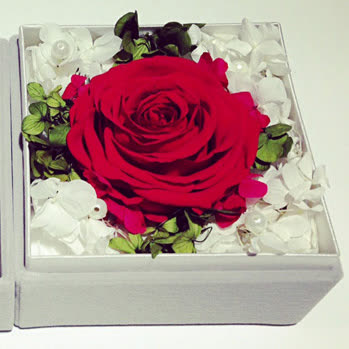
Because you can’t touch the petals online, you’re relying on visual and description clues to separate professional preservation from cheap or misrepresented product. Use this quick checklist while you scroll:
Visual and Description Signals of Quality
- Color and texture in close‑ups. Professionally preserved blooms usually have even color and smooth petals. If photos show blotchy dye, cracked surfaces, or obvious spray paint on the edges, expect a harsher, less natural look.
- Clear material language. Listings should say “preserved” or “glycerin‑treated” or similar. Vague phrases like “long‑lasting artificial flower” often mean silk or plastic, not a preserved natural bloom.
- Shape of petals. Preserved petals tend to keep the original curl and layering. Fully rigid, unnaturally stiff petals can indicate either dried flowers or artificial ones.
- Arrangement craftsmanship. For finished bouquets and domes, look at stem placement, spacing and symmetry. Sloppy glue marks or awkward gaps suggest mass‑produced decor more than careful floral work.
Here’s a compact way to compare what you’re seeing:
| Product type | Typical feel & look | Good listing signals |
|---|---|---|
| Preserved rose heads set | Soft, flexible petals, rich color | Close‑up photos, “preserved” in title, stem/head count |
| Boxed single preserved rose | Fresh‑like bloom in gift packaging | Material details, care notes (no water, no sun) |
| Mixed preserved bouquet | Varied textures, colors, natural shapes | Flower species listed, preservation method mentioned |
| Pressed preserved art | Flat blooms, stable color in frame | Acid‑free backing/glass mentioned, display instructions |
If a seller promises an “eternal” or “forever” flower but shows only one low‑resolution photo and no material details, treat the lifespan claim more as marketing than fact.
How Long Preserved Flowers Last and How to Care for Them
Most brands frame preserved flowers as a long‑lasting alternative to fresh arrangements rather than a permanent object.Source With careful placement, blooms can stay attractive for many months and sometimes for years, but there’s no universal guarantee. Heat, humidity and light exposure matter.
Typical care guides recommend three simple rules:Source
- Keep them out of direct sun. UV exposure speeds fading and discoloration. Display preserved arrangements away from bright windows or under softer, indirect light.
- Avoid humidity and water. High humidity can cause preserved flowers to soften too much, change shape or grow spots. They’re already treated inside, so you should never mist or water them.
- Handle gently and dust occasionally. Petals can tear if you squeeze or bend them. If dust builds up, use a very soft brush or a hairdryer on a cool, low setting to blow particles away.
For a U.S. buyer, this translates into simple placement decisions: preserved flowers do best in climate‑controlled indoor spaces—living rooms, bedrooms, offices—rather than bathrooms with steam, kitchen windows with strong sun, or an uncovered porch.
Buying Preserved Flowers Online: DHgate, Other Channels, and Risk Checks
You can buy preserved flowers through several channels in the U.S.:
- Local florists and preservation studios. Often used for custom wedding bouquet preservation and higher‑end gifts.
- Specialty online florists. These focus on preserved and dried flowers, offering curated arrangements and detailed care guides.Source
- Marketplaces like DHgate, Etsy, and similar platforms. These aggregate many independent sellers, from small craft studios to cross‑border suppliers.
DHgate sits in that last bucket: a cross‑border marketplace where you may find preserved flower products—boxed roses, mixed arrangements, loose stems—offered by individual sellers. Because inventory and seller practices vary, your job is to evaluate each listing on its own merits.
Here’s a practical scenario to anchor the decision.
Scenario: U.S. buyer choosing preserved roses for a long‑lasting gift You want a box of preserved red roses for a partner. On a craft marketplace like Etsy, you might see a U.S. or Canadian seller offering a set of preserved rose heads aimed at DIY or custom arrangements, with multiple close‑up photos and care instructions.Source On a cross‑border marketplace such as DHgate, you might see similar photos but from overseas suppliers, often with bulk quantity options.
How do you decide?
- Check the preservation claim. Look for explicit words like “preserved natural rose,” not just “eternal flower.” If the DHgate listing mixes “artificial” and “preserved” in the same description, clarify through reviews or seller Q&A before trusting it.
- Study photo quality and variety. Multiple high‑resolution images—front, side, close‑up—help you judge texture. A single stylized product shot gives you little information.
- Read lifespan and care language skeptically. “Years” can be realistic under good conditions, but no one can promise an exact duration. Prefer sellers who pair claims with care instructions (no sun, no water, indoor use) rather than vague “lasts forever” slogans.
- Consider your use case. For a sentimental, one‑off gift, the extra cost and communication clarity from a specialty florist might be worth it. For event decor or bulk stems where unit price matters more and you can accept some variation, a cross‑border marketplace like DHgate can be a reasonable sourcing option.