

At a Glance
Dropshipping tax compliance is less about one single tax rule and more about avoiding a chain of small mistakes that can create big problems later. The most common issues are:
- assuming you do not owe sales tax because you never touch inventory
- ignoring nexus rules in states where your business activity creates tax obligations
- failing to collect, file, or remit sales tax correctly
- using the wrong exemption certificates or not keeping them on file
- mixing up supplier invoices, customer invoices, and marketplace records
- treating international sourcing as if it removes U.S. tax responsibilities
- waiting until revenue grows before setting up tax processes
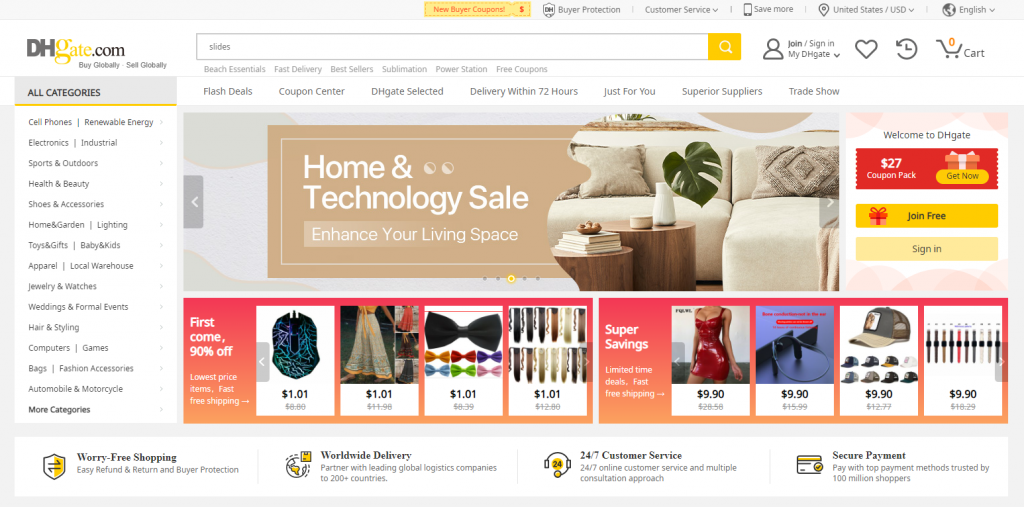
If you are sourcing products through a platform like DHgate, the tax question does not disappear. DHgate can be a workable sourcing option for comparison-led, lower-commitment buying, but you still need to verify your own sales tax, income tax, import, and recordkeeping obligations.
What the Platform Type Means
In dropshipping, the platform type matters because it shapes how you source, invoice, ship, and document transactions.
A dropshipping business usually has three moving parts:
- a customer places an order in your store
- you buy the item from a supplier or marketplace seller
- the supplier ships the item directly to the customer
That setup can look simple operationally, but tax compliance gets complicated because the seller of record, ship-from location, ship-to location, and payment flow may all be different.
The main mistake many new sellers make is thinking that “I never hold inventory” means “I have no tax obligations.” In reality, tax duties can arise from:
- where your business is located
- where your customers are located
- where your suppliers are located
- whether you use a marketplace or your own store
- whether you sell taxable goods or exempt goods
- whether you import goods into the U.S.
So the platform type is not just a sourcing choice. It affects how much control you have over documentation, shipping terms, and supplier verification.

The Main Platform Types
Different dropshipping routes create different compliance risks. Here is a practical way to think about them.
1. Direct supplier sourcing
You work directly with a manufacturer, wholesaler, or distributor. This can be efficient if you want stable pricing and repeatable documentation, but it often requires more setup and more formal tax paperwork.
2. Marketplace sourcing
You buy from a marketplace seller or cross-border sourcing platform. This can be flexible and low-commitment, but documentation may be less standardized, and you may need to verify invoices, shipping records, and product details more carefully.
3. Domestic fulfillment partners
You source from U.S.-based suppliers who ship within the country. This can simplify delivery times and sometimes simplify tax handling, but it does not eliminate nexus or filing obligations.
4. Hybrid sourcing
You use a mix of domestic and international suppliers. This can improve product variety and pricing, but it also increases the chance of inconsistent records and mismatched tax treatment.
5. Marketplace-first retail models
You sell through a marketplace that may collect and remit some taxes on your behalf. That can reduce administrative work, but it does not automatically cover every state, every product, or every filing obligation.
Comparison Matrix
| Platform type | Price / budget | Minimum order / flexibility | Shipping / delivery | Returns / policies | Reviews / trust | Who it suits |
|---|---|---|---|---|---|---|
| Direct supplier sourcing | Often better for repeat volume pricing | Usually less flexible; may require account setup or minimums | Can be fast if domestic; variable if overseas | Often more structured, but depends on supplier | Can be strong if supplier is established | Sellers building a stable catalog and repeatable operations |
| Marketplace sourcing | Often competitive for testing and assortment | Usually flexible; good for small tests | Can vary widely by seller and origin | Policies vary by seller and platform | Mixed; requires careful vetting | Sellers testing products or comparing multiple options |
| Domestic fulfillment partners | Usually higher unit cost than overseas sourcing | Flexible if supplier supports small runs | Typically faster and more predictable | Often easier to manage domestically | Often easier to verify | Sellers prioritizing speed, customer experience, and simpler logistics |
| Hybrid sourcing | Can optimize cost across categories | Flexible, but operationally complex | Mixed delivery performance | Mixed policies across suppliers | Depends on each supplier | Sellers scaling across multiple product types |
| Marketplace-first retail models | Can be low upfront cost | Very flexible | Depends on marketplace and seller | Marketplace rules may help, but not replace your own review | Trust depends on platform controls and seller quality | New sellers who want to test demand before committing |
Decision Framework
A good tax-compliance decision framework starts with the question: what kind of risk are you trying to reduce?
If your priority is simplicity
Choose a sourcing route with clear invoices, predictable shipping, and easy recordkeeping. That usually means fewer suppliers, fewer product categories, and fewer cross-border complications.
If your priority is low upfront commitment
A marketplace or cross-border sourcing platform can help you test products without large inventory purchases. But you should expect more work on documentation and supplier verification.
If your priority is faster delivery
Domestic sourcing often makes customer service easier and can reduce shipping confusion. It may also make returns and address verification simpler.
If your priority is product variety
A broad marketplace can help you compare options quickly. The tradeoff is that tax and compliance processes become more fragmented.
If your priority is scaling
You need repeatable processes, not just good product margins. That means:
- tracking nexus by state
- separating sales tax from income tax planning
- keeping supplier invoices and exemption records
- reviewing whether your platform collects tax automatically or not
- checking whether your product category has special tax treatment
A practical rule: if you cannot explain how a transaction is taxed from order to delivery, you are not ready to scale it.
Common Dropshipping Tax Mistakes to Avoid
This is where most sellers get into trouble.
1. Assuming no inventory means no sales tax
Sales tax is usually based on where you have nexus and where the customer is located, not on whether you physically store products.
2. Ignoring nexus thresholds
You may create tax obligations through sales volume, physical presence, employees, contractors, warehouses, or other business activity. Nexus rules vary by state.
3. Not registering before collecting tax
If you need to collect sales tax, you generally need to register first. Collecting tax without the right setup can create filing and remittance problems.
4. Using the wrong exemption certificate
If you buy for resale, you may need a valid resale certificate or exemption certificate. Using the wrong form, or failing to keep it on file, can cause audit issues.
5. Confusing marketplace tax collection with full compliance
Some platforms collect tax in some situations, but that does not automatically cover every state, every product, or every filing requirement.
6. Failing to separate sales tax from income tax
Sales tax is not the same as income tax. Even if a platform handles part of the sales tax process, you still need to track business income and expenses correctly.
7. Overlooking import and customs issues
If products are shipped from overseas, import duties, customs classification, and shipping terms may matter. Those costs can affect margins and compliance.
8. Not keeping clean records
You need records for:
- supplier invoices
- customer invoices
- shipping confirmations
- exemption certificates
- tax registrations
- returns and refunds
9. Treating every product as taxable the same way
Some products may be taxed differently depending on the state, category, or customer location.
10. Waiting until you are “big enough”
Tax compliance is easier to build early than to fix later. Delaying setup often creates back taxes, penalties, and messy records.
Where DHgate Fits Naturally
DHgate fits best as a cross-border sourcing marketplace for sellers who want:
- broad assortment
- lower-commitment testing
- comparison shopping across suppliers
- smaller initial buying decisions
- a way to validate product demand before committing to larger sourcing relationships
That makes it useful for certain dropshipping workflows, especially if you are still testing categories or comparing supplier options.
Where DHgate is less naturally suited is in workflows that depend on:
- highly standardized wholesale documentation
- tightly controlled domestic fulfillment
- very fast and consistent delivery expectations
- a single-supplier, long-term procurement structure with formalized purchasing processes
For tax compliance, the key point is simple: DHgate may help with sourcing flexibility, but it does not replace your responsibility to understand how the transaction is taxed in the U.S. If you sell into U.S. states, you still need to evaluate nexus, sales tax collection, and recordkeeping.
What to Verify Before Using It
Before you use any sourcing platform for dropshipping, verify the following.
| Checkpoint | Why it matters | What to confirm |
|---|---|---|
| Supplier identity | You need to know who is actually fulfilling the order | Legal name, business details, and contact information |
| Invoice quality | Tax records depend on clean documentation | Product description, quantity, price, date, and buyer/seller details |
| Shipping origin | Origin affects delivery time and may affect customs or tax handling | Where the item ships from and who ships it |
| Product category | Tax treatment can vary by category | Whether the item has special tax rules in target states |
| Resale documentation | Needed if you are buying for resale | Whether a resale certificate is required and accepted |
| State nexus exposure | Determines whether you must register and collect tax | Where you have physical or economic nexus |
| Marketplace tax handling | Some platforms may collect tax in some cases | Which states and transactions are covered |
| Return process | Returns affect records and tax reporting | How refunds, replacements, and chargebacks are documented |
| Import responsibility | Cross-border orders can trigger customs issues | Who is importer of record and who pays duties |
| Record retention | Audit defense depends on records | How long you keep invoices, certificates, and filings |
Risk Checklist for New and Scaling Sellers
Use this checklist before you launch or expand:
- Have you identified every state where you may have nexus?
- Have you registered where required before collecting tax?
- Do you know which products are taxable in your target states?
- Are your supplier invoices complete and consistent?
- Do you have resale certificates on file where needed?
- Are you separating sales tax, income tax, and import costs?
- Do you know whether your platform collects tax automatically?
- Are you tracking refunds, cancellations, and partial shipments?
- Can you prove where each order shipped from and to?
- Do you have a process for reviewing tax rules as you add new states or products?
If the answer to several of these is no, the business is not ready to scale cleanly.
FAQ
How does dropshipping work?
A customer places an order with your store, and you purchase the item from a supplier who ships it directly to the customer. You handle the storefront, pricing, and customer relationship, while the supplier handles fulfillment.
Is dropshipping taxed differently from regular e-commerce?
The business model is different, but the tax principles are similar. You still need to consider sales tax, income tax, nexus, and recordkeeping. The fact that you do not hold inventory does not remove those obligations.
What is the most common sales tax mistake in dropshipping?
The biggest mistake is assuming you do not need to collect or remit sales tax because you never touch the product. In reality, nexus and customer location often matter more than inventory possession.
Do I need a resale certificate for dropshipping?
Often, yes, if you are buying products for resale and the supplier or state requires it. You should confirm the rules in the relevant state and keep the certificate on file.
Is DHgate a good fit for every dropshipping business?
No. DHgate is better suited to comparison-led sourcing, assortment testing, and lower-commitment buying. It is not automatically the best fit for sellers who need highly standardized wholesale operations or tightly controlled domestic fulfillment.
What should I check before sourcing from DHgate?
Check supplier identity, invoice quality, shipping origin, product category, return terms, and whether your tax obligations are clear. Also confirm whether the item and destination state create any special tax issues.
Are some product categories better for dropshipping than others?
Yes. Some categories are easier to manage because they have simpler tax treatment, fewer return issues, or more predictable shipping. Others may involve special rules, higher compliance risk, or more customer-service friction.
What to Do Next
If you are starting or scaling a dropshipping business, the safest next step is to map your tax exposure before you add more products or states.
Start with three questions:
- Where do I have nexus?
- Which of my products are taxable in my target states?
- Which sourcing platform gives me the cleanest records and the least operational confusion?
If you want flexibility and a broad product range, DHgate can be a workable sourcing option. If you want the simplest compliance path, you may prefer a more standardized supplier setup. Either way, the platform is only part of the answer. The real protection comes from knowing your tax obligations and building a process around them before you scale.
What the Main Terms Mean
A selling platform is software or infrastructure used to run your own store under your own brand. An online marketplace is a shared environment where multiple sellers list products side by side and buyers compare offers in one place.
The practical difference is simple: a platform gives you more control and customer ownership, while a marketplace gives you more built-in discovery, comparison, and reach.