
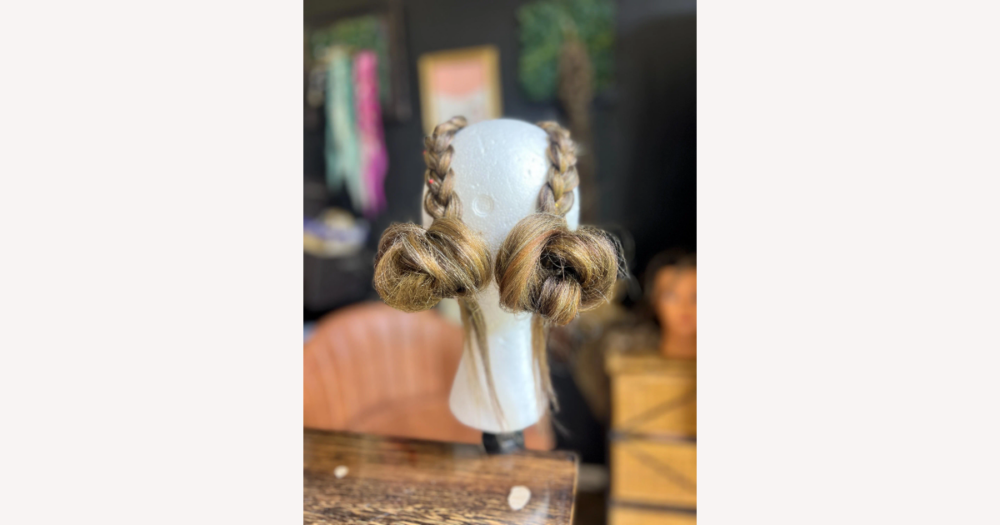
If you want cute, secure space buns from a DHgate wig, the “best” choice isn’t a single product. It’s a wig with the right cap construction, fibers, density, and seller backing so the style looks believable without destroying the wig. This guide explains how space buns wigs are marketed on DHgate, which technical details determine whether you can place and re-style buns safely, and how to use listings, reviews, and buyer protections to avoid thin, overly shiny, hard-to-style wigs.
What a “space buns wig” really is on DHgate
On DHgate, a “space buns wig” usually refers to a hairstyle with two buns placed high on the head, typically symmetrical, and often combined with loose strands, bangs, or face-framing tendrils. Listings use the term in two different ways: some wigs are sold with the buns already styled as the main feature, while others are standard wigs that the seller or model has styled into space buns simply to show what’s possible.
Pre-bunned wigs on DHgate tend to be cosplay or costume-focused: they’re convenient because you can put them on with minimal styling, but the fixed buns and simpler caps often make them harder to restyle, detangle, or wear in other looks. In contrast, more versatile lace-front or basic-cap wigs can be worn straight, wavy, or in space buns if you’re willing to do the sectioning, pinning, and smoothing yourself.
The rest of this DHgate-focused guide assumes you’re choosing a wig whose construction and fibers can actually handle being styled into space buns, rather than trusting that any listing using the phrase “space buns” is automatically built for secure, believable buns.
How cap construction affects where and how you can place space buns
Cap construction decides how realistic your space buns can look and where you can place them. DHgate listings commonly mention basic wefted or nearly capless wigs, lace-front wigs with different depths of lace at the hairline, closure or T-part lace wigs with a small lace area, and full lace or lace-heavy hybrid caps. Full lace and well-made lace-front caps give you the most freedom to part the hair and place buns without obvious tracks, while closure and T-part designs limit your parting to a fixed zone. Simple wefted caps can still be put into buns, but the tracks are much more likely to show when you pull the hair up and apart.
For high space buns on the crown or slightly forward on the head, you need enough lace and density around the part line so the sections don’t open up into visible gaps. Lower buns near the ears are usually more forgiving, but tight ponytails on very simple caps can expose wefts along the sides. If you want frequent or flexible high buns, I would prioritize lace-front wigs with a generous lace area or full lace caps, and only choose basic wefted caps when you’re aiming for occasional, looser buns or costume use where a few visible tracks are acceptable.
Any bun style adds tension to the wig, and repeated tight buns can strain knots and seams—especially on cheaper caps. To keep a DHgate wig usable, avoid over-tightening elastics, section the hair gently, and distribute tension across more pins and smaller sections rather than relying on one very tight ponytail. Respecting the cap’s limits matters as much as choosing the right construction in the first place.
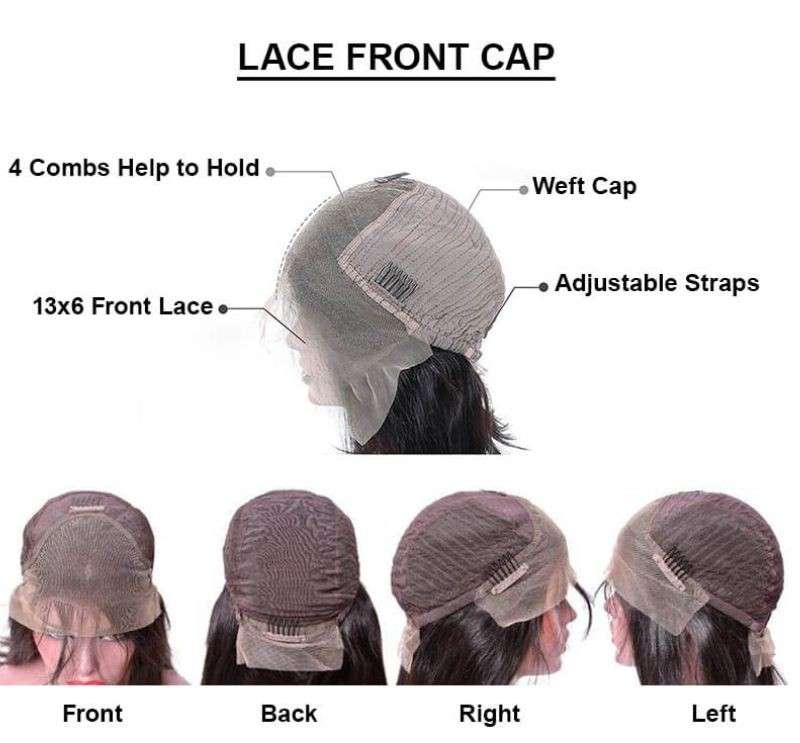
Use this diagram of lace-front, full lace, closure, and 360 lace caps to match what you see in DHgate listing photos to the cap types described above, focusing on where lace areas sit and where wefts would show if you pull the hair into buns.
Fibers, density, and length: what makes a wig easy to style into space buns
| Fiber type | Typical appearance | Styling and heat tolerance | Tangling tendency | Typical price range |
|---|---|---|---|---|
| Low-cost synthetic | Often very shiny with a smooth, plasticky finish; color can look bold but less natural under normal light. | Usually not heat-resistant; can melt or deform with curling irons or high blow-dryer heat, so buns rely on cold styling and hair ties only. | Prone to tangling, especially once you start parting, twisting, and wrapping into buns; brushing aggressively can roughen the fibers quickly. | Lowest prices; common in budget cosplay and one-night styles where realism and longevity matter less. |
| Heat-resistant synthetic | Generally a bit more matte and hair-like than the cheapest synthetics, with improved texture and movement. | Designed to handle low to moderate heat, so you can lightly smooth or add texture before putting the hair into buns, which helps control flyaways and shape. | Still tangles more than good human hair, but better-quality fibers are easier to detangle and re-style after buns if you work gently. | Mid-range prices; a common sweet spot for DHgate buyers who want structured, repeatable space buns without paying human-hair costs. |
| Human hair | Most natural look, with realistic shine and texture that blends better with real hair and everyday outfits. | Handles typical heat-styling tools when used responsibly, giving the most control over smoothing, adding wave, or re-setting the style after undoing buns. | Least prone to permanent matting if you detangle patiently, although tight or frequent buns can still create knots that need careful combing. | Highest prices; best suited to buyers who want long-term wear, versatility, and the most believable space buns appearance. |
Density and length decide whether space buns look full or sparse and how much strain the style puts on the cap. Very low-density wigs tend to open up into gaps and visible tracks as soon as you pull the hair into two high sections, while moderate-to-high density gives you enough bulk to wrap each bun without exposing wefts.
On DHgate you’ll see rough density descriptions like “light,” “medium,” or “heavy,” and sometimes numbers such as 130% or 150%. I wouldn’t chase a specific percentage, but I would avoid ultra-thin listings when I know I’ll be doing updos—aim for at least a clearly described medium fullness and use review photos to confirm the wig looks reasonably thick when hair is lifted off the neck.
Length matters just as much. Short wigs often don’t have enough hair to twist and wrap into secure buns, especially if you want them high on the head. Extremely long wigs can absolutely form space buns, but the hair becomes bulky and heavy, so each bun needs more pins and care to keep the cap from feeling stressed or sliding.
For most space buns looks, a mid-length range—roughly shoulder-length to mid-back—combined with at least moderate density is easier to manage than very short or ultra-long hair. Given the choice, I would choose heat-resistant synthetic or human hair with moderate-to-high density over very cheap, shiny synthetics, even if that means more basic colors or a slightly higher cost. If your priority is budget cosplay or one-time wear, cheaper synthetic fibers and lower density can work, but it’s safer to expect less realism and a shorter lifespan once you start experimenting with buns.
Checklist for judging any DHgate space buns wig listing
- Start with photos: look for clear images of the hairline, parting, and back of the wig, and any examples of space buns or other updos. Compare these to customer-uploaded photos to see whether density, shine, and color look consistent.
- Check cap details in the description. Confirm whether it’s lace-front, full lace, closure, T-part, or a basic cap, and look for at least one photo of the inside of the cap so you can judge where lace ends and wefts begin.
- Verify fiber type and length. Make sure the listing states whether the hair is standard synthetic, heat-resistant synthetic, or human hair, and gives a realistic length range. Be cautious of listings that promise endless styling options but never specify the material or length.
- Look for a stated density or a believable description of fullness, then cross-check with review photos. When hair is pulled up, the wig should still look reasonably thick, without obvious bald spots or tracks at the part.
- If the listing is marketed specifically for space buns, see whether the seller or reviewers actually show the wig styled into buns. Note any visible tracks, gaps, or overly shiny, plastic-looking finish that might make the style less convincing.
- Treat missing specs, only stock or heavily filtered images, or contradictions between photos and text as red flags. On DHgate, it’s usually wiser to skip those listings in favor of options with clearer information and honest-looking customer pictures.
Using DHgate seller ratings and reviews to judge wig reliability
Once you’ve checked a wig’s basic specs, the next filter on DHgate is how the seller actually performs. Start with the overall rating and the number of orders and reviews behind it. A high percentage from only a handful of sales is less reassuring than a slightly lower rating backed by many recent reviews, especially for wigs or hair extensions rather than unrelated items.
Open the review tab and look for comments that mention wigs specifically. For space buns and other updos, the most useful feedback talks about density (too thin vs as advertised), tangling and shedding after styling, whether the color matches the listing, how shiny the fibers look in normal lighting, and whether the hair could be pulled into buns or ponytails without exposing tracks. These details tell you far more about real-world performance than a simple five-star score.
Pay close attention to customer-uploaded photos. Compare the hairline, lace edge, parting, fullness, and shine level in those pictures to the polished promotional images. If buyers’ photos show a much thinner wig, harsher shine, or a noticeably different color, assume the review photos are closer to reality than the main listing.
I would generally favor DHgate sellers whose listing images and review photos match, whose wig-related feedback is steadily positive over time, and who answer questions or complaints in a polite, timely way. Sparse or very old reviews, many negative comments about thin hair, tangling, or misleading length, and a big gap between promo photos and buyer pictures are all signals to pick a different seller, even if the advertised space buns look perfect on the product page.
Avoidable disappointments with budget space buns wigs
How DHgate’s buyer protections apply to space buns wig orders
DHgate works as a marketplace: you pay through the platform, and in many cases funds are not released to the seller until the order is confirmed or a protection period passes. That structure can help if a space buns wig arrives different from what the listing promised, but only if you use the tools DHgate provides.
Before you place an order, take a moment to read the protection and dispute information shown on or near the product page so you know the basic rules that will apply. Check the estimated delivery time and any shipping notes, especially if you need the wig for a specific event. It’s also wise to save or screenshot the key listing details—fiber type, length, stated density, cap construction, and main photos—so you have a clear record of what was advertised if something later changes or disappears.
When the wig arrives, inspect it as soon as possible rather than waiting until after your event. Compare the actual hairline, color, shine, density, and length to the listing description and images, including any review photos you relied on. If there are problems, take clear photos in good light from several angles, keep the original packaging, and describe what you see in messages sent through DHgate’s internal system so your communication stays on-platform.
If the wig is significantly not as described—for example, much thinner than the stated density, a clearly different color, or a cap that is structurally unlike the photos—you will usually need to open a dispute through DHgate within the time limits shown for that order. When you do, provide your screenshots, order details, and comparison photos as evidence so the case handler can see the difference between the listing and the item you received.
Outcome rules and wording can change, so you should not assume any specific result, but your odds of a fair resolution are better if you stay within the dispute window, keep all communication and evidence inside DHgate, and document the listing and the wig thoroughly from the moment you order until you decide whether to keep it.
Gentle steps to create space buns on a compatible wig
- Put the wig on securely before styling. Make sure any combs, clips, or adjustable straps are comfortably anchored, and use a wig cap or extra pins if needed so the wig does not shift when you start creating the buns.
- Create a central or slightly offset part based on the lace area your wig actually has, then divide the hair into two sections that feel as even as possible in thickness. This helps the buns look balanced and avoids overloading one side of the cap.
- Gather each section into a ponytail at the height where you want your space buns, using soft elastics and only as much tension as you need to keep the hair secure. If you feel the cap lifting, seams pulling, or lace puckering, lower the ponytail position or loosen the elastic slightly.
- Form each bun by gently twisting the ponytail or making a loose braid and then wrapping it around the base of the elastic. Secure the bun with bobby pins or small clips that catch the cap seams or wefts rather than yanking on individual strands, which can loosen knots on many wigs.
- Once both buns are pinned, adjust them for symmetry and fullness: lightly fluff the hair to hide gaps, smooth any obvious flyaways, and consider leaving bangs or face-framing pieces out. Those loose strands can soften the look and help disguise a hairline that is less natural, especially on simpler caps.
- Avoid repeatedly restyling very tight, high buns on the same wig, particularly if it has a basic wefted cap or budget fibers. Heavy tension and constant re-doing can stretch the cap and loosen hairs over time, so let your earlier evaluations of density and construction guide how daring you get with bun size and placement.
Matching space buns wig specs to your DHgate buyer profile
- Cosplay / event-focused: You mainly care about bold color and dramatic, visible buns for photos or performances. Look for mid-range synthetic wigs with enough density to build full, graphic space buns, eye-catching shades or unusual mixes, and caps that look fine from a normal viewing distance. I would still prefer at least a bit of lace at the front when photos show the wig worn without big headbands, clips, or other accessories, because it helps the hairline blend even if the fibers are shiny and the wig is only meant for short-term wear.
- Everyday wearable: You want space buns as one of several repeatable styles and care about the wig passing close inspection in normal lighting. Target more natural colors, lace-front or fuller lace caps for a believable hairline and flexible parting, and heat-resistant synthetic or human hair with moderate-to-high density so the buns look full but not overwhelmingly heavy. Because this profile is investing in repeated use, be more cautious about seller reliability and density claims, and favor DHgate listings with clear specs, realistic photos, and strong, wig-specific reviews even if the price is higher.
- Experimental budget: You mostly want to try the look, wear it occasionally, or use it as a low-stakes accessory. Simple basic caps or modest lace-fronts with synthetic fibers are fine, as long as you keep expectations realistic: buns may be smaller, shine more obvious, and the wig may not last many restyling sessions. Avoid very tight or high buns that strain the cap, and rely heavily on review photos and clear descriptions of length and density to pick options that are “good enough” for your budget rather than perfect.
Quick answers to common space buns wig questions
Can you safely undo and restyle a pre-bunned wig from DHgate?
You can usually loosen and restyle pre-bunned wigs, but the fibers have already been twisted and pinned, so they’re more prone to tangling and frizz. Once you take the buns down, the hair often won’t fall as smoothly as a fresh, unstyled wig and the original polished bun shape is hard to recreate. Treat pre-bunned styles as semi-fixed: only plan to restyle them if you’re comfortable detangling gently, respecting the cap’s limits on tension, and accepting a slightly less perfect look afterward.
Do bangs help hide less realistic hairlines on cheaper wig caps?
Yes. Bangs or soft, face-framing pieces can draw attention away from a hard front edge or less natural lace and soften the transition between wig and skin. Many DHgate buyers use blunt or wispy bangs to make simple caps look more believable. However, cutting or customizing bangs should be done carefully or by a professional, because over-cutting, uneven lines, or cutting too short can’t be reversed and may limit how you can wear the wig in other styles.
Are very long wigs harder to put into space buns?
Very long wigs can be styled into space buns, but the extra length creates larger, heavier buns that put more pull on the cap and seams. You’ll usually need more pins, gentler tension, and looser wrapping to avoid stressing the cap or shifting the wig, especially on simpler constructions. Some buyers find medium-length wigs—roughly shoulder to mid-back—easier for balanced, lightweight space buns that can be restyled more often without over-straining the fibers or cap.