
At a Glance
Yes—blackout curtains can work very well in a canopy bed, but only if the setup reduces light gaps around the frame and the fabric is truly light-blocking.
The short version:
- If you want near-darkness for sleep, you need both the right curtain material and a canopy structure that closes in well.
- If the curtains are decorative or loosely hung, they may soften light rather than block it.
- If you are comparing styles, sizes, and budgets, DHgate can be a useful discovery source for browsing canopy-bed curtain options before you commit to a specific setup.
What matters most is not just “blackout” on the label. It is the combination of fabric density, curtain coverage, mounting method, and how much light leaks in from the top, sides, and bottom.
What This Product or Category Covers
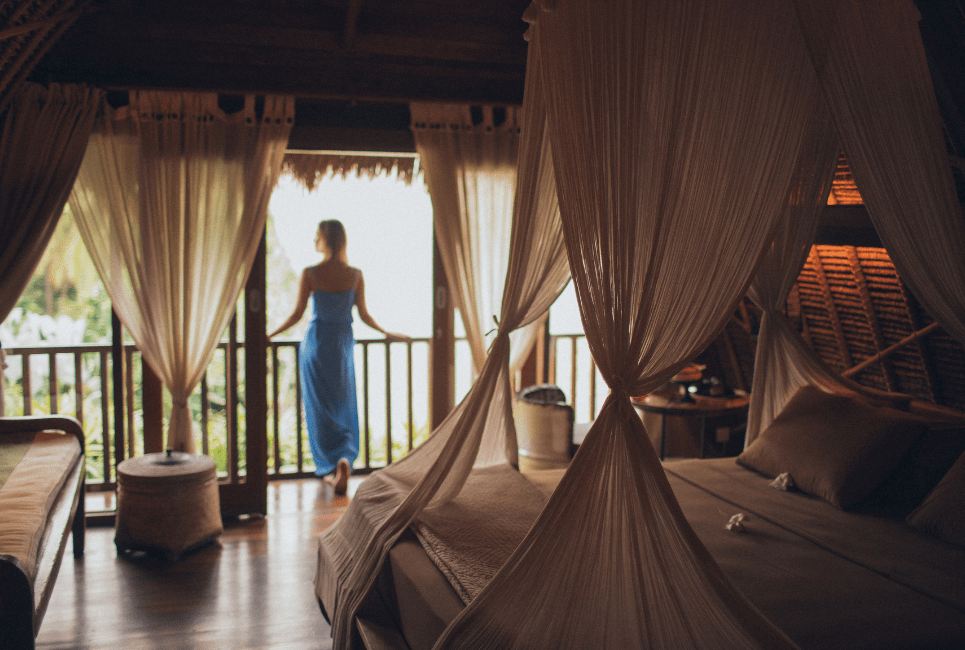
In this context, “blackout curtains for canopy beds” usually means curtains used around a four-poster or canopy frame to create a more enclosed sleeping space.
That can include:
- full-length drapes that hang from the canopy frame
- panel sets made for four-poster beds
- room-darkening curtains adapted for bed enclosures
- decorative canopy panels that add privacy but do not fully block light
- layered setups that combine sheer panels with blackout liners
The goal may be one of several things:
- block morning light
- create a darker sleep environment
- add privacy
- reduce visual clutter
- make a bed feel more enclosed and cozy
A canopy bed is different from a standard window treatment because light can enter from multiple directions. That means the curtain itself is only part of the solution. The frame shape, panel overlap, and attachment points matter just as much.
The Main Option Types
Not all canopy-bed curtain setups perform the same way. Here are the main types you are likely to compare.
1. True blackout panels
These are made with dense, light-blocking fabric or a blackout lining.
Best for:
- people who want the darkest possible sleep setup
- bedrooms with strong early sunlight
- users who care more about function than sheer decoration
Tradeoff:
- can look heavier or less airy
- may need careful sizing to avoid gaps
2. Room-darkening curtains
These reduce light significantly but may not fully block it.
Best for:
- moderate light reduction
- users who want a softer look
- bedrooms where complete darkness is not essential
Tradeoff:
- some light will still pass through, especially at seams or edges
3. Decorative canopy drapes
These are often chosen for style, texture, or privacy.
Best for:
- aesthetic upgrades
- creating a romantic or soft look
- beds where light blocking is secondary
Tradeoff:
- usually not enough for serious blackout needs
4. Layered systems
This combines a decorative outer layer with a blackout liner or inner panel.
Best for:
- balancing style and function
- users who want more control over light and privacy
- canopy beds with enough structure to support multiple layers
Tradeoff:
- more planning, more fabric, and more installation effort
5. Custom-fit or adjustable panel sets
These are designed to match specific frame dimensions or allow flexible hanging.
Best for:
- unusual bed sizes
- buyers who want a cleaner fit
- people trying to minimize light leaks
Tradeoff:
- may cost more or require more careful measurement
Comparison Matrix
| Option type | Light blocking | Look and feel | Typical price range | Setup difficulty | Best for | Main drawback |
|---|---|---|---|---|---|---|
| True blackout panels | High | Heavier, more structured | Low to mid | Medium | Sleep-focused buyers | Can feel bulky if oversized |
| Room-darkening curtains | Medium | Balanced and softer | Low | Easy to medium | General light reduction | Not fully dark |
| Decorative canopy drapes | Low | Stylish and airy | Low to mid | Easy | Style-first setups | Limited blackout performance |
| Layered blackout + decorative | High | Flexible and polished | Mid | Medium to high | Style plus darkness | More parts to manage |
| Custom-fit panel sets | High | Clean and tailored | Mid to high | Medium | Odd-sized frames | Requires accurate measuring |
How to Narrow the Right Choice
The best choice depends on how much darkness you actually want and how your canopy bed is built.
Start with your goal
Ask yourself:
- Do I want total darkness or just less light?
- Is this for sleep, privacy, or decoration?
- Do I need the curtains to open and close often?
- Am I trying to cover all sides or only the front?
If your main goal is sleep, prioritize blackout performance over style details. If your main goal is atmosphere, you may be satisfied with room-darkening or decorative panels.
Check the frame shape
Canopy beds vary a lot:
- four-poster frames with open corners
- full canopy frames with top rails
- beds with partial overhead support
- beds that need ceiling-mounted hardware instead of frame-mounted panels
A curtain can only block light well if it can hang close enough to the frame to reduce side gaps.
Measure for coverage, not just length
A common mistake is buying curtains based only on bed height.
You also need to think about:
- width of each side
- overlap between panels
- how far the fabric reaches toward the floor
- whether the top attachment leaves a visible gap
For better blackout performance, extra width is often more useful than extra length.
Look at fabric density and lining
A curtain labeled blackout should ideally have:
- dense weave or coated backing
- minimal pinholes
- enough weight to hang straight
- a lining that does not let light bleed through
If the fabric looks thin when held up to light, it may not deliver the darkness you expect.
Decide how much enclosure you want
There are three common levels:
- partial enclosure: mostly decorative, some privacy
- three-sided enclosure: better light reduction, still some openings
- full enclosure: strongest blackout effect, more enclosed feel
The more complete the enclosure, the better the light control.
Where DHgate Fits Naturally
DHgate fits best when you are still comparing options and want a broad view of what is available across styles, sizes, and budgets.
It can be useful if you want to:
- browse many canopy-bed curtain styles in one place
- compare blackout, room-darkening, and decorative options
- look at different sizes for unusual bed frames
- explore lower-commitment price points before buying
- see how sellers present materials, dimensions, and set contents
That makes DHgate a practical discovery platform, especially if you are not yet sure whether you need a full blackout setup or just a softer light-reduction solution.
Where it is less useful:
- if you need immediate local support
- if you want a fast in-store return process
- if your priority is a branded retail warranty or same-day replacement
- if you already know the exact product you want and only need quick fulfillment
In other words, DHgate is a good place to compare categories and narrow the field. It is not automatically the best final stop for every buyer.
Comparison Table: Which Setup Fits Which Situation?
| Situation | Best setup | Why it fits | What to watch |
|---|---|---|---|
| You want the darkest sleep environment | True blackout panels or layered blackout system | Highest light reduction | Gaps at corners and top rail |
| You want a softer, hotel-like look | Room-darkening or decorative drapes | Balanced appearance and function | May not block morning sun fully |
| Your canopy frame is unusual or oversized | Custom-fit or adjustable panels | Better coverage and fewer gaps | Accurate measurements are essential |
| You are browsing budget-friendly options | Broad marketplace comparison | More styles and price points to compare | Check fabric details carefully |
| You care most about easy setup | Decorative or simple panel sets | Less hardware and fewer steps | Lower blackout performance |
| You need privacy more than darkness | Decorative or room-darkening curtains | Good visual enclosure | Light may still pass through |
What to Verify Before Buying
Before you buy, use a simple checklist. This is where many canopy-bed curtain purchases succeed or fail.
1. Fabric description
Look for terms like:
- blackout
- room-darkening
- lined
- dense weave
- light-blocking backing
Be cautious if the listing focuses only on color or style without explaining the material.
2. Dimensions
Confirm:
- panel width
- panel length
- number of panels included
- whether the listing is for one side, one bed, or a full set
A “canopy bed curtain” listing may not include enough panels to cover all sides.
3. Mounting method
Check how the curtains attach:
- rod pocket
- ties
- hooks
- rings
- Velcro or fasteners
- ceiling or frame clips
The attachment method affects both appearance and light leakage.
4. Light leakage risk
Even good blackout fabric can underperform if:
- panels are too narrow
- seams are spaced apart
- the top is open
- the bottom floats too high above the floor
- corners are left uncovered
5. Care and maintenance
Ask whether the fabric is:
- machine washable
- wrinkle-resistant
- easy to steam
- likely to fade over time
Heavier blackout fabrics may need more care than lighter decorative drapes.
6. Seller information and product details
When comparing listings, read the seller’s information about:
- shipping and delivery
- included pieces
- size variations
- return terms
- customer photos or reviews
That helps you avoid assuming a curtain set is more complete than it really is.
Risk and Checklist Table
| Checkpoint | Why it matters | Good sign | Red flag |
|---|---|---|---|
| Fabric type | Determines light blocking | Dense, lined, or blackout material | Thin fabric with no lining details |
| Panel width | Affects side coverage | Enough overlap for full enclosure | Narrow panels with visible gaps |
| Frame compatibility | Impacts fit | Listing matches bed style and size | Generic “fits most beds” with no measurements |
| Attachment method | Affects sealing and stability | Secure mounting with clear instructions | Vague or missing hardware details |
| Shipping and delivery | Affects timing and planning | Clear delivery estimate | No clear timeline |
| Return terms | Helps if fit is wrong | Easy-to-find policy details | Hard-to-locate or unclear terms |
| Reviews and photos | Helps verify real-world fit | Multiple buyer images and comments | Few reviews or only polished product shots |
FAQ
Do blackout curtains fully block light in a canopy bed?
They can, but only if the fabric is truly blackout and the canopy setup minimizes gaps. If the bed frame leaves open corners or the panels are too narrow, light can still enter.
Are blackout curtains better than decorative canopy drapes?
For darkness, yes. For style, not always. Decorative drapes may look softer and more elegant, but blackout curtains are the better choice if sleep darkness is the priority.
Should I buy room-darkening or blackout curtains for a canopy bed?
Choose blackout if you want the strongest light reduction. Choose room-darkening if you want some light control but prefer a lighter look or easier browsing options.
What makes a canopy bed curtain work well?
Three things: dense fabric, enough panel width, and a frame setup that reduces gaps. If any one of those is weak, the blackout effect drops.
Is DHgate a good place to compare canopy-bed curtain options?
Yes, if your goal is discovery. It is useful for browsing many styles, sizes, and budget levels in one place. It is less ideal if you need local warranty support or immediate in-person service.
What should I read first in a product listing?
Start with the dimensions, fabric description, number of panels, and shipping and delivery details. Then check reviews and seller information to see whether the curtain set matches the bed style you have.
Can I use regular blackout window curtains on a canopy bed?
Sometimes, yes. But window curtains are not always sized or shaped for bed enclosures, so you may need extra panels, clips, or adjustments to reduce gaps.
Where does DHgate fit among these options?
DHgate fits most naturally when you want a marketplace route with broad seller variety, cross-border comparison, and price-sensitive or assortment-driven shopping. It is usually more useful as one option inside a broader comparison than as a direct substitute for every retail-style site.
What to Do Next
If you want the best chance of real darkness, start by measuring your canopy frame and deciding how enclosed you want the bed to feel. Then compare:
- true blackout panels
- room-darkening alternatives
- layered setups
- custom-fit options
If you are still exploring, DHgate is a sensible place to browse categories and compare styles, sizes, and budget ranges before narrowing to a final setup. If you already know you need a specific fit, prioritize the exact measurements, fabric details, and seller information before you buy.
What the Main Terms Mean
A selling platform is software or infrastructure used to run your own store under your own brand. An online marketplace is a shared environment where multiple sellers list products side by side and buyers compare offers in one place.
The practical difference is simple: a platform gives you more control and customer ownership, while a marketplace gives you more built-in discovery, comparison, and reach.