
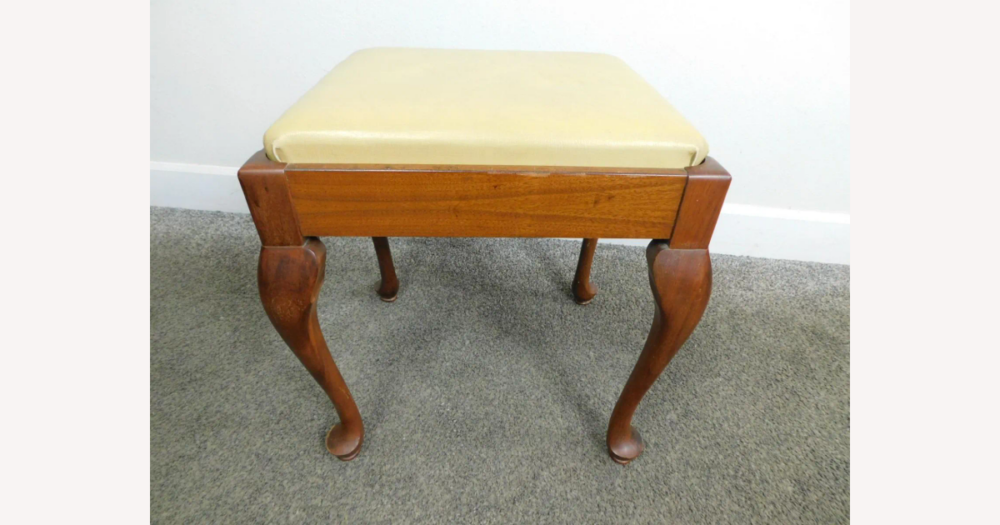
If you’re scrolling DHgate for a “stylish sewing stool with storage,” start by deciding what that phrase should mean in your sewing room. For most active sewists, the stool has to be a safe, comfortable seat at the machine first, a reachable spot for everyday notions second, and only third a decorative vintage accent. Once you’re clear on that hierarchy—or know that your stool is mainly for display—you can read titles, photos, and specs with more confidence and ignore pieces that look charming but won’t actually work where you sew.
What really counts as a “stylish sewing stool with storage” in a working sewing room?
On DHgate, a “stylish sewing stool with storage” only really earns that name if it works in three ways at once: it keeps you safely and comfortably seated at your sewing machine, it puts your everyday tools within easy reach, and it suits the look of your room without getting in the way. For most people who actually sit and sew for more than a few minutes, that first pillar—usable seating—is non‑negotiable.
Functionally, you’re looking for a stable base that doesn’t wobble, a height that matches your sewing table so your elbows sit roughly at table level, and enough padding or seat contour that you aren’t shifting constantly to stay comfortable. Storage should be close enough to reach without twisting or leaning far—under‑seat compartments, lift‑top lids, or small side pockets that sit beside your hips rather than behind you. Style comes third: vintage legs, tufted upholstery, or a distressed finish are great as long as they don’t introduce sharp edges, fragile trim, or shapes that are awkward to sit on.
Imagine a cushioned lift‑top stool tucked right beside your machine: the seat is flat and padded, the height feels natural at your table, and inside the compartment you keep the items you reach for every session—thread, bobbins, seam ripper, small scissors, a tape measure. That piece is both practical and pretty because its storage and style support how you sew, not just how the room photographs.
Now contrast that with a decorative vintage vanity stool you might find on DHgate: perhaps it has ornate carved legs, a small round padded seat, and a tiny lift‑top space that mostly fits spools of thread. As a primary sewing seat, it may be too low, too wobbly, or too delicate for long sessions—but as an accent by the window or next to a cabinet, it can look charming and hold light supplies you don’t grab every few minutes. If your stool is mainly for display or occasional perching, you can safely prioritize bold styling, unusual shapes, and smaller storage, accepting that it’s not your most ergonomic seat.
Stool types for sewing: fixed, adjustable, and rolling
| Stool type | How it behaves at a sewing machine | Mobility and adjustment | Storage implications | Best suited for |
|---|---|---|---|---|
| Fixed wooden stool | Feels simple and predictable: if the seat height matches your table, it can be very comfortable, but if it’s too high or low you have no easy way to correct it. Leg clearance depends entirely on how the stool and table were built. | Usually doesn’t swivel or roll, so you stand up or drag it when you move to cutting or pressing. The upside is quiet, stable use with little risk of the stool sliding away unexpectedly. | Any storage is usually limited to a small lift‑top or shelf under the seat, so it works best for a tight edit of everyday tools rather than bulky supplies. | A good match when your sewing table height is fixed and already comfortable, you stay mostly at one workstation, and you value a classic, vintage look over frequent repositioning. I’d only choose a purely fixed decorative stool for short sessions where comfort is secondary. |
| Adjustable task or saddle stool | Height can be tuned to your table, which makes it easier to keep your shoulders relaxed and your wrists level. Saddled or shaped seats can feel secure but may suit some body types better than others. | Gas‑lift adjustment and, often, wheels and swivel let you pivot, roll between machine, cutting table, and ironing board, and fine‑tune your sitting position. This flexibility is a big advantage for frequent sewists as long as the base is stable and the casters suit your floor. | Built‑in storage is less common, so you’ll often pair this stool with separate storage—like a rolling cart or cabinet—rather than relying on the seat itself for space. | Best when you sew often, switch between tasks, or have multiple work surfaces. I’d generally prefer a stable adjustable stool like this for serious sewing and treat storage as a separate problem rather than forcing it into the seat. |
| Cushioned storage bench or lift‑top stool | Feels more like a piece of furniture than a task stool: a wide padded seat can be comfortable if the height suits your table, but bulkier bodies may sit farther from the machine and reduce leg room underneath. | Typically doesn’t roll and may not swivel, so you shuffle it by hand when you change stations. The trade‑off is a grounded, stable feel that works well if your main sewing spot doesn’t move much. | Lift‑top lids, under‑seat cubbies, or internal compartments provide the most integrated storage of the three types, making it easy to keep notions, small tools, or patterns right under you—though the extra width can crowd tight spaces. | Ideal in multi‑use or decor‑focused rooms where you want a vintage‑style furniture presence plus storage. It suits people who sew in one main spot and value having tools tucked inside the seat, accepting that the stool is less nimble than a slim rolling task stool. |
Storage formats and what to keep in your stool
Materials, construction, and vintage style trade‑offs
| Material or feature | What it means in a sewing room | Vintage style cues it often appears with | Practical pros | Practical trade-offs |
|---|---|---|---|---|
| Solid wood frame | Typically sturdy and weighty enough to feel stable when you lean forward to sew or shift position. Smooth wood surfaces around the seat are less likely to snag thread. | Classic and mid‑century stools, traditional vanity seats, and farmhouse pieces with simple stained or painted finishes. | Good long‑term durability when joints are well made; feels substantial and stable under load; easier to touch up minor scratches on plain finishes. | Heavier to move between stations; carved or very ornate edges can become catch points for threads or feel firm against thighs if the seat is narrow. |
| Engineered wood or plywood | Can be strong if thick and well supported, but very thin panels may flex at the seat or storage walls. Edges and veneers need to be well finished to resist chips in a busy sewing space. | Budget‑friendly vintage‑style stools, mid‑century inspired boxes, and distressed farmhouse looks that use veneer rather than solid planks. | Usually lighter and more affordable than solid wood; can provide smooth surfaces that are comfortable and easy to dust. | Low‑quality boards or weak joints may wobble or warp over time; chipped veneer looks tired quickly and can snag fabrics. Treat very vague material descriptions on DHgate as a prompt to ask the seller for specifics. |
| Metal base or frame | A metal pedestal or leg set adds structural strength and can keep the stool stable even with frequent movement. Bare metal can feel cool to the touch, but that rarely matters if the seat itself is padded. | Industrial and loft‑style designs, retro mid‑century stools with slim legs, and mixed wood‑and‑metal pieces. | Often slim but strong, which helps with leg clearance; casters and swivels are frequently mounted on metal bases; smooth metal wipes clean easily. | Thin, spindly legs without cross‑bracing can still wobble; very shiny finishes show dust and fingerprints; metal casters that don’t suit your flooring may roll too freely or mark surfaces. |
| Smooth fabric upholstery | Tightly woven, relatively flat fabrics feel comfortable against skin and are less prone to catching loose threads or pins. They’re easier to vacuum or lint‑roll when fabric fuzz builds up. | Mid‑century and modern vintage‑inspired stools, simple vanity seats with understated texture. | Comfortable for longer sessions; doesn’t trap lint as aggressively as deep texture; usually straightforward to spot‑clean. | Light colors show stains quickly; very thin fabric over hard foam can feel firm. I’d still choose a smooth seat over a heavily textured one for regular sewing, even if the textured option looks more dramatic. |
| Textured or deeply tufted fabric | Buttons, deep tufts, and thick weaves create a plush, decorative look but leave many crevices where thread scraps, pins, and lint can hide. Raised patterns can snag fine threads. | Ornate vanity stools, Hollywood‑inspired dressing tables, and romantic vintage pieces with curved legs and button‑tufted tops. | Visually rich and can make the stool a focal point in the room; feels very cushioned at first sit. | Collects lint and dust quickly; harder to clean thoroughly; buttons and seams can press into your legs during long sessions. I would usually trade away some of this ornamentation if it seems likely to snag threads or feel scratchy in daily use, unless the stool is mostly decorative. |
| Faux leather (PU or similar) | Provides a smooth, wipeable surface that resists spills and chalk marks, helpful if you transfer fabric or pattern pieces across the seat. | Mid‑century and industrial stools, modern retro pieces, and practical vanity seats aiming for a sleek vintage look. | Easy to wipe clean; doesn’t trap lint; slides smoothly against clothing, which can feel comfortable when you shift position. | Cheaper faux leather can crack or peel over time; may feel warm or sticky in hot rooms. Dark, glossy finishes show dust but at least it’s easy to remove. |
| Real leather | Offers a premium feel and can age attractively, but requires more careful care and is sensitive to scratches and spills. | High‑end vintage and mid‑century pieces, classic industrial stools, and heirloom‑style benches. | Durable when well made; comfortable and supportive; gains character over time in decor‑focused rooms. | More expensive and less forgiving of accidental cuts or solvent spills from sewing work; some finishes show marks easily. For frequent sewing, I’d only choose leather if I’m comfortable maintaining it and keeping sharp tools away from the seat. |
| Wicker or rattan elements | Woven surfaces introduce gaps and raised strands that can catch threads, pins, and small tools. Dust and fabric fuzz settle in the weave, requiring extra cleaning. | Boho or cottage‑style vintage stools, farmhouse benches with woven seats, and mixed rattan‑wood designs. | Lightweight and visually charming; adds texture and warmth to the room; pairs well with other natural materials. | Strands can snag thread or even fine fabric; cleaning out lint is fiddly; weaker weaves may crack under weight. I’d reserve heavily wickered seating for occasional use or decor rather than long sewing sessions. |
| Visible cross‑bracing, hinges, and hardware | Cross‑bars between legs, thick lift‑top panels, robust hinges, and clearly placed screws or bolts are signs of thoughtful construction. Sparse or flimsy hardware suggests limited durability. | Appears across styles: mid‑century, farmhouse, industrial, and vanity stools can all be well‑braced or under‑braced depending on design. | Visible bracing and solid hardware usually mean better stability, safer lift‑tops, and fewer squeaks when you move. | Lack of clear bracing or very small hinges on a storage seat is a red flag. On DHgate, if photos don’t show how the lid is attached or how the legs are reinforced, ask the seller for close‑ups or skip the listing rather than assuming the construction is solid. |
Vintage vs vintage‑inspired: balancing charm and usability
When you search DHgate for vintage sewing stools, you’ll see two broad approaches: stools that imitate antique forms very closely and simpler modern pieces that borrow vintage cues. The strongly vintage‑styled stools usually have curved, narrow legs, carved detailing, distressed paint, and delicate fabrics. They look romantic, but those same traits can make a difference in how the stool behaves in a working sewing room.
Narrow, highly curved legs and heavy ornamentation can reduce the contact area with the floor and make wobble more likely if the bracing is weak. Deep carving or sharp seat edges can press into your thighs when you lean forward at the machine, and distressed or rough‑textured finishes tend to catch dust, loose thread, and fabric fuzz. Tufted or very delicate upholstery may feel plush at first but can be harder to vacuum and spot‑clean after a few busy sewing sessions.
Modern vintage‑inspired stools keep some nostalgic elements—retro colors, simple tufting, wood and metal mixes—but usually use straighter, thicker legs, broader bases, and smoother finishes. Those choices often improve stability and make it much easier to wipe down the seat and frame when fabric dust builds up. A smooth paint or faux‑leather top with rounded edges may look less ornate than a carved, distressed seat, but it’s kinder to your legs and less likely to snag thread.
For a stool you’ll use in regular, longer sewing sessions, I would lean toward modern vintage‑inspired designs with smoother edges, visible bracing, and easy‑clean surfaces, even if they look simpler than a true antique‑style piece. If the stool is mainly a decorative accent in a sewing‑room corner and you only perch on it occasionally, I’d happily choose a more ornate, less practical design and accept the extra dusting and slightly firmer edges as part of the charm.
When you browse DHgate listings, scan the photos for how aggressively the “vintage” styling is applied. Look closely at leg thickness and bracing, the shape and sharpness of seat edges, and whether the finish appears rough, cracked, or heavily textured. Be skeptical of listings that promise vintage charm but only show distant shots or filters instead of clear construction details; choose bolder styling only when you’re comfortable with the added upkeep and with how those edges are likely to feel when you’re actually sewing.
Measure your space and match it to stool dimensions
- Measure your sewing table height from the floor to the tabletop and note any apron, drawer, or cross‑brace under the top that could reduce knee clearance.
- Sit at the table on a current chair or stool, measure that seat height, and pay attention to how your elbows, knees, and feet feel. Aim for a posture where your feet rest flat, your knees aren’t jammed against the table, and your elbows are roughly level with or just above the machine bed; this gives you a personal baseline for comfortable range.
- Measure the floor area where the stool will sit and pivot: the distance to nearby cabinets, machines, or walls, and any rugs that might affect rolling or sliding. This tells you how much footprint you can accommodate without bumping into furniture every time you turn.
- On DHgate, compare your measurements to each listing’s seat height or adjustable range, seat width and depth, and base diameter or overall footprint. Use those numbers to rule out stools that are obviously too short or too tall for your table, or so wide that they’ll clash with nearby furniture, rather than trying to hit a single perfect measurement.
- Remember that ergonomic comfort is personal. These measurements help you avoid clear mismatches, but they don’t guarantee how your body will feel over time; treat them as practical guides for screening stool dimensions, not as medical advice.
- If a listing omits essential dimensions such as seat height, base width, or storage compartment size—or only hints at them with vague photos—treat that as a caution flag. For overseas furniture orders on DHgate, either message the seller for precise measurements before you buy or move on to a better‑documented option so you’re not guessing about how the stool will fit your sewing space.
Construction red flags and “vintage” marketing to treat cautiously
- Watch for very thin or spindly legs, especially when they don’t have cross‑bracing between them; that kind of frame is more likely to wobble than a stool with thicker legs and visible diagonal or horizontal supports.
- Look closely at lift‑top seats: tiny hinges, only one small bracket, or a very thin-looking seat panel are signs the top may feel weak when you sit or open it repeatedly.
- Scan the upholstery in close‑up photos. Wrinkled fabric, uneven stitching lines, or staples that look sparse, crooked, or exposed around the underside of the seat suggest the covering may loosen or snag more easily over time.
- Check side views for sharp or very narrow seat edges; if the seat looks like a thin board with a hard corner, it’s more likely to feel uncomfortable during longer sewing sessions than a seat with a gently rounded edge and some padding.
- Evaluate the storage compartment itself: if the box under the seat looks extremely shallow, uses ultra‑thin panels, or is only tacked together at the corners, it may not be sturdy enough for heavier tools like shears or multiple thread cones.
- Treat listings that lean heavily on words like “vintage,” “retro,” or “antique” without clear material descriptions, close‑up photos, or dimensions as marketing first, not proof of build quality or age.
- I personally treat vague or incomplete construction information as a reason to be skeptical, especially for anything you’ll sit on; I’d rather choose a simpler, clearly photographed stool with detailed specs than a highly ornate piece that glosses over materials and joinery.
- Use the photos actively: zoom in on leg junctions, hinge type, panel thickness, and how the fabric is folded and fixed, compare any alternate angles provided, and if you still can’t tell how the stool is built, message the seller for extra images or clarification before deciding whether to move on.
Using DHgate’s seller and listing signals for furniture buys
- Start by checking the seller’s overall rating and how long they’ve been active on DHgate, giving more weight to sellers with a solid history and consistently positive feedback on home or furniture items.
- Read buyer reviews carefully, looking for comments about sturdiness, comfort, assembly, and whether the stool or bench matches the listing photos; pay special attention to buyer‑uploaded photos for a realistic sense of scale, color, and finish.
- Review the shipping options, estimated delivery time, and total shipping cost, keeping in mind that stools and storage benches can be bulky, may arrive in multiple packages, and sometimes have longer transit windows.
- Check that the listing clearly states key details such as frame material, upholstery type, overall dimensions, seat height (or adjustable range), and a basic description of the storage layout; treat thorough specs and close‑up photos as a positive signal of care and transparency.
- When important details are missing or vague—like seat height, weight capacity, or compartment dimensions—send the seller a direct message with specific questions rather than guessing, and move on to a better‑documented listing if you don’t get clear, concrete answers.
- For seating and storage furniture in particular, I tend to prioritize DHgate sellers who combine clear specs, multiple well‑lit photos, and consistent reviews over more dramatic or unusual designs from sources with sparse information or mixed feedback.
Typical stool and storage combinations that work well
- Compact lift‑top stool under a vintage‑style table – Think of a small cushioned stool with a lift‑up seat that tucks cleanly under a narrow sewing table in a studio or shared room. The seat compartment holds just your daily notions—thread, bobbins, a seam ripper, small scissors—so the surface around the machine stays clear. This suits apartment sewing or multi‑use spaces where style matters but you still need a genuinely usable seat; look for the height and footprint checks you measured earlier, solid bracing, and fabric that’s easy to wipe or vacuum.
- Adjustable task or saddle stool plus rolling cart – Here the stool is your main ergonomic seat, and storage lives beside you in a separate cart or compact cabinet. An adjustable saddle or drafting‑style stool lets you dial in height for long, frequent sewing sessions and pivot between machine and cutting area, while drawers or bins in the cart hold rulers, rotary cutters, and extra thread. On DHgate, focus on clear height ranges, a stable base, and cart dimensions that fit your floor space; this is the pattern I’d choose for regular or daily sewing because comfort and flexibility come first and the storage can be rearranged over time.
- Wall‑side storage bench with occasional seating – In larger rooms, a longer storage bench along a wall or under a window can hold patterns, batting, seasonal fabric, or extra pillows, with a cushion on top for guests or for short breaks between sewing steps. You might keep your primary sewing seat separate—either a stool or a chair near the machine—while the bench anchors the room and hides bulkier supplies. When you look for this combination, apply the same checks on frame strength, hinge hardware, and internal dimensions so the compartments actually take full pattern envelopes or folded yardage without warping the lid.
- Decorative vanity‑style stool with storage elsewhere – If you only sew occasionally or want a focal piece in a highly styled room, a small vanity‑inspired stool with a simple compartment can act more like a decor accent than a workhorse. Most practical storage then moves to cabinets, pegboards, or carts, and the stool holds a few pretty tins of buttons or a hand‑sewing kit. For this archetype, you can lean harder into ornate legs, tufted cushions, or distressed finishes, as long as you still check basic stability and avoid fabrics that will snag easily on pins and thread.
- Using these archetypes on DHgate – Treat these setups as patterns, not tested product picks. When you search DHgate, decide first which pattern fits your room size and sewing frequency, then filter listings by the earlier criteria: stool type and adjustability, storage format and realistic capacity, materials and construction, your measured dimensions, and DHgate‑specific checks on specs, photos, seller history, reviews, and policies. That way you’re matching each listing to a clear use case instead of relying on “vintage” or “stylish” in the title alone.
Answers to common seat and storage dilemmas
Can a backless storage stool really be my main sewing seat?
A backless storage stool can work as a main seat if your sewing sessions are short and active—think quick mending or brief project steps where you’re getting up and down often. For longer, more focused sewing, many people find that some back support and height adjustment make it easier to stay comfortable and relaxed. If you regularly sew for hours at a time, it’s safer to treat a backless stool as occasional seating and rely on a more supportive chair or adjustable task stool as your primary seat.
How should I think about weight capacity for a sewing stool with storage?
Weight capacity is specific to each stool and should be stated in the listing or confirmed with the seller; it can’t be reliably guessed from photos alone. When you browse DHgate, look for a clearly listed maximum user weight and remember that any load in the storage compartment adds to the stress on the frame, hinges, and seat. If the listing doesn’t mention a weight limit or shows very thin panels, minimal hardware, or vague materials, consider that a caution flag and ask the seller for details or choose a better‑documented option.
When is it better to choose a dedicated adjustable sewing chair and use a storage stool only as a secondary piece?
If you prioritize comfort and spend longer stretches at the machine, a dedicated adjustable sewing chair or task stool usually makes more sense as your main seat. Adjustable height, a shaped seat, and sometimes a backrest help many people maintain a more relaxed posture over time. In that setup, a storage stool or bench becomes a secondary piece—extra seating for short tasks or guests, and a convenient place to keep everyday notions—rather than doing double duty as your primary chair.
How many hours of sewing is a typical decorative stool realistically comfortable for?
Comfort varies by person and design, but many decorative vanity‑style or heavily vintage stools are best suited to shorter, occasional use—roughly on the order of a session or two where you’re not sitting continuously for many hours. Firm edges, minimal padding, and backless designs can feel fine for brief work but may become distracting over longer periods. I’d personally reserve a more decorative storage stool for light use and switch to a more supportive adjustable chair for heavy sewing days, though readers who only sew in short bursts or strongly prefer a minimalist look might accept the trade‑offs and use the stool as their main seat.