
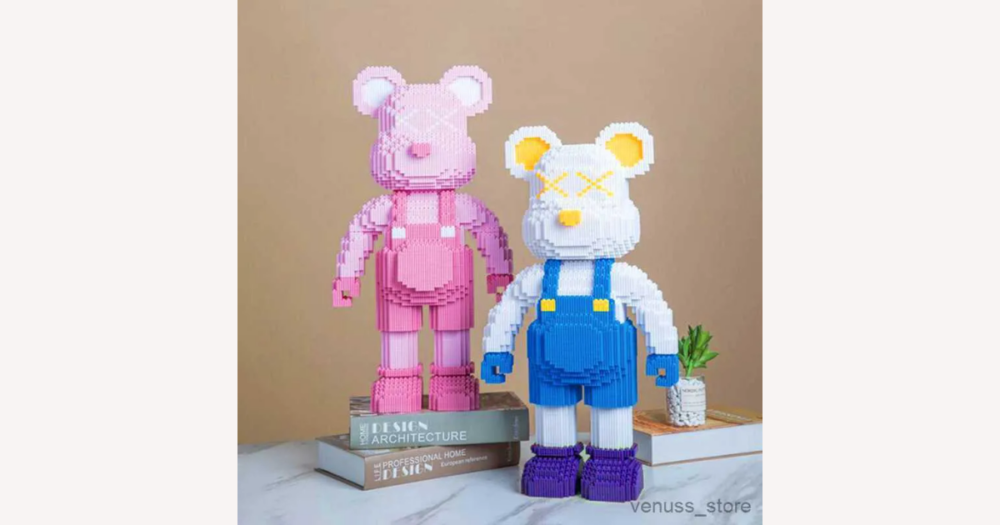
If you want to customize your Bearbricks and are wondering how DHgate fits into that plan, start by treating them as articulated plastic art toys with standardized size labels and then matching those sizes to generic accessories—paints, decals, clip-on parts, stands, and display cases. This guide focuses on how to read DHgate listings for specifications, materials, and seller signals and how to run a simple pre‑purchase checklist so you can decide whether a potential accessory is worth trying, without needing direct product recommendations.
Know your Bearbrick and common customization add‑ons
Bearbricks are articulated hard‑plastic art toys with a simple bear silhouette and roughly nine points of articulation. Most official figures are described in standardized size labels such as 100%, 400%, and 1000%, which indicate overall height and general proportions, but the exact dimensions and engineering details can still vary by series.
For customization, that body shape and scaling matter because any headgear, backpacks, armor shells, bases or stands, display cases, and clip attachments have to match the figure’s head width, limb thickness, and total height. A helmet or clip‑on accessory that fits a 100% Bearbrick will usually not sit the same way on a 400% or 1000% version, and tight pieces around joints can interfere with movement.
Because different Bearbrick releases can change proportions slightly, you should treat any non‑official accessory marketed as “Bearbrick compatible” as approximate rather than guaranteed. Later, when you look at DHgate listings, plan to confirm measurements, attachment methods, and size ranges yourself instead of relying only on a compatibility claim in the title.
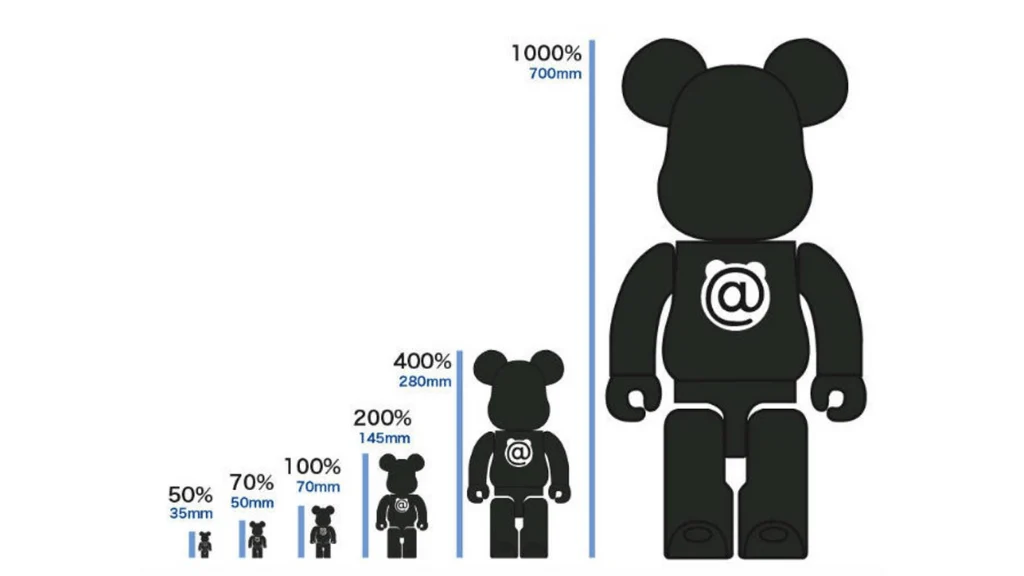
The image compares several Bearbrick size scales to show how the same bear silhouette changes height and proportions from smaller to larger figures.
- Paints and coatings: general art supplies such as acrylic paint sets, spray paints clearly labeled for plastic, primers, and clear coats. On DHgate, these are usually listed as art paint sets or spray paint for plastic, not Bearbrick-specific products.
- Decals and stickers: DIY decal sheets, vinyl sticker packs, and transfer stickers that you can cut or position to fit Bearbrick surfaces. You’ll typically find them under DIY decal sheet or vinyl stickers rather than any Bearbrick tag.
- Small decorative parts: charms, chains, mini props, and keychain hardware that add detail around the figure. These often appear as jewelry-making supplies or craft accessories and can be adapted using clips, loops, or adhesive.
- Structural clip-on parts and shells: armor-style pieces, masks, or other add-ons designed to grip a toy’s body. On DHgate, they may be described as toy accessories or model parts, and they need clear clip dimensions or figure height to be plausibly compatible with a particular Bearbrick size.
- Stands, bases, risers, and shelves: generic display hardware for figures or collectibles, frequently categorized under home decor or toys & hobbies. Search terms like vinyl toy stand, figure base, or display riser are more reliable than vague “Bearbrick stand” labels.
- Acrylic display boxes and dust cases: clear boxes, domes, and background panels that protect and frame your Bearbrick. These usually appear as acrylic display box or collectible figure case; you decide if they fit by comparing internal dimensions to your Bearbrick’s height and width.
- Lighting and background accessories: LED strips, spotlights, and printed backdrops that enhance a display but don’t touch the figure directly. They’re sold as LED display lights or decorative backdrops, and you mainly check power, size, and placement options.
- On DHgate most of what you’ll see for these categories are generic hobby and display supplies, not official Bearbrick-branded parts. Focus on clear product-type labels and measurements instead of trusting a vague “Bearbrick accessory” title on its own.
Use DHgate search and filters to find potential customization parts
- Start with broad, generic search terms that match the accessory type, such as “vinyl toy stand”, “acrylic display box”, “DIY decal sheet”, or “spray paint for plastic”, instead of only searching “Bearbrick accessories”.
- Add modifiers like size range, material, or intended use—for example “for figures”, “for plastic”, or an approximate height—to steer results toward items that could realistically work with your Bearbrick size.
- Try related phrases that reference toys or art figures, such as “bear toy display”, “art toy stand”, or “collectible figure case”, knowing that many DHgate listings will never mention Bearbricks by name.
- Use DHgate’s category filters or tags to move away from unrelated products and into sections like “toys & hobbies”, “home decor”, or “arts & crafts” that better match customization and display uses.
- Scan search results and thumbnails, quickly discarding listings whose main image or title clearly doesn’t match the accessory type you need or whose photos look wildly inconsistent or misleading.
- Open promising listings in new tabs or save them to a wishlist for later comparison, focusing on items whose titles, primary photos, and basic specs line up with the Bearbrick customization idea you have in mind.
- Favor deliberate, filter-guided searching over impulse clicks on flashy but vague listings; when fit and compatibility matter for stands, cases, or clip-on parts, careful search terms usually lead to better candidates.
Check specifications for size, fit, and how the accessory attaches
Once you have a few candidate accessories open on DHgate, treat the specification section as your main decision tool. Look first at overall dimensions: height, width, and depth for stands, bases, and display boxes, and compare them with the approximate size of your Bearbrick (for example, whether it’s closer to a 100% or 400% figure). For cases or cradles, internal measurements matter more than outer size—an acrylic box might be tall enough but too narrow at the base, or a stand’s peg spacing may not match the figure’s feet.
For add‑on pieces, pay attention to any slot, groove, or clip sizes. If a listing gives diameters, thicknesses, or opening widths, use those to judge whether a part could reasonably wrap around a limb or sit between the figure’s ears. Labels such as “for 6–8 inch figures”, specific height ranges, or footprint measurements are more useful than a single photo, especially when the accessory is meant to cradle or enclose the toy.
Attachment method is just as important as size. A part that clips around an arm or leg can restrict articulation or leave pressure marks; adhesive pads or tapes may be semi‑permanent and can affect printed designs; chains or hanging hardware change how and where the figure is displayed; simple platforms rely entirely on balance. Good listings explain how the accessory attaches in words, not just pictures, so you can judge whether you’re comfortable with the trade‑off between stability and wear.
Finally, consider weight and material density. Heavy metal bases or thick resin add‑ons can shift the Bearbrick’s center of gravity and make it easier to tip over, while very light plastic platforms may slide if the figure is bumped. If a listing mentions material (such as acrylic, metal alloy, or resin) and gives a weight or at least a feel description, you can better predict whether the accessory will keep your figure stable or make it more fragile in everyday use.
Consider material compatibility with Bearbrick plastics
Most Bearbricks are made from hard plastics such as ABS or similar materials, which behave differently under paints, solvents, and adhesives than softer vinyl or fabric. That means you need to think about how each customization supply will interact with a smooth, rigid plastic surface rather than assuming anything labeled for crafts will be safe.
In toy and model work, water‑based acrylic paints and coatings are often used because they tend to sit on the surface without aggressively attacking the plastic underneath when applied correctly. In contrast, strong solvent‑based paints, thinners, or powerful cleaners can soften, discolor, or warp many plastics if they’re too concentrated or left on the surface for long. Some spray paints and clear coats are specifically labeled as suitable for plastic; those labels are worth seeking out in DHgate descriptions when you’re comparing possible options.
Decals and stickers depend on the right adhesive strength. Very aggressive glues can leave cloudy residue on glossy Bearbrick surfaces or even lift printed designs when removed, while very weak adhesives may peel at the edges or fall off quickly, especially on curved limbs or heads. Listings that mention removable adhesives, repositionable decals, or use cases like “for plastic models” give you more clues than generic “sticker” labels.
For glues and add‑on parts, look for products or accessory descriptions that mention plastic models, epoxy systems, or specific plastic‑safe adhesives. These are generally designed to bond hard plastics without melting or cracking them. Vague references to “super glue” or “strong glue” without any substrate information are harder to judge, particularly when you don’t know the exact plastic blend used in your Bearbrick or the accessory.
Exact reactions always depend on the particular Bearbrick release, the third‑party part, and environmental conditions like temperature and humidity. Even two ABS figures can respond differently to the same paint or glue, and long‑term durability is difficult to predict from listing text alone, which is why a cautious, test‑first approach matters.
Read listing and seller signals as quality evidence
Once you’re reasonably comfortable with specs and materials, treat the listing’s photos as your first quality filter. Multiple images that show the accessory from different angles, including close‑ups of attachment points, joints, or surface texture, suggest that the seller actually has the item or a close sample in hand. Galleries where every photo looks like the same object, shot in similar lighting and background, are more reassuring than mixes of obviously different products. If you see generic stock images, inconsistent colors from one photo to the next, or pictures that don’t match the title at all, assume the listing is higher risk and only consider it for low‑stakes experiments, if at all.
Read past the title into the full description. Strong listings spell out dimensions, mention specific materials (for example, ABS plastic, acrylic, or metal), and describe how the accessory is meant to be used—such as “fits 100% figures,” “for small vinyl toys,” or “desk display only.” Any notes about compatible heights, figure types, or weight limits make it easier to judge whether a Bearbrick will sit or clip securely. When descriptions stay vague—“high quality accessory” with no measurements, no material names, and no usage examples—you’re being asked to take more on trust than I’d be comfortable with for a centerpiece customization.
Buyer reviews and ratings can add another layer of imperfect evidence. Focus less on the overall star score and more on comments that mention actual size, fit, and color: remarks like “smaller than I expected,” “fits my model perfectly,” or “color is lighter than photos” are more helpful than generic praise. Because most reviewers won’t name Bearbricks specifically, scan for references to figures, statues, or collectibles to see how the accessory behaves with similar objects. Sparse, very short, or obviously copy‑paste reviews don’t tell you much, so treat those listings as if they had no feedback at all.
Seller‑level signals help you gauge consistency over time. On DHgate, overall rating, the number of completed transactions, and visible account age can all hint at how long a seller has been active and how often buyers are satisfied enough not to complain. I’m more inclined to trust a moderately priced accessory from a seller with a long track record and steady feedback than a dramatic bargain from a new account with almost no history, but even a strong profile is only modest reassurance, not a guarantee.
When all of these signals line up—clear, consistent photos, detailed descriptions, specific buyer comments, and a stable seller history—you can treat the listing as a relatively lower‑risk option, though there is always some uncertainty with cross‑border orders. When they don’t—few or mismatched images, vague text, no real reviews, and a brand‑new seller—it’s better to either walk away or, at most, buy a single piece as a test rather than trusting it for a main display or an expensive custom figure.
Run a DHgate‑specific pre‑purchase checklist
- Item dimensions and fit: Compare the accessory’s listed measurements with the Bearbrick size you own, including internal dimensions for stands, clips, or cases. If numbers are missing or don’t make sense, don’t assume it will fit.
- Materials and compatibility: Confirm that paints, coatings, adhesives, or accessory materials are described clearly and seem plausible for hard plastics or figures, or that you’re willing to test them first on a hidden area or a less important toy.
- Listing and seller quality: Recheck photo clarity, description depth, buyer review patterns, and seller ratings so you’re not overlooking obvious warning signs in your excitement about the design.
- Communication: If any crucial detail—size, material, attachment method—remains unclear, message the seller and wait for a specific answer with numbers or named materials rather than accepting vague reassurance before ordering.
- Transaction setup: Make sure you’re paying through DHgate’s own checkout, review the full cost including shipping and any taxes, and confirm the estimated delivery timeframe so you’re not surprised by delays or extra charges.
- Shipping and packaging: Where possible, choose tracked shipping and look for any mention of protective packaging, especially for fragile items like acrylic cases, clear parts, or small decorative pieces that could crack in transit.
- Contingency planning: Go in knowing that DHgate, like many marketplaces, offers dispute and refund mechanisms when items arrive damaged, significantly different from the description, or never arrive, but that specific terms can change. Keep order confirmations, listing screenshots, and message history organized in case you need to open a case.
- Final go/no‑go: If, after all of this, key specs, materials, or seller answers are still vague, treat that as a hard stop rather than a minor inconvenience, no matter how tempting the price or design might be.
Manage common risks when buying customization parts online
- “Compatible” parts that aren’t: Many unofficial or generic accessories are advertised as fitting Bearbricks but arrive too loose, too tight, or sitting at an odd angle. Treat any vague compatibility claim as a warning sign, and test with a single figure before planning a full display or large order.
- Generic scaling and proportions: Bases, stands, or clip‑on pieces sized for other vinyl toys may not match Bearbrick foot spacing, ankle shape, or body proportions, so they can wobble, tilt, or restrict articulation. When possible, compare listed measurements with your figure and assume you may need to adjust or lightly modify generic parts.
- Color differences from photos: Lighting, filters, and screen settings can make paints, decals, or accessories look slightly different in person, which matters if you’re coordinating a display. Expect some variation, and avoid projects that depend on an exact shade unless the listing shows multiple real‑life photos and clearly names the color.
- Fragile or low‑quality materials and shipping damage: Some plastics or metals may feel flimsy, arrive with surface scratches, or break under light pressure, and long cross‑border shipping routes increase the chance of damage if packaging is thin. Assume that delicate items like clear acrylic, thin clips, or metal add‑ons need extra care and may not survive rough handling.
- Start small before committing: Reduce downside by ordering one unit or a very small batch first to test fit, color, and durability on a single Bearbrick. Only scale up once you’re happy with how the accessory behaves in real use.
- Document what you’re promised: Prioritize listings with real‑life photos and close‑ups of attachment points, and take screenshots of specs, size charts, and key messages with the seller before you pay. If something arrives very different from what was shown, those records make it easier to explain your case to support.
- Inspect quickly and act within deadlines: Open packages as soon as they arrive, check for fit, finish, and damage, and decide promptly whether the items match your expectations. Platform dispute and refund windows are time‑limited, so early inspection gives you more room to contact the seller or open a case if needed.
- Treat each order as an experiment: Cross‑border marketplace shopping always carries some uncertainty, especially for niche customization parts. Think of each purchase as a trial with managed downside—use small orders, careful documentation, and realistic expectations so that a mismatch is an annoyance, not a major setback to your collection.
FAQ: Official parts, vague listings, and change‑of‑mind orders
Does DHgate sell official Bearbrick parts or only third‑party accessories?
DHgate is a marketplace where many independent sellers list their own products. Some may claim to sell brand‑related or “Bearbrick” items, but official status depends on authorization from the brand, which is rarely clear in generic listings. For customization projects, it’s safest to assume that most parts and accessories on DHgate are third‑party unless the seller provides verifiable proof of official licensing and you can confirm it independently.
What should I do if a DHgate listing is vague about Bearbrick compatibility?
Treat vague compatibility claims as a risk rather than a bonus. If the listing doesn’t clearly state dimensions, supported figure heights, or how the accessory attaches, use DHgate’s messaging tools to ask the seller for precise measurements and material details. If they can’t provide clear numbers or a straightforward explanation, especially for structural or expensive accessories, it’s usually better to skip that item and look for a better‑documented alternative instead of gambling on fit.
What happens if my customization item arrives and I change my mind before using it?
Change‑of‑mind situations are handled by a mix of DHgate’s current platform policies and each seller’s own return rules. Some listings allow returns only when items are damaged or “not as described,” and may not accept unused items just because you decided not to keep them. Before ordering, read the return and refund section on each listing carefully and assume that some customization supplies may be non‑returnable for personal preference reasons even if you could seek a refund when they arrive significantly different from the description.
Does customizing Bearbricks affect their resale value?
Customization usually shifts a Bearbrick from being a standard collectible into a personal art project. While some unique customs may appeal to specific buyers, many collectors prefer factory‑original figures, which can limit resale demand or affect pricing. If resale value matters to you, reserve your most valuable or rare pieces and focus customization on figures you’re happy to keep as personal works, not investment assets.