
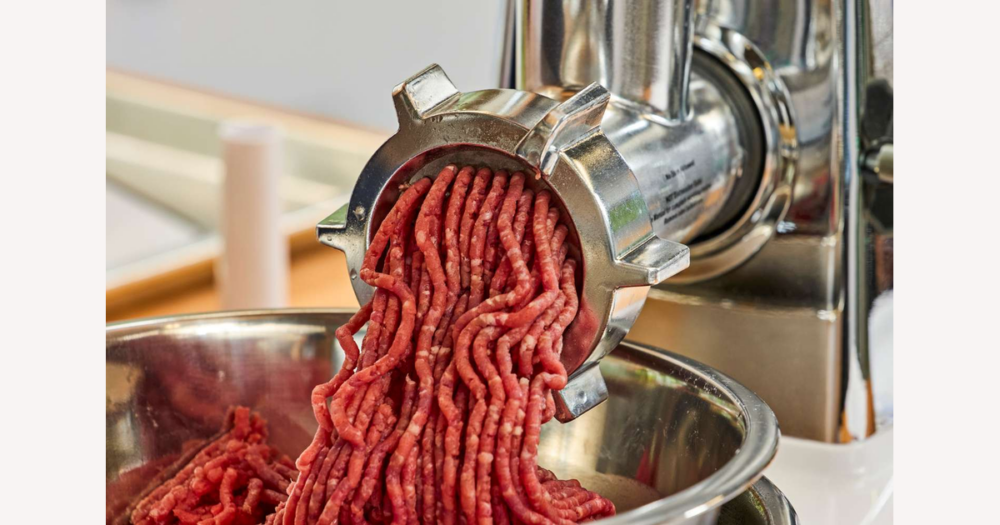
If you want that classic loose, juicy burger texture, the equipment matters as much as the recipe. On DHgate, look for a true meat grinder or sturdy stand‑mixer grinder attachment with at least one coarse plate and food‑safe, durable materials. Before ordering, confirm the plate options, capacity, and compatibility with the seller so the grinder you receive can produce the texture you have in mind.
Equipment types that can realistically produce burger-style coarse grinds
For grinding meat on DHgate with the loose, slightly chunky texture that suits burgers, the most reliable tools are dedicated electric meat grinders and solid stand‑mixer grinder attachments. Both push meat through a fixed plate rather than just chopping it, so you get more control over particle size and a repeatable coarse grind when you choose a coarse or medium plate.
A meat grinder works by feeding meat into a screw that pushes it forward and forces it through holes in a plate. That extrusion step creates distinct pieces and a consistent texture. A food processor instead uses spinning blades that repeatedly chop whatever is in the bowl; with short pulses and small, cold batches you can approximate a coarse grind, but one or two extra pulses can turn the meat mushy and uneven.
If burgers are a regular menu item, I would choose an electric grinder or a robust stand‑mixer attachment, because they combine steady texture, reasonable speed, and manageable cleaning for typical home and light‑commercial batches. Manual crank grinders can also produce good burger texture, but they demand more physical effort and patience, especially for larger quantities. A compact food processor or small hand grinder is acceptable when you only grind occasionally or have very limited space, as long as you accept the trade‑off in fine control and stick to careful pulsing and modest batch sizes.
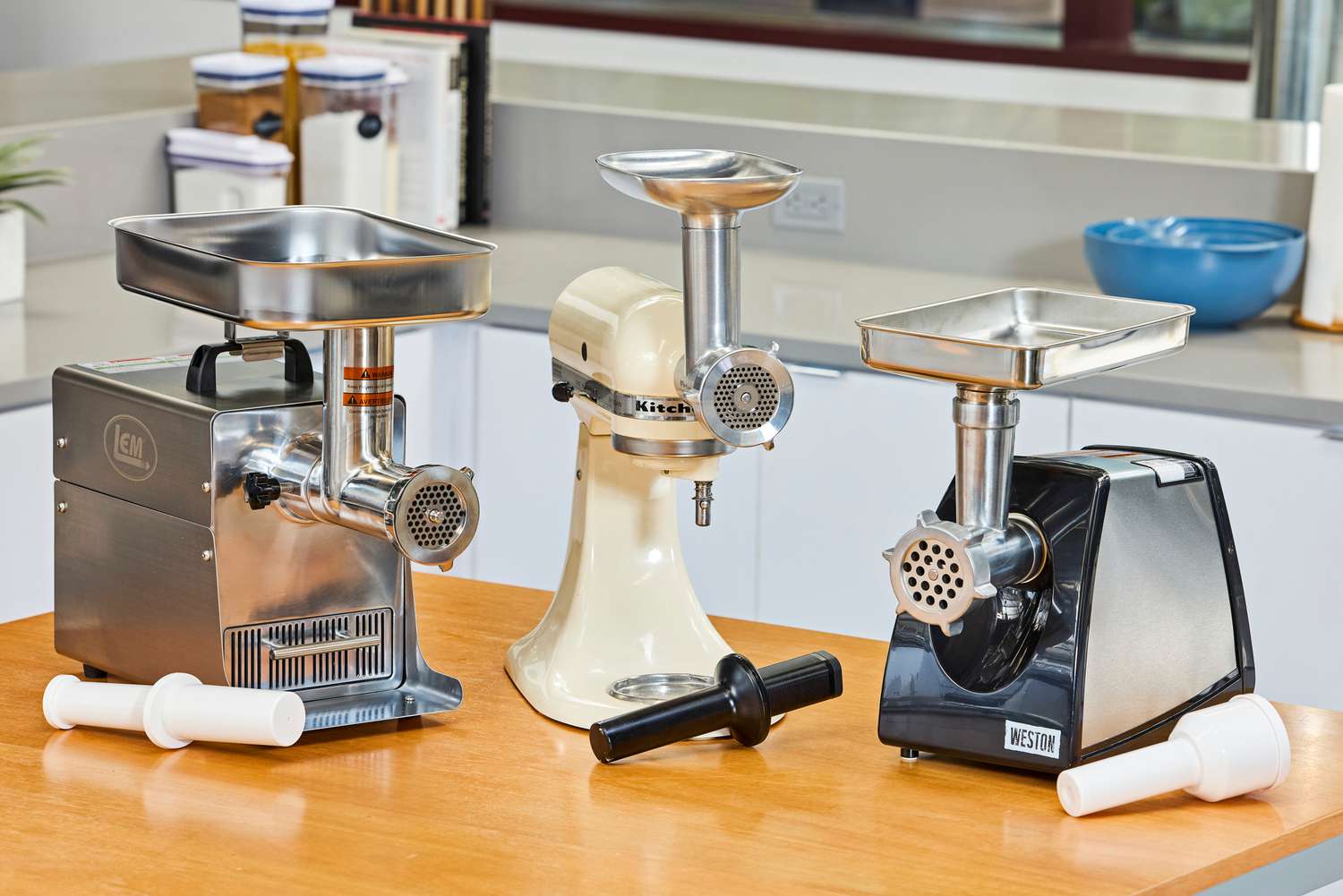
The image shows several meat‑grinding tools—a countertop electric grinder, a stand‑mixer with grinder attachment, a manual hand‑crank grinder, and other compact machines—lined up on a kitchen counter to highlight their different sizes and layouts.
How grinder plates and passes shape burger texture
Grinder plates with larger holes leave meat in distinct particles with tiny air gaps between them, which is what gives a burger patty its loose, tender bite. When meat is pushed through a coarse or medium plate, the fat is cut rather than smeared, and the pieces still look like small chunks rather than paste.
Fine plates have much smaller holes, so the screw has to push the meat harder to get it through. That extra pressure and smaller opening break the meat down further and smear the fat, tightening the structure into a very uniform, dense grind that suits sausages or meatballs more than burgers. Running meat through a grinder multiple times—especially with a fine plate—smooths and compresses it even more, which is why most burger grinds use a coarse or medium plate in a single pass.
There is no single “perfect” hole diameter for burgers. Different sources recommend slightly different sizes, and the ideal feel depends on the cut you use, the fat ratio, and your own preference. Treat plate choice as a starting guideline instead of a rigid rule: begin with the coarsest plate that comes with your grinder, test the texture on a small batch, and adjust only if you find it too chunky or too loose to hold together.
From a buying perspective, equipment that accepts interchangeable plates and includes at least one clearly coarse option is more flexible for burger‑style grinds than a tool locked into very fine plates only. When you review DHgate listings, pay attention to whether plate sizes are described or shown clearly enough to identify a coarse pattern, and favor grinders where you can swap plates as you refine your preferred burger texture.
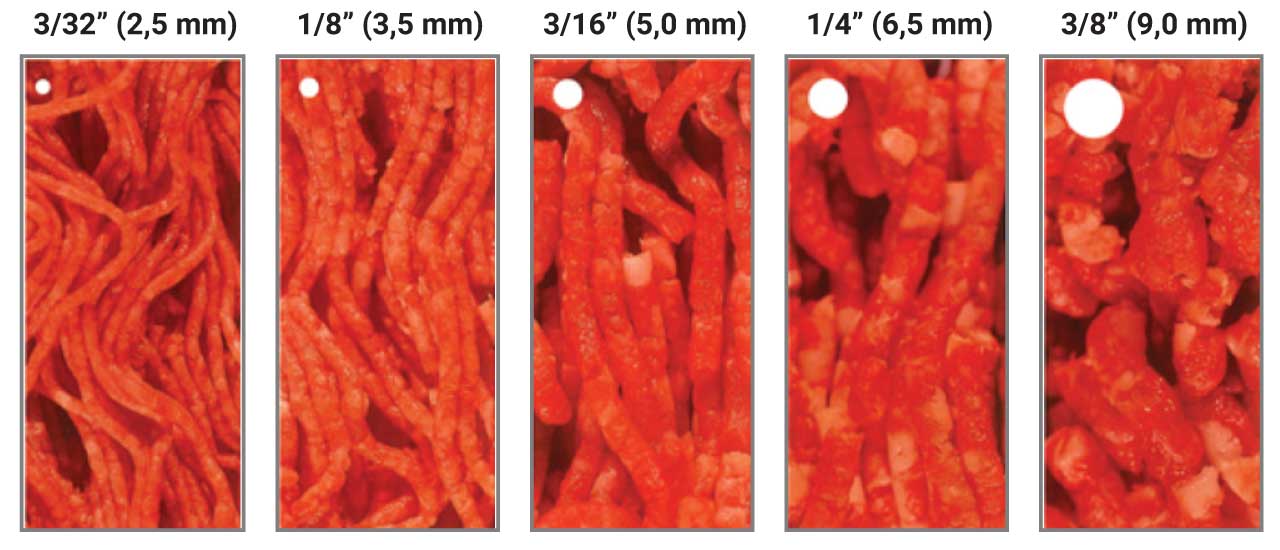
The diagram compares grinder plates with large versus small holes and shows how meat extruded through each looks more chunky or more paste‑like, helping buyers connect plate specifications to expected burger texture.
Comparing grinder options for everyday burger grinding
| Equipment type | Grind control for coarse burgers | Batch size and speed | Ease of cleaning | Noise and bulk | Typical materials | Author’s burger-use preference |
|---|---|---|---|---|---|---|
| Electric countertop grinder | Most consistent control over a coarse grind thanks to steady motor power and interchangeable plates; easy to repeat a loose burger texture once you dial in a coarse or medium plate. | Suited to larger batches; runs continuously and processes meat quickly as long as you don’t overstuff the feed tube. | More parts to disassemble, but many are designed to come apart for thorough washing; can feel a bit fiddly until you learn the assembly order. | Typically louder and bulkier than other options, taking more counter or storage space. | Commonly stainless steel or heavy-duty metal for the body and plates, with some plastic housings on home models. | My first choice for regular burger grinding at home or in a small business, when you have space for a dedicated tool. |
| Stand-mixer grinder attachment | Good control over texture when the attachment is solid and the mixer motor is strong; still relies on proper plate choice and chilled meat to keep the grind coarse. | Handles small to medium batches comfortably; speed depends on mixer power and is usually adequate for home use. | Often more tedious to clean than a dedicated grinder because of smaller parts and mixer-related nooks, but still manageable with practice. | Quieter and less bulky than a separate grinder because you reuse the mixer base; the attachment itself is compact. | Usually metal plates and body paired with plastic housings or collars, depending on the attachment design. | My preferred compromise when you already own a capable stand mixer and grind burgers regularly but don’t want a separate machine. |
| Food processor | Can approximate a coarse burger texture only with short pulses and small batches; easy to overshoot and turn meat mushy if you run it continuously. | Best for small, occasional batches; works quickly but needs careful pulsing and scraping between bursts. | Bowl, blade, and lid are generally quick to rinse, and many parts are dishwasher-safe, which suits casual use. | Usually quieter than an electric grinder and more compact; designed to live on a countertop or in a cabinet. | Commonly plastic bowls with metal blades; some premium models include sturdier housings but still emphasize lightweight construction. | A reasonable “good enough” option for very limited space or rare burger grinding, but not what I’d pick if coarse texture is a regular priority. |
| Manual hand-crank grinder | Capable of very good coarse texture because you control feed rate and plate choice directly; performance depends on keeping blades sharp and working with cold meat. | Best for small batches; speed is limited by how fast you crank, so larger quantities become tiring. | Simple design with few parts makes cleaning straightforward, though disassembling and scrubbing by hand takes time. | Quiet in operation and relatively compact; needs a stable mounting surface and storage space for the body and handle. | Typically cast metal or stainless steel for the body and plates, with some plastic handles or clamps on lighter-duty models. | A budget-friendly, low-noise choice I’d consider for occasional grinding or very small kitchens, as long as you’re comfortable with the physical effort. |
Preparation steps that help your grinder produce better burger texture
- Chill the meat thoroughly in the refrigerator, and if possible briefly chill grinder parts so the fat stays firm and passes cleanly through the plate instead of smearing.
- Trim away thick silverskin and large tendons, then cut meat into uniform chunks sized to fit your grinder’s feed tube so pieces move smoothly without jamming.
- Assemble the grinder carefully, making sure the cutting blade faces the plate correctly, parts are aligned, and the ring is snug but not overtightened so the meat can flow without excessive compression.
- Feed meat steadily rather than forcing it, working in sensible batch sizes so the motor or hand crank maintains a consistent rhythm and the grind stays even.
- Remember that these prep habits—cold, well-trimmed chunks and a correctly assembled, sharp grinder—do as much for a clean, coarse burger texture as the equipment type itself; exact chill times or chunk sizes can be adjusted to your meat and grinder as long as the meat stays firm and the grinder doesn’t smear it.
Video walkthrough of chilling meat and parts, cutting even chunks, assembling the grinder correctly, and grinding through a coarse plate to show how each step affects texture.
Checklist for evaluating meat-grinder listings on DHgate
Common equipment-related pitfalls that lead to mushy burgers
Using DHgate’s marketplace tools when buying meat-grinding equipment
On DHgate, the most useful step before committing to a meat‑grinding tool is to use the platform’s messaging to clarify the details that affect burger texture. Contact the seller to ask specifically which plate sizes are included (coarse, medium, or only fine), what material the plates and body use (for example, stainless steel versus other metals), which accessories come in the box, and whether any grinder attachment is truly compatible with your stand mixer model or intended power source.
When you check seller ratings and review comments, look for grinder‑specific signals rather than just general praise: buyers mentioning that the item arrived as described, that the metal feels solid rather than flimsy, that plates fit correctly and produce an even grind, and that motors or cranks handle typical meat batches without strain. Customer photos can help you judge whether the construction and plate design match the listing images, but remember that feedback is personal and can change over time.
After you place an order, DHgate’s basic tools—such as order tracking and dispute or refund processes—become relevant if something goes wrong. Those mechanisms typically focus on whether the delivered grinder and plates match the specifications, photos, and claims in the listing, rather than on how much you like the texture itself, so keep your messages with the seller clear and specific about plate types, materials, and capacity.
The clearer you are up front about needing at least one coarse or medium plate, food‑safe and durable construction, and a capacity that fits your usual batch size, the easier it is to describe your expectations to the seller and to show misrepresentation if the product arrives with only fine plates, different materials, or a noticeably smaller, weaker build than advertised.
Focused FAQs on plate use, food processors, and unclear specs
Does grinding meat twice improve burger texture?
Grinding meat twice usually makes the texture more uniform, but it also tightens and densifies the meat because each pass breaks the particles down further and smears more fat. For most burger styles, starting with a single pass through a coarse or medium plate gives the loose, tender bite people expect. A second pass is a personal preference: try it only if you find your first coarse grind too chunky, and be aware that the result will feel firmer and less airy.
Is a food processor acceptable for grinding meat for burgers?
A food processor can be “good enough” when you grind meat infrequently, in small batches, and have limited space for a dedicated grinder. To avoid turning meat to mush, keep the meat very cold, work with modest amounts in the bowl, and use short pulses rather than letting the machine run continuously. This approach can approximate a coarse grind, but control is less precise than with a true meat grinder and it’s easier to overshoot into a paste-like texture, so it’s a compromise rather than an ideal solution.
What should I do if a DHgate listing doesn’t clearly state grinder plate size or coarseness?
If plate size or coarseness is unclear, use DHgate’s messaging to ask the seller for specific measurements, clear photos of the plates, or a description of which are coarse, medium, or fine. If the reply stays vague or doesn’t confirm that a coarse or medium plate is included, treat that as a warning sign and prioritize listings that explicitly describe plate sizes or show clearly coarse options. Clear information up front makes it easier to get the burger texture you want and to rely on DHgate’s dispute tools if the product doesn’t match the description.
Are there strict rules for these edge cases, or do they come down to preference?
Double grinding, relying on a food processor, and choosing among listings with limited plate details all involve judgment and personal taste rather than fixed rules. Use the core principles from this guide as your baseline—aim for at least one coarse or medium plate, cold meat and parts, and equipment that can grind without smearing—then adjust practices based on how you like your burger texture and how clearly each DHgate listing describes its plates and materials.