
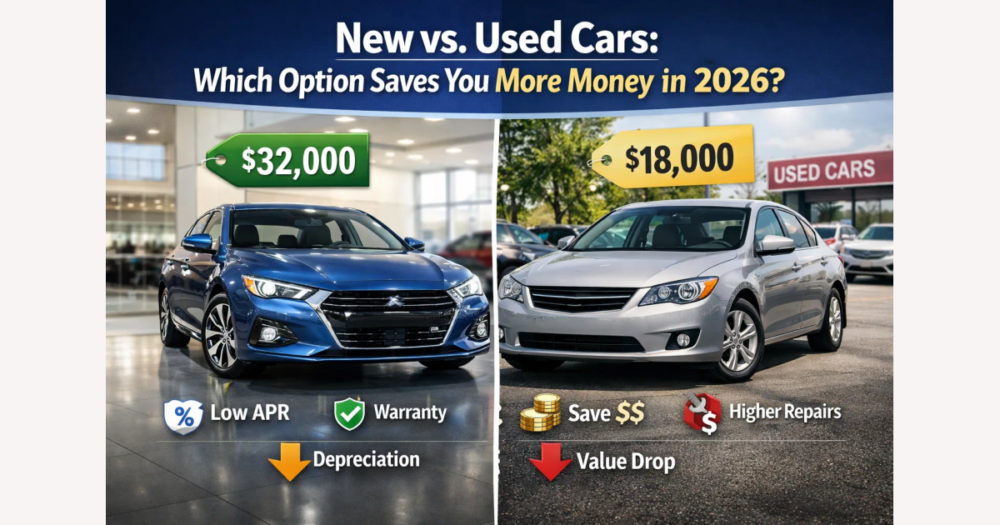
On DHgate, a strong deal is about clear information and buyer protections, not just the cheapest sticker—and that mindset is just as important when you research 2026 used cars in the US. This guide shows how to use DHgate-style checks on seller credibility, documented condition, secure payment and dispute or refund terms to judge whether any used-car offer is genuinely good value and what to do next before you buy.
What really counts as a good deal on a 2026 used car?
On DHgate, a “good deal” usually means a fair price backed by clear information and buyer protections, and the same idea applies to 2026 used cars in the US. Instead of chasing the very lowest sticker price, look for cars that are reasonably priced for their model, mileage and visible condition, with straightforward terms you can understand before you commit.
A transparent listing should spell out the exact year and model, trim level and major options, current mileage, title status, and any known accident or damage history. Strong offers also point to documentation, such as service records, vehicle history reports, and inspection results, and may note whether any warranty coverage or return terms apply.
Two cars at similar prices can differ sharply in value. One might include a clean title, full maintenance history and a recent independent inspection, with clear payment, transport and contract terms. Another might be vague about past accidents, leave gaps in the service records and gloss over how and when you’re expected to pay, leaving you exposed if problems appear later.
For 2026 used cars, prioritize deals that combine fair pricing with clear specs, documented condition and practical protections—such as the right to have the car inspected before finalizing payment, written contracts and refundable deposits where available. Treat very cheap offers with caution and only move forward when you can independently verify the car’s condition and you are comfortable accepting a higher level of risk.
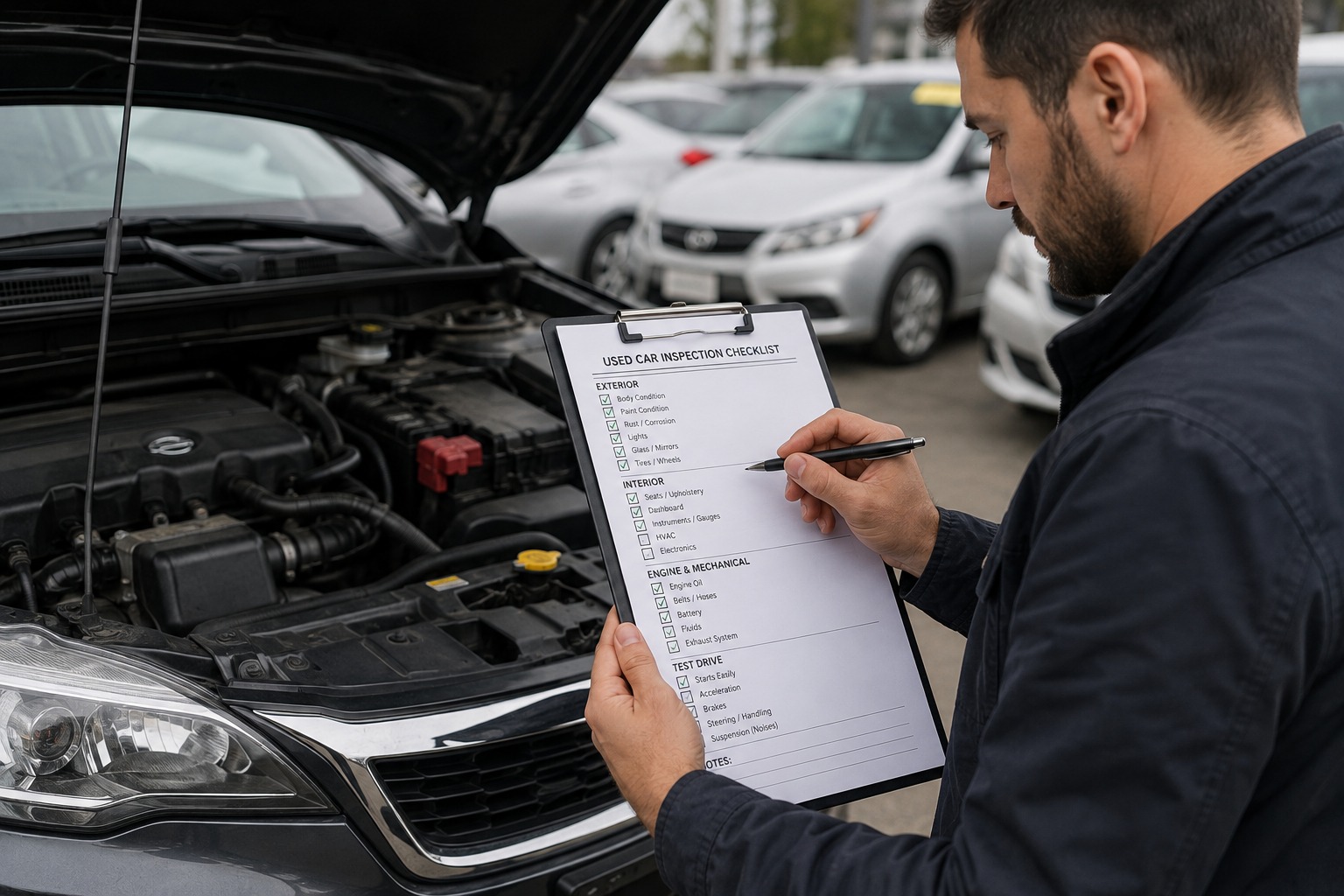
A shopper examines the exterior of a used car and reviews its paperwork, underscoring that a good deal depends on inspecting the vehicle and confirming its documentation, not just the advertised price.
Where do strong-value 2026 used car deals usually show up?
In the US, 2026 used cars are usually found through franchised dealerships, independent dealers, certified pre-owned or off-lease programs, online marketplaces and classifieds, and private-party sales. Each channel can offer value, but the information, protections and buyer effort differ.
Genuine value can appear in any of these channels, but the workload and risk for the buyer change. Channels that resemble DHgate’s structured environment—where listings are more detailed, inspections and history reports are common, and contracts or warranty terms are clear—tend to offer more protection, though prices may not be the absolute lowest. Less structured channels can advertise cheaper cars, but they often require you to do more verification yourself and accept more uncertainty about the vehicle’s past and your recourse if something goes wrong.
| Channel type | Typical information clarity | Condition evidence available | Buyer protections | Risk and effort profile |
|---|---|---|---|---|
| Franchised dealership | Usually detailed listings with VIN, trim, options, mileage and title status; staff can pull additional specs on request. | Commonly offer history reports, in-house inspections and reconditioning notes, especially on newer used inventory. | Purchase documents, financing protections and, in many cases, short warranties or return policies within local law. | Lower risk but higher prices on average; you still need to read contracts carefully, but much of the basic verification is structured for you. |
| Independent dealer | Information quality varies; many provide basic specs and mileage but may be less consistent about trim details or prior use. | Some offer history reports and basic inspections, but coverage and depth can be uneven compared with franchised stores. | Buyer protections depend on the dealer’s policies; contracts and limited warranties may exist but can be narrower. | Moderate risk and mixed effort; you may find sharper prices, but you need to ask more questions and verify documents yourself. |
| Online marketplace or classifieds | Listing detail depends on the individual seller; some posts are thorough, others give only minimal specs and photos. | Evidence is typically whatever the seller uploads; history reports or inspection summaries may be linked but are not guaranteed. | Platform rules may offer limited dispute tools, but formal warranties or refund terms usually come from the seller, not the site. | Risk ranges from moderate to high; prices can be competitive, yet you must independently confirm specs, history and payment safety before committing. |
| Certified pre-owned or off-lease program | Generally very clear specs and equipment lists, with standardized descriptions for each model and trim. | Vehicles are usually inspected against set checklists, with history reports and reconditioning documented. | Structured warranties, roadside assistance and defined return or exchange windows are common in these programs. | Lower risk with higher up-front prices; much of the quality and protection work is built in, reducing your verification burden. |
| Private-party sale | Information clarity depends entirely on the owner; some will share detailed records, others provide only basic year, model and mileage. | Evidence may consist of whatever records the owner kept; history reports and recent inspections are helpful but not always available. | Protections are limited to what state law provides; there is rarely a formal refund policy or warranty unless you negotiate specific terms in writing. | Higher risk but potential for lower prices; you must arrange your own history report, inspection and secure payment, and accept less structured recourse if issues appear later. |
How can I systematically research 2026 used cars before contacting sellers?
- Set a realistic total budget for the car that includes estimated taxes, registration, dealer or documentation fees, and a small buffer for near-term repairs, rather than focusing only on the advertised price.
- List a few target models, trims and configurations that actually exist as 2026 used cars in your area, based on your needs for size, fuel type, features and daily use.
- Use broad market information—such as typical asking prices you see across multiple generic listings or price ranges reported in general auto resources—to understand what your chosen models usually cost at different mileage and condition levels in your region, without treating any estimate as a precise forecast.
- Collect candidate cars from several channels (dealers, certified or off-lease programs, online marketplaces, and private sellers), giving preference to listings that show complete specs, verified mileage, VIN, title status, clear photos, and access to history or inspection reports.
- Screen out listings with vague specs, missing VIN or mileage, unclear title status, or inconsistent photos and descriptions, keeping only cars whose prices sit roughly within typical ranges for their model and condition and whose documentation is detailed enough to judge.
- From that group, build a shortlist and tag each car according to your risk tolerance and preferred channels, giving extra weight to offers with stronger documentation, clearer protections and transparent terms—even when they are slightly more expensive than opaque, bargain-priced alternatives.
How do DHgate-style buyer checks apply to 2026 used car deals?
- Start from DHgate’s role: DHgate itself does not list 2026 used cars or act as a car marketplace, but its buyer-protection ideas—checking seller credibility, reading clear listings, using secure payment, and knowing dispute procedures—are a useful framework for evaluating any car offer.
- Check seller credibility by asking who you are dealing with: look for a traceable business or individual with verifiable contact details, licenses where required, a visible history of trading cars, and reviews or references that show how past buyers were treated.
- Review listing clarity and documentation: confirm that the car’s year, make, model, trim, options, mileage and title status are stated accurately, that the VIN is provided, and that photos, vehicle history reports and inspection records clearly match the specific car being sold.
- Plan secure, traceable payment: aim to pay under a written agreement using methods that create a clear paper trail—such as a cashier’s check tied to a bill of sale or dealer financing—instead of informal cash or peer-to-peer transfers with no contract or receipt.
- Clarify logistics in writing: agree on who handles transport, where and when the car will be picked up or delivered, when ownership and risk transfer to you, and what condition is promised at that moment, including any commitments about repairs or detailing before handover.
- Understand dispute and refund options before you commit: read any warranty or return policy, ask how problems will be handled if the car’s condition differs from the description, and be aware of any applicable consumer or lemon-law protections in your state, making sure key promises are captured in the contract rather than left as verbal assurances.
- Treat solid documentation, secure payment arrangements and clear dispute procedures as core parts of judging whether a deal is good, not optional extras to sacrifice for a slightly lower advertised price when you cannot independently verify the car’s condition or your protections.
Which red flags suggest a 2026 used car deal isn’t truly safe or valuable?
- Specs are incomplete or inconsistent: key details like year, trim, mileage, VIN or title status are missing, or the description contradicts photos or documents. This usually signals poor transparency and makes it harder to judge what you’re really buying.
- No VIN or history report is provided: the seller won’t share the full vehicle identification number or a reputable history report. Without these, you cannot easily check for accidents, flood damage, title issues or odometer problems.
- Refusal to allow an independent inspection: the seller pushes back when you ask to have a trusted mechanic or inspection service look at the car. Blocking outside scrutiny is a strong sign they don’t want potential problems uncovered.
- Salvage, rebuilt or unclear title status: the title is branded, missing, or the seller gives vague answers about ownership and liens. Title complications can limit your protections and may hide serious past damage or legal risks.
- Unexplained mileage or visible damage: the odometer reading doesn’t match the story you’re told, or obvious body, interior or mechanical issues are dismissed without documentation or repair records. This raises questions about how the car was used and maintained.
- Heavy pressure to decide and pay quickly: the seller insists you must act “today” or lose the deal, discourages you from comparison shopping, or becomes impatient when you ask for time to review documents. Genuine value usually holds up under reasonable scrutiny.
- Requests for cash-only or off-platform payment: you’re pushed toward informal cash, peer-to-peer transfers, or other methods with no written contract, receipt, or clear terms. That removes the secure, traceable payment protections DHgate-style checks are designed to preserve.
- Vague delivery, handover or transport plans: the seller cannot clearly explain where and when you’ll get the car, who is responsible during transport, or what condition is promised at handover. Unclear logistics make it harder to prove what was agreed if something goes wrong.
- A single minor concern might be fixable—for example, a missing photo you can request—but when several of these serious red flags show up in the same offer, risk increases sharply. In those cases, it’s safer to walk away, even if the advertised price looks unusually low compared with other 2026 used cars.
What can I realistically know about a deal, and how do I protect myself before buying?
For a 2026 used car, some parts of a deal are knowable or at least estimable before you buy. You can compare the asking price with typical ranges for similar cars, look closely at visible condition, review documented service history and any warranty coverage, and verify title status and odometer information against official records and reports.
Other factors stay uncertain no matter how careful you are. Future price changes, long-term reliability for that specific car, and every repair it might need over the years can’t be predicted with certainty. The realistic goal is not perfect safety, but reducing avoidable risk by insisting on clear information and basic protections before you commit.
If a seller resists those reasonable checks, it’s usually a sign that the apparent bargain depends on you staying in the dark—and that the deal is not worth the extra risk.
- Get a reputable vehicle history report using the car’s VIN, and review it for past accidents, flood or major damage, title branding, odometer issues and repeated ownership changes.
- Arrange an independent inspection by a qualified mechanic or inspection service, and read their findings before agreeing to buy, especially for hidden mechanical or safety concerns.
- Confirm title status and ownership, making sure the seller has the legal right to sell the car and that the title can be transferred cleanly into your name without undisclosed liens.
- Use secure, documented payment methods tied to a written purchase agreement—such as a bill of sale or dealer contract—rather than informal cash or peer-to-peer transfers with no clear terms.
- Clarify in writing any warranty, return or dispute procedures so you know what support, if any, is available if serious issues appear soon after purchase.
- Treat strong resistance to any of these basic steps as a warning: when a seller will not cooperate with standard protections, the safest move is to decline the deal and look for a car where you can verify both the vehicle and your rights more clearly.
Common questions about timing, DHgate’s role, and problems with a deal
Does DHgate list 2026 used cars or act as a car marketplace?
No. DHgate does not list 2026 used cars and does not operate as a vehicle marketplace. This guide uses DHgate-style ideas—checking seller credibility, insisting on clear listings, using secure payment methods, and understanding dispute or refund procedures—as a framework you can apply when evaluating used-car offers from other channels in the US.
How should I use discount forecasts and average price reports when timing a 2026 used car purchase?
Treat forecasts and average price reports as background context, not promises. They can help you see whether asking prices for your target models are broadly high, typical or low for the moment, but they cannot guarantee future discounts or exact savings. Use them to sense whether a price is roughly reasonable today, then focus on the specific car’s specs, documented history and protections instead of delaying indefinitely in the hope of a better theoretical deal later.
What can I do if a 2026 used car bought as a “great deal” quickly shows problems?
Start by reviewing your purchase contract, bill of sale and any warranty or return terms so you understand what was promised and what remedies may be available. Contact the seller promptly, describe the issues clearly and ask for their proposed solution in writing. Document problems with photos, repair estimates and dates, and keep copies of all communications. If you cannot resolve the situation directly, consider seeking help from appropriate consumer-protection resources in your area or qualified legal advice, such as guidance on whether complaint processes, mediation or small-claims options might apply. Outcomes depend on local law and your specific agreement, so no single course of action is guaranteed to succeed.
Is chasing the very lowest advertised price really the best way to get a good deal on a 2026 used car?
Usually not. Rock-bottom prices often come with tradeoffs: vague or incomplete specs, limited documentation of the car’s history or condition, and little clarity about payment, title transfer or dispute options. You’re more likely to end up with a genuinely good deal by prioritizing transparent information, documented inspections and history, secure and traceable payment, and clear contract and warranty terms—even if that means paying a bit more up front. Structured checks can significantly reduce avoidable risk, but they cannot remove it completely, so it’s better to accept a reasonable price for a clearly understood car than gamble on maximum discount with minimal protections.