
If you’re browsing DHgate for a wooden scalp massager, the safest way to get something that feels comfortable and well made is to focus on what you can actually see and verify: the wood, the finish, the design, and the seller’s track record. This guide explains how to read DHgate listings, photos, reviews, and buyer protection details so you can confidently shortlist wooden tools that fit your hair, your scalp, and your budget without needing curated product links.
What counts as a wooden scalp massager on DHgate?
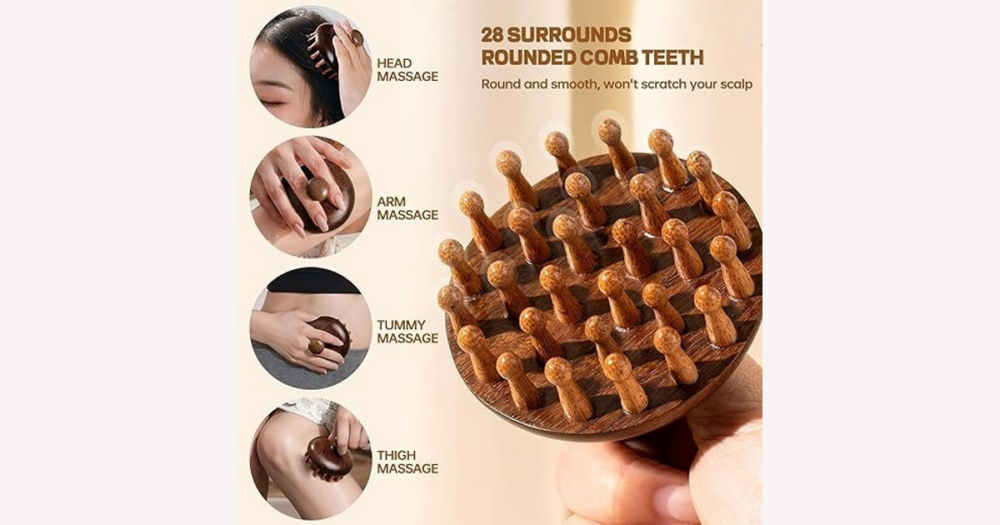
On DHgate, a wooden scalp massager is a simple, non‑electric tool made primarily from wood and used manually on the scalp. Most listings fall into three broad shapes: wide‑tooth wooden combs that you use close to the roots, small handheld wooden rollers or multi‑point massagers that you move across the scalp, and brush‑like designs with wooden pins or teeth set into a base.
These wooden tools are different from the plastic or silicone scrubbers and powered electric scalp massagers you may also see on DHgate. Plastic or silicone models usually have flexible rubbery bristles, and electric versions add vibration or rotating heads. Wooden massagers rely purely on your hand pressure and motion, with the feel determined by the wood itself, the spacing and shape of the teeth or pins, and the handle style.
This guide focuses on those manual wooden tools on DHgate and helps you read listings critically—looking at material, finish, design, and seller reliability—rather than trying to compare live inventory or promise specific results. The aim is to give you practical criteria so you can judge any wooden scalp massager you discover on DHgate for yourself.
How to judge wood quality and finish from a DHgate listing
When you scan wooden scalp massagers on DHgate, start by noting the wood the seller names. Common mentions include beech, bamboo, sandalwood, or a generic “hardwood.” In general, denser hardwoods tend to feel smoother in the hand and resist dents better than very soft woods, but listings rarely provide full woodworking detail, so treat the named species as a hint rather than proof of quality.
Focus next on the visible finish. In close‑up photos, look for smoothly sanded surfaces, rounded tooth tips, and polished or lightly oiled wood rather than rough patches. Around the teeth and handle, you should not see splinters, fuzzy grain, obvious filler, or uneven edges. Consistent colouring across the tool usually indicates more careful finishing than blotchy or streaky areas, especially near joints or glued sections.
Anti‑static or “premium wood” claims are common in marketing copy. Because this guide can’t verify performance, treat those phrases cautiously unless the listing backs them up with neutral details: clearly wooden teeth, well‑finished edges, and photos that show a smooth surface likely to generate less static than some plastics. Practical comfort matters more than big promises, so I would always prioritise a plainly smooth, well‑finished tool over a more aggressive design with sharp or densely packed teeth that looks roughly sanded.
Use DHgate’s photo viewer to zoom into teeth, handles, and joints. Prefer listings with multiple clear, unfiltered close‑ups that show the same finish from different angles over those with only distant or heavily edited images. Whenever you see performance language like “promotes hair growth” or other wellness guarantees, treat it as marketing rather than a reason to choose one wooden massager over another; let visible material and finish quality guide your decision instead.
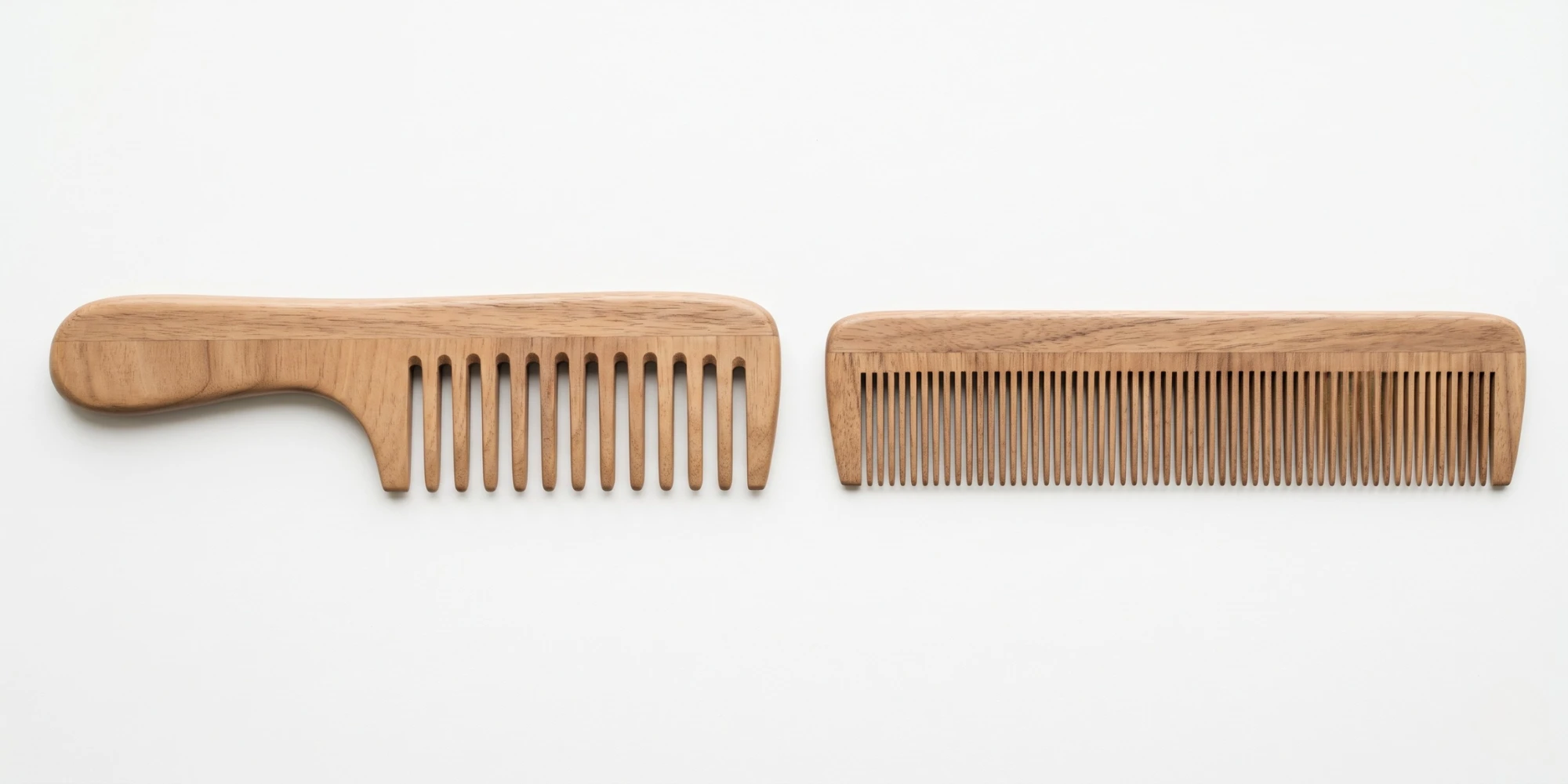
In clear close‑up photos, look for teeth and handles that appear smoothly finished with rounded edges rather than jagged or flat‑cut tips.
Matching design and hair type: teeth, shape, and handle
Once you’ve found a wooden scalp massager that looks well finished, the next step is matching its design to your hair and how you actually plan to use it. Think about the teeth or pins first: longer, thicker teeth with wider gaps tend to slide more easily through dense, thick, or tightly curled hair and reach the scalp without snagging as much. Shorter, finer, and more closely spaced teeth usually suit straight, wavy, or finer hair and shorter styles, but the same close spacing can catch or stall in very full curls.
Tip shape matters for comfort. Rounded tips generally feel gentler and more cushiony, especially if you’re sensitive to pressure, while sharp or very pointy tips can feel scratchy even with light contact. I would always avoid teeth that look flat-cut or jagged in the photos, no matter how interesting the overall design is, because they’re more likely to scrape than massage.
Then look at the overall body shape. Flat comb-style tools give you precise control along the hairline or partings and are easy to pack away, but they mainly move along straight paths and can miss parts of a very rounded scalp. Curved brush bodies and contoured multi-row designs can hug the shape of your head more naturally, which often helps on thicker or tightly curled hair because they reach between sections more easily. For very dense textures, I’d happily trade a minimalist flat shape for a slightly bulkier, curved or wide-tooth design as long as the finish still looks smooth and the teeth aren’t overly sharp.
Handle style and weight affect how long you can use the tool comfortably. An integrated grip or palm-style body that your hand wraps around gives a low, controlled feel, which can work well if you prefer short, gentle sessions or have shorter hair. A separate handle lets you reach the back of the head and around styles more easily, but if it’s too thin or very heavy, it can be tiring to hold and may tempt you to press harder than you meant to. Aim for a size that looks similar to a small brush or comb you already find comfortable in your hand rather than an oversized block of wood.
Before deciding, picture your usual routine: whether you mostly work on dry hair, lightly damp hair after washing, loose hair, or hair that’s partly styled or sectioned. If you often work on loose, thick curls, a wider-tooth or contoured design with a secure grip is more practical than a tiny, tightly spaced comb. If your hair is fine and straight, a lighter tool with slightly closer, rounded teeth may feel more controlled and less likely to pull. Matching teeth, shape, handle, and weight to that real routine helps you choose a massager that feels natural to use rather than one that only looks appealing in photos.
Using and caring for a wooden scalp massager at home
- Prepare your hair and scalp so the tool can move: gently detangle first, and make sure hair is loose enough that the teeth or pins can actually reach the scalp rather than stopping at the surface.
- Place the wooden massager lightly against your scalp and move it in short, controlled strokes or small circles, depending on its design, keeping movements steady rather than fast or aggressive.
- Stay aware of pressure, aiming for comfortable, even contact; if you feel the teeth or pins digging in or scratching, ease off immediately instead of pushing through discomfort.
- If you have very curly or textured hair, work in sections and pause when you feel resistance; lift the tool away and detangle with your fingers or a suitable comb instead of forcing the massager through a snag.
- Use it on dry or only lightly damp hair rather than soaking wet; avoid immersing the wooden tool in water or leaving it wet for long periods, because repeated moisture and slow drying can warp or weaken the wood over time.
- After each use, wipe the surface and teeth with a dry cloth; when deeper cleaning is needed, use a slightly damp cloth with a little mild soap, then dry the tool thoroughly and store it in a dry place away from constant humidity, such as steamy bathrooms.
- If any area of your scalp feels irritated, or the tool consistently feels uncomfortable even with light pressure, treat that as a sign to adjust your technique, reduce pressure, or stop rather than pushing on—any relaxation or enjoyment you get from using the massager is a personal response, not a guaranteed effect.
Red flags for low-quality wooden scalp massagers
- Rough or splintered wood: In close-up photos, look for smooth, even surfaces on teeth and handles. Visible splinters, fuzzy-looking edges, or teeth that end in very sharp, needle-like points are strong signs the tool may feel scratchy or even break during use.
- Cracks, gaps, and glue residue: Check joints where teeth meet the base or where a handle attaches. Obvious cracks, gaps, or shiny blobs of glue suggest weaker construction that may loosen or snap, especially if the tool is dropped.
- Uneven colouring that looks like damage: Natural grain and slight colour variation are normal, but patchy discolouration, dark stains around cracks, or rough blotches can indicate rushed finishing rather than character in the wood.
- Minimal or suspicious photos: Be cautious if a listing shows only one or two distant shots, relies heavily on stock or heavily filtered images, or uses different-looking products across colour or size variants. A good listing usually includes clear, unedited close-ups of the actual teeth, handle, and finish.
- Vague material descriptions: A single word like “wood” with no further detail, combined with no close-up photos, makes it harder to judge quality. I would treat that as a risk and favour listings that at least show the grain and describe the finish, even if they don’t name a specific species.
- Overblown marketing language: Phrases such as “luxury wood,” “high-end professional massage,” or “premium craftsmanship” without neutral specifications (dimensions, weight, finish details) are just advertising. Treat them as decoration, not proof of quality.
- Risk indicators, not guarantees: None of these signs prove a defect, and this guide can’t estimate how often problems occur. But if the teeth already look harsh or the finish appears roughly sanded in photos, I would simply move on to a better-presented option.
- Compare similar listings: When several DHgate listings offer a similar design, favour the one that shows detailed, consistent close-ups of the real product over a listing that hides finish details. Transparent photos are often a better bet than a more dramatic design with unclear images.
Checking DHgate seller reliability for wooden tools
Once you’ve screened out obvious product red flags, judge whether the DHgate seller is likely to deliver what they describe. Start with broad trust signals: overall star ratings for the store, the number of completed orders, and how long the store has been active. A seller with a long history, many orders, and consistently decent ratings is usually a safer bet than a brand-new shop with little activity, but even high ratings are indicators, not guarantees.
Look at the specific listing as well as the store. Check how many buyers have ordered this exact wooden scalp massager and how many have left reviews. A handful of reviews can’t prove typical performance, yet they still give context; patterns across dozens or hundreds of reviews carry more weight than a single glowing comment or one angry complaint.
Read review content closely. Give more value to comments that mention concrete details such as “smooth teeth,” “no splinters,” “matches the photos,” or “smaller than the measurements.” Vague praise like “great product” or complaints with no specifics are weaker evidence. Pay special attention when several buyers independently mention the same point about finish quality, comfort, or how closely the tool matches the listing images and dimensions.
Buyer-uploaded photos are especially useful. Look for real-life close-ups of the teeth, pins, and handle to confirm that the wood grain, colour, and smoothness resemble the promotional photos. If the buyer photos show rough edges, different shapes, or much paler or darker wood than advertised, that’s a sign to be cautious or reconsider the seller.
Finally, separate hard evidence from marketing language. Descriptions that emphasise “high quality,” “luxury wood,” or “professional massage results” don’t, by themselves, prove reliability. Treat those phrases as sales copy and rely more on observable signals: ratings over time, order volume, repeat buyers, specific reviews, and clear buyer photos when deciding whether to trust a seller with your order.
DHgate buyer protection basics for wooden scalp massagers
On DHgate, buyer protection for small accessories like wooden scalp massagers typically works through an escrow-style system: you pay through DHgate, and the platform generally holds the money until you confirm receipt or a confirmation timeout passes. That structure is designed so you can check whether the massager matches its listing before the seller is paid in full.
If your order arrives significantly not as described, damaged, or missing, you can usually open a dispute within DHgate’s specified time window. For a wooden scalp massager, that might mean receiving a plastic tool instead of wood, a massager with a noticeably rough or cracked finish, or a size or tooth layout that is clearly different from the photos and measurements shown in the listing. Depending on DHgate’s current policies and the outcome of the case, resolutions can include refunds or partial refunds, sometimes with a requirement to return the item.
Because DHgate’s exact buyer protection terms, eligibility rules, and timelines can change, you should always rely on the latest information in DHgate’s official help or policy pages rather than any summary guide. Whatever the issue, strong documentation improves your position: keep clear photos of the item and its defects, screenshots of key listing claims (such as “solid wood” or specific dimensions), and your order records so you can clearly show how the product you received differs from what was advertised when you open a dispute.
Quick checklist for shortlisting wooden scalp massagers on DHgate
- Confirm material and finish: the listing explicitly mentions wood, and close-up photos show smooth, rounded teeth and a consistent finish without visible splinters, cracks, or rough patches.
- Check design fit: teeth length, spacing, and shape, plus handle style and overall size, look practical for your hair type and how you like to move the tool. For very thick or tightly curled hair, prioritise longer, wider-spaced teeth or contoured shapes, but still insist on a smooth, well-finished surface.
- Scan for red flags: steer away from listings that show harshly pointed teeth, obvious glue gaps or residue, uneven colouring that suggests rough sanding, or heavily filtered promotional images with no clear, unedited close-ups of the actual product.
- Review seller reliability: look at the store’s ratings, review count, and buyer feedback detail, plus buyer-uploaded photos, store age, and order history to judge whether the seller regularly delivers items that match their descriptions and photos.
- Note buyer protection context: before ordering, save screenshots of the listing’s key claims and familiarise yourself with DHgate’s current dispute and refund process so you know how to respond if the massager arrives damaged or not as described.
- Treat this checklist as a repeatable scan that sharpens your judgment on DHgate listings; it reduces the risk of disappointment but can’t guarantee a perfect purchase every time.
FAQ: Everyday questions about wooden scalp massagers
Can I use a wooden scalp massager on wet hair or in the shower?
Occasional use on lightly damp hair is usually fine as long as you dry the tool promptly with a towel and store it in a dry place. Prolonged soaking, regular shower use under running water, or leaving the wood wet for long periods can cause warping, swelling, or cracks over time, so it’s safer to use a wooden massager mostly on dry or just slightly damp hair and follow any care instructions given in the DHgate listing.
How often should I replace a wooden scalp massager?
There isn’t a fixed replacement schedule; a well-made wooden scalp massager can last a long time with normal use and gentle cleaning. Replace it as soon as you notice changes that affect comfort or safety, such as new cracks in the wood, rough or splintered spots, sharp edges developing on the teeth, or loose glued parts. If any area looks or feels unsafe against your scalp, stop using it and switch to a new tool.
How does the feel of a wooden scalp massager compare with silicone tools?
Wooden scalp massagers usually feel firmer and may be slightly heavier, with more solid contact at each tooth or pin. Silicone tools tend to feel softer and more flexible, with some spring or bend in the bristles. Neither material is proven superior for health or hair growth; the difference is mainly texture and weight. Choose based on what you personally find comfortable in photos and in use, and on how much care and maintenance you’re willing to give a wooden tool.
Is wood better than silicone for scalp health or hair growth?
Available information does not show a clear health or growth advantage for wood over silicone, or vice versa. Both are simple mechanical tools that depend on how gently and consistently you use them, not on special material effects. On DHgate, it’s more practical to choose between wood and silicone based on comfort, maintenance effort, and how clearly the listing shows the tool’s finish and design, rather than relying on health or hair-growth promises in marketing copy.