
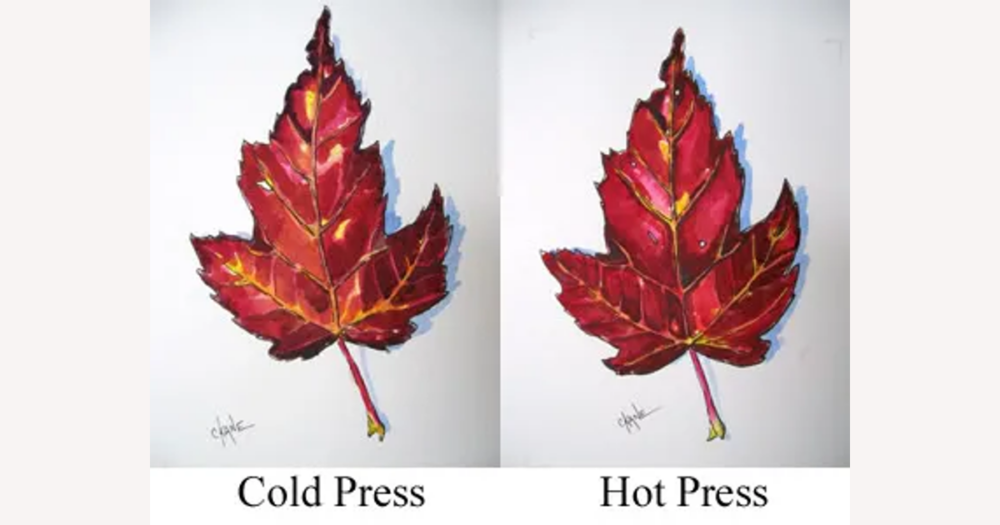
If you want your Etsy watercolor pieces to look professional and survive handling, the most reliable starting point on DHgate is heavier, cotton-rich paper with clearly stated specs. For sellable originals, I’d treat 140 lb/300 gsm cold press, preferably 100% cotton, as a baseline because it resists buckling and feels premium; for work you’ll scan into prints, similarly heavy hot press paper keeps lines clean and scans smoother. Whatever you choose, check that the DHgate listing spells out weight, material, texture, size, and quantity, then confirm the seller’s ratings, shipping terms, and refund or dispute options before you commit a whole series of Etsy paintings to that paper.
Start with a few reliable paper setups for Etsy artwork
For Etsy-ready watercolor originals, a dependable starting point on DHgate is 140 lb/300 gsm cold press paper made from 100% cotton or at least a high cotton content. This combo resists warping under normal washes, feels substantial in the hand, and looks more “gallery-ready” when buyers frame or handle the actual sheet.
If you’re painting work that will mainly be scanned and turned into prints, similar weights (around 300 gsm) but with hot press or very smooth cold press surfaces make life easier: the smoother texture keeps fine lines and gradients cleaner in digital reproduction, so your Etsy listings look crisp without fighting paper tooth in the scan.
For practice pieces, color tests, or very budget-friendly items where you’re not promising premium, archival originals, lighter-weight or mixed cellulose papers can be perfectly reasonable, as long as the DHgate listing is specific about weight, material, and texture. I personally reserve heavier, cotton-rich papers for anything sold as an original, and only compromise toward lighter or cellulose-based options when expectations—and prices—are lower or I’m deliberately experimenting with a new supplier.
Choose a paper weight that won’t buckle or feel flimsy
Watercolor paper weight is usually given in gsm (grams per square meter) or in pounds (lb). Higher numbers in either system mean a thicker, denser sheet. In broad terms, very light papers under roughly 200 gsm tend to buckle easily under washes and often need stretching; medium weights around 250–300 gsm (about 140 lb) are widely used for general watercolor; very heavy papers above 300 gsm offer extra stability for very wet techniques.
For Etsy-level work—especially originals you’ll ship and buyers may frame—avoiding very light paper is one of the safest decisions you can make. Lighter sheets warp more, are harder to keep flat in transit, and can feel flimsy compared with what customers expect from “artist-grade” work. I would treat 300 gsm as a practical baseline for sellable originals or framed pieces and use lighter weights mainly for practice or if you’re already comfortable stretching paper and accepting the trade-offs. Heavier papers do cost more and are most critical for very wet, layered styles, but even with gentle washes they reinforce that sense of solidity and professionalism when someone unpacks your painting from an Etsy order.
Match paper texture to your painting style and Etsy use
Watercolor paper texture mainly comes in three families. Hot press is very smooth with almost no tooth, so paint and ink sit on the surface, edges stay crisp, and granulation is subtle. Cold press has a moderate, even tooth you can feel under your fingers; it softens edges slightly, encourages gentle granulation, and gives washes a classic watercolor look. Rough paper has pronounced peaks and valleys, which can catch pigment strongly and exaggerate texture and granulation, but also break up fine lines and make edges less predictable.
In practice, cold press is the versatile workhorse for many Etsy-ready originals. It handles loose washes, layered color, and a mix of detail and softness without fighting you, which suits florals, landscapes, and character pieces that rely on visible brushwork. Hot press shines when you want clean, controlled detail: ink-and-watercolor illustration, calligraphy-style lettering, crisp architectural lines, or pieces where every contour needs to stay sharp. Rough textures suit very expressive, atmospheric work—stormy skies, abstract washes, or highly textured botanicals—where the surface itself becomes part of the visual impact.
Texture also affects how your art photographs and scans for Etsy. Smoother hot press (and the smoother end of cold press) usually scans with fewer tiny shadows and distortions from the paper surface, which helps when you’re creating print-ready files. More textured cold press or rough sheets can make originals look rich and tactile in person, but their deep tooth may cast small shadows in listing photos unless your lighting is careful and even.
Common guidance that beginners often prefer cold press reflects general practice, not a strict rule. If you like very tight line work or mostly sell prints, hot press may feel more natural; if you lean into bold texture, rough can be worth the learning curve. For sellable Etsy originals, I personally lean toward cold press because it balances character and control for most styles, unless your work clearly calls for very smooth or very rough surfaces. For print masters, I would favor hot press or a relatively smooth cold press to minimize texture artifacts in scans, and I’d factor how often you plan to digitize each piece into your texture choice.
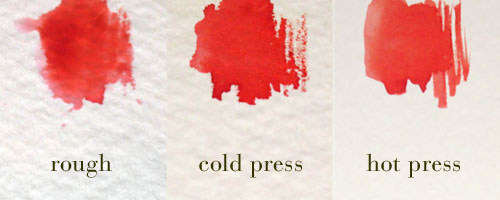
Close-up comparison of hot press, cold press, and rough watercolor paper surfaces so you can see how much tooth each texture has before choosing a paper.
Understand cotton vs. cellulose and what “professional” paper really means
Watercolor papers are usually described by their fiber content: 100% cotton, cotton blends, or wood pulp/cellulose. Cotton fibers tend to give the sheet more strength and flexibility when wet, so the surface resists pilling, can take more scrubbing and layering, and stays flatter under repeated washes. Good cellulose papers can still work well for lighter techniques, single-pass washes, or line-focused pieces, but they typically show wear sooner if you lift and rework heavily.
Because of that behavior, many artists and buyers perceive cotton papers as more “professional” or artist grade and treat cellulose and blended sheets as student or mid-tier options. That’s a tendency, not an absolute rule: some cellulose papers are quite respectable, and not every cotton sheet is automatically perfect. Quality still varies by manufacturer, but cotton content is a reasonable proxy when you can’t test the paper in person.
For any watercolor sold as an Etsy original, I personally look for 100% cotton or clearly high cotton content with honest, specific specs, because those papers are more likely to handle real-world painting and framing without feeling fragile. For pieces you’ll scan and turn into prints, or for practice and experimentation, I’m comfortable using good cellulose or cotton blends if the listing is transparent about material and your techniques are relatively gentle.
Labels like “acid-free” and “archival” are worth seeking out as basic quality signals, especially when combined with cotton content, and many artists treat that combination as a reasonable proxy for good longevity. Still, long-term aging depends on more than marketplace descriptions, so it’s safer to view these terms as reassuring tendencies rather than guaranteed permanence, and to reserve stronger archival expectations for papers you’ve tested and trust.
Pick practical formats and supporting specs for Etsy workflow
For Etsy watercolor work, the paper format you choose mostly affects how easy it is to paint, trim, and ship pieces without fighting buckling. Loose sheets give you the most flexibility: you can tape them to a board to control warping, then cut them down to popular Etsy-friendly sizes such as roughly 8×10, 9×12, or A4 to match standard frames. Gummed pads are similar but hold the stack together on one edge, which is convenient for storage and transport; you still lift sheets off after painting and can trim them freely.
Blocks are glued on several edges, so the whole stack behaves like a single thick board while you paint. That extra rigidity helps keep heavy washes flatter without stretching, which can be reassuring if you dislike dealing with tape and buckling. The trade-off is that separating each finished sheet requires careful cutting, and you’re largely committed to the block’s size, which matters if you want to offer consistent framed dimensions in your Etsy shop or ship custom sizes.
Labels such as “acid-free,” “non-yellowing,” or “archival” are worth looking for as part of the quality picture, because they signal that the paper is designed to resist obvious discoloration and brittleness. At the same time, marketplace listings rarely provide lab-level data on longevity, so these terms are better treated as sensible minimums than hard guarantees. For Etsy originals, I would pair cotton, around 300 gsm, and clear acid-free or non-yellowing notes in a format that matches common frame sizes and stays flat in transit. For practice or studies, I’m more flexible: pads or cheaper loose sheets made from cellulose are fine as long as the listing clearly states the format and what the paper actually is, so you know you’re not relying on it for premium, long-term originals.
Different paper setups for originals, prints, and practice
| Use-case | Recommended weight | Preferred texture | Material tier | Format considerations | Where to spend vs. save |
|---|---|---|---|---|---|
| Etsy originals sold as physical artworks | Around 300 gsm (≈140 lb) or heavier for stability under washes and handling | Cold press or the texture that best fits your style; avoid extremes that make framing or viewing difficult | 100% cotton or clearly high cotton content for a more professional feel and durability | Loose sheets or blocks in sizes that match common frames (e.g., 8×10, 9×12, A4) and stay flat for shipping | Prioritize quality: I would not compromise much on cotton content, weight, or clear specs for higher-priced originals; savings come from choosing practical sizes rather than ultra-specialty formats. |
| Artwork created mainly to be scanned and turned into prints | Around 250–300 gsm so the sheet stays reasonably flat and feels solid while you work | Smooth hot press or smoother cold press to keep lines crisp and minimize texture in scans | Cotton is ideal, but good cellulose or blends can be acceptable if the surface behaves well and scans cleanly | Pads or loose sheets that fit your scanner or can be trimmed to it; blocks only if you’re comfortable cutting pages out | Balance quality and budget: I’d accept well-reviewed cellulose here if listings are specific and my techniques are gentle, spending more on surface smoothness and reliable behavior than on maximum cotton content. |
| Practice pieces, studies, and supplier tests | Around 200–250 gsm if budget is tight; heavier is nice but not essential for light techniques | Any texture that matches what you want to practice, from cold press to rough | Cellulose or cotton blends are usually fine, treated as student or mid-tier options | Affordable pads or loose sheets in convenient sizes for experimenting and trimming, without worrying about perfect framing dimensions | Save aggressively: this is the place to test new DHgate papers and suppliers on cheaper stock before trusting them for Etsy originals, while still insisting on honest listed specs for weight and material. |
Avoid common pitfalls in DHgate watercolor paper listings
- Skip any DHgate watercolor paper listing that does not clearly state the paper weight in gsm or lb. Missing numbers, or obviously inconsistent figures (for example, calling very low gsm “extra thick”), are strong signs that the paper may buckle, feel flimsy, or simply not behave like standard watercolor stock.
- Treat vague texture descriptions with caution, especially when terms like hot press, cold press, and rough are mixed together or used loosely. If you cannot tell whether the surface is smooth or noticeably textured, it’s harder to predict how your washes, lines, and scans will look for Etsy listings.
- Be skeptical of listings that rely almost entirely on generic phrases such as “premium,” “professional,” “high quality,” or “thick” without concrete specs. For Etsy work, you need objective details—weight, material (cotton vs. cellulose), texture, format, size, and quantity—not just marketing language.
- Watch for incomplete material information, such as “special fiber” or “artist paper” with no mention of cotton content or cellulose. Unclear materials can mean the sheet pills easily, warps under washes, or looks cheap when buyers handle the original.
- For sellable Etsy originals, I would personally avoid any paper listing that does not give exact weight and material. If a listing is unclear, treat that as a reason to ask the seller specific questions or move on, rather than hoping it will behave like artist-grade paper.
- Only consider unclear or lightly specified paper for low-stakes practice if the price is very low and you’re prepared for unpredictable behavior. Even then, I’d still insist on at least a stated weight so you have some idea of how thick and durable the sheet will be.
A step-by-step checklist for buying watercolor paper on DHgate
- Define the intended use of the paper first: Etsy originals sold as physical artworks, pieces you’ll scan as print sources, or practice and studies. This sets your expectations for quality, durability, and budget.
- Choose a minimum weight that fits that use. For originals, I would treat around 300 gsm (≈140 lb) as a practical baseline for stability; for prints and practice, you can accept slightly lighter but still substantial weights, while keeping your preferred texture in mind.
- Decide whether you need 100% cotton or can accept cellulose or blends. For higher-priced Etsy originals, I’d lean strongly toward cotton-rich papers; for print sources and practice, good cellulose or mixed papers can be fine if they behave reliably with your painting style.
- Check that the DHgate listing clearly spells out core specs: weight (gsm or lb), material description, texture or surface smoothness (hot press, cold press, rough, or similar wording), format (sheet, pad, block), size of each sheet, and quantity per pack.
- Review listing photos for clues about texture and base color, looking at close-ups of the surface and edges. Remember that lighting and photography are imperfect, so treat photos as supporting hints, not the only evidence.
- Scan seller ratings and buyer reviews, focusing on comments about how the paper handles watercolor—such as buckling, pilling, or color vibrancy—rather than only notes on shipping speed or packaging.
- Confirm shipping costs, estimated delivery times, and refund or dispute options before you order, especially for larger quantities. I’d recommend starting with a smaller batch from any new supplier so you can test the paper in your own workflow before trusting it for high-priced Etsy originals.
What you can and can’t know about paper quality before you buy
On DHgate, the most reliable clues about watercolor paper quality are the concrete specs and patterns in buyer feedback. When a listing clearly states weight (gsm or lb), material (for example, 100% cotton, cotton blend, or cellulose), texture (hot press, cold press, rough), format (sheet, pad, block), size, and labels such as “acid-free” or “non-yellowing,” you at least know what the seller says they’re offering. Listing photos that show close-ups of the surface and edges can help you judge how smooth or textured the paper looks, and multiple reviews that describe similar behavior—such as “handles heavy washes,” “minimal buckling,” or “surface pills easily”—are useful signals about how the paper is likely to perform.
Static marketplace information can’t fully answer the more subtle questions. You won’t really know how the sheet feels under your brush, how forgiving it is when you lift or scrub, whether colors stay exactly the same over many years, or how well the paper supports your particular techniques just from specs and photos. Even good reviews are snapshots of someone else’s style and expectations, not a guarantee that the paper will behave like top-tier artist stock in every situation.
Because of that, I treat clear specs and reviews that align with standard watercolor norms as enough reason to try a paper from DHgate—but not enough to promise archival-level longevity or flawless behavior for high-priced Etsy originals. A practical approach is to start with smaller quantities from any new supplier, use those sheets first for practice pieces or lower-stakes work, and pay attention to buckling, pilling, and how your colors sit on the surface. Only once a paper consistently supports your process would I trust it for premium originals, adjust Etsy pricing upward, or describe it in listings as a higher-end material.
FAQ: Nuanced choices for Etsy watercolor paper
Do I really need 100% cotton paper for every Etsy watercolor piece?
No. For high-priced originals where buyers handle and frame the actual sheet, I’d strongly prefer 100% cotton or clearly high cotton content because it usually handles washes better and feels more professional. For lower-priced items, prints created from scans, or practice work, good cellulose or cotton-blend papers can be acceptable as long as the listing is specific about weight and material and the paper behaves reliably in your own tests.
If I mostly paint very light washes, can I use slightly lighter weights than 300 gsm?
If your style is gentle—single-pass washes, minimal scrubbing—slightly lighter weights can work, especially for studies or lower-priced pieces. The trade-off is that lighter sheets still buckle more easily and feel less substantial when shipped or framed. For anything marketed as a premium Etsy original or gift-ready artwork, I’d keep 300 gsm as my baseline and reserve lighter weights for practice or clearly modest-price work where expectations are lower.
Is it okay to mix different paper types within one Etsy shop, and how many should I juggle?
Yes, you can mix paper types as long as quality is consistent within each price tier and your listings set honest expectations. For example, use heavier cotton paper for higher-priced originals and good cellulose or blends for budget pieces or prints, and make that distinction clear in your descriptions. In practice, managing a small set of papers—perhaps one main cotton stock for originals and one or two reliable alternatives for prints and practice—keeps your workflow simpler while still letting you match paper choice to price point and purpose.