
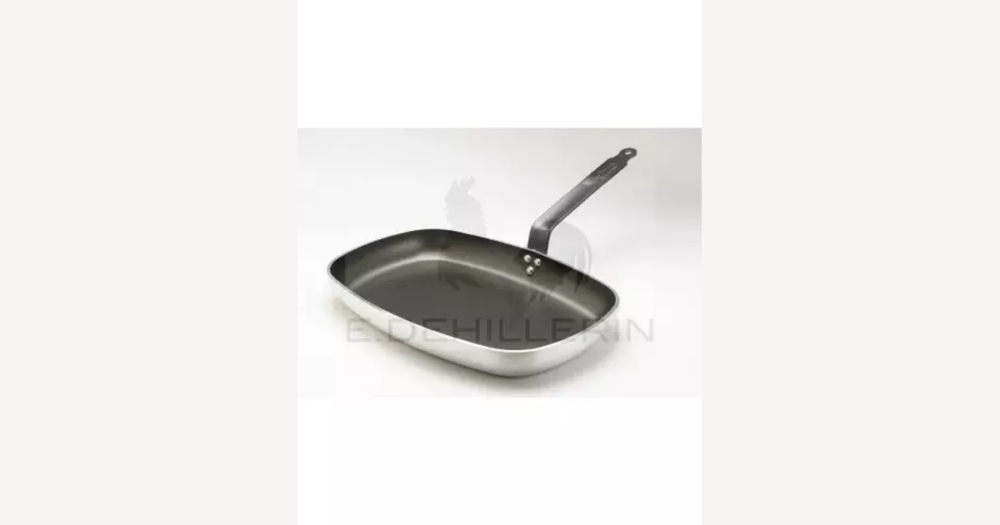
When you choose a rectangular non-stick frying pan on DHgate, you’re weighing whether the shape fits the way your stove heats and the foods you cook, which size and build (lighter vs. heavier, thinner vs. thicker) feel trustworthy for everyday use, and which listings offer clear specs, honest photos, and reliable seller and refund terms. This guide focuses on interpreting DHgate details—dimensions, materials, coatings, compatibility, ratings, and policies—so you can narrow options confidently without chasing the flashiest marketing or the absolute lowest price.
What decision are you really making when you pick a rectangular non-stick pan on DHgate?
On DHgate, the core decision is whether a rectangular non-stick pan actually fits how and where you cook, followed by which size and build feel right for you. Start by thinking about your usual tasks and stove setup: rectangular pans are handy when you want to line up foods like strips of bacon, fish fillets, skewers, or sandwiches in neat rows along straight edges and corners. That layout works best if the pan’s footprint makes sense on your burners or in your oven rather than hanging far past the heat source.
From there, you’re choosing between lighter, thinner pans that heat up quickly but may feel less solid, and thicker, heavier pans that tend to feel more stable and durable but respond more slowly and can cost more. The guide leans toward pans that seem trustworthy over years of use—clear coating type, honest thickness hints, and sensible compatibility—rather than the very lowest price or flashiest marketing claims when specs are vague.
Because you’re shopping on DHgate rather than picking a specific brand here, the real filter is listing and seller quality: whether dimensions, materials, and coating type are clearly stated; photos and descriptions match; seller ratings and reviews look consistent; and shipping, refund, and dispute terms are transparent. The key questions are how rectangular shape affects cooking behavior, what base materials and coatings usually imply, how to check compatibility, and how DHgate’s listing details and policies can help you avoid unnecessary hassle.
How does a rectangular pan cook differently from a round pan?
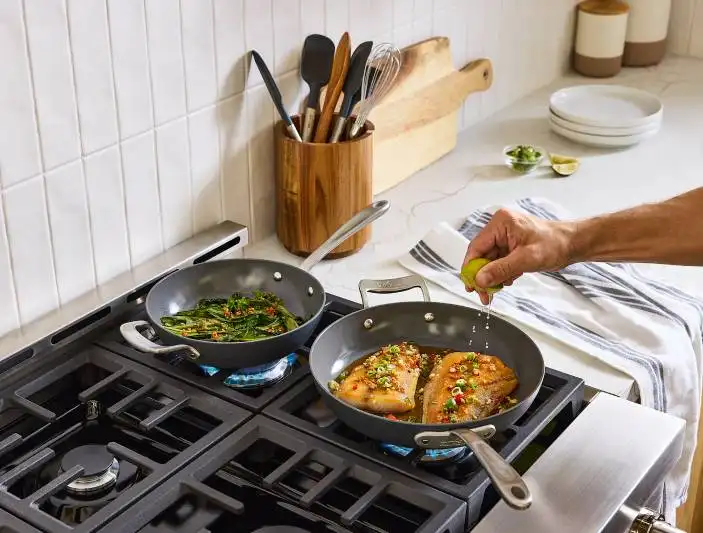
Two round nonstick fry pans sit side by side, illustrating how a pan’s footprint relates to a burner and how food can be laid out across the surface, even when you’re thinking about switching to a rectangular layout for rows of bacon, fish, or sandwiches.
Rectangular pans change how you use the cooking surface. Instead of a round pool of space, you get longer straight runs and corners that make it easier to line up foods—rows of bacon or tofu strips, side-by-side fish fillets, stacked sandwiches—without wasting odd gaps at the edges. That extra straight-edged area can feel more organized when you often cook multiple small items at once.
Heat, however, still comes from a burner that is usually round. On most stoves the hottest zone sits near the center of the element; if your rectangular pan is much larger than that circle, the corners may run cooler or hotter than the middle depending on how the flame or coil spreads. This can show up as fries browning faster in the center while pieces at the far ends lag behind, or sauces bubbling more vigorously in one band than another.
When the pan’s footprint roughly matches a larger gas or electric element, an elongated burner, or a pair of bridged zones on a modern cooktop, the rectangular shape can feel well matched: more of the base sits over active heat, and the long sides give you a comfortable area for turning and rearranging food. On very small burners or portable stoves, though, an oversized rectangular pan can feel awkward to position, waste heat around the edges, and make uneven cooking more noticeable.
Rectangular non-stick pans make the most sense when you value that row-friendly layout and can choose a size that sits reasonably over your heat source. If you’re often cooking small portions on compact burners, a round pan may still give smoother heat patterns, but if you regularly line up longer items or cook for several people at once, a well-sized rectangular pan can turn that extra edge and corner space into practical everyday comfort.
What do base materials tell you about heat and durability?
| Base material | Typical heat behavior | Weight feel | Warp resistance tendency | Listing clues and notes |
|---|---|---|---|---|
| Standard aluminum | Heats up quickly and generally spreads heat fairly evenly across the base. | Usually feels lighter and easier to lift, especially in larger sizes. | Thinner aluminum bases are more likely to flex or warp if used on high heat or moved abruptly; thicker aluminum tends to stay flatter. | Look for mentions of thickness such as “heavy-gauge” aluminum and for photos where the base and sidewalls look visibly substantial. Terms like “premium” or “professional” alone are marketing language, not proof of durability. |
| Hard-anodized aluminum | Still conducts heat well, often with a slightly steadier, more controlled feel than very thin aluminum. | Typically a bit heavier than standard aluminum, giving a more solid, grounded sensation in the hand. | Anodizing is often paired with thicker construction, which tends to resist warping better than very thin, soft aluminum bases. | Phrases like “hard-anodized” plus “thick” or “heavy” and clear side-on photos of the pan walls can suggest a more robust build, but they are not guarantees of performance or lifespan. |
| Stainless steel or layered bases (steel with aluminum core) | Bare stainless can heat more slowly and may develop hot spots; layered bases that include aluminum aim to improve heat spread. | Usually feels heavier and more substantial, which some cooks prefer for stability. | Heavier stainless or multi-layer bases tend to resist warping well when used within normal heat ranges. | Listings may mention “multi-layer base,” “tri-ply,” or an “aluminum core” under stainless steel. These phrases describe construction style; treat them as design information rather than automatic proof of superior cooking results. Generic labels like “professional grade” remain marketing, not hard evidence. |
How should you read non-stick coating and “safe” labels?
On DHgate, coating labels are first and foremost material descriptions. A PTFE-based non-stick coating is the familiar slick surface many people know from traditional non-stick pans, while ceramic-type coatings describe a different style of smooth, usually light-colored surface applied over a metal base.
You’ll also see phrases such as “PFOA-free” or “PFAS-free.” These indicate what the seller claims is not used in the coating or manufacturing process, but they are still product statements, not guarantees about health outcomes or how long the coating will last.
For choosing a rectangular pan, clearer coating information is more useful than vague promises. Descriptions like “PTFE-based non-stick on aluminum base” or “ceramic coating over hard-anodized aluminum” that match between the title, main text, and spec table are stronger information than loose phrases such as “healthy coating,” “eco,” or “green non-stick” without detail.
If the coating type is missing, confusing, or contradicted across the listing—for example, PTFE in the title but “ceramic” in the specs—it’s sensible to treat the coating details and long-term behavior as uncertain unless the seller clarifies. In that situation, decide whether you’re comfortable with that uncertainty or prefer a listing where the coating material is described consistently.
The practical goal is to judge how clear and consistent the coating information is so you can understand what kind of non-stick surface you’re buying, rather than trying to rank coating types based on implied health claims or ambitious marketing language.
Should you choose a shallow, light pan or a deeper, heavier one?
- Shallow, thinner rectangular pans: lighter to lift, easier to tilt for sliding out eggs, toast, or grilled sandwiches, and quick to heat up for short frying or searing sessions.
- Because the base is usually thinner, very shallow pans can feel less solid and may be more prone to warping over time if used on high heat or moved abruptly between temperature extremes.
- Deeper, heavier rectangular pans: better suited to one-pan meals, larger portions, or dishes with more liquid, since the taller sides help contain sauces, stews, or layered foods.
- Their thicker, weightier bases typically feel more stable on the burner and often resist warping better than very thin pans, though actual lifespan still depends on how you heat and care for them.
- In a rectangular format, deeper pans can sometimes double as small roasting or baking vessels within any stated oven-safe limits, while very shallow ones are mainly for surface frying on the stovetop.
- Before favoring either build, think realistically about your most common tasks (small snacks vs. larger meals), how comfortable you are lifting heavier cookware, and the storage space you have for bulkier rectangular pans.
Will a rectangular pan fit and heat well on your stove or in your oven?
- Compare the pan’s base dimensions in the listing with the diameter or size of your main burners or cooking zone. A rectangular pan that is much wider than the burner is more likely to heat unevenly, especially toward the corners.
- Look for explicit statements about heat-source compatibility—gas, electric coil, ceramic/glass, or induction—in the description or spec table instead of assuming any pan works on every stove.
- For induction, check that the listing clearly indicates induction-ready or induction-compatible and mentions a suitable magnetic base layer, such as certain stainless-steel or multi-layer constructions, rather than guessing from photos alone.
- If you plan to use the pan in the oven, check any stated oven-safe temperature limits and confirm whether handles, lids, and the non-stick coating are described as oven-safe, which matters especially for deeper pans that might double as baking or roasting dishes.
- Treat compatibility as something to verify, not assume: base your decision on explicit dimensions and compatibility notes in the DHgate listing rather than generic marketing images or unspecific phrases like “fits all stoves.”
What DHgate pre-purchase checklist should you follow?
- Confirm the pan’s length, width, and depth in the specs or description, then compare those measurements with your stove burners, oven rack space, and where you’ll store the pan so the rectangular footprint actually fits.
- Read the description and any spec table closely to identify the base material, coating type, and any mentions of thickness or gauge, and check that these details are clear and internally consistent rather than vague or contradictory.
- Inspect all listing photos for clues about base thickness, handle attachment, and the interior surface, and make sure the images match the stated size, shape, and depth instead of implying a different pan.
- Review seller ratings, the number of completed orders, and review comments for patterns about build quality and how accurately the product matches the description, giving more weight to consistent feedback than to a single extreme review.
- Check shipping options, estimated delivery times, and any extra fees or taxes so you understand the real total cost and how long you might wait for the pan to arrive.
- Read DHgate’s platform policies and the seller’s own refund and dispute terms so you know what happens if the pan arrives damaged, warped, or noticeably different from the listing, and how to open a case if needed.
- Use this checklist to favor clear specs, honest photos, and reliable DHgate sellers over the absolute lowest headline price, unless you consciously accept more uncertainty in exchange for saving money.
Which online listing pitfalls should you treat as warning signs?
What listing details actually count as quality evidence on DHgate?
On DHgate, the strongest signs of a well-described rectangular non-stick pan are listings where the title, photos, and spec table all line up. Look for multiple clear images that show the base thickness, corners, handles, and interior surface, then check that the written dimensions and material details match what you see. A detailed spec table that names the base metal, coating type, and exact length, width, and depth is more informative than a short bullet list of adjectives.
User reviews matter most when there are many of them and they repeat similar points about sturdiness, heat behavior, and whether the pan matches the description. Comments that mention truthfulness of size and material, how the pan sits on the burner, or whether the coating behaves as described are more useful than generic praise. A pattern of balanced reviews—some minor drawbacks, some strengths—usually gives a clearer picture than a page with only one or two very short glowing comments.
Weaker evidence includes stock-looking photos that don’t show the actual construction, titles that shout “high quality” or “premium” without backing that up in the specs, and reviews that only say “great product” with no detail. When information is thin or inconsistent, treat key qualities like thickness, durability, or coating behavior as unresolved. Favor listings where the photos, measurements, material labels, and review patterns tell the same story, especially if you’re paying more for a pan you expect to use often. Be more cautious when those pieces don’t converge.
How do care and heat recommendations affect your choice?
Most non-stick rectangular pans on DHgate come with familiar care guidance: use medium rather than maximum heat, avoid metal utensils in favor of wood, silicone, or plastic, and clean with soft sponges instead of abrasive scrubbers. Many listings also say whether the pan should be hand-washed, whether it can go in the dishwasher on a gentle cycle, or whether it should not be machine-washed at all.
These instructions are conditions of use, not guarantees that the pan will last a certain number of years. If you often cook on very high heat, rely on dishwashers, or prefer metal tools, either look for a pan whose description explicitly allows those habits or accept that you’ll be using it outside the recommended care. When problems arise, heavy use beyond the stated limits can make it harder to argue that issues are solely product-related.
Choosing a pan whose heat and care expectations realistically match how you cook and clean makes everyday use simpler. You’re more likely to follow the instructions consistently, keep the coating in better shape, and stay within the seller’s stated conditions if you pick a pan that fits your routine instead of one that demands care you won’t actually give.
Practical FAQs about rectangular non-stick pans on DHgate
Can a rectangular non-stick pan replace a baking dish?
Sometimes, for simple baked dishes. A deeper rectangular pan with clearly stated oven-safe temperatures for the pan body, coating, and handles can stand in for a baking dish as long as its length, width, and depth fit your recipe and oven space. It is not a blanket replacement, though—stay within the specified temperature limits, avoid broiler-style direct flames if they’re not mentioned, and don’t assume every non-stick pan is suitable for long, high-heat baking.
How should you interpret “oven-safe” labels when handles or lids are involved?
Treat “oven-safe” as applying only to parts the listing explicitly names and only up to the stated temperature. If the description says the pan is oven-safe to a certain degree but doesn’t mention the handle material, silicone grips, or a glass lid, assume those pieces are not included until proven otherwise. Vague phrases like “can be used in the oven” without a temperature or part breakdown are a reason to be conservative, use lower heat, or message the seller for clarification before relying on oven use.
What should you do if pan dimensions are missing or unclear in a DHgate listing?
Accurate measurements are central to fit and usability, so don’t guess from photos alone. If length, width, and depth are missing, inconsistent, or only described with a diameter that doesn’t match a rectangular shape, treat size as unresolved. Your options are to ask the seller directly for precise measurements and only proceed if the reply is clear, or skip the listing and choose one with well-stated specs that match the photos and description.