
An aluminum jon boat bimini top is a collapsible shade canopy on a metal frame that mounts to your boat and folds down when you don’t need it. On a jon boat, it’s usually an aluminum‑frame system with fabric stretched across 2 or 3 bows, strapped to the deck or gunwales so you can fish, cruise, or run between spots without baking in the sun. You choose it mainly by your boat’s width, bow count (how many frame arches), fabric quality, and whether the mounting hardware works with your flat aluminum sides. Online, including on DHgate, you’ll see a lot of generic “boat bimini” listings; the trick is matching their specs to your actual hull.
What a Bimini Top Does on an Aluminum Jon Boat
On a small aluminum jon boat, a bimini top acts like a portable awning. It’s an open‑front cover made from fabric on a metal frame that gives shade and some light weather protection over the cockpit or seating area, but doesn’t enclose the boat the way a full cabin or T‑top would.
The frame typically hinges at the mounting points, so you can stand it up while you’re on the water and fold it down into a boot when you want a clear casting deck or need to trailer the boat. Because jon boats have low freeboard and flat sides, the bimini sits fairly close to you—bringing real relief during midday fishing or slow river runs—but still needs to be high enough that you can stand or move without hitting your head.
A common use case: a 14-16 ft jon boat with two bench seats and a small outboard. A bimini mounted just ahead of the rear seat can shade the driver and a passenger while still leaving room to cast off the bow.
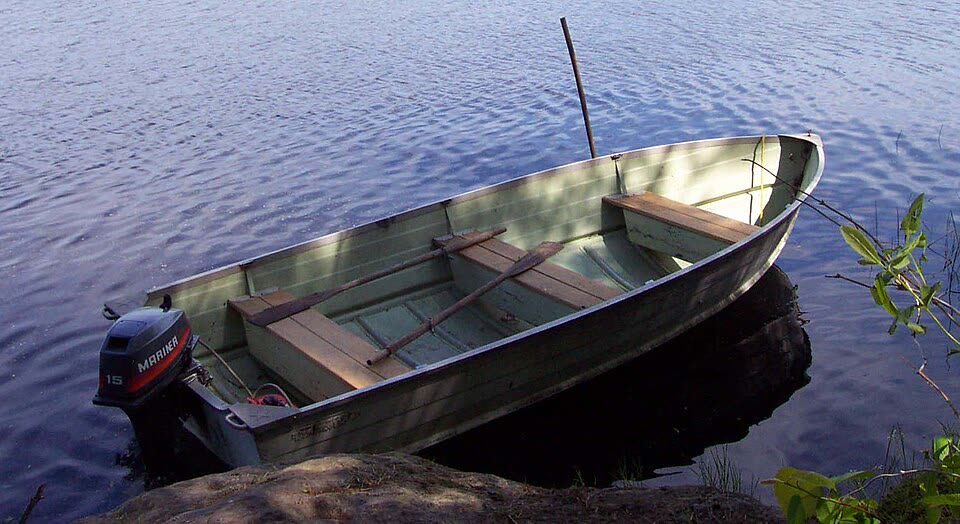
Key Styles and Specs for Jon Boat Bimini Tops
Most jon‑boat‑friendly biminis share a few basic traits:
- Aluminum alloy frame: Lightweight and corrosion‑resistant, typical of small‑boat biminis like the 2‑bow tops sold by Oceansouth and other marine brands.
- Marine‑grade fabric: Polyester or canvas designed for UV exposure and spray rather than indoor use.
- Sold by width band: The listing will say something like “fits 67″–72″ wide,” referring to boat beam.
The specs you see online aren’t abstract; they change how your jon boat feels in use.
Bow count: 2‑bow vs 3‑bow on a jon boat
Two‑bow and three‑bow tops are both common for aluminum utility and jon boats. They differ in shade length and stability more than in basic function.
Here’s how that typically plays out:
| Bimini style | Typical jon boat fit (editorial) | Real‑world feel on a 14-16 ft jon boat |
|---|---|---|
| 2‑bow top | Shorter, narrower utility/jon hulls | Shades one bench area; good if you prioritize an open bow for casting. |
| 3‑bow top | Wider or longer small boats | Creates a longer “roof”; better for family cruising or if you want both driver and front passenger shaded. |
| Extra‑long 3‑bow | Wide modified‑V or gear‑heavy rigs | Can cover most of the cockpit but may complicate casting and rod management. |
Product examples like Carver’s 2‑bow tops in the 47″–52″ width range are aimed squarely at compact utility boats. In practice, a 2‑bow works well if your aluminum jon boat is short and you mostly fish solo or with one partner. If you’re running a wider 16 ft hull with kids or multiple anglers sitting under cover, a 3‑bow gives noticeably more usable shade.
Width, height, and how to size your jon boat
Width is the number that matters most. Generic biminis are sold in bands (e.g., “fits 67″–72″ wide”), and that band needs to match where you’ll mount the frame on your boat.
For a typical 14-16 ft jon boat:
- Measure beam at the mounting point. Use a tape across the gunwales where you want the bimini feet. Don’t assume the widest part of the boat; jon boats can pinch slightly toward the bow.
- Match to the listing’s width band. If your measured width is 68″, you’d look for a “67″–72″” band, not a 73″–78″ band.
- Check height vs. your use. Listings often specify an approximate height (e.g., around 42″ in some utility‑boat examples). Lower tops feel more secure at speed but can feel cramped. Higher tops give headroom for standing casts but catch more wind.
If you mainly sit while running and fish off the bow with the top folded, a mid‑height 2‑bow sized tightly to your beam is usually comfortable. If you want to stand under the top while trolling or drifting, aim for a taller 3‑bow and accept a bit more wind resistance.
Frame and fabric choices
Standard jon‑boat biminis use aluminum alloy tubing with stainless fasteners and marine polyester or canvas. From marine retailers like BoatCoversDirect, you’ll see these materials clearly listed.
Key trade‑offs:
- Frame diameter and material: Aluminum is lighter and common on jon boats; heavier stainless frames are usually reserved for larger vessels.
- Fabric weight and color: Thicker polyester or canvas tends to feel sturdier. Dark colors block more light but get warmer; lighter colors reflect heat but may show stains.
For a small aluminum hull, the usual choice—a 1″ aluminum frame with marine polyester—is a good balance of weight and durability.
Mounting on flat aluminum sides
Installing a bimini on a jon boat generally uses either:
- Deck‑mount brackets screwed into the top of the gunwales or narrow deck ledge.
- Side‑mount brackets fastened to the vertical hull sides.
A common layout, shown in jon‑boat discussions and tutorials like the thread on Catfish1, is:
- Base mounts near the middle bench or just aft of it.
- Forward and rear nylon straps running to the bow and stern, positioned to avoid tiller or throttle controls.
Because aluminum jon boats often have thin metal at the gunwales, many owners add backing plates or choose side mounts where the hull is reinforced. Always plan strap runs so they don’t cross your casting lane or block an outboard tiller sweep.
Buying a Jon Boat Bimini Online: Fit Checks, DHgate, and Alternatives
Buying a bimini for a jon boat online is less about brand and more about reading specs with your tape‑measure notes in front of you.
Start with these fit checks:
- Confirm your width band. Compare your measured beam to the listing’s “fits X–Y inches wide” line.
- Bow count vs. use. If most trips are two anglers on a 14 ft boat, a 2‑bow in the right width band is usually sufficient. For family cruising or a wider 16 ft, lean toward a 3‑bow.
- Mounting hardware type. Look for mentions of deck vs. side mounts, and decide which suits your aluminum gunwale or hull structure.
- Height relative to your stature. If the listing gives a height, visualize it against your own height and seating position.
How DHgate fits into the picture
DHgate acts as a marketplace connecting buyers with primarily China‑based suppliers, and it hosts a category for boat bimini tops, marine parts, and boat canopy products. You’ll encounter generic listings like “boat bimini top,” “fishing rod holder bimini,” and similar accessories among those marine parts.
Where DHgate can make sense:
- You’re comfortable with cross‑border purchases and possibly less familiar brands.
- You want to explore lower‑cost or bulk options for outfitting multiple small boats.
What you need to do yourself on each listing:
- Match the stated width band to your measured beam, not just the words “jon boat.”
- Check whether the frame is aluminum alloy and the fabric is described as marine polyester or canvas.
- Look for clear photos of mounting brackets to judge whether they’ll work on flat aluminum sides.
Because we don’t have live data on DHgate’s current stock, prices, or policies, your decision there should hinge on how precisely the seller describes width, bow count, frame material, fabric type, and the hardware included.
Domestic marine retailers and specialty sites
Major US retailers and marine specialists—examples include Camping World’s deep‑V aluminum boat biminis or sites like BoatCoversDirect—tend to list jon‑boat‑sized tops with straightforward specs: width band, bow count, frame material, fabric type, and sometimes height. If you’re wary of ambiguous listings, that clarity can be appealing.
On those sites you can also see products aimed specifically at small utility and jon boats, such as compact 2‑bow tops in the 47″–52″ width range, which makes sizing a 1442‑style hull more predictable.
A practical next step for a 14-16 ft jon boat
Grab a tape measure and:
- Measure the beam at the point where you’d like the bimini base.
- Decide whether you prefer shade over one bench (2‑bow) or over most of the cockpit (3‑bow).
- Sketch strap anchor points so they won’t interfere with your motor controls or favorite casting stance.
With those notes in hand, you can compare listings on DHgate, Amazon, Camping World, or marine‑specific sites and ignore anything that doesn’t give a clear width band and material description. That simple prep work is usually the difference between a bimini top that feels custom‑fit to your aluminum jon boat and one that ends up in the garage after a single frustrating trip.