
On DHgate, you’re used to checking a seller’s ratings, payment terms, and dispute rules before you place an order. Choosing an accountant for Amazon and other marketplace income should feel just as deliberate: you want someone who can show, in detail, how they turn messy marketplace payouts, fees, refunds, and cross‑border purchases into clear books, so your payments, shipping costs, and tax obligations are all traceable instead of buried in a single bank deposit.
Why marketplace accounting is different from regular small-business bookkeeping
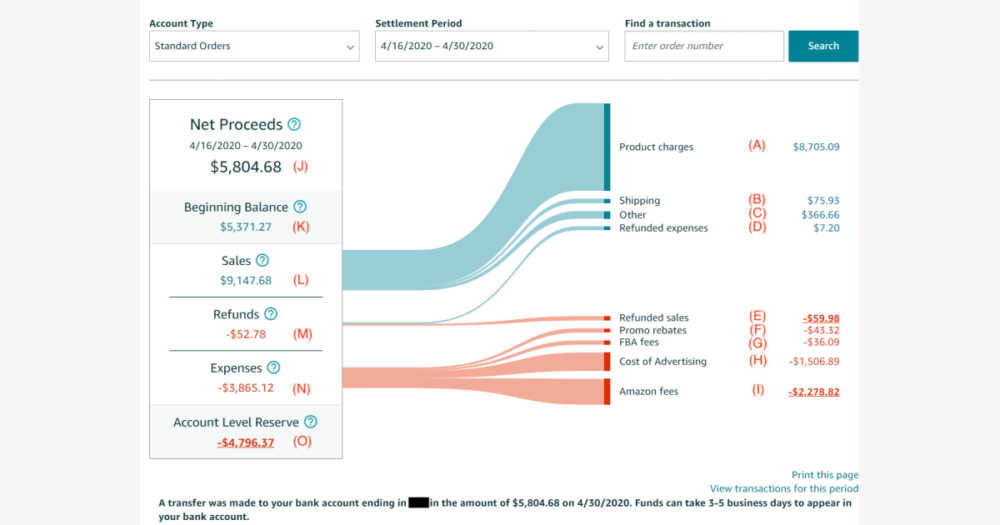
On DHgate or Amazon, the money that lands in your bank is only the final result of a long marketplace chain, not a simple record of daily sales as it might be at a local shop. Amazon bundles customer payments, selling fees, FBA and storage charges, advertising spend, refunds and chargebacks into settlement reports, then sends you a net payout. If an accountant just books that payout like one big “PayPal-style” deposit, they can’t see which part was true revenue, which part was fees, and how much tax you actually owe.
Timing adds another layer of complexity. Amazon often pays out on a delayed cycle, with month‑end cutoffs that don’t match your calendar sales, and FBA inventory can sit in Amazon warehouses while the same products are also sold through other channels. That means your books have to track inventory movements and costs across platforms, not just what you bought and sold in a single storefront. On top of that, marketplace facilitator rules mean Amazon may collect and remit some sales tax for you in certain states, while you remain responsible in others, and all of that still feeds into your overall income tax on worldwide marketplace earnings.
A generic small‑business accountant can be excellent at traditional retail or service businesses but still treat Amazon income as a simple stream of deposits. When that happens, they may miss fee categories, under‑ or overstate revenue, ignore cross‑border purchases, or gloss over multi‑state sales tax exposure. If marketplace selling on Amazon or DHgate is a meaningful part of my income, I’m willing to pay more or work with a niche firm that can walk me through exactly how they handle these marketplace flows in the books. If I only make occasional marketplace sales and most of my situation is basic W‑2 income or a small local side hustle, I’d be more comfortable using a generalist—as long as I know they’re not trying to shoehorn a complex marketplace into a one‑line “online sales” account.
How Amazon money flows through your books—and what your accountant should be able to show you
For an Amazon‑savvy accountant, the money flow should be something they can describe plainly. Customer orders create gross revenue; Amazon then deducts selling fees, FBA and storage charges, advertising costs, and any other program fees; refunds, returns, and chargebacks reverse part of that revenue; and the remaining net amount is what finally hits your bank account. In good books, those pieces don’t disappear inside the payout—they show up as separate lines, so you can see sales, fees, ad spend, and refunds rather than one unlabeled deposit.
To do that well, a specialist relies on specific Amazon reports, not just bank statements. They should talk comfortably about settlement or transaction reports that break down each payout, fee reports that list selling, FBA, storage, and promo fees, and inventory or stock reports that show what’s sitting in Amazon’s warehouses and what has been sold. Each of these feeds into a clear mapping: revenue accounts for gross sales, expense accounts for each fee type and advertising, inventory and cost‑of‑goods accounts for stock movements, and tax accounts that reflect marketplace‑collected sales tax and your own obligations.
When you interview an accountant, don’t be shy about asking them to walk through this flow step by step. A confident specialist can open anonymized client data (with permission) or use test reports to show you a real example of a settlement, the journal entries they created from it, and how that rolls up into financial statements and tax filings. I treat this ability to explain and demonstrate the flow as non‑negotiable: if an accountant can’t clearly say how they handle Amazon fees, refunds, and payouts—and can’t point to the reports they rely on—that’s a red flag for me, even if their resume is full of impressive qualifications.
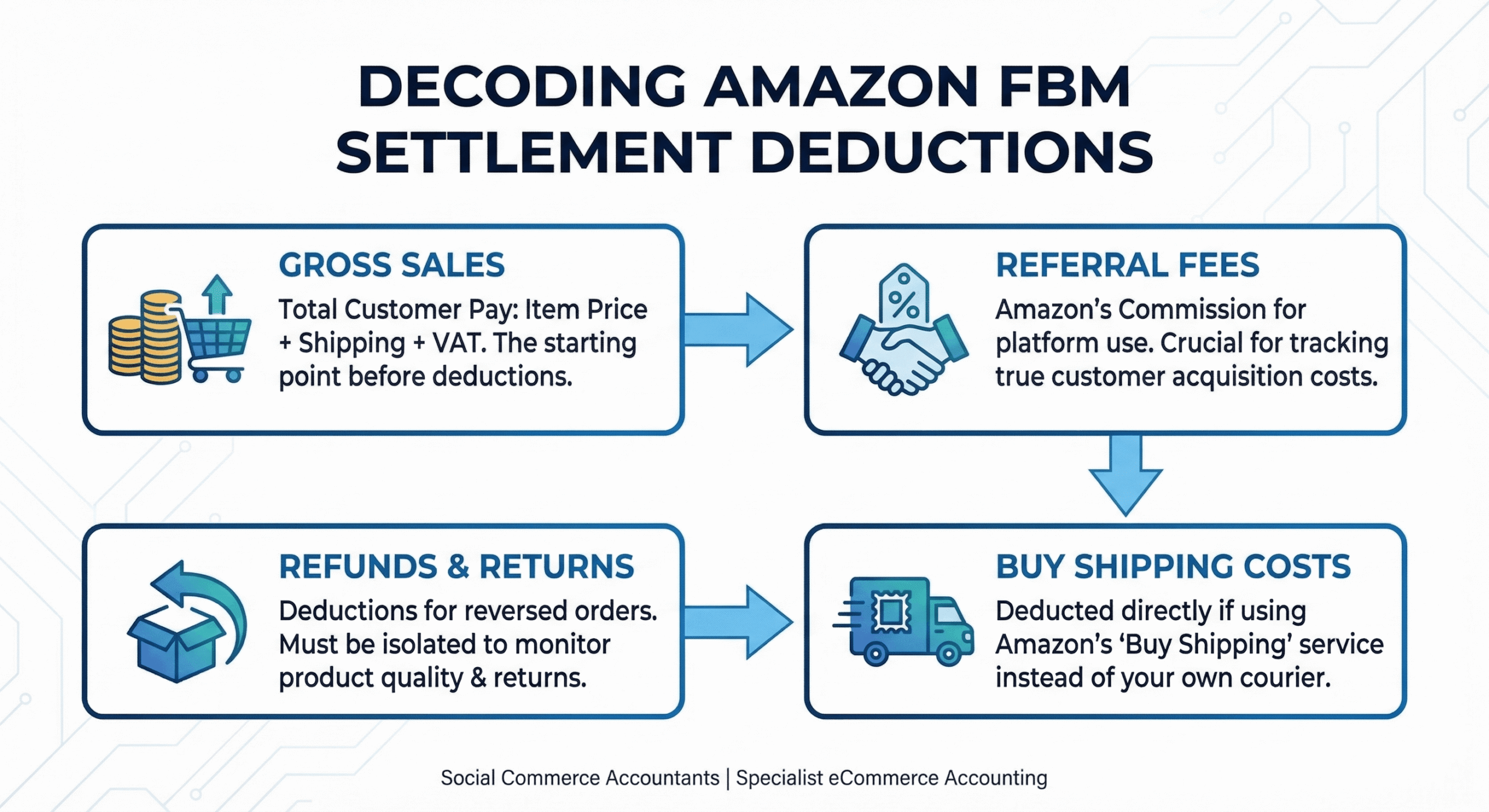
Imagine your accountant using a flow like this: customer orders feed into Amazon settlement reports, fees and refunds are broken out, and only then is the net deposit recorded in your books with each component categorized separately.
Specialist vs. generalist: signs an accountant truly understands marketplace selling
| Trait or interview signal | Marketplace-specialist accountant | Generalist small-business accountant |
|---|---|---|
| How they talk about Amazon data and reports | Names specific Amazon reports—settlement/transaction reports, fee reports, inventory/FBA stock reports—and explains how each feeds into your books. | Speaks vaguely about “online sales” or just says they record whatever hits the bank, without mentioning any Amazon-native reports. |
| Treatment of net payouts versus gross sales | Clearly separates gross sales, individual fee categories, refunds, and taxes first, then records the net payout as the last step; can describe this flow in detail. | Treats each Amazon deposit as a single lump-sum sale, with fees and refunds buried in a generic “miscellaneous expenses” line or not broken out at all. |
| Handling of FBA and multi-channel inventory | Talks comfortably about FBA inventory movements, cost of goods sold, stock sitting in Amazon warehouses, and how they reconcile inventory across Amazon, DHgate sourcing, and any other channels. | Says they “track inventory” but focuses only on purchases and year-end counts, without showing how Amazon warehouse stock and multi-channel sales are reflected in your accounts. |
| Understanding of sales tax / VAT facilitator rules | Explains marketplace facilitator rules, knows where Amazon collects and remits tax on your behalf, and where you may still have filing obligations; can show how tax from Amazon reports appears in your books. | Assumes Amazon “takes care of all the tax” or only mentions generic sales tax/VAT, without distinguishing facilitator collection from your own registration and filing duties. |
| Overall interview signals and who to favor | Answers are specific, confident, and grounded in real marketplace examples; I’d rather hire this kind of specialist, even if they’re a smaller firm or charge more, especially once my Amazon and other marketplace activity is meaningful. | Answers stay high-level and bank-statement-focused; I’d only accept this kind of generalist if my marketplace sales are minimal and low-risk—otherwise I treat these signals as a reason to keep looking for someone with deeper marketplace experience. |
Accounting tools and integrations: what matters (and what doesn’t)
Step-by-step: how to vet an accountant for Amazon and marketplace experience
- Shortlist candidates who clearly state that they work with Amazon or ecommerce sellers, ask other marketplace sellers (including DHgate users) for referrals, and confirm they hold relevant professional credentials or memberships.
- Prepare interview questions that go beyond general “online sales” talk: ask which specific Amazon reports they rely on, how they separate gross sales from fees and refunds, how they handle inventory and ad spend, which tools they use, and how many marketplace clients they currently serve.
- During interviews, request anonymized examples of marketplace work—such as a settlement report matched to journal entries—and listen for specialist signals like referencing fee categories and tax rules instead of just bank deposits.
- Before you sign an engagement letter, agree on scope and deliverables: how often bookkeeping will be updated (monthly or quarterly), who is responsible for tax returns, how they will treat income from other platforms and DHgate-sourced inventory, and how often you’ll review reports together.
- Confirm how communication and corrections will work: how you flag issues, how they respond to Amazon account changes or DHgate payment questions, and how they handle adjustments mid-year. If they resist detailed questions or stay vague about their marketplace process, treat that as a reason to keep looking.
Risks of choosing the wrong accountant—and early red flags to notice
Bringing DHgate and other platforms into the picture
When you buy inventory on DHgate, your accountant should treat the product cost, shipping, insurance, and any customs duties as part of your inventory or cost of goods sold, not as vague “miscellaneous” expenses. Those amounts belong on the balance sheet as inventory until the goods are sold, then flow into cost of goods sold so you can see the real margin on each marketplace.
On the sales side, Amazon, DHgate, and other marketplaces should appear in your books as separate revenue streams with their own fee categories. Just as with Amazon, gross sales, platform fees, payment processor charges, advertising spend, refunds, and net payouts from each marketplace need to be split out rather than booked as one big deposit. A good accountant will describe how they import reports from each platform, map them to your chart of accounts, and reconcile everything back to your bank and payment accounts.
For a DHgate user, this isn’t about checking individual seller ratings anymore; instead, you’re checking whether the accountant can safely handle cross‑border purchases and multi‑platform flows. They should be comfortable talking about customs paperwork, import duties, VAT or sales tax on overseas purchases, and how those costs will show up in your profit reports, while still letting you see performance by platform so you know whether Amazon, DHgate, or another site is pulling its weight.
I prefer accountants who can confidently discuss at least one or two platforms besides Amazon—such as DHgate, eBay, or Shopify—when my business actually uses them. If they can only describe generic “online sales” and never mention specific marketplace reports, fee types, or cross‑border tax issues, that’s a sign they may not be ready to manage the full picture of your ecommerce activity.
Using DHgate-style buyer checks to evaluate accountants
- Check the accountant like a seller: confirm their qualifications and licenses, look for membership in a professional body, ask how many years they’ve worked with small businesses, and see whether they openly mention marketplace clients or publish anonymized case studies involving Amazon or DHgate‑style cross‑border selling.
- Review the engagement letter or scope like a product listing: read the document that describes the work they’ll do and make sure it clearly includes marketplace bookkeeping, treatment of inventory and imported goods, and tax filing responsibilities for your Amazon and other platform income.
- Clarify payment and refund rules: ask about their fee structure (hourly, fixed, or retainer), what happens if the work takes longer than expected, what recourse you have if you’re unhappy with the service, and how they handle changes in your business, such as adding a new marketplace or increasing DHgate purchasing mid‑year.
- Ask about dispute handling: learn how they correct errors in your books, respond if you receive a tax notice or audit, and how they approach disagreements over the treatment of specific marketplace transactions, such as import duties, platform commissions, or cross‑border VAT.
- Favor transparency the way you would on DHgate: I would choose accountants who are willing to put clear terms, responsibilities, and fees in writing and who answer questions directly, just as I’d prefer DHgate sellers with detailed policies and strong ratings before committing my money.
Common practical questions about working with an Amazon-focused accountant
Do I really need a local, in-person accountant for my Amazon and DHgate activity?
Not necessarily. What matters most is that the accountant understands your country’s tax rules, can work in your language, and can clearly explain how they’ll handle marketplace reports and cross-border purchases. I’m comfortable using a remote specialist if they can show a solid workflow for Amazon and DHgate; if my situation is very simple—mostly local income with occasional marketplace sales—I’d consider a nearby generalist as long as they’re honest about their limits.
How often should my marketplace books be updated if I sell on Amazon or other platforms?
Active marketplace sellers usually benefit from at least monthly bookkeeping so fees, ad spend, refunds, and inventory movements don’t pile up. High-volume or fast-growing accounts may need weekly updates to keep cash flow and tax estimates accurate. If your marketplace activity is a small side project, quarterly updates can be acceptable, but you still want a clear process that ties each update back to Amazon and other platform reports, not just bank deposits.
What should I expect if I decide to switch accountants in the middle of the year?
Plan for a handover that includes exporting your accounting data, giving access to prior reports and tax filings, and reconciling any gaps in the books. Clarify in writing which accountant is responsible for specific returns and deadlines during the transition. A marketplace-savvy accountant should be able to review the old records, rebuild missing links between Amazon payouts, DHgate purchases, and your ledger, and explain what’s being adjusted so you’re comfortable with the changes.
What if my business grows beyond my current accountant’s marketplace expertise?
Treat it like outgrowing a basic seller on DHgate: review the scope you agreed on, ask whether they can realistically support your new volume, platforms, or cross-border tax exposure, and decide whether you need a more specialized firm. If they can’t describe a clear workflow for your expanded Amazon and multi-platform income, or seem unsure about new tax or inventory issues, it’s reasonable to move to an accountant who focuses on marketplace sellers and can show you how they’ll keep your books accurate as you scale.