
On DHgate, the best way to ship an order isn’t a single “top” courier but the method whose delivery time, shipping cost, tracking and customs conditions fit your situation. This guide shows you how to read those fields on DHgate’s product and checkout pages so you can pick a realistic, trackable option instead of guessing from labels alone.
How DHgate shipping options actually work
On DHgate there isn’t one universally “best” shipping option or courier. Each order shows several methods, and the right choice depends on how you balance four things: the estimated delivery window, the shipping price, whether tracking is included, and who is likely to handle customs or import charges for your country.
On the product and checkout pages DHgate presents these as different service levels, from slower economy or standard methods to faster express options. I would normally choose a method with realistic delivery times and clear, trackable shipping over the absolute cheapest or fastest-looking option with vague details. If you have a strict deadline and are comfortable paying more, it can be reasonable to prioritize express services instead. The rest of the guide focuses on how to read DHgate’s shipping fields—method name, estimated delivery time, cost, tracking and customs notes—rather than ranking specific carrier brands by country.
Where to find shipping details on DHgate
When you open a DHgate product page, shipping details usually sit close to the price and quantity selectors. You’ll typically see the shipping method name or type, an estimated delivery window (for example, a range of dates or number of business days), and either a specific shipping fee or a “free shipping” note. This area may also mention whether tracking is included and, for cross‑border orders, brief notes about customs, taxes or local delivery partners.
After you add items to your cart, the order summary repeats key shipping information for each product or for the whole parcel. Here you can confirm which method is currently selected, see how the shipping fee contributes to your total, and check that the estimated delivery window still meets your needs once all items are grouped together.
On the checkout page, before you pay, DHgate normally shows the final shipping method, fee and delivery estimate for the order. This is the place to double‑check that you’re comfortable with the speed, total cost and tracking level. Look for core concepts even if the exact wording varies by seller or interface version: a method name or type (standard, economy, express), a clear delivery timeframe, a stated shipping price or free shipping tag, a note about tracking availability, and any mention of customs, duties or local carriers. Interpreting each of these fields in terms of time, cost and tracking is what helps you decide whether a shipping option truly suits your order.
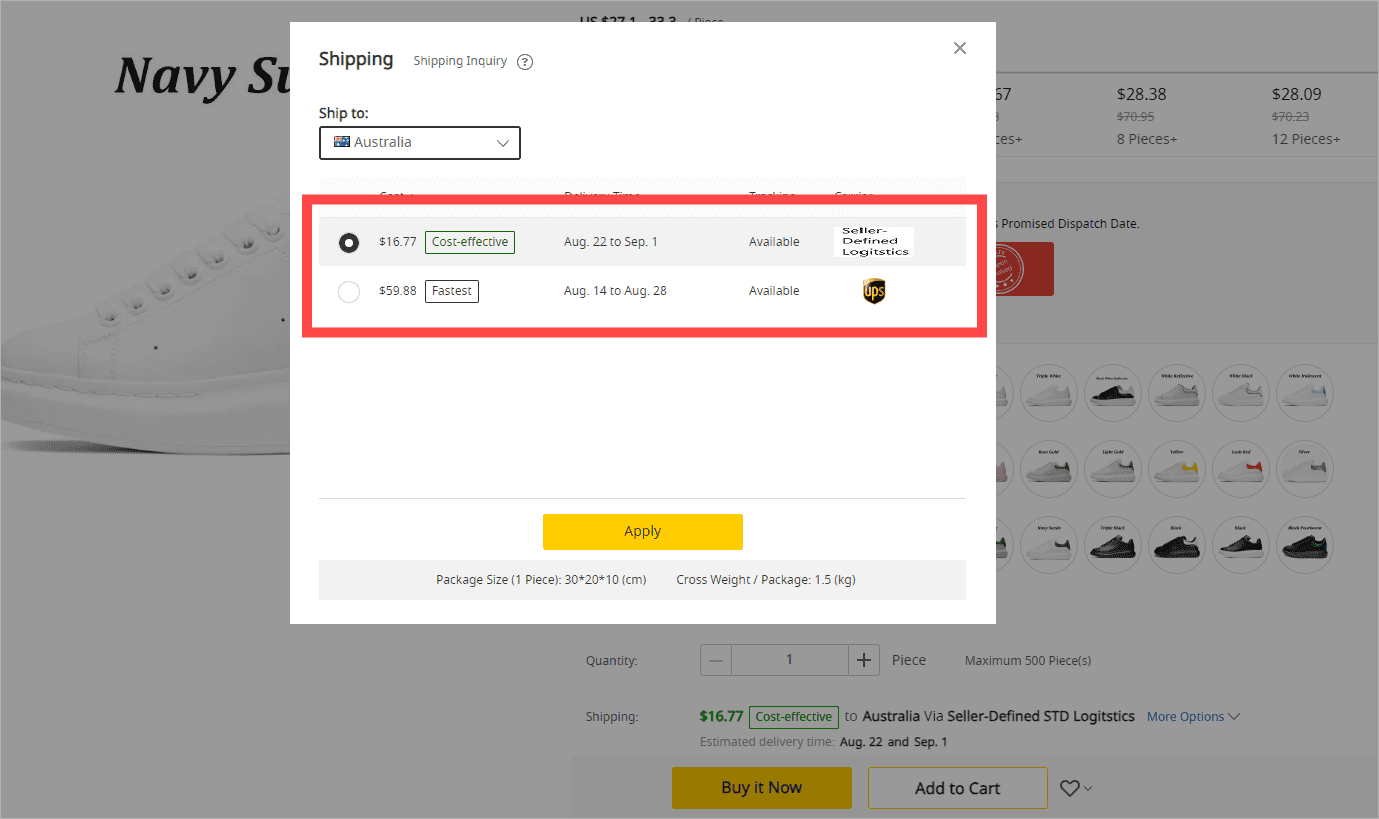
Example layout of a product page where the estimated delivery time and shipping fee are shown together in a dedicated shipping information box.
Common types of DHgate shipping methods and what they mean
Once you can see the shipping fields on a DHgate product or checkout page, it helps to think of the methods as broad categories rather than dozens of completely unique options. Most choices fall into patterns like economy or standard postal shipping, faster postal or commercial services, full express couriers, or consolidated seller‑arranged logistics, each trading off speed, cost and how detailed the tracking will be.
These categories are practical guidelines, not promises. The exact name shown, the route your parcel takes and how it behaves in real life depend on the individual seller, your country and the logistics partners involved, so use the patterns below to set expectations, then verify them against the specific listing details and reviews.
| Shipping method category | Typical delivery speed | Typical shipping cost | Tracking detail | When this option usually fits |
|---|---|---|---|---|
| Economy / standard postal shipping | Slowest: often several weeks and more sensitive to customs or local backlogs. | Lowest or free; the main appeal is saving on shipping. | Basic tracking that may update infrequently or stop once the parcel reaches your local postal network. | Best when you have a flexible timeline, want to keep costs down, and are comfortable with limited tracking for low‑value or non‑urgent items. |
| Faster postal or commercial services | Moderate: usually quicker than standard post but not as fast as full express; still affected by cross‑border processing. | Low to mid‑range; you pay more than economy but less than premium express. | Improved tracking with more regular updates, though it can still become patchy when handed between partners. | A good middle ground if you value a balance of price and speed and prefer clearer tracking without paying express‑level fees; this is often what I would choose for everyday purchases. |
| Express couriers | Fastest: typically the shortest quoted delivery windows, with priority handling along the route. | Highest; express methods can add a noticeable premium to the total order cost. | Detailed end‑to‑end tracking with frequent scans and clearer status messages. | Best for tight deadlines or high‑value items where arrival time and visibility matter more than cost. If you need the item by a specific date and are willing to pay extra, this category is usually the most appropriate despite the higher fee. |
| Consolidated / seller‑arranged logistics | Variable but often mid‑range: parcels may be grouped and moved through a shared network before reaching local carriers. | Usually mid‑range; consolidation can reduce per‑item cost but may introduce handling fees. | Tracking may jump between systems or show fewer intermediate scans, especially while parcels are grouped or transferred between partners. | Useful when ordering multiple items from the same seller or warehouse and you’re happy with moderate speed and cost. Choose this if the seller explains the process clearly and buyers mention reliable delivery, but remember that tracking can feel more complex or less granular. |
A quick checklist before you pay
- Match the estimated delivery window to when you actually need the item, and add a buffer for possible customs checks, holidays or local delays.
- Review the total order cost, including shipping, and decide whether paying slightly more for a method with better tracking or a shorter delivery window is worth it for this purchase.
- Confirm whether the selected shipping method includes tracking and note where updates will appear in your DHgate account (for example, in the order details or logistics section).
- Read the seller’s shipping description and recent buyer reviews, looking for specific comments about delivery speed, packaging quality and whether parcels arrived within the promised timeframe.
- Check for any notes about customs duties or taxes for your country; if the information is unclear and the order value is high, consult DHgate help or your local customs resources before paying.
- When choosing between similar options, lean toward the method with realistic delivery estimates and clearer tracking information rather than the absolute cheapest choice with vague or incomplete shipping details.
How tracking works for DHgate orders
Once a seller on DHgate ships your order, they usually add a tracking number to the transaction. You can then see the logistics status in your DHgate account, typically on the order details page or in a dedicated tracking or logistics section, instead of relying on an external site alone.
Early tracking updates often come from the first carrier handling the export leg, showing events like “accepted by carrier” or “departed from origin.” As the parcel moves between countries and hands off to local postal services or last‑mile partners, the source of updates can change and the wording may become less detailed, which is normal for cross‑border logistics rather than a sign that DHgate itself has stopped tracking.
Economy or very low‑cost methods may only scan the parcel a few times or lag several days behind its actual movement, so gaps in the tracking history are common with those service levels. If you care about knowing where the package is, it’s reasonable to prefer options that clearly include a trackable number and show a history of reasonably frequent scans, even if they cost a bit more.
If a tracking number doesn’t appear after a reasonable period following the seller’s “shipped” status, or the tracking stops updating for many days, start by messaging the seller through DHgate to ask for confirmation and any additional information. Only if the seller is unresponsive or the delay extends beyond the platform’s normal protection window should you consider escalating through DHgate’s dispute tools, following whatever current guidance the help center provides.
Delays, customs and other shipping risks to keep in mind
- Estimated delivery dates on DHgate are approximate windows, not guarantees. They can be stretched by customs inspections, security checks, severe weather, local carrier backlogs or holidays, even when the seller ships on time.
- Choosing the very cheapest, untracked shipping makes it harder to know where your parcel is and to prove non‑delivery. With no or minimal scans, you may face more uncertainty about timing and less clear evidence if you need DHgate to review a dispute.
- Disputes and refunds for items that never arrive are handled under DHgate’s buyer protection rules, not by the carrier’s own policies. Methods that include clear tracking and prompt seller communication usually give you better support for a claim if something goes wrong.
- Because DHgate’s exact buyer protection deadlines and dispute requirements can change, always check the current help or policy pages for the latest time frames and documentation expectations instead of relying on assumptions or old advice.
For cross‑border DHgate orders, the product price and shipping fee do not automatically cover import taxes or customs duties. Depending on your country’s laws and the value and type of goods, you may be asked by customs or the delivery carrier to pay additional charges before the parcel is released, which can add both cost and a few extra days to the overall delivery time.
Some listings or DHgate policies may state that prices are tax‑inclusive or that duties are prepaid, but this is not universal and can vary by seller, shipping method and destination. If that information is missing or unclear, you should assume that local authorities may still collect import charges when the package arrives.
I prefer to treat customs as a likely extra step on higher‑value orders: allowing extra time in my expectations and budgeting for possible import fees rather than being surprised later. For costly or sensitive shipments, it’s wise to read DHgate’s documentation and, when necessary, consult your local customs resources so you understand how your country handles international ecommerce parcels.
DHgate shipping FAQs: changes, stalled tracking and disputes
Can I change the shipping method on DHgate after I’ve placed an order?
Changing the shipping method after payment is usually difficult and not guaranteed. If you realize you need a different option, contact the seller through DHgate messaging as soon as possible, explain the change you want, and ask whether they can adjust the method or cost before the parcel is sent. If the seller has already shipped, you’ll normally need to keep the original method and rely on DHgate’s buyer protection if problems arise.
What should I do if my DHgate tracking hasn’t updated for a long time?
Start by checking the order details and logistics section in your DHgate account to confirm the latest status and that the tracking number is correct. Then message the seller to ask for confirmation that the parcel is still moving and whether they have more recent information from the carrier. If a carrier name is shown, you can also try entering the tracking number on that carrier’s own site or a reputable tracking aggregator. If there is still no movement and the delay feels excessive, keep records of the timeline in case you need them for a dispute.
When is it reasonable to open a dispute on DHgate for non‑delivery?
A dispute makes most sense after you’ve tried to resolve the issue with the seller, the estimated delivery window has clearly passed, and tracking or communication suggests the parcel is lost or unreasonably delayed. Before opening a case, review DHgate’s current buyer protection rules in the help center or order terms so you understand the valid reasons, evidence expectations and time limits. Use the dispute tools within DHgate rather than relying on the carrier’s policies alone.
How can I check the exact dispute deadlines and requirements for my DHgate order?
Do not rely on assumed timelines or old advice, because DHgate’s buyer protection rules can change. Instead, look up the latest guidance in DHgate’s help center, policy pages or the protection section linked from your order details. Those resources outline the current time frames, acceptable evidence and steps you should follow if you need to escalate a non‑delivery or other shipping problem.