
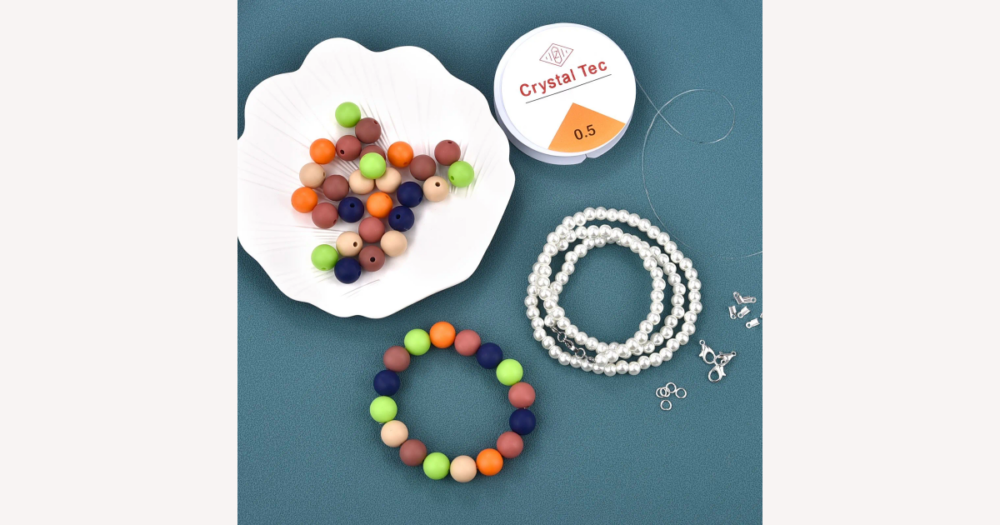
DHgate can be a broad source of beads and jewelry-making supplies, but it’s most useful when you understand what counts as a “bead resource” and how the marketplace works. Here, I use the term for the full mix of beads, findings, stringing materials, and basic tools found in DHgate listings. The focus is on using DHgate’s searches, seller information, payment protections, and shipping options safely—prioritising clear photos, measurements, and reviews over the very lowest price.
What does “bead resources” mean when you’re shopping on DHgate?
On DHgate, “bead resources” covers more than just the beads themselves. Jewelry makers typically look at bead types (glass, acrylic, plastic, resin, metal, wood, crystal, gemstone, seed beads), matching findings (clasps, spacers, connectors, bead caps, jump rings, ear wires, bails, charms), plus stringing materials like wire, cord, and elastic, and basic tools such as pliers or crimping tools. All of these show up as individual listings from different sellers on the DHgate marketplace.
This guide focuses on how to use DHgate for those bead-related categories: how to search and filter for specific materials, sizes, shapes, and quantities, how to read listings and reviews, and how DHgate’s payment, shipping, and dispute processes affect orders. It is not a directory of other bead shops or a hunt for the absolute rock-bottom price across the internet.
Throughout the page I treat DHgate as most useful when a listing and seller are easy to understand. I would rather choose bead and finding listings with clearer photos, measurements, and buyer feedback—even if they cost a little more or ship more slowly—than chase the very lowest price from a seller whose information is vague. If you’re more price-driven, you can still use the same checks and decide where you’re comfortable accepting extra uncertainty.
Key bead and findings types and how to search for them on DHgate
For beads, DHgate listings commonly cover glass and crystal beads for sparkle, acrylic or plastic beads for lightweight and colourful designs, resin beads for unusual shapes or embedded effects, metal beads for structured or industrial looks, wooden beads for natural or boho styles, gemstone or stone beads for more premium pieces, and tiny seed beads for detailed weaving and embroidery. Most of these come in standard shapes such as round, faceted, cube, oval, rondelle, and tube, and you’ll often see options grouped by colour families or mixed assortments.
Findings are the small hardware that make those beads wearable. Typical DHgate categories include spacers and bead caps to frame beads, clasps like lobster or toggle to close bracelets and necklaces, jump rings and split rings to connect components, ear wires and posts for earrings, bails to hang pendants, and decorative charms or pendants that become focal points. When you translate a design into a search, think in pairs: if you’re browsing “glass beads”, you may also need “lobster clasp” and “jump ring”; if you’re looking at “gemstone beads”, you might pair them with sturdy metal bead caps and a matching clasp set.
On DHgate, you’ll usually search and filter these items by material (glass, alloy, 925 silver, stainless steel, wood, resin, gemstone), colour or finish, size (mm measurements for beads and internal diameter for rings), shape (round, faceted, cube, heart, flower, etc.), and lot or pack quantity. Phrases like “wholesale”, “bulk”, or “lot” often signal higher quantities per listing, which can be useful for stringing projects or selling finished jewelry. Because terminology varies between sellers, read the description and sizing chart carefully to confirm bead dimensions, hole size, and the number of pieces included in each lot. In line with my own priorities, I would choose DHgate listings that support these details with clear close-up photos and a solid set of reviews, even if they’re slightly more expensive than a vague, poorly documented option.
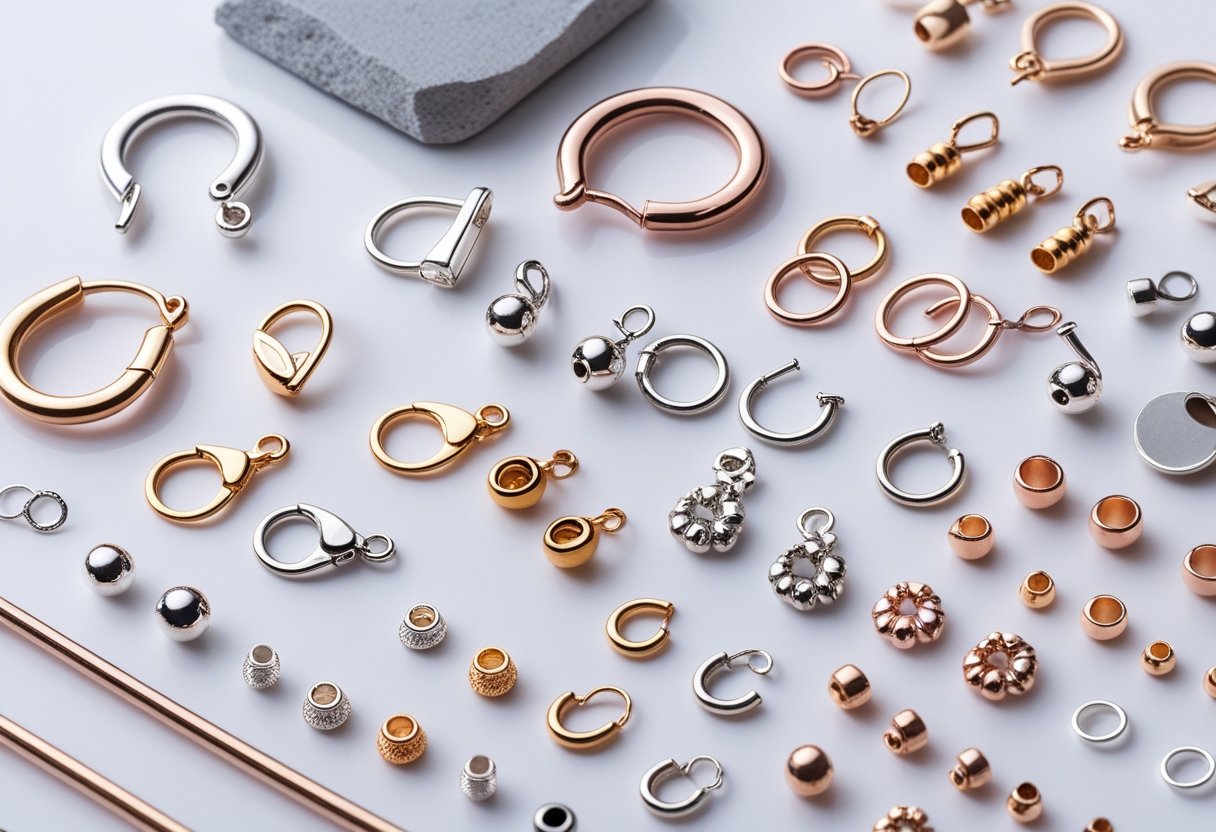
A close-up chart of assorted jewelry findings and beads arranged by type, showing different shapes and metal components so readers can visually connect category names with what they’ll see in DHgate search results.
Tools and accessories to source alongside beads
- Basic pliers: round-nose pliers for forming loops, and flat-nose or chain-nose pliers for gripping and opening jump rings.
- Cutting tools: wire cutters or side cutters for trimming beading wire, head pins, and other metal components.
- Crimping tools: dedicated crimping pliers for securing crimp beads or tubes on beading wire, plus crimp covers to hide the flattened crimps.
- Beading needles: fine needles suitable for seed beads, bead weaving, and detailed stitching work.
- Organizers and storage: bead trays, compartment boxes, small jars, and stackable storage cases to keep different bead types and findings separated.
- Stringing materials: nylon or polyester beading thread, coated beading wire, memory wire, and elastic cord for stretch bracelets and simple necklaces.
- Finishing accessories: crimps, crimp tubes, and crimp covers, along with stopper beads or wire guardians that protect stringing materials at stress points.
On DHgate, you can either bundle tools and beads into one order from a single seller or split them across several stores. Bundling from one seller simplifies shipping, tracking, and communication, because you only have one order record to monitor and one set of messages if anything goes wrong, but it may mean accepting whatever brands or styles that seller carries instead of chasing a very specific tool design.
The alternative is to place separate orders with different sellers to get specialist tools, premium organizers, or particular stringing materials while sourcing beads elsewhere. That approach can match your projects more precisely, but you’ll have more parcels to track and more order pages to watch for updates. Personally, I would rather concentrate my bead and tool purchases into fewer, clearer orders from sellers whose descriptions, ratings, and shipping terms are easy to understand, even if that means passing on a slightly cheaper tool from a less transparent store.
How DHgate’s payment and buyer protections work for bead orders
When you pay for beads and supplies on DHgate, you’re paying through the platform rather than directly handing money to the seller. In general, DHgate receives your payment and holds it while the seller prepares and ships the order. The seller expects to ship within a stated handling period, and funds are only released after you confirm receipt or a buyer-protection period runs its course, so the seller is incentivized to dispatch and deliver what was advertised.
Exact timelines, payment methods, and buyer-protection terms can change over time and may vary by order, so it’s important to read the current DHgate buyer protection information and check the details shown on your own order page, especially if you’re placing a large or time-sensitive bead order. The escrow-style flow gives you a buffer against outright non-delivery or major misrepresentation: if a parcel of bead lots never arrives or is clearly far from what was described, you can use the platform’s dispute tools while the money is still controlled by DHgate rather than already sitting in the seller’s account.
Step-by-step: evaluating DHgate bead sellers before you buy
- Open the seller’s store page and note the overall rating, number of completed transactions, and how long the store has been active so you have a quick sense of their general reliability.
- Read product reviews that specifically mention beads, paying attention to comments about material quality, color accuracy, size consistency, and how smoothly shipping and delivery went.
- Look closely at the listing photos, checking whether there are clear close-ups, multiple angles, and any scale references (such as rulers or coins) that make bead size and finish easier to judge.
- Review the written description for material details, size units (mm, inches), quantity per lot, and any stated certifications or quality claims, and be cautious if important information is vague or inconsistent.
- Compare several listings or sellers offering the same type of bead so you can spot unusually low prices or very sparse descriptions that may signal lower transparency or higher risk.
- If anything is still unclear, use DHgate’s messaging tools to ask the seller specific questions about material, size, color mixes, or processing time before you commit to an order.
- I personally give more weight to clear photos and detailed, consistent reviews than to the very lowest price, and I would encourage you to lean toward sellers who are transparent and well-reviewed even if their beads cost a little more.
Placing and tracking bead orders on DHgate
- Browse bead listings on DHgate, review each description and seller information to confirm they match your project needs, and add the chosen items to your cart.
- Check whether multiple items from the same seller can be combined in a single order, then review the total cost carefully, including shipping fees and any discounts or coupons applied.
- Confirm your shipping address and choose a shipping method that balances cost, delivery speed, and the level of tracking detail you want for your bead parcels.
- Submit the order through DHgate’s checkout process and keep any confirmation emails or on-site order numbers so you can reference them later if needed.
- Go to your account’s order section—typically labeled something like “My Orders” or similar—to monitor status changes such as paid, awaiting shipment, and shipped.
- Open the tracking information for orders that have been marked as shipped to see carrier details and movement updates, keeping in mind that economy shipping often updates less frequently or in distinct stages as parcels move between hubs.
- When you plan to buy many bead lots, try to group purchases with a few trusted sellers rather than spreading them across dozens of stores; this can simplify shipping arrangements and make it much easier to follow order status and tracking for all your bead resources.
Common pitfalls with beads and small findings on DHgate
- Confirm bead size by reading the measurements carefully, noting whether they’re in millimetres or inches, and using any size charts or photos that show beads next to familiar objects (such as a ruler or coin) to sanity‑check the scale.
- Study the quantity fields to see exactly how many beads, strands, or lots are included in the price, and look for wording that distinguishes per‑strand pricing from per‑lot packs so you’re not counting on units that aren’t actually part of the order.
- Check whether the listing says colours are random, mixed, or assorted, versus single‑colour packs, and compare all available photos so you know whether you’re buying a carefully curated colourway or a general mix.
- Read the estimated delivery window and shipping method description on each listing, and only choose the slowest, cheapest shipping when your project timeline is flexible. I prefer sellers whose descriptions, photos, and shipping details leave very little room for ambiguity, even if their prices and delivery costs are slightly higher, because it helps avoid these common frustrations.
Shipping options and delivery expectations for DHgate bead orders
Bead orders on DHgate are typically shipped internationally using economy or standard methods, which can mean long lead times—often several weeks or more—before parcels reach you, while faster paid options usually cost more but tend to move through the network more quickly and offer clearer tracking updates. When you buy multiple items from the same seller, they may be packed into one parcel with a single tracking number, but orders from different sellers will create separate shipments and separate tracking entries, so it’s normal for your overall bead haul to arrive in multiple packages over time.
Before paying, review each listing’s shipping method description and estimated delivery window, and match the choice to your project schedule: slower, cheaper economy shipping makes sense only when you can wait, whereas paying a bit more for standard or express shipping can be worth it if you want more predictable arrival dates and better tracking detail. I would generally choose moderately priced shipping with reliable tracking over the very cheapest option with vague or infrequent updates, but if your budget is tight and you’re not in a hurry, accepting longer, less predictable delivery to save money can be a reasonable trade‑off.
Handling damaged, missing, or incorrect bead items through DHgate
- Inspect your bead packages as soon as they arrive, checking for damage to the parcel and comparing the contents with what you expected in terms of quantity, colour, and size.
- Take clear photos of any problems, including close-ups of damaged beads or findings, missing items, or obvious colour or size mismatches, and keep the outer packaging and labels as evidence.
- Sign in to your DHgate account, open the relevant order, and use the platform’s messaging or problem-reporting tools to contact the seller, briefly describing the issue and attaching your photos so everything is documented on DHgate.
- If the seller’s response is slow, unhelpful, or the problem is serious, submit a dispute through the same order page, clearly stating what the listing described, what you received, and what resolution you’re requesting, and upload your evidence again so it sits in the dispute record.
- Follow DHgate’s instructions on refunds, returns, or partial credits, and keep all communication inside the platform rather than moving to private email or messaging, so your case stays covered by DHgate’s buyer protection system.
- Do not rely on fixed deadline numbers from this guide; before or shortly after you place bead orders, review the current buyer protection and dispute information on DHgate so you know exactly how long you have to report issues and open a case.
How DHgate bead sourcing compares to local and other online craft options
| Source type | Key strengths | Typical limitations | Best suited projects |
|---|---|---|---|
| DHgate | Very wide variety of bead types, findings, and tools, with many bulk and wholesale lots and options for customized or private‑label supplies; per‑unit prices can be low when you order larger quantities. | Higher minimum order quantities are common, delivery windows are longer and less predictable than domestic shipping, and you need to invest time in vetting individual sellers and listings. | Stocking up for larger projects, experimenting with many bead styles or fittings at once, or building a small business inventory when you can plan ahead and wait for international shipping. I turn to DHgate when variety and bulk matter more than exact arrival dates. |
| Local craft stores | Immediate availability, no international shipping, and the ability to see and feel beads in person, compare colours directly, and get quick staff input; returns or exchanges are usually straightforward. | Selection is limited to what fits in the store, unusual sizes or materials may be hard to find, and per‑unit prices are typically higher than bulk online sources. | Urgent projects, last‑minute repairs, or colour‑critical pieces where you need to match shades precisely and cannot wait weeks for delivery; I prefer local shops when timing and perfect colour matching are more important than price or range. |
| Other online craft sites | Curated selections that focus on craft supplies, often with clearer photography and descriptions than general marketplaces, plus faster and more predictable domestic or regional shipping than international platforms. | Less emphasis on wholesale or very large lots than DHgate, overall variety may be narrower than the full marketplace, and prices can sit between local retail and DHgate bulk levels. | Medium‑scale projects where you want reliable, relatively quick shipping and a focused bead range, but don’t need the absolute lowest per‑unit cost or the widest possible assortment. These sites are a comfortable middle ground when you value speed and clarity but still want more choice than a single local store. |
Practical DHgate bead-order FAQs
Can I combine small bead orders from multiple DHgate sellers into one shipment?
No. Each DHgate seller handles their own packing and shipping, so orders from different stores are processed and shipped separately. You can sometimes combine multiple items from the same seller into one order (and one parcel), but listings from different sellers will create separate orders, separate shipping fees, and separate tracking numbers. It’s usually easier to group more of your bead and tool purchases with a few trusted sellers so you have fewer orders to monitor.
What should I do if my DHgate bead order’s tracking seems stalled for a long time?
First, check the carrier details and the latest tracking scan—international bead parcels often pause at transit hubs or customs, and updates can be infrequent with economy services. If the parcel appears stuck and the estimated delivery window is close to or past its end, message the seller through DHgate from the order page so your communication is logged on the platform. If there’s still no progress or the seller is unhelpful, use the same order record to open a dispute, explaining the delay and attaching screenshots or tracking information so DHgate can review the case while buyer protection still applies.
Is it wise to place small sample bead orders on DHgate before buying in bulk?
Yes. Starting with modest quantities from a seller who has clear photos, detailed descriptions, and solid reviews is a cautious way to test bead quality, colour accuracy, sizing, and shipping performance. Once you’re happy with a seller’s samples and delivery timeline, you can scale up to larger orders or more time‑sensitive projects with more confidence. Keeping your early orders small, well‑documented, and inside DHgate’s buyer‑protection timelines is safer than jumping straight into big speculative bulk purchases with an untested seller.
Overall, what’s a sensible strategy for managing bead orders on DHgate?
Treat DHgate as a place to test and build relationships gradually: focus on a few transparent, well‑reviewed sellers, place small trial orders first, keep your order and tracking records organised, and rely on DHgate’s messaging and dispute tools whenever something looks wrong. That staged approach lets you tap into the platform’s variety and pricing without over‑committing money or project deadlines to sellers you haven’t yet proved in practice.