
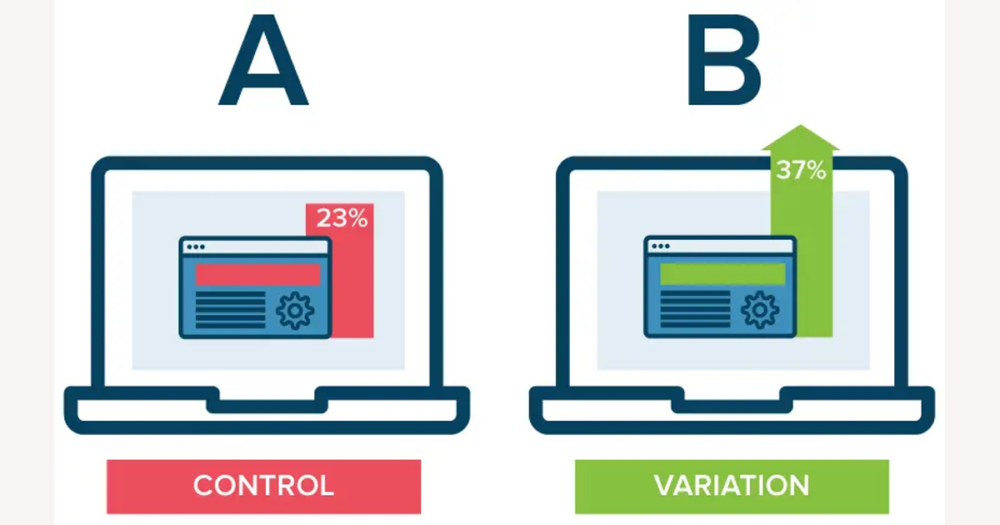
Split testing can support higher sales on DHgate when you use it to refine specific listing, pricing, and policy details that influence how buyers click, trust, and complete orders—but it only works under the right conditions. This guide explains what split testing means in a DHgate marketplace context, which parts of the buyer journey you actually control, and when I would focus on improving basic listing quality and traffic before investing effort in formal experiments.
Where split testing actually helps DHgate sellers (and where it doesn’t)
Split testing can help increase sales on DHgate, but only when it is used to refine specific parts of your presence—such as listing content, pricing presentation, and policy wording—and when you have enough traffic and clean data to learn from the results. It is a way to make better decisions, not a guarantee that revenue will jump.
In a marketplace like DHgate, split (A/B) testing means comparing two versions of something you control—typically a title, main image, description section, attribute set, price point, shipping option, or a piece of policy text—and watching a clear metric such as impressions, click-through rate, orders per 100 visits, or the number of pre‑sale questions to see which version performs better.
Split testing is worth the effort when a listing already has steady traffic, you change only one element at a time, and you respect DHgate’s rules on truthful descriptions, pricing, promotions, and policies. Under those conditions, tests can show which variant makes buyers more likely to click, trust your offer, and complete payment. If traffic is very low or your basics are weak—for example unclear titles, poor images, incomplete descriptions, slow responses, or unreliable shipping—I would first improve listing clarity, accuracy, and service and work on driving more visits. Once those foundations are in place, split testing becomes a useful framework for fine‑tuning rather than a substitute for core quality.
How a basic split test maps onto the DHgate environment
- Pick a concrete goal for the test, such as increasing click-through from DHgate search, getting more orders per 100 visits, or reducing the number of pre‑sale questions you receive for a listing.
- Choose one controllable element to change: for example, adjust the listing title wording, swap the main image, test a different price point or quantity bundle, offer an alternative shipping option, or rewrite a piece of visible policy text.
- Create two versions and expose them under comparable conditions. On DHgate this usually means either using separate listings where allowed or running time‑based variants on a single listing (Version A for a set period, then Version B for the same kind of period) while keeping other factors stable as far as possible.
- Use DHgate’s built‑in metrics—such as impressions, click-through rate, orders, and conversion rate over the test periods—to compare performance between versions and draw directional conclusions about which change better supports your chosen goal.
On DHgate, some parts of the buyer journey are fully controlled by the platform: site layout, many search and ranking factors, the checkout and payment flow, and the underlying dispute and refund mechanisms. You cannot split test those elements directly. What you can control are your listing titles and images, descriptions and attributes, prices and promotion settings, shipping offers, and the wording of store and after‑sale policies that appear on your pages. Because DHgate’s search and recommendation algorithms can shift traffic over time based on performance, promotions, and seasonality, manual tests rarely allocate traffic perfectly evenly between variants. Treat your results as directional rather than precise, and use them to guide sensible adjustments rather than making drastic decisions on the basis of small or short‑term differences.
Testing listing content to improve clarity and trust
On DHgate, buyers usually decide within a few seconds whether to click or trust a listing, and their first impression comes from the title and main image. These are strong split‑test candidates: you can compare a title that leads with the primary benefit (“durable travel backpack for daily use”) against one that leads with a key specification (“30L waterproof nylon backpack”), or test wording that makes compatibility and size unmistakably clear. For main images, simple variations like product‑only versus a clean lifestyle scene, a front view versus an angled view, or better lighting and background can show you which presentation helps buyers answer “Is this the right product?” quickly when they scan DHgate search results.
Gallery images are the next place where small, honest changes can matter. One version might use only generic product shots, while another adds close‑ups of materials, size or usage diagrams, or a photo that shows what is included in the package. Buyers often click through these images to confirm details such as texture, connectors, or how the item is used in real life, so tests that add clarity rather than decoration tend to be more useful than trying to make the gallery look flashy.
You can also experiment with how you structure the description and bullets. For example, one variant may bury important information—materials, sizing guidance, compatibility notes, warranty or after‑sale support—deep in the text, while another moves those points into short bullets near the top. Similarly, refining attribute choices so they are as accurate and complete as DHgate allows helps buyers confirm key facts quickly and reduces confusion. A good test here is to compare a description that feels cluttered and vague with a version where the same information is organized and direct, then watch whether pre‑sale questions and order rates change.
Across all of these content tests, the variants must stay honest, accurate, and compliant with DHgate’s listing rules. Over‑claiming features, exaggerating quality, or using images that do not match what you actually ship may produce a short‑term lift but can damage ratings, increase disputes, and trigger platform penalties. The goal is to learn which clear, truthful presentation helps buyers decide “This matches my needs” and “This seller looks professional”—not to push them into orders they will regret.
Experimenting with pricing and shipping options
| Test focus | Variant A example | Variant B example | Primary buyer metric | Operational watchpoint |
|---|---|---|---|---|
| Base price vs shipping structure | Slightly higher item price with free standard shipping included | Lower item price with standard shipping shown as a separate paid fee | Conversion rate from views to orders | Overall profit per order and any increase in shipping‑related complaints or disputes about fees |
| Total cost clarity | Single, all‑in price that already includes typical shipping to the main target country | Item price plus clearly broken‑out shipping cost and estimated delivery time | Click‑through rate from search and cart completion rate | Buyer questions about total cost, and cancellations after seeing full price at checkout |
| Bundles or multipacks | One unit at a standard price, suitable for buyers testing the product | Multipack or bundle (e.g., 3 units) at a small per‑unit discount | Average order value and share of buyers choosing the bundle | Inventory turnover, packing complexity, and any rise in complaints about receiving the wrong quantity |
| Visible discounts or promotions | Stable base price with no extra promotion label, relying on clear value messaging | Displayed discount or limited‑time promotion consistent with DHgate tools and rules | Conversion rate and average order value during the promotion period | Refunds, disputes, and buyer mistrust if discounts change too frequently or look confusing |
| Faster vs cheaper shipping options | Cheaper, slower shipping as the default option with an estimated delivery window | Faster, more expensive shipping highlighted as the default or recommended option | Share of orders choosing each option and overall conversion rate | On‑time delivery performance, shipping cost margins, and any rise in complaints about late or expensive deliveries |
Use these patterns as starting points for a small number of clear pricing and shipping experiments on DHgate. For each listing, change one lever at a time—such as the way you combine item price and shipping, or whether you highlight bundles or faster delivery. Choose a primary buyer metric like conversion rate or average order value, then watch a secondary operational signal such as complaints, refunds, or shipping disputes. Stable, understandable pricing and delivery options usually build more trust than constant tinkering, so keep variants simple, compliant with DHgate policies, and easy for buyers to interpret when comparing your offers to others on the platform.
Testing policy wording to support buyer confidence
On DHgate, you cannot rewrite the platform’s official dispute and refund rules, but you usually can adjust how you describe your own handling of issues within that framework. That includes setting clear expectations for response times (for example, “we respond to messages within 24 hours”), how you deal with exchanges if an item is not as described, and what kind of after‑sale support buyers can expect.
Policy wording is a good candidate for split testing because many buyers read this text before deciding whether to place an order. You might compare a brief, simple return statement against a more detailed explanation that lists conditions and timelines, test whether explicitly mentioning DHgate’s buyer protection alongside your own guarantees feels more reassuring, or move a short reassurance line (such as “covered by DHgate protection and easy exchange if item not as described”) closer to the price or add‑to‑cart area instead of leaving it deep in the description.
To see whether these variants support buyer confidence, watch practical signals rather than just the wording itself: changes in the number of pre‑sale questions about returns or refunds, the rate of completed orders for the listing, and any shift in cancellations or disputes. If a clearer, more honest policy message reduces confusion and keeps more buyers comfortable completing payment, that is a useful outcome even if the effect is modest.
Any policy text you test must stay accurate, match how you actually operate, and comply with DHgate’s rules. Avoid promising refunds or exchanges faster or more generously than you can realistically deliver, and do not imply protections that DHgate does not provide. Split testing should help you find the most straightforward, trustworthy way to explain your real practices—not encourage misleading claims that could increase disputes or harm your seller reputation.
Running simple split tests on DHgate without special tools
- Choose one DHgate listing and one specific element to test—such as the main image, title wording, or a visible policy line—along with a single primary metric like click‑through rate from search or number of orders per week.
- Decide how you will create the variants: where DHgate rules allow similar listings, you can set up two comparable listings with different versions of the element, or you can use the same listing and run Version A for a defined period (for example, two weeks) and Version B for the same length of time afterward.
- Schedule each version for a clear time window and avoid major promotions, holidays, or sudden price changes that affect only one period, so the comparison reflects the variant you are testing rather than external spikes in traffic or demand.
- After both versions have run, use DHgate’s listing statistics—such as impressions, click‑through rates, orders, cancellations, and refund requests—to compare performance between the two time windows or listings and decide which version is directionally stronger.
To keep these manual tests interpretable, log the dates, version details, and key metrics in a simple spreadsheet or notebook. Note which element changed, how long each version ran, and the impressions, clicks, orders, and any disputes or cancellations. This record makes it easier to revisit decisions later and avoid repeating changes that did not help.
Stay strictly within DHgate’s rules on duplicate listings, category placement, and promotion usage when you set up variants. Favor conservative experiments that adjust presentation rather than aggressive tactics that could look like spam, rule evasion, or attempts to manipulate ranking. If you are unsure whether a setup is allowed, lean toward a single listing with time‑based changes instead of multiple similar listings.
Because a marketplace like DHgate does not give you perfect, simultaneous traffic splitting between versions, treat these tests as approximations. They are meant to provide directional learning about what works better for your buyers, not formal statistical proof. Focus on clear, repeatable patterns across several tests rather than reading too much into small, one‑off differences.
Limits and risks of split testing on marketplaces
When split testing matters most—and when other fixes come first
Split testing tends to pay off most on DHgate when you apply it to high‑traffic listings and big, buyer‑facing elements. If a product already gets regular impressions and visits, testing the title, main image, key price points, shipping options, or how policies are explained can shift click‑through, orders, and refunds in a way you can actually see in the data. These are the levers that many buyers encounter, so even modest improvements in clarity or appeal can translate into more reliable sales.
By contrast, core operational issues rarely respond to A/B variants. Slow or inconsistent shipping, poor packaging that leads to damage, inaccurate descriptions that cause “not as described” disputes, or long delays in replying to messages are problems of process, suppliers, and staffing. Running different versions of a listing will not fix them; until service is dependable, any gains from split testing are capped because buyers lose trust when orders arrive late, broken, or not as advertised.
A useful way to think about priorities is to compare pairs of actions. Testing slightly different refund wording is helpful, but only if you actually honor refunds within DHgate’s rules when something goes wrong. Experimenting with “fast vs. economy” shipping offers can refine how you present choices, but it cannot compensate for a chronically delayed courier or unreliable warehouse. Fixing those fundamentals usually has more impact on repeat business and dispute rates than any creative test.
A simple rule of thumb is: fix basic service first, then use split testing to refine strong offers. Make sure your DHgate listings are accurate, your deliveries are on time, your packaging protects the goods, and your responses and after‑sale handling match what you promise. Once that foundation is solid and you have at least one or two listings with steady traffic, use split tests to polish how you present and explain those offers to buyers, rather than trying to use testing as a shortcut around operational problems.
Checklist for planning your first DHgate split tests
- Select a DHgate listing that already receives meaningful traffic so your test has enough impressions and visits to produce useful data.
- Decide on one specific element to change—such as the title, main image, price presentation, shipping option, or policy wording—and write a short hypothesis for version B (for example, “This new main image will increase click-through from search”).
- Choose a single primary metric to judge the test, such as click-through rate or number of orders, and optionally note a secondary metric like cancellations, complaints, or dispute rates to watch for side effects.
- Define a realistic minimum test duration based on typical traffic for that listing, aiming for enough visits to make differences meaningful while keeping the experiment short enough to fit into your regular workflow.
- Review DHgate guidelines on duplicate listings, pricing changes, and promotions to confirm that your planned variants, discounts, and shipping options are compliant with platform rules.
- Set clear start and stop dates for each version (A then B, or vice versa) and prepare a simple log—such as a spreadsheet or notebook—to record the listing ID, element changed, hypothesis, time periods, traffic and performance metrics, and your final conclusion.
Practical FAQs about split testing on DHgate
How long should I run a split test on a low-traffic DHgate listing?
On a low-traffic DHgate listing, there is rarely a perfect test duration. Aim to run each version long enough to collect a meaningful number of visits and orders, then look for a clear pattern rather than a small difference based on a handful of views. If a listing gets only occasional impressions, it is usually more practical to focus your tests on higher-traffic items first and treat low-traffic experiments as rough guidance, not firm proof.
Does DHgate provide built-in split testing or A/B experimentation tools?
DHgate’s features can change over time, and there is no guarantee of a dedicated split-testing tool. Instead of assuming that specific A/B capabilities exist, check the current DHgate help center and seller documentation for up-to-date information on listing analytics, promotions, and any testing-related features. If no formal tool is available, you can still use manual, time-based tests and the existing metrics to compare versions.
What should I do if my split test results on DHgate are inconclusive?
If neither version clearly outperforms the other, treat them as broadly similar and keep the variant that is more trustworthy, clearer for buyers, or easier for you to manage operationally. Record what you tested and the metrics you saw, then design a cleaner experiment next time—changing only one element, running versions for comparable periods, and watching a single primary metric—so future results are easier to interpret.
Can imperfect split tests still help me make better decisions on DHgate?
Yes. Marketplace tests are rarely perfect, but even imperfect experiments can highlight useful directions as long as you interpret them cautiously. Use split testing alongside ongoing improvements to listing accuracy, shipping reliability, and customer service, and treat results as guidance for gradual, evidence-informed changes rather than definitive proof that one version will always perform better.