
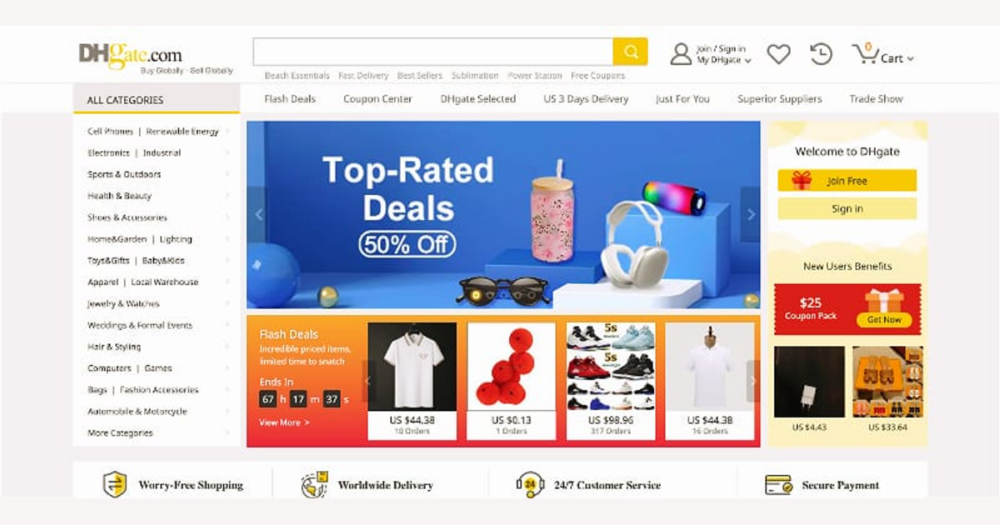
Artisans looking for online opportunities quickly run into both dedicated handmade marketplaces and broad platforms like DHgate, and the distinction matters. Handmade-focused sites typically revolve around creator-made or designer-led goods, with clear rules about originality, materials, and production scale, while general marketplaces mix craft-style listings with mass-produced and wholesale inventory. This guide uses those differences as a reference point and then shows how DHgate’s seller, payment, shipping, and dispute rules fit into a cautious handmade sourcing strategy.
What is a handmade marketplace, and how is it different from general ecommerce platforms?
For artisans, a handmade marketplace is a platform built primarily around creator-made or designer-led goods, with rules that stress originality, small‑scale production, and a clear maker identity. Listings are expected to be designed, made, or directly curated by the seller, and platform policies usually spell out what counts as handmade, what kinds of production are allowed, and how sellers must represent materials and processes.
On a dedicated handmade marketplace like Etsy, that emphasis shows up in the branding and structure: categories are tailored to crafts and art, shop pages highlight the maker, and buyers are encouraged to connect with individual creators rather than anonymous warehouses. Community features—such as detailed seller profiles, stories behind products, and tools for showcasing collections—reinforce the idea that you are buying from specific artisans.
By contrast, general ecommerce platforms such as DHgate, Amazon, or eBay host many different kinds of inventory at once: handmade‑style goods, factory‑made products, dropshipped items, and wholesale stock can all appear side by side. Even when these marketplaces offer “handmade” or craft‑style listings, they do not usually restrict the entire site to artisan production. The practical dividing line is how transparent and strict a platform’s listing rules are about what can be sold and how it must be described, not just whether its marketing language talks about creativity or crafts.
How do typical handmade marketplaces operate for artisans?
On a typical handmade marketplace, an artisan’s journey starts by opening a seller account or shop, completing identity and tax information, and agreeing to rules that define what counts as handmade or designer-led work. Each product listing must be created to match those rules, with clear photos, descriptions of materials and processes, and honest details about whether helpers or outside manufacturers are involved. Sellers also set prices, stock levels, and shipping options, often tailored to small-batch or made-to-order production.
Fee structures on these platforms usually combine several elements: per‑listing fees when an item is published, commissions or transaction fees when a sale is made, and sometimes subscription tiers that unlock extra tools or lower rates. The exact amounts differ by marketplace, but the pattern is that artisans pay both to participate and to complete sales, in exchange for access to a ready audience and built‑in payment and order management.
Search and discovery tools help buyers find handmade goods efficiently. Categories, tags, and filters surface items by material, style, occasion, or region; featured collections and curated pages highlight particular makers or trends. Reviews, ratings, and messaging tools let buyers ask questions, request custom work, and build ongoing relationships with favorite shops. Some marketplaces add community layers such as maker stories, blog features, juried admission for certain sections, or region‑specific platforms that spotlight local artisans. These features provide a useful reference for comparing a dedicated handmade marketplace with DHgate’s broader, multi‑category structure later in the guide.
How do popular handmade marketplaces compare with DHgate?
| Marketplace type | Audience focus | Product scope | Seller rules or curation | Typical DHgate position in this comparison |
|---|---|---|---|---|
| Dedicated handmade marketplaces (e.g., Etsy, regional artisan platforms) | Primarily retail consumers who are deliberately seeking handmade or designer-led goods and want a clear connection to individual makers. | Mostly handmade, custom, or designer-created items, sometimes vintage or limited craft supplies; mass-produced inventory is restricted or excluded. | Detailed handmade definitions, limits on outsourcing, and sometimes juried admission or manual curation; listings can be removed if they break handmade rules. | DHgate sits outside this artisan-only category. It does not promise that goods are handcrafted, so artisans should not expect the same level of handmade-focused curation when using it. |
| General marketplaces with a dedicated handmade section (e.g., Amazon Handmade) | A very large general-shopping audience, with a smaller segment that filters into the handmade area for craft-focused purchases. | Broad multi-category inventory across the site, with a curated subsection that highlights handmade or maker-branded products. | Sellers usually apply or are vetted for the handmade program and must follow specific category rules, but the wider platform still centers mass-market goods. | DHgate resembles these platforms in breadth of categories and global reach, but it does not run a separate, vetted handmade program. Handmade-style listings share space with wholesale and factory-made items. |
| DHgate global B2B/B2C marketplace | Mixed audience of small buyers, resellers, and business purchasers sourcing components, bulk goods, or finished products. | Multi-category inventory that leans toward factory-produced and wholesale items, with some craft-style or handmade-look products depending on individual sellers. | General merchant registration, listing and transaction standards, and buyer-protection rules; DHgate focuses on marketplace integrity rather than guaranteeing artisanal production methods. | In this landscape, DHgate is best viewed as a broad sourcing marketplace that can include handmade-style listings but is not a curated artisan community. Artisans typically treat it as a place to source materials or products, not as their primary handmade marketplace for building a fan base. |
What role can DHgate play in a handmade or craft business?
For a handmade or craft business, DHgate is most realistically a sourcing hub rather than a gallery for your own one-of-a-kind pieces. It operates as a global marketplace where many independent sellers and factories offer bulk and small-quantity goods across categories, from accessories and home decor to packaging and tools. Much of this inventory is factory-produced or wholesale, with some craft-style items mixed in, so the platform is designed around supply rather than around showcasing individual makers.
In that context, artisans often look at DHgate for inputs and infrastructure: beads, charms, and findings for jewelry; fabric, trims, and hardware for textile work; tools and equipment for workshops; and packaging or branding elements such as boxes, tissue, stickers, or custom-printed materials. A small brand might also source certain generic or craft-style finished products that can be customized, bundled, or private-labeled to sit alongside truly handmade pieces in their catalog.
What DHgate does not provide in the same way as juried artisan marketplaces is a built-in, maker-centric audience that arrives specifically to discover individual handcrafted items. Seller requirements focus on registration, listing accuracy, and transaction rules, not on verifying that every product is handmade. If your main goal is to grow a loyal following around your own craft, you’re more likely to find that audience on dedicated handmade platforms or your own site.
A practical way to position DHgate is as a supporting sourcing channel that feeds into those audience-building venues. Use artisan-focused marketplaces, social media, and your own store to tell your maker story and sell finished work, while using DHgate selectively for materials, tools, packaging, or certain compatible products. The key is to understand DHgate’s structure and policies—seller checks, payment handling, shipping, and disputes—so you can decide whether its sourcing role fits your brand and risk tolerance before relying on it for your handmade business.
Key DHgate seller checks for handmade-style goods and supplies
- Start with the seller’s overall rating and total number of reviews; higher scores backed by many reviews usually indicate more consistent performance than a handful of ratings on a new account.
- Open recent feedback and scan for patterns about product quality, how closely items match descriptions and photos, and whether buyers report on-time, intact delivery—these details matter more than the star score alone.
- Check store age and transaction volume to see whether the seller has been active on DHgate for a while and has completed a meaningful number of orders, which can signal stability.
- Look for signs of responsiveness, such as reasonable message reply times and feedback that mentions helpful communication or problem-solving when issues arise.
- Read listing and store policies carefully for returns, exchanges, and how problems are handled, paying extra attention when you’re sourcing business-critical materials or components.
- Favor sellers with clear descriptions, good photos, transparent policies, and steady histories over untested listings offering the very lowest price; predictable service is usually worth paying a little more for handmade-related supplies.
How DHgate orders and payments usually work
- Select the products you need on DHgate and create an order, double-checking quantities, options (such as colors or sizes), and shipping details before you pay.
- Complete payment using DHgate’s supported methods; funds are processed through DHgate or its payment partners rather than being handed directly to the seller at the moment of purchase.
- Monitor the order status as it moves from placed to shipped and then to delivered inside DHgate’s order interface, using any tracking information the seller provides.
- Keep in mind that buyer protection and dispute or refund windows are usually tied to points in this timeline—for example, expected delivery dates or confirmation of receipt—so note the statuses and dates carefully.
- Before placing large or business-critical orders, read DHgate’s current buyer protection, payment, and refund policy pages, because exact timeframes, eligible payment methods, and refund rules can change over time.
Shipping and tracking on DHgate: what to check
- Individual DHgate sellers control shipping: they choose carriers and service levels, set charges, and estimate delivery windows, so speeds, reliability, and tracking availability can differ sharply between listings.
- Read each listing’s shipping section carefully, checking which methods are offered (standard, express, economy), how much they cost, and the stated delivery timeframe, especially for international shipments that may take several weeks.
- Confirm whether tracking is included by default, offered only with certain shipping options, or not provided at all, and how tracking numbers will appear in your DHgate order details once the seller ships.
- Look for clues about reliability—such as previous buyer feedback mentioning on‑time delivery, accurate estimates, and usable tracking—rather than choosing solely on the lowest shipping price.
- Factor shipping times and potential delays into your handmade business planning, allowing enough lead time for materials to arrive before production or for finished goods to reach customers by promised dates.
Disputes and refunds on DHgate if an order disappoints
- Identify a problem with the order, such as late or missing delivery, damage in transit, or a product that is significantly different from its description or agreed specifications.
- Within the applicable timeframe, open a dispute from your DHgate account’s order page, select the most accurate reason, and state the outcome you are seeking, such as a full or partial refund or a reshipment.
- Upload clear evidence through the dispute tools—photos or video of the item and packaging, screenshots of the listing, and relevant message history—to show how the order falls short of what was promised.
- Use DHgate’s messaging or dispute interface to communicate with the seller, respond to counter‑proposals, and keep an eye on any deadlines for replying or updating your claim.
- If you and the seller cannot reach an agreement, escalate the dispute so DHgate can review the evidence and apply its buyer protection rules where they apply.
- Before problems arise, read DHgate’s current buyer protection and dispute policy pages, because exact time limits, eligible scenarios, and documentation requirements can change and will determine what recourse you have.
Practical risks of using general marketplaces as “handmade” sources
Using DHgate or any general marketplace as a “handmade” source always means dealing with a wide range of product types and seller practices. Some listings that look artisanal at first glance may actually be factory‑produced or partly outsourced, and not every seller is equally careful about explaining how their goods are made. That variability can be workable for a sourcing‑focused strategy, but it makes close reading essential if your brand relies on originality and clear maker values.
Pay attention to how a listing talks about materials and production. Detailed descriptions of fibers, metals, finishes, and craft processes—along with clear photos from multiple angles—are usually a better sign than generic phrases like “high quality” or “handmade style” with only a couple of polished images. If the listing mentions customization, look for specifics about what can be changed and how long made‑to‑order work takes; vague promises without timelines or constraints can lead to inconsistent results from batch to batch.
Reviews are most useful when you read the comments, not just the star rating. Scan for mentions of authenticity (“looks like the photos,” “not what I expected”), durability after some use, and whether multiple buyers describe similar quality and sizing. One glowing review on a low‑volume seller tells you less than a steady pattern of good or mixed feedback across many orders.
Before relying on a seller for key supplies, check the store’s policies on returns, exchanges, and custom work. A clear, reasonable policy that matches your tolerance for risk—especially around defects, color or material variation, and delivery problems—is easier to plan around than a short or confusing statement. If you cannot tell who covers return shipping, how refunds are processed, or what happens when a custom piece is not quite right, treat that uncertainty as part of the risk.
In this context, lack of clarity is itself a red flag. When listings, reviews, and store policies don’t line up, or the seller avoids specifics about materials, origin, or production scale, it is safer to walk away and look for a merchant whose documentation fits your handmade values, even if their prices are a little higher. Prioritizing transparent information over the very cheapest option makes it easier to protect your brand and avoid preventable disputes later.
DHgate next steps checklist for artisans and small buyers
- Read DHgate’s current buyer protection, payment, dispute, and refund policy pages so you understand the formal rules and timeframes before placing any significant orders.
- Browse a few categories relevant to your handmade business and practice reading listings critically, comparing how different sellers describe materials, production methods, customization options, and shipping terms.
- Review several seller profiles, noting ratings, feedback volume, store age, and how buyers describe their experiences, to build a sense of which merchants appear more consistent and reliable.
- Compare how shipping options, delivery estimates, and tracking details are presented across different listings, and check whether typical timelines and costs can realistically fit your production schedule or event dates.
- If you feel comfortable with the rules and a particular seller, place a small, low‑risk test order to experience DHgate’s ordering, shipping, and dispute processes in practice before relying on the platform for core supplies.
- Treat each of these steps as a way to learn how DHgate works and to confirm that its structures feel predictable and understandable enough for your handmade strategy, rather than as a push to commit to large or long‑term purchasing immediately.
DHgate and handmade marketplaces: quick FAQ
Is DHgate a handmade marketplace in the same sense as Etsy or other artisan‑only platforms?
No. DHgate is a broad global marketplace that connects buyers with many types of sellers, including wholesalers and manufacturers. It can host craft‑style or handmade‑look goods, but it is not curated as an artisan‑only community and does not promise that products are handcrafted in the way dedicated handmade marketplaces do.
How should artisans position DHgate in their handmade business strategy?
Most artisans treat DHgate as a sourcing channel rather than their primary place to build a handmade audience. It’s better suited to finding materials, tools, packaging, and certain generic or craft‑style items that support your production. For reaching buyers who deliberately seek artisan work and want a clear maker story, dedicated handmade marketplaces or your own site are usually the main sales venues.
Can I combine DHgate with Etsy or other handmade platforms—for example, sourcing on DHgate and selling elsewhere?
Yes, many makers use a mix of platforms: sourcing supplies or compatible components via DHgate, then selling finished handmade products on Etsy, regional artisan sites, or a personal online store. The key is to make sure this combination aligns with your brand values and with each platform’s rules, especially any policies about production partners, customization, or what counts as handmade.
If I list my own handmade items on DHgate, are there special handmade rules I need to follow?
DHgate’s standards focus on general merchant and listing rules—such as accurate descriptions, honest representations, and compliance with its buyer‑protection policies—rather than on verifying that every item is handmade. If you choose to sell self‑made goods there, you still need to follow DHgate’s current seller and listing requirements and should not assume the platform will market your products as part of a curated handmade community.