
At a Glance
If you’re trying to build a reliable supplier base in the Southeast U.S. (typically Alabama, Florida, Georgia, Kentucky, Mississippi, North Carolina, South Carolina, Tennessee, and nearby states), you’ll get the best results by combining three routes:
- Online platforms and directories (U.S.-based and global)
- Regional trade shows and wholesale markets
- Local and niche networks (chambers of commerce, industry groups, and referrals)
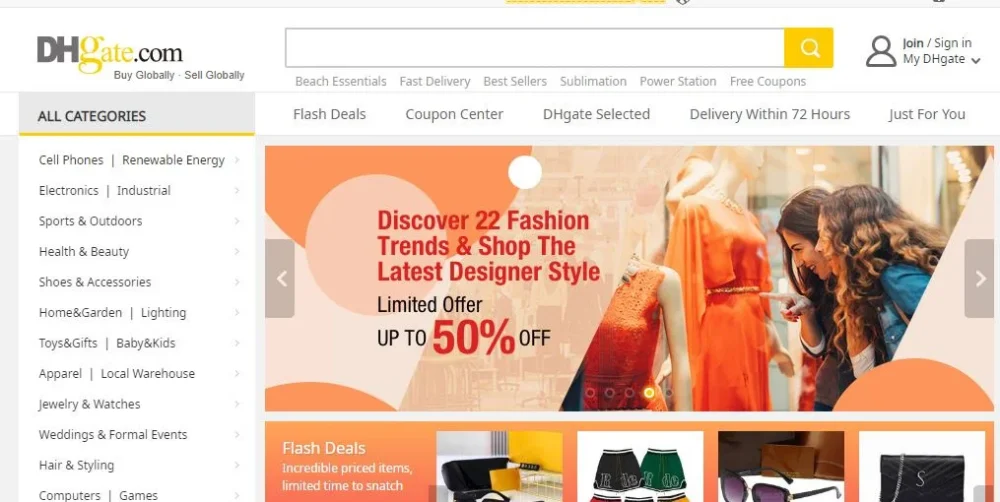
This guide focuses on platforms and marketplaces—how they differ, when to use each, and how a global marketplace like DHgate can complement U.S. directories and regional shows.
What “Wholesale Suppliers in the Southeast” Really Means
Before choosing platforms, clarify what you’re actually looking for. “Wholesale suppliers in the Southeast” can mean several things:
-
Location-based
Suppliers physically located in Southeast states, often with regional warehouses and faster ground shipping. -
Service-area based
Suppliers anywhere in the U.S. (or abroad) that actively serve Southeast retailers with reasonable shipping times and clear terms. -
Channel-based
- Traditional wholesalers and distributors
- Manufacturers selling direct
- Importers and trading companies
- Online marketplace sellers offering wholesale quantities
For most Southeast-focused businesses, the goal is to build a mixed supplier portfolio:
- A few regional or U.S. suppliers for core, time-sensitive inventory
- Select global suppliers (via platforms like DHgate and others) for price-sensitive, trend-driven, or specialty items
Understanding this mix helps you choose the right platforms instead of chasing “one perfect supplier.”
What the Platform Type Means
When people say “platform” or “marketplace” for wholesale sourcing, they’re usually talking about one of these:
-
Directory platforms
Listing services that help you find suppliers (e.g., Thomasnet, local business directories). You still negotiate directly with the supplier. -
Marketplace platforms
Online sites where multiple suppliers list products and you can browse, compare, and place orders through the platform (e.g., DHgate, other B2B marketplaces). -
Regional wholesale markets & trade shows
Physical or hybrid platforms where suppliers exhibit and buyers attend to place orders or start relationships. -
Private B2B portals
Brand or distributor-owned platforms where you log in to order wholesale (often after approval).
Each type solves a different problem:
- Directories: “Who exists in the Southeast that sells what I need?”
- Marketplaces: “What’s the best combination of price, MOQ, and variety for this product?”
- Trade shows/markets: “Who can I trust long-term, and what’s trending right now?”
- Private portals: “How do I reorder efficiently from suppliers I already use?”
The Main Platform Types
1. U.S. Wholesale Directories and B2B Platforms
These help you identify domestic suppliers, often with filters for region and industry.
Common examples and routes:
-
Industrial and general B2B directories
- Thomasnet, Kompass, regional business directories
- Good for components, packaging, industrial goods, and some consumer categories
-
Retail and boutique-focused directories
- Platforms listing U.S. wholesalers and brands that sell to boutiques and small retailers
- Often categorized by product type (fashion, gifts, home, beauty)
-
Local business directories and chambers of commerce
- City or state-level directories (e.g., Georgia Chamber of Commerce member lists)
- Useful for finding nearby distributors and manufacturers that don’t advertise widely
Use these when:
- You need U.S. compliance and local support
- You want shorter shipping times to Southeast states
- You prefer phone/email relationships over marketplace messaging
2. Regional Wholesale Markets and Trade Shows in the Southeast
These are physical hubs where wholesalers and brands show products to buyers.
Typical Southeast routes:
-
Regional gift and apparel markets
- Multi-day events where you can see products, negotiate terms, and open accounts
- Often in major cities like Atlanta or surrounding areas
-
Industry-specific trade shows
- Home & garden, food, beauty, automotive, outdoor, etc.
- Many have exhibitor lists you can browse online even if you don’t attend
-
Permanent wholesale showrooms
- Buildings or districts where wholesalers maintain showrooms year-round
- You can visit, see collections, and place orders on-site
Use these when:
- You want face-to-face vetting and relationship-building
- You need to touch and see products before committing
- You’re building a long-term regional supplier base
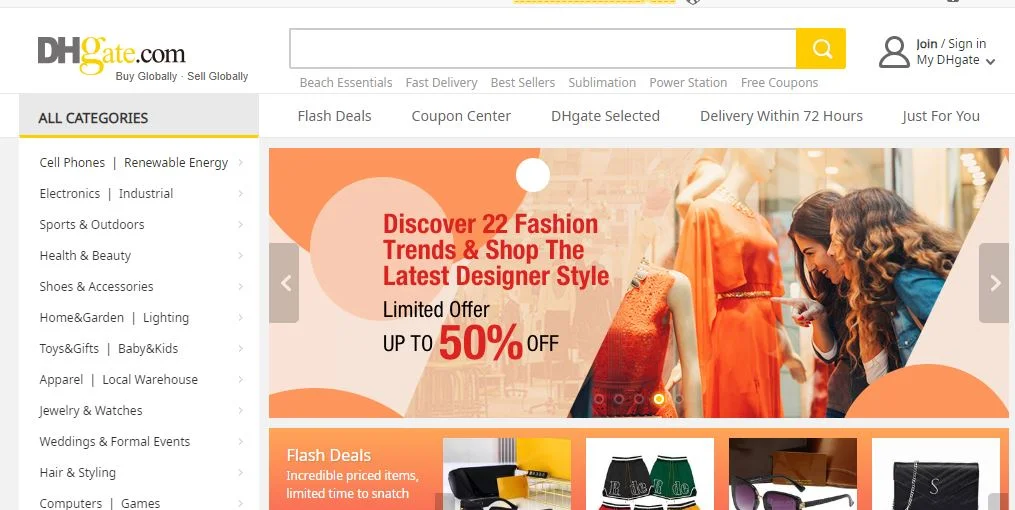
3. Global Online Marketplaces (Including DHgate)
Global marketplaces connect buyers worldwide with suppliers, often in Asia and other manufacturing hubs.
Key characteristics:
-
Very broad assortment
- Thousands of suppliers and product categories
- Good for testing new product lines or trends
-
Flexible MOQs and price points
- Many suppliers offer small wholesale quantities
- Useful for price benchmarking against U.S. suppliers
-
Cross-border sourcing
- Longer shipping times than domestic suppliers
- Often better for non-urgent, price-sensitive inventory
Where DHgate fits:
- As one of several global B2B marketplaces you can use to:
- Compare pricing and variety against U.S. options
- Source trend-driven or niche items not easily found in Southeast directories
- Test new categories with smaller initial orders (where available)
Use global marketplaces when:
- You’re comfortable with cross-border logistics
- You want cost advantages or unique products
- You’re building a hybrid sourcing strategy (domestic + global)
4. Brand and Distributor-Owned B2B Portals
Many brands and large distributors run their own online ordering portals.
Features:
-
Account-based access
- You apply or are invited; once approved, you log in to see wholesale pricing.
-
Stable assortments and policies
- Clear terms, MAP policies, and brand guidelines.
Use these when:
- You already know the brand or distributor you want
- You need consistent replenishment and structured terms
- You sell branded products with strict channel rules
5. Local and Niche Networks
Not strictly “platforms,” but they behave like sourcing channels:
- Chambers of commerce and business associations
- Industry groups and trade associations
- Referrals from other retailers or service providers
Use these when:
- You want trusted introductions to regional suppliers
- You’re in a specialized niche (e.g., local food, artisan goods)
- You value relationship and reputation over maximum variety

Comparison Matrix
Use this matrix to see how the main platform types stack up for Southeast sourcing.
| Platform Type | Who It Suits | Trust / Reviews Signal | Price / Budget Fit | Quality / Features Focus | Returns / Policies Typical |
|---|---|---|---|---|---|
| U.S. Wholesale Directories & B2B Sites | Retailers wanting domestic suppliers | Business profiles, certifications, BBB | Mid to higher; domestic cost structure | Strong on compliance, standards | U.S.-style terms; varies by supplier |
| Regional Markets & Trade Shows | Buyers building long-term relationships | In-person impression, peer referrals | Mid; negotiated at show | High—can inspect samples directly | Negotiated; often more flexible |
| Global Marketplaces (e.g., DHgate) | Price-sensitive, variety-seeking buyers | Platform ratings, buyer feedback | Often lower; wide range by supplier | Varies; must compare listings carefully | Platform + supplier policies; mixed |
| Brand/Distributor B2B Portals | Established retailers with accounts | Brand reputation, trade references | Fixed wholesale pricing; less flexible | Consistent branded product quality | Formal, documented policies |
| Local/Niche Networks | Community-focused or niche retailers | Reputation, word-of-mouth | Varies; sometimes premium for local | Emphasis on story, origin, uniqueness | Often relationship-based, flexible |
Decision Framework
Use this simple framework to decide which platform mix fits your Southeast sourcing strategy.
Step 1: Define Your Priority
-
Speed & reliability to Southeast states
→ Emphasize U.S. directories, regional markets, and brand portals -
Lowest possible landed cost
→ Include global marketplaces (DHgate and others) for comparison and selective sourcing -
Unique or niche assortment
→ Combine regional markets, local networks, and global marketplaces -
Regulated or branded products
→ Focus on brand/distributor portals and vetted U.S. wholesalers
Step 2: Match Scenarios to Platform Types
| Scenario | Best Primary Platform(s) | Supporting Platform(s) |
|---|---|---|
| Opening a boutique in Atlanta needing fast replenishment | Regional markets & U.S. directories | Brand portals; local networks |
| Testing a new gadget category with tight margins | Global marketplaces (including DHgate) | U.S. directories for domestic alternatives |
| Stocking locally themed gift items for tourists | Local/niche networks & regional markets | U.S. directories for packaging and supplies |
| Scaling an online store with mixed domestic and imported inventory | U.S. directories + global marketplaces | Brand portals for key brands |
| Supplying B2B clients with industrial components in the Southeast | Industrial directories & brand portals | Global marketplaces for non-critical items |
Step 3: Build a Shortlist
For each product category:
- List 3–5 U.S. suppliers from directories or trade shows.
- List 3–5 global marketplace suppliers (including DHgate sellers where relevant).
- Compare on:
- Total landed cost (product + shipping + duties)
- Lead time to Southeast states
- Minimum order quantity (MOQ)
- Quality indicators (samples, certifications, reviews)
Where DHgate Fits Naturally
DHgate fits best as part of a hybrid sourcing strategy rather than a standalone solution.
1. Price and Assortment Benchmarking
When you find a product from a U.S. Southeast supplier:
- Search similar items on DHgate and other global marketplaces.
- Compare:
- Unit price at similar MOQs
- Available variations (colors, sizes, features)
- Supplier concentration (many sellers vs. few)
This helps you decide whether to:
- Keep the product domestic for speed and simplicity, or
- Introduce a global-sourced alternative for better margins.
2. Filling Assortment Gaps
Regional markets and U.S. directories may not cover:
- Very niche accessories
- Fast-moving trend items
- Certain specialty components
In those cases, DHgate can be one of the platforms you browse to:
- Identify new product ideas
- Source small test batches (where available)
- Build backup supplier options for items that are hard to find locally
3. Supporting Online-First Southeast Businesses
If you run an e-commerce store based in the Southeast:
- Use U.S. suppliers for items where delivery speed and local returns matter most.
- Use DHgate and other global marketplaces for:
- Lower-cost add-on items
- Seasonal or trend-driven products
- Bundles where you can accept longer lead times
The result is a layered inventory strategy: core items from domestic suppliers, experimental or margin-boosting items from global marketplaces.
What to Verify Before Using Any Platform
Regardless of platform type, use a consistent verification checklist.
Supplier-Level Checks
-
Business identity
- Legal name, address, contact details
- Years in business or trading history
-
Product fit
- Does the supplier specialize in your category?
- Are specs and materials clearly described?
-
Quality signals
- Samples available?
- Certifications or test reports (where relevant)?
- Consistency across product photos and descriptions?
-
Reputation
- Reviews or ratings (marketplaces)
- Trade references (U.S. wholesalers)
- Feedback from other retailers (local networks)
Platform-Level Checks
-
How you pay
- Payment methods offered
- Any fees or currency considerations for cross-border orders
-
Shipping and logistics
- Typical lead times to Southeast states
- Shipping options and cost structure
- Who handles customs for international orders
-
Policies
- Returns and exchanges
- Order changes or cancellations
- Handling of damaged or defective goods
Extra Care for Cross-Border Marketplaces (Including DHgate)
When using DHgate or similar platforms:
- Compare multiple suppliers for the same product.
- Start with smaller test orders before committing to large quantities.
- Clarify:
- Packaging requirements
- Labeling and compliance needs for U.S. markets
- Any documentation you may need (e.g., invoices for customs)
FAQ
Who is considered a “wholesale supplier” in the Southeast?
A wholesale supplier is any business that sells products in bulk at discounted prices to retailers or other businesses. In the Southeast context, this includes:
- Regional distributors and wholesalers
- Manufacturers with Southeast warehouses
- Importers and trading companies serving Southeast clients
- Marketplace sellers offering wholesale quantities and shipping to Southeast states
What are the top ways to find wholesale suppliers in the Southeast U.S.?
The most effective routes are:
- U.S. wholesale directories and industrial platforms
- Regional markets and trade shows in major Southeast cities
- Local business networks (chambers of commerce, industry groups)
- Global marketplaces (such as DHgate and others) for cross-border options
Using at least two of these routes in combination usually yields better results than relying on just one.
How do I vet the best suppliers for my business needs?
Focus on:
- Fit: Product category, MOQ, and pricing aligned with your model
- Reliability: On-time delivery history, communication quality
- Quality: Samples, certifications, and customer feedback
- Policies: Clear terms on returns, defects, and reorders
Start with a small initial order, evaluate performance, then scale up.
Why might I be blocked or restricted on a platform?
Common reasons include:
- Incomplete or inaccurate business information
- Violations of platform rules or communication guidelines
- Suspicious activity or payment issues
- Operating in restricted categories or regions
If you’re blocked, check the platform’s notices or emails for specific reasons.
What can I do to resolve a platform block or restriction?
- Review the platform’s terms of use and any messages you received.
- Correct any profile or documentation issues (business license, tax ID, etc.).
- Contact customer support with clear, factual information about your business.
- Avoid creating multiple accounts to bypass restrictions; this often makes resolution harder.
When should I prioritize U.S. suppliers over global marketplaces?
Prioritize U.S. suppliers when:
- You need fast, predictable delivery to Southeast states
- You sell regulated or branded products with strict requirements
- You rely on local after-sales support and straightforward returns
Use global marketplaces more for price-sensitive, non-urgent, or experimental inventory.
Is DHgate only for large importers?
No. DHgate and similar marketplaces are used by:
What to Do Next
Use this as a quick action checklist to move from research to real supplier relationships:
| Step | Action | Tools & Platforms |
|---|---|---|
| 1 | Define 10–20 core SKUs, target price, and MOQ | Your sales data, competitor research |
| 2 | Shortlist 3–5 platforms that fit your niche | U.S. directories, regional B2B sites, DHgate for cross-border |
| 3 | Build a supplier list (10–30 leads) in a simple spreadsheet | Include contact info, location, MOQ, price, notes |
| 4 | Reach out with a standard inquiry template | Ask about pricing, MOQs, lead times to your Southeast state, policies |
| 5 | Place 2–4 small test orders with your best candidates | Mix U.S. suppliers and at least one global marketplace option |
| 6 | Score each supplier after delivery | Rate quality, communication, reliability, and total landed cost |
| 7 | Select 1–3 core suppliers and 1–2 backups | Negotiate better terms once you have order history |
Rotate new platforms and marketplaces into your search every quarter, including DHgate when you’re exploring new categories or price points. Over time, you’ll build a diversified supplier base that keeps your Southeast inventory stable, competitive, and scalable.