
DHgate gives Australian buyers access to overseas suppliers of round edge tiles, often at lower per‑tile prices than local stores, but those savings come with longer international shipping, customs considerations and more uncertainty. If you are willing to trade speed and simplicity for a potentially lower landed cost—and to invest some effort in checking sellers and shipping terms—DHgate can be a practical option. The key is navigating that process safely.
How DHgate fits into your search for affordable round edge tiles in Australia
DHgate is a global online marketplace, not an Australian tile retailer. When you search for round edge tiles there, you buy from overseas suppliers who list their products on DHgate, while the platform handles the order and payment flow.
Because you are sourcing tiles from international sellers, headline per‑tile prices on DHgate often look lower than what you might see from Australian online tile shops. The trade‑off is that those tiles usually come with longer, less predictable delivery windows, international freight charges, and potential customs or GST, whereas local stores tend to offer clearer shipping options, faster delivery, and easier access to samples at higher overall prices.
Personally, I would rather pay a little more to a DHgate seller who clearly explains shipping costs to Australia, gives realistic delivery timeframes, and has a solid record of fulfilling orders, than chase the absolute cheapest tile listing from an unfamiliar seller with vague logistics and sparse reviews.
DHgate can be a viable way to keep costs down on round edge tiles if you are prepared for cross‑border complexity, accept longer timelines, and use DHgate’s tools to check seller history, ratings and listing details before you commit. If you need simple, fast local delivery with straightforward returns and support, buying from Australian tile retailers will usually be easier, even if the unit price is higher.
Navigating DHgate listings and placing a tile order from Australia
- Search DHgate using terms like “round edge tiles”, “bullnose tiles” or “tile trim”, then apply filters for shipping to Australia, your target price range, and minimum seller rating so you only see listings that can realistically reach you.
- Open individual listings that look promising and examine the photos and specifications carefully to confirm whether the item is a trim piece or a main field tile, and to note its size, thickness, edge profile, colour and surface finish.
- Check how the quantity is measured—by piece, by box, or by square metre—and look for any minimum order quantity that could change your total coverage and cost, especially on heavy tile orders.
- Compare shortlisted listings on unit price, minimum order requirements and stated shipping options, keeping only those that explain dimensions, quantities and shipping to Australia clearly rather than relying on vague or incomplete tables.
- Use DHgate’s messaging tools to ask the seller specific questions about coverage per box or per piece, how much waste or breakage they recommend allowing for, and whether the trims come from the same batch as the main tiles you already have or plan to buy.
- Avoid listings that stay unclear about measurements, whether the product is trim or field tile, or how batch matching works, even if they look cheaper; with cross‑border orders, fixing quantity errors or mismatched trims after the fact is usually slow and costly.
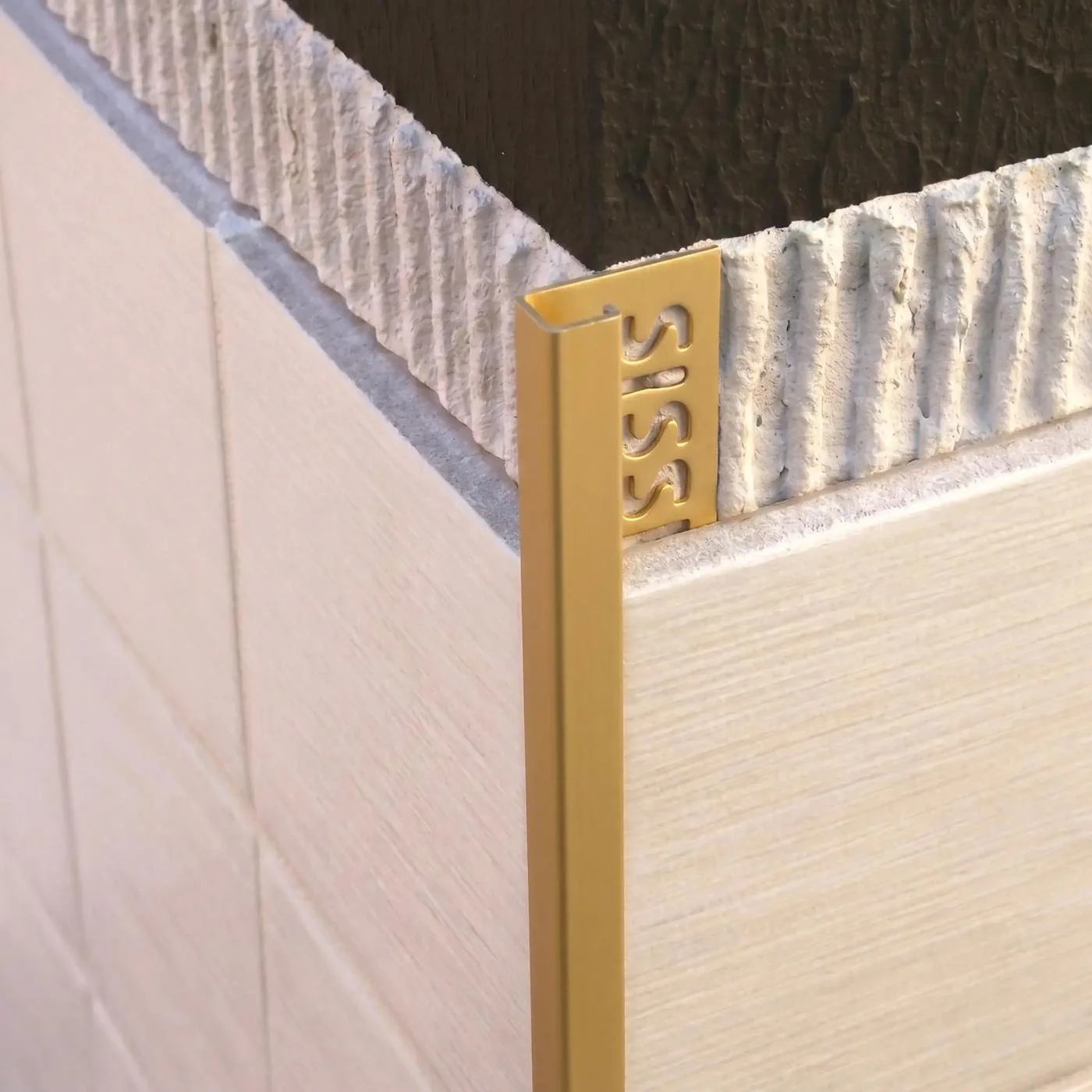
Close-up view of metal tile trims with a defined edge profile, illustrating how trim pieces differ from standard field tiles so buyers can better interpret listing photos on DHgate.
How payment works on DHgate for Australian tile buyers
When you pay for round edge tiles on DHgate from Australia, you complete checkout through DHgate itself rather than sending money directly to the seller. The platform generally supports familiar online payment options such as major credit and debit cards and common digital wallets, so you can use the same kinds of methods you’d use on other international sites.
Listing prices are often shown in a major currency like US dollars. At checkout, DHgate or your payment provider converts that amount to Australian dollars, and your bank or card issuer may add its own currency conversion or international transaction fees. It’s worth checking your card’s fee policy in advance and treating the price shown on the listing as an approximate figure until you see the final AUD total on the payment screen.
DHgate uses an escrow-style flow: the platform holds your payment after you place the order and only releases funds to the seller when you confirm that the tiles have arrived or when an automatic confirmation period expires. This setup offers more protection than transferring money straight to a seller, because the funds are not fully released while delivery or quality issues are still being resolved, but it does not remove the need for careful checks on the listing and shipping terms.
In practice, I would favour tile listings where the total price, currency, and any obvious extra charges are clearly displayed and the checkout preview matches those expectations, even if another listing looks a little cheaper at first glance but is vague about currency, fees or how the final amount will be calculated.
Shipping, delivery and landed cost when tiles come to Australia
For DHgate tile orders to Australia, shipping is the next major cost driver after the purchase itself. Sellers typically choose from standard international parcel services, faster express couriers, or, for larger consignments, freight-style options that move heavier boxes more economically but slowly. The exact method depends on each seller’s arrangements, so you should treat the shipping line on a listing as a key part of the offer, not an afterthought.
Delivery estimates on DHgate combine the seller’s handling time with the transit time for the chosen service. For heavy, breakable goods like tiles, those windows are often longer and less predictable than domestic Australian delivery, ranging from a couple of weeks to well over a month, and delays at busy periods or during customs processing are possible.
Shipping charges for tiles are usually calculated on weight and volume, which means a box of ceramic or stone tiles can cost significantly more to move than small, light items. On top of the freight cost, imports into Australia may attract duties, GST and customs clearance fees based on the value and type of goods. You need to treat the per‑tile listing price as only one component of the true landed cost and check whether the listing says taxes and clearance are included, rolled into shipping, or likely to be charged separately on arrival.
If a listing’s shipping or tax information is vague, message the seller to ask which method they use, how they calculate the fee, and whether they expect any additional charges on delivery. I would avoid tile listings that do not clearly specify shipping methods, costs or basic tax handling, even when the unit price looks attractive, in favour of sellers who offer transparent shipping options, realistic delivery windows and straightforward explanations of how your total to Australia is built up.
Buyer checklist: vetting DHgate tile sellers and listings
- Check the seller’s overall rating, number of reviews and total order volume for similar building or home improvement products to gauge how reliably they have fulfilled past orders.
- Read recent reviews carefully, focusing on comments about whether items matched the description, how often parcels arrived on time, and how the seller responded when buyers reported problems.
- Look for customer photos of tiles actually received and compare them with the listing images, paying attention to colour, surface finish and the round edge profile to spot any obvious differences.
- Review the packaging description in the listing, looking for details such as sturdy cartons, internal padding, corner protection or palletisation for larger consignments, which matter for heavy, fragile tiles.
- Confirm the stated delivery estimates, whether tracking is included, and the basic return or refund terms for damaged or incorrect goods so you understand how issues will be handled before you pay.
- Check tile-specific details in the listing: surface finish (gloss, matte, textured), colour and shade notes, edge profile type, batch or production information, and any mention of possible shade variation between boxes.
- Use DHgate’s messaging to ask about any missing specifications and to confirm quantities, coverage per box, how breakage will be handled, and any agreed allowance or compensation if some pieces arrive damaged.
- I would choose sellers with detailed listings, strong recent ratings, clear packaging and refund policies even if their prices are slightly higher, and only consider less-proven, sparsely documented sellers if I were consciously accepting more risk in exchange for a lower upfront cost.
Using DHgate’s buyer protection and dispute tools for tile orders
Common pitfalls when importing round edge tiles via DHgate (and how to avoid them)
DHgate vs Australian online tile stores: cost and logistics trade-offs
| Route | Typical unit pricing | Shipping and delivery | Customs and taxes | Returns and support | When it tends to make sense |
|---|---|---|---|---|---|
| DHgate | Often lower per‑tile prices, especially for bulk orders from overseas suppliers, but headline pricing can hide significant freight and fees. | International shipping with longer, less predictable transit times; method and reliability vary by seller and carrier. | Buyer may need to account for import duties, GST and customs handling charges separately from the tile price and shipping line. | Disputes and support are handled through the platform across borders; processes can be effective but less straightforward than local consumer channels. | Best suited to substantial orders where potential savings are meaningful and you can absorb delays, extra logistics steps and some risk in exchange for lower total cost. |
| Australian online tile stores | Higher sticker prices per tile or per box, particularly for specialised trims, but costs are more transparent upfront. | Domestic freight with clearer delivery windows and generally faster, more reliable service; easier to coordinate around project schedules. | GST is typically included in pricing, with no international customs to manage for deliveries within Australia. | Returns, exchanges and support follow local policies and consumer protections, often with simpler communication and resolution. | A better fit for smaller jobs or time‑critical projects where you value speed, straightforward shipping, sample options and strong local support more than squeezing out the lowest possible price. |
Step-by-step plan for buying round edge tiles on DHgate from Australia
- Set a budget that includes estimated tile costs, weight-based international shipping and potential duties or GST, instead of focusing only on the per‑tile price.
- Search DHgate for round edge tiles that ship to Australia and shortlist a few listings based on specifications, initial price and seller rating.
- Run your vetting checklist on each shortlisted listing, reviewing ratings, reviews, customer photos, packaging descriptions and stated policies.
- Message promising sellers to confirm units, coverage per box, batch consistency between trims and field tiles, and detailed shipping methods and costs.
- Choose the listing that balances cost with clear logistics and responsive communication, even if it is not the absolute cheapest option.
- Complete payment through DHgate, noting the billing currency and any bank or card fees that affect the final amount in AUD.
- Monitor order status and tracking regularly, watching for delays that might affect your project schedule.
- Inspect tiles promptly on arrival for quantity, breakage, edge profile and colour match, comparing them to the listing details and photos.
- If everything is satisfactory, confirm receipt within DHgate; if not, collect evidence and open a dispute within the allowed timeframe using photos and your message history.
- Treat this sequence as your practical DHgate plan: it stitches together search, vetting, payment, shipping and buyer protection tools so you can pursue savings on round edge tiles without taking on unnecessary risk.
Practical FAQs for Australian DHgate tile buyers
Can I combine round edge tiles with other products in one DHgate shipment to Australia?
Sometimes. DHgate does not automatically bundle different products into one parcel; combined shipping depends on each seller’s freight setup and policies. If you want tiles and other items to ship together, ask the seller directly whether they can pack them in one shipment, how that affects cost, and whether it changes delivery times or risk of damage. Treat any agreement as seller-specific rather than a guaranteed DHgate feature.
Is it possible to order samples or very small quantities of round edge tiles or trims on DHgate?
It can be possible, but minimum order quantities often limit sample-style purchases. Many tile listings are priced per box or require a minimum number of pieces, which may be more than you need for testing. You can message sellers to ask whether they offer smaller trial quantities, sample pieces, or mixed boxes, and what price and shipping would apply. Any flexibility here is at the seller’s discretion, so confirm details in writing before you pay.
How should I handle local regulations, strata by-laws or building codes when choosing tiles on DHgate?
DHgate does not guarantee compliance with Australian building codes or strata rules, so you need to manage this separately. Ask sellers for clear technical specifications—such as material type, slip rating if available, thickness and intended use—and then cross-check those details against local standards or seek advice from your builder, strata manager or another qualified professional. If regulations are strict, treat DHgate purchases as conditional on confirming compliance, not as a substitute for local legal or technical guidance.