
At a Glance
Buying several of the same item—or a mixed bundle of products—at the lowest realistic total cost is less about finding a single “cheapest” store and more about choosing the right channel for your situation.
When you’re purchasing in bulk, you’re balancing:
- Per‑unit price vs minimum order quantity (MOQ)
- Shipping and import costs vs local convenience
- Speed and reliability vs rock‑bottom pricing
- Personal use vs resale or business inventory
Common channels include:
- Warehouse clubs (Costco, Sam’s Club)
- Big online retailers (Amazon, Walmart)
- Global wholesale marketplaces (DHgate, Alibaba)
- Consumer marketplaces with bulk options (AliExpress, eBay)
- Local wholesalers, distributors, and cash‑and‑carry
- Liquidation and surplus sites
This guide walks through what really drives your total cost, compares the main options, and shows where a cross‑border marketplace like DHgate naturally fits into a budget‑focused buying strategy.
What Drives the Real Cost
Before choosing where to buy, it helps to define what “best price” actually means in bulk buying.
Key Cost Components
-
Unit price
- The headline price per item.
- Often lower when you buy more, but can hide other costs.
-
Minimum order quantity (MOQ)
- The smallest number you must buy to access a certain price.
- A low unit price with a very high MOQ can be a bad deal if you don’t need that many.
-
Shipping and handling
- Domestic shipping: usually faster and simpler.
- Cross‑border shipping: can be cheaper per unit but slower and may involve customs.
-
Taxes, duties, and fees
- Sales tax or VAT.
- Import duties and brokerage fees for cross‑border orders.
- Payment fees (currency conversion, transaction fees).
-
Packaging and customization
- Retail packaging vs plain bulk packaging.
- Custom logos, labels, or bundles for resale.
-
Risk and quality
- Defective items, mis‑shipments, or inconsistent quality.
- Returns and after‑sales support (or lack of it).
-
Time cost
- How long you spend comparing suppliers, negotiating, and managing logistics.
- How quickly you need the items.
What “Bulk Buying” Means in Practice
Bulk buying can cover several scenarios:
- Personal bulk: stocking up on household items, gifts, or event supplies.
- Small business inventory: buying products to resell online or in a shop.
- Operational use: equipment, uniforms, or consumables for a team or organization.
- Event or project buying: conference swag, wedding favors, or promotional items.
Each scenario has different tolerances for risk, lead time, and complexity—and that’s what should drive your choice of channel.
Core Options and Budget Bands
Here’s how the main bulk‑buying routes typically line up in terms of budget, convenience, and risk.
1. Warehouse Clubs (Costco, Sam’s Club, etc.)
- Best for: Household bulk, office supplies, food, and mainstream consumer goods.
- Budget profile: Good value, especially on staples; not always the absolute cheapest per unit.
- Pros:
- Simple pricing, local returns, and strong consumer protections.
- No import complexity; you see what you’re buying.
- Cons:
- Limited product variety and branding options.
- Not ideal for very large quantities or specialized items.
2. Big Online Retailers (Amazon, Walmart, etc.)
- Best for: Mixed baskets, fast delivery, and moderate bulk (packs, multi‑packs).
- Budget profile: Competitive, especially with subscription or business accounts.
- Pros:
- Easy comparison, reviews, and fast shipping.
- Good for time‑sensitive or quality‑sensitive purchases.
- Cons:
- Per‑unit prices often higher than true wholesale.
- Limited control over packaging and customization.
3. Global Wholesale Marketplaces (DHgate, Alibaba)
- Best for: Price‑sensitive buyers, small sellers, and operators willing to manage cross‑border orders.
- Budget profile: Often very low per‑unit prices, especially at higher MOQs.
- Pros:
- Access to manufacturers and trading companies.
- Wide assortment and options for customization.
- Cons:
- Longer shipping times and potential import duties.
- More work verifying suppliers and managing communication.
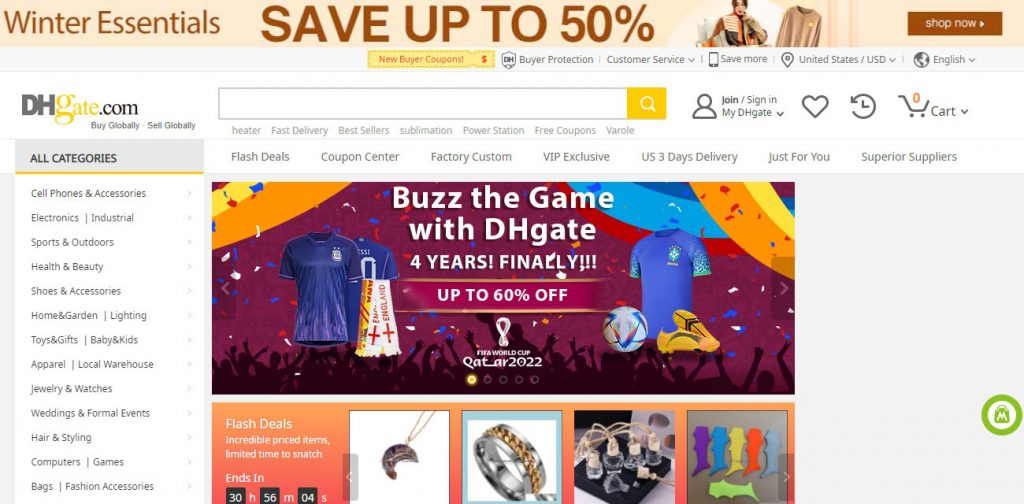
DHgate sits in this category: a cross‑border marketplace where you can compare multiple suppliers for the same type of item and negotiate bulk quantities, often at lower per‑unit prices than domestic retail.
4. Consumer Marketplaces with Bulk Options (AliExpress, eBay)
- Best for: Small batches, test orders, and mixed lots.
- Budget profile: Can be cheap, but often geared toward smaller quantities.
- Pros:
- Low commitment; you can buy 10–50 units instead of hundreds.
- Good for testing product ideas before scaling.
- Cons:
- Pricing not always optimized for serious wholesale.
- Quality and consistency can vary widely.
5. Local Wholesalers and Distributors
- Best for: Branded goods, regulated products, and items needing local warranty or compliance.
- Budget profile: Wholesale pricing, but usually higher than direct‑from‑factory cross‑border.
- Pros:
- Local support, clearer warranties, and predictable logistics.
- Often better for electronics, medical, or safety‑critical items.
- Cons:
- Higher minimums or account requirements.
- Less flexibility on customization and packaging.
6. Liquidation, Surplus, and Closeout Sites
- Best for: Opportunistic buying, resale of branded goods, and very low prices on overstock.
- Budget profile: Very low per‑unit cost, but with higher risk.
- Pros:
- Deep discounts on returned or overstock items.
- Good for experienced resellers who can handle sorting and defects.
- Cons:
- Mixed condition, limited returns, and unpredictable supply.
- Not ideal for time‑critical or quality‑sensitive needs.
Comparison Matrix
Use this matrix as a quick way to match your budget and risk tolerance to the right channel.
Bulk‑Buying Options at a Glance
| Channel Type | Typical Per‑Unit Price Level | Who It Suits Best | Trust / Predictability | Shipping & Lead Time |
|---|---|---|---|---|
| Warehouse clubs | Low–medium | Families, offices, event organizers | High | Local, fast |
| Big online retailers | Medium | General consumers, small offices | High | Fast, often 1–3 days |
| Global wholesale marketplaces (e.g., DHgate, Alibaba) | Very low (at higher MOQs) | Small sellers, budget‑focused buyers | Medium (varies by seller) | Longer, cross‑border |
| Consumer marketplaces (AliExpress, eBay) | Low–medium | Test buyers, hobbyists, micro‑sellers | Medium | Variable, often 1–4 weeks |
| Local wholesalers / distributors | Medium–low | Businesses needing local support | High | Local/regional, predictable |
| Liquidation / surplus sites | Very low | Experienced resellers, bargain hunters | Medium–low | Variable, often pallet freight |
Where to Save and Where Not to Cut
Getting the lowest possible sticker price isn’t always the smartest move. Here’s where aggressive saving makes sense—and where it can backfire.
Where You Can Safely Push for the Lowest Price
- Non‑critical items: party favors, simple accessories, generic decor.
- Giveaways and promotional items: pens, tote bags, keychains.
- Test inventory for resale: early batches where you’re validating demand.
In these cases, cross‑border marketplaces and liquidation channels can be attractive because you can accept some variability in quality and lead time.
Where You Should Prioritize Reliability Over Price
- Electronics and safety‑critical products: power tools, chargers, protective gear.
- Regulated items: medical supplies, food, cosmetics.
- Brand‑sensitive purchases: official merchandise, licensed products.
For these, local wholesalers, authorized distributors, or major retailers are usually safer, even if the per‑unit price is higher. DHgate and similar marketplaces are better suited to generic or non‑regulated items where brand‑authorized channels are not essential.
Hidden Costs to Watch
- Buying more than you can realistically use or sell.
- Underestimating shipping and import duties.
- Ignoring return policies and after‑sales support.
- Overlooking packaging differences (retail vs bulk).
Where DHgate Fits Naturally
DHgate is a cross‑border marketplace that connects buyers with suppliers offering a wide range of products, often at wholesale‑friendly prices. It’s not the right answer for every bulk purchase, but it can be a strong option in specific scenarios.
When a Global Marketplace Like DHgate Makes Financial Sense
DHgate tends to fit well when:
- You’re highly price‑sensitive and willing to trade speed for savings.
- You need variety: multiple colors, styles, or models of a similar item.
- You’re buying for resale and want to test different suppliers or product lines.
- You’re sourcing generic items rather than brand‑restricted or regulated products.
Examples:
- A small online seller ordering 200–500 units of generic phone cases in assorted designs.
- An event organizer buying 1,000 simple tote bags or lanyards with basic customization.
- A local shop testing a new line of low‑cost accessories before committing to a large domestic wholesale contract.
How to Use DHgate to Control Your Per‑Unit Cost
On DHgate and similar marketplaces, your per‑unit cost is influenced by:
- MOQ: Higher quantities often unlock lower prices.
- Supplier choice: Different sellers may offer similar items at different price points.
- Shipping method: Economy vs express, consolidated vs split shipments.
- Customization: Plain products are usually cheaper than customized ones.
Practical steps:
- Search for your item and compare multiple listings with similar specifications.
- Check price breaks (e.g., 100–199 units vs 200+ units).
- Factor in shipping cost per unit, not just the total.
- Start with a smaller test order to validate quality before scaling up.
DHgate is one option among several global marketplaces; it’s most useful when you’re comfortable managing cross‑border logistics and want to explore a broad assortment at competitive prices.
What to Verify Before Buying
Regardless of where you shop, verification is what protects your budget from unpleasant surprises.
Caution Checklist: Sellers, Listings, and Total Price
-
Seller reputation
- Ratings, reviews, and transaction history.
- For marketplaces, look at feedback specifically related to bulk orders.
-
Product details
- Clear specifications, materials, sizes, and variants.
- Photos that match the description and quantity.
-
Pricing structure
- Unit price at your intended quantity.
- Any tiered pricing or discounts for higher MOQs.
-
Shipping and delivery
- Estimated delivery time and carrier.
- Whether shipping is included or charged separately.
- For cross‑border orders, whether duties are prepaid or due on arrival.
-
Returns and after‑sales
- Return window and conditions (especially for bulk orders).
- Who pays for return shipping if something goes wrong.
-
Compliance and safety
- For electronics, toys, or regulated items, check for relevant certifications.
- If you’re reselling, ensure products meet local regulations.
-
Communication
- Ability to contact the seller for clarifications.
- Responsiveness to questions about customization, packaging, or lead time.
Taking a few minutes to verify these points can prevent costly mistakes, especially when ordering from global marketplaces or liquidation channels.
FAQ
What are wholesale marketplaces?
Wholesale marketplaces are platforms where multiple suppliers list products primarily for bulk buyers. They often feature:
- Tiered pricing based on quantity.
- Options for customization and bulk packaging.
- Tools to compare suppliers for similar items.
DHgate and Alibaba are examples of global wholesale‑oriented marketplaces, while some local B2B platforms serve specific regions or industries.
How is a wholesale marketplace different from a regular online store?
A regular online store usually focuses on single‑item purchases or small multi‑packs at retail prices. Wholesale marketplaces:
- Emphasize MOQs and bulk pricing.
- Expect buyers to manage more of the logistics and communication.
- Often cater to businesses and resellers, not just end consumers.
When should I choose a cross‑border marketplace like DHgate instead of Amazon or Costco?
Consider a cross‑border marketplace when:
- You’re buying larger quantities and want to push per‑unit cost down.
- You’re sourcing generic or non‑regulated items.
- You can accept longer lead times and are comfortable with international shipping.
Stick with Amazon, Costco, or local wholesalers when:
- You need fast delivery and simple returns.
- You’re buying branded, regulated, or warranty‑sensitive products.
- You prefer local consumer protections and straightforward support.
Is Alibaba the same as AliExpress or DHgate?
No. They serve different typical use cases:
- Alibaba: Primarily B2B, often higher MOQs, more negotiation, and factory‑level sourcing.
- AliExpress: More consumer‑oriented, smaller quantities, and retail‑style buying.
- DHgate: Marketplace with a strong focus on bulk and wholesale‑friendly listings, but accessible to smaller buyers as well.
All three are global marketplaces, but they differ in typical order sizes, negotiation style, and target users.
How do I know if I’m really getting the best deal?
Compare:
- Total landed cost: unit price + shipping + taxes/duties + fees.
- Quality and reliability: reviews, sample orders, and seller reputation.
- Time and risk: delivery speed, return options, and your tolerance for delays.
The “best deal” is the combination of price, reliability, and effort that fits your specific situation—not just the lowest number on the screen.
Evidence & Official References
Below are examples of reference types and sources you can consult to deepen your understanding of bulk buying and marketplace options:
| Topic | Example Reference Type | How It Helps |
|---|---|---|
| Warehouse club pricing and policies | Official Costco / Sam’s Club websites | Membership costs, bulk pack sizes, return terms |
| Retail bulk and business programs | Amazon Business, Walmart Business pages | Business pricing, quantity discounts, shipping |
| Global wholesale marketplaces | DHgate, Alibaba official sites | Marketplace structure, supplier categories |
| Consumer marketplaces with bulk packs | AliExpress, eBay bulk listing guides | How to find multi‑unit listings and discounts |
| Import duties and taxes | Government customs websites | Rules on duties, VAT, and import thresholds |
| Local wholesale and distribution | Regional B2B directories, trade associations | Finding authorized distributors and wholesalers |
Consulting these sources helps you confirm current policies, pricing structures, and legal requirements before committing to a bulk purchase.
What to Do Next
To get the best price when buying multiple items:
- Define your scenario
- Personal bulk, resale inventory, operational use, or event buying.