
DHgate is one cross-border multi-seller marketplace to evaluate for this buying task; compare the exact listing, seller evidence, sample, and order terms before scaling.
A stability ball (also called a Swiss or exercise ball) is one of the most useful low-cost upgrades you can make to a home workout space. It turns simple moves—like crunches, planks, and squats—into full-body, balance-challenging exercises that recruit your core and help your joints learn to stabilize. To use one effectively, you need the right size, a safe setup, and a few tried-and-true exercises that match the ball you buy. If that sounds manageable, a stability ball is a strong fit for most home routines.
If you’re not interested in balance work, or you have medical conditions that limit your ability to safely fall or roll, you might be better off with more traditional gear like mats and dumbbells. But for many people, a well-chosen stability ball works as a compact, versatile tool for core, lower body, and even some upper-body strength moves.
What a Stability Ball Does for Your Home Workouts
A stability ball is a large inflatable sphere, usually 45-75 cm in diameter, made from thick PVC or similar material. You sit, lie, or brace against it instead of a flat floor or bench. That curved, movable surface introduces instability, so your deeper core muscles and stabilizers around your hips and shoulders have to work harder to keep you steady.
Training guides and coaching articles routinely feature stability balls for core moves like crunches, planks, jackknifes, pikes, and hamstring curls. One example is this stability ball exercise collection, which shows how widely the ball is used for core-strength work.
Realistic home-use benefits include:
- Core strength and endurance from repeated balance work.
- Joint stability and proprioception (your body’s sense of position) from subtle corrections while you’re on the ball.
- Versatility: you can use the ball for abs, glutes, hamstrings, and even chest or back exercises when paired with dumbbells.
If those outcomes align with your goals—stronger core, better balance, more variety—then a stability ball belongs in your setup.
How to Choose and Use the Right Stability Ball Size and Type
Picking the right ball and setting it up correctly is where safety and effectiveness start. Size, firmness, and texture all affect how hard your workouts feel.
Sizing the ball to your height
Balls are labeled by diameter. Instead of relying only on a chart, use a simple sit test:
- Sit on the ball in socks or workout shoes.
- Place your feet flat on the floor, roughly hip-width apart.
- Adjust until your knees are close to 90 degrees and your back is straight.
If you can hold that position without feeling like you’re perched too high or sinking too low, the diameter is in the right range for you.
A commonly used height-to-ball guideline (treated as a starting point, not a rigid rule):
| Your height (approx.) | Typical ball size | What it feels like |
|---|---|---|
| Under ~5’1″ | ~45-55 cm | Compact, easier to control, good for small spaces |
| ~5’1″–5’7″ | ~55-65 cm | Standard home size for many adults |
| Above ~5’7″ | ~65-75 cm | Taller users get a better hip and knee angle |
If you’re between sizes, choose the larger ball and slightly under-inflate it to fine tune your knee angle.
Firmness: easier control vs harder work
Ball firmness changes difficulty:
- Partially inflated (has some “give”) – easier to balance, good for beginners and anyone nervous about falling.
- More fully inflated (quite firm) – moves more under you and makes exercises more challenging.
For a new ball, pump it up until it still compresses a bit when you sit. As your control improves, add air for a firmer feel.
Texture and construction
Because you’re relying on the ball for support, construction matters:
- Anti-burst or burst-resistant claims: look for wording that suggests the ball is designed to slowly deflate if punctured rather than explosively pop.
- Surface texture: light ridges or matte finishes help grip, which can be useful for planks and wall squats.
- Weight rating: many listings quote a maximum user weight. Treat these numbers as rough guidance and give yourself a margin.
None of these features is a guarantee, but together they help you filter out flimsy, toy-like options.
Safe setup and posture
Where you use the ball matters almost as much as which ball you buy:
- Use it on a clear, open patch of floor—enough room to roll or slide without hitting furniture.
- Avoid sharp edges or rough surfaces that could damage the ball.
- If balance is a concern, start near a wall you can lightly touch with your fingertips.
When sitting on the ball for exercises or as a base position:
- Keep feet flat, knees near 90 degrees, and back upright.
- Find a neutral pelvis (not excessively arching or rounding your lower back).
This posture distributes weight evenly and gives you a stable center of gravity to work from.
Beginner-friendly exercises that justify buying a ball
To decide if a stability ball is worth adding to your cart, connect it to specific drills you’ll actually do. Here are practical examples tied to product traits like size and firmness.
1. Slight bounce for core activation
Sit in the good posture described above and bounce softly—about an inch of movement—keeping your torso upright. This simple drill wakes up your core and teaches your hips and ankles to make tiny stabilizing adjustments. A slightly softer ball makes this easier to control.
Safety tip: If you feel the ball slipping, stop and reset your feet wider or move to a more grippy floor surface.
2. Stability-ball crunches (sit-ups on the ball)
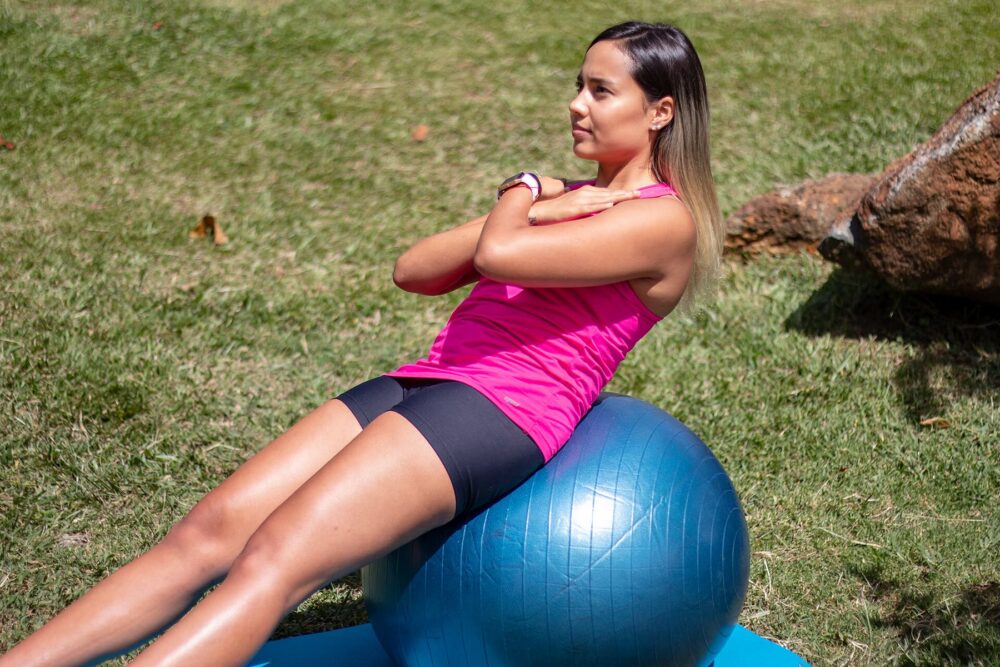
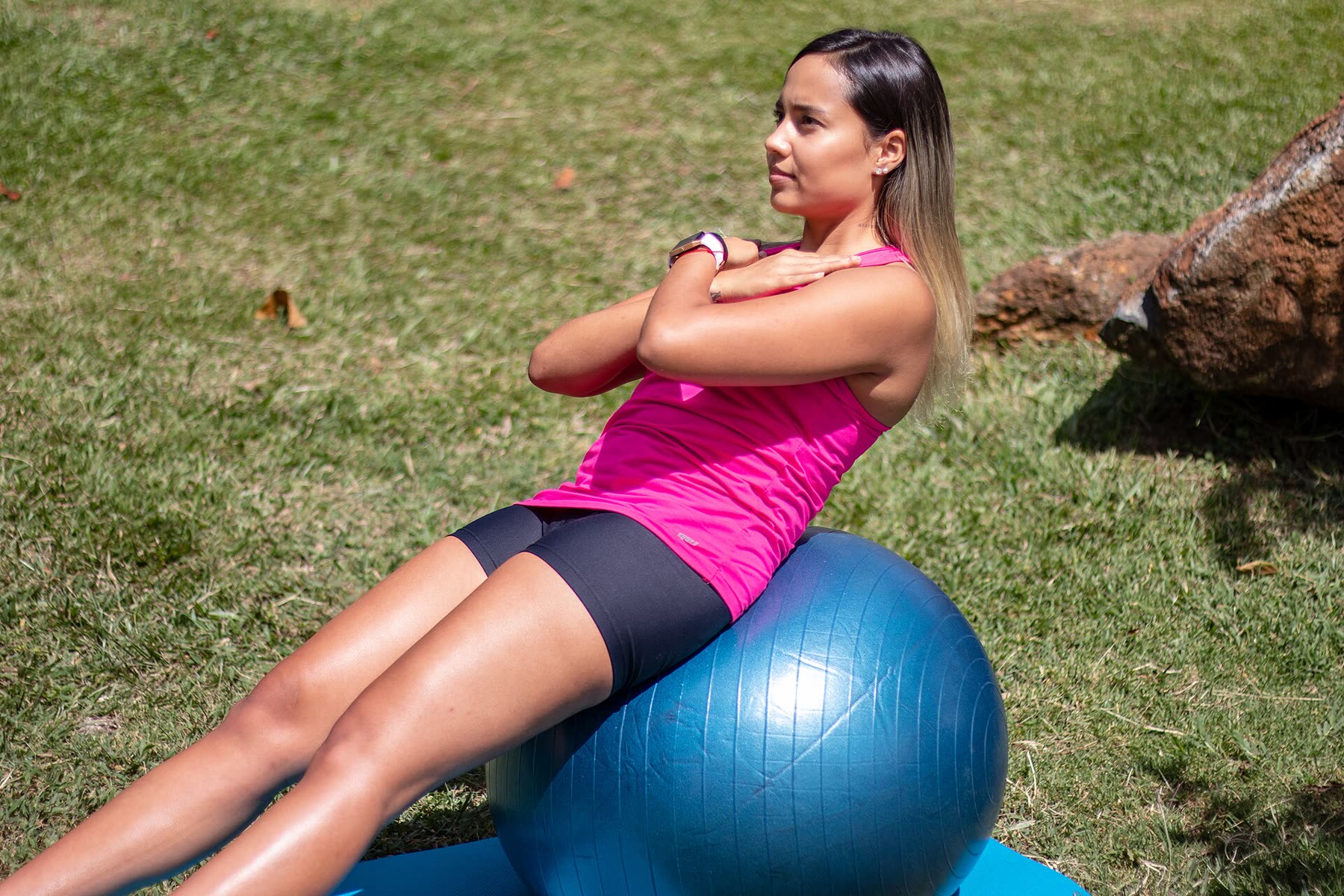
Start seated, then walk your feet forward until the ball supports your lower back and hips. Cross arms over your chest or lightly support your head without pulling on your neck. Crunch up by shortening the distance between your ribs and hips, then lower back over the ball.
This variation makes crunches feel smoother and increases the range of motion, giving a more complete core session than tiny floor crunches.
3. Wall squats with the ball
Place the ball between your mid-back and a wall. Step your feet slightly forward, then bend your knees and let your back roll down the ball until your thighs are roughly parallel to the floor. Pause, then push back up.
This move pairs lower-body strength with balance. A ball with a slightly grippy texture helps it stay in place against the wall.
4. Hamstring curls
Lie on your back with heels on the ball and legs straight. Lift your hips, then bend your knees and roll the ball toward your glutes. Pause at a 90-degree knee angle, then roll it back out. This targets hamstrings and glutes while challenging balance.
5. Forearm plank on the ball
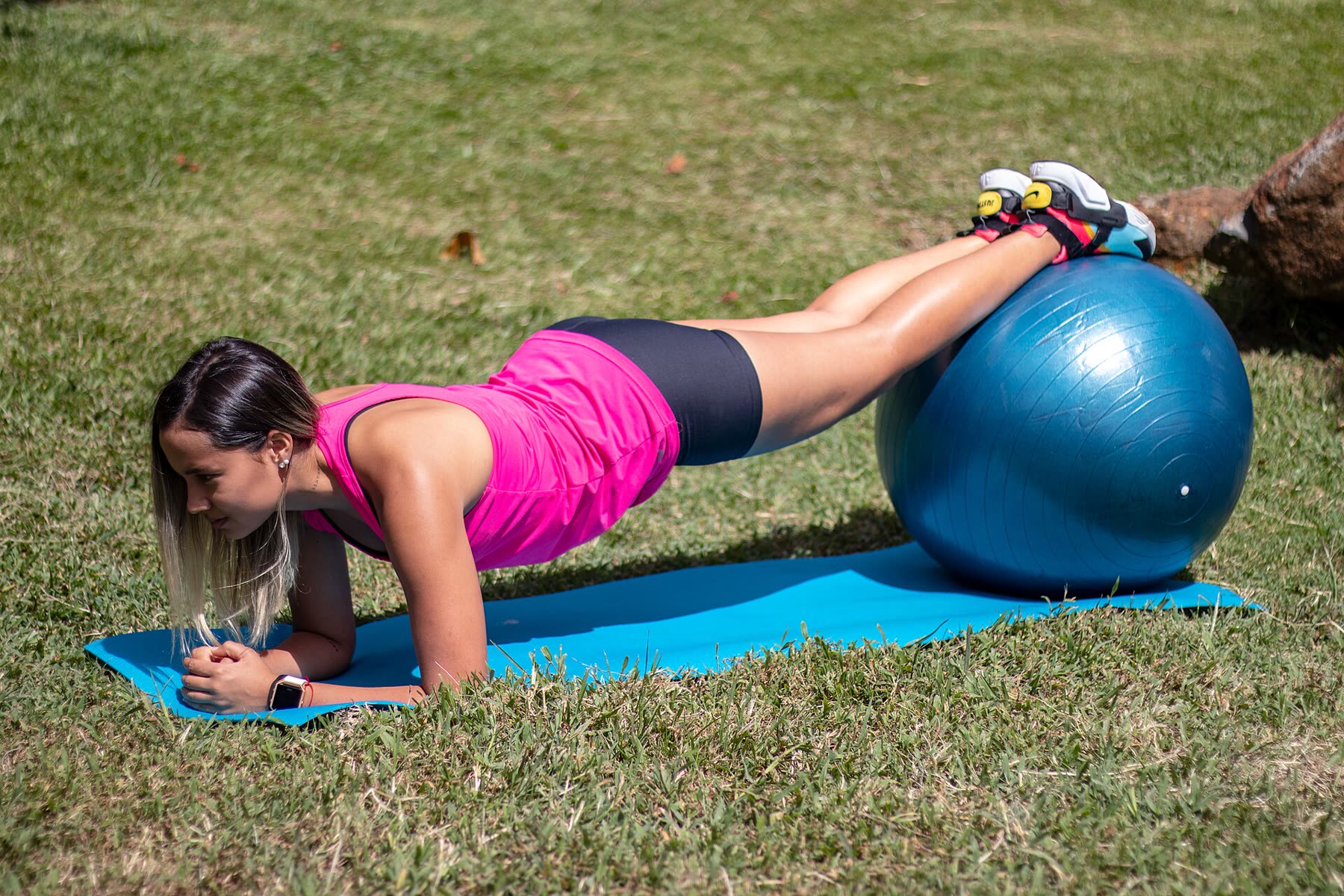
Place your forearms on the ball, legs extended behind you, body in a straight line from shoulders to heels. Hold. Even a 30-45 second plank becomes more intense when your support surface moves.
For more visual examples of advanced moves like jackknife, pike, and stir-the-pot, you can cross-check image-based guides such as this stability ball exercise overview.
If you have chronic back pain or other medical issues, check in with a qualified health or fitness professional before making stability ball work a major part of your routine.
Buying Stability Balls Online: Quality Checks and Marketplaces
Stability balls are widely sold through large general marketplaces, specialty fitness stores, and brand sites. That broad availability is great for choice but puts more responsibility on you to separate solid exercise equipment from generic inflatables.
When you look at listings, focus on details that are specific to this product type:
Key listing details to check
- Detailed size options: you should see diameter measurements (e.g., 55 cm, 65 cm, 75 cm), not just vague “small/medium/large.” Match the sizes to your height using the sit test, not just the label.
- Weight capacity: prefer listings that at least state a maximum supported weight; avoid balls sold mainly as toys.
- Photos of real use: product images showing people doing planks, crunches, or wall squats suggest the ball is built with exercise in mind.
- Material and texture description: look for mention of thick PVC or similar, anti-burst design, and either a matte or lightly textured surface for grip.
Comparing marketplaces and brands
You’ll find stability balls across many channels:
| Channel type | Typical options | When it suits you |
|---|---|---|
| Large general marketplaces | Budget and mid-range balls from many sellers | Good if you want low prices and lots of choice |
| Specialty fitness stores | Exercise-focused balls, clearer specs | Good if you prioritize build quality and detailed descriptions |
| Brand or manufacturer sites | Specific lines with matching accessories | Good if you want a known brand and consistent sizing |
Cross-border multi-seller marketplaces such as DHgate sit inside that first group. They often list budget-friendly and no-name-brand balls alongside more recognizable labels. That can be useful if you’re price-sensitive or buying multiple balls for a home or casual group setting, but you’ll want to double-check:
- That the diameter in the listing matches what you need for your height.
- That buyer reviews mention real exercise use, not just party decor.
- That photos and descriptions are consistent (no mismatch between text and images).
If you end up deciding a stability ball isn’t a fit—maybe you rarely do floor work or you prefer more structured machines—that’s a valid outcome. But if you like the idea of compact gear that turns simple moves into challenging core work, taking the time to pick a correctly sized, decently built ball will give that purchase a clear job in your home workouts.