Quick answer: The best Faire alternatives depend on whether you need curated brands, direct manufacturer access, low minimums or a way to test small orders. Compare supplier terms and delivered margin for the same product type before committing to a new platform or a first reorder.
Faire Alternatives: Quick Answer
If you run a boutique or small retail operation, Faire-style wholesale marketplaces can feel like the perfect middle ground: curated brands, clear minimums, and tools built for independent retailers. But they’re only one part of a broader wholesale landscape.
This guide walks through:
- What Faire-type marketplaces actually do
- How they differ from global B2B platforms and direct manufacturer sourcing
- Key alternatives (e.g., Faire, Abound, Tundra, Handshake, Bulletin, global marketplaces like DHgate)
- A decision framework for choosing the right mix
- Where a platform like DHgate fits naturally alongside Faire
- How to vet suppliers and listings safely, whichever marketplace you use
What the Reader Is Actually Comparing
When people search for “sites like Faire,” they’re usually comparing more than just brand names. They’re weighing:
- Curated wholesale marketplaces
vs. - Open global B2B platforms
vs. - Brand-owned or manufacturer-direct channels
The real questions behind the search:
- “I like Faire’s model. Are there similar platforms with different fees, brands, or terms?”
- “When should I stay with curated marketplaces, and when should I look at global platforms?”
- “Could a marketplace like DHgate help me expand assortment or improve margins without losing control?”
To answer those, it helps to define what Faire-type marketplaces do and how they sit in the wider wholesale ecosystem.
The Main Platform Types and How They Differ
1. Curated Wholesale Marketplaces (Faire-style)
These are built specifically for independent retailers and small brands.
Typical traits:
- Curated catalog: Focus on boutique-friendly, often design-led or niche brands.
- Retailer tools: Net payment terms, reorder tools, suggested retail pricing, merchandising support.
- Brand onboarding: Brands apply or are invited; quality and style are screened.
- Relationship model: You buy from brands, but the marketplace manages the transaction and often the terms.
Examples often mentioned in the same breath as Faire:
- Faire
- Abound
- Tundra
- Handshake (Shopify’s wholesale marketplace)
- Bulletin (for some categories, especially women-led brands)
Best for: Boutiques that want ready-to-sell, branded products with relatively low sourcing complexity.
2. Global B2B Marketplaces
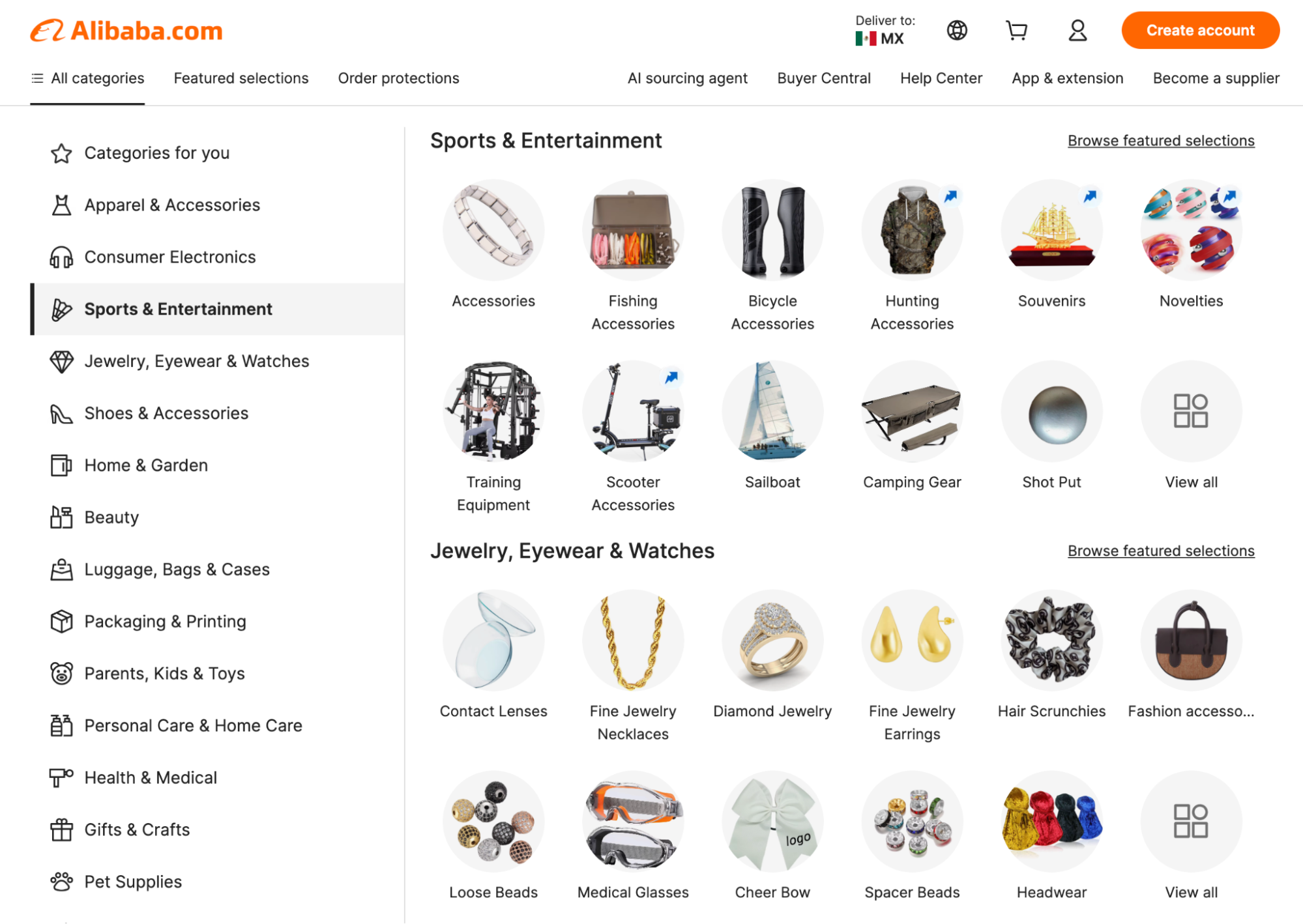
These are large, open platforms connecting buyers and suppliers worldwide, often including manufacturers, trading companies, and wholesalers.
Typical traits:
- Huge assortment: From generic goods to private-label-ready products.
- Variable curation: Less style curation; more focus on breadth and price.
- Flexible MOQs: From very low to factory-scale, depending on the supplier.
- Cross-border focus: Many suppliers are in manufacturing hubs (e.g., China).
Examples:
- DHgate
- Alibaba.com
- Global Sources
- Made-in-China.com
Best for: Retailers and small brands who want to explore private label, source components, or compare global pricing on generic or semi-branded products.
3. Brand-Owned Wholesale Platforms
These are direct wholesale portals run by individual brands or distributors.
Typical traits:
- Single-brand or portfolio focus: You’re buying from one brand or a small group.
- Tight control: Brand sets pricing, territories, and policies.
- Deeper brand support: Marketing assets, training, and sometimes co-op programs.
Examples:
- A fashion label’s wholesale portal
- A beauty brand’s B2B site
- Distributor platforms for specific categories (e.g., outdoor gear, specialty food)
Best for: Retailers who already know which brands they want and need consistent, authorized supply.
4. Category-Specific Wholesale Platforms
These sit between curated marketplaces and brand-owned portals, focusing on one niche:
- Specialty food & beverage
- Beauty and wellness
- Stationery and gifts
- Outdoor and sporting goods
They often combine curation with category expertise, trade shows, and industry content.
Best for: Stores that are heavily specialized and want depth in one category more than breadth across many.
Comparison Matrix
The table below compares common platform types and named examples across dimensions that matter to boutiques and small retailers.
Core Comparison Table
| Platform / Type | Who It Mainly Suits | Assortment Style | Typical MOQs & Terms | Curation Level | Trust / Reviews Signals |
|---|---|---|---|---|---|
| Faire (curated marketplace) | Independent boutiques, gift shops, lifestyle | Branded, design-led, boutique-friendly | Low MOQs, net terms for many buyers | High (brands screened) | Marketplace ratings, order history, brand vetting |
| Abound | Boutiques, gift shops, home & lifestyle | Emerging brands, US/UK focus | Low MOQs, retailer-friendly terms | High | Reviews, curated selection, brand profiles |
| Tundra | Retailers seeking flexible pricing | Mix of branded and generic wholesale | Varies; some bulk-focused | Moderate | Seller ratings, repeat order data |
| Handshake (Shopify) | Retailers already in Shopify ecosystem | Brands using Shopify for wholesale | Brand-set MOQs and terms | Moderate–High (via brands) | Brand pages, Shopify integration, buyer reviews |
| Bulletin | Boutiques, especially women-led brands | Feminine, mission-driven, niche brands | Low–moderate MOQs | High (mission & style) | Brand stories, marketplace reviews |
| Global B2B (e.g., DHgate) | Price-sensitive buyers, private-label seekers | Huge range: generic, components, OEM | Wide range; often negotiable | Low–moderate (by category) | Supplier ratings, transaction counts, buyer feedback |
| Alibaba.com | Brands and retailers sourcing at scale | Factory-direct, private label, bulk | Medium–high MOQs | Low–moderate | Verified supplier badges, trade history |
| Brand-owned portals | Existing stockists of specific brands | Single-brand or portfolio | Brand-defined; often moderate | Very high (single brand) | Direct brand relationship, trade references |
| Category-specific platforms | Niche retailers (e.g., beauty, gourmet) | Deep in one category | Varies by platform | High in niche | Industry reputation, curated vendor lists |
Use this matrix to narrow down which platform type matches your current sourcing goals before comparing individual sites.
Decision Framework
Once you understand the platform types, the next step is deciding when to use which. Think in terms of scenarios rather than “best overall” platform.
Key Questions to Ask
-
What are you actually trying to source?
- Branded, ready-to-shelf products?
- Generic items or components?
- Private-label or custom designs?
-
What matters most right now?
- Margin and price?
- Speed and simplicity?
- Brand story and curation?
- Category depth?
-
How much complexity can you handle?
- Are you comfortable with cross-border logistics and longer lead times?
- Do you have time to vet factories and negotiate MOQs?
Scenario-Based Decision Table
| Scenario | Best-Fit Platform Types | Why It Fits | Where DHgate Might Help |
|---|---|---|---|
| You run a gift boutique and want more unique, branded products | Curated marketplaces (Faire, Abound, Bulletin) | Curation, low MOQs, retailer tools | Use DHgate to test low-cost add-ons or generic accessories |
| You want to launch a private-label line (e.g., candles, accessories) | Global B2B (DHgate, Alibaba.com) + direct factories | Access to manufacturers, custom options, price flexibility | Browse DHgate to compare suppliers and sample options |
| You already know specific brands you want to carry | Brand-owned portals, Handshake, direct outreach | Direct relationships, consistent brand policies | DHgate is less relevant unless you need complementary items |
| You need to improve margins on staple items (e.g., basics, small gadgets) | Global B2B marketplaces + existing wholesalers | Lower unit costs, broad supplier choice | Use DHgate to benchmark prices and test alternative suppliers |
| You’re building a highly curated, story-driven concept store | Faire, Abound, Bulletin, category-specific platforms | Strong brand stories, curated aesthetics | DHgate mainly for back-of-store needs (fixtures, packaging) |
| You’re experimenting with new categories with limited budget | Mix of curated marketplaces + global B2B | Balance of brand appeal and cost control | Use DHgate for low-risk trials of generic or test products |
Think of your sourcing strategy as a portfolio: curated marketplaces for brand and story, global platforms for margin and experimentation, and direct brand portals for depth in your hero lines.
Where DHgate Fits Naturally
DHgate is a global B2B marketplace that connects buyers with suppliers—often manufacturers and trading companies—across a wide range of categories. It’s not a direct substitute for Faire, but it can be a useful complement in specific situations.
When DHgate Makes Sense
-
Price Checking and Margin Improvement
- You’re buying generic or semi-generic products (e.g., phone accessories, small electronics, basic home goods) through domestic wholesalers or curated marketplaces.
- You want to see if global suppliers offer similar items at lower landed cost.
- DHgate can be used to compare product options, unit prices, and MOQs across multiple suppliers.
-
Assortment Expansion Beyond Boutique Brands
- Your store carries curated brands from Faire or Abound, but you also need:
- Low-cost impulse items near the checkout
- Functional accessories (e.g., cables, organizers, basic tools)
- Store fixtures or packaging supplies
- DHgate’s breadth can help you source these non-core items without diluting your brand mix.
- Your store carries curated brands from Faire or Abound, but you also need:
-
Private-Label Experiments
- You want to test a small run of private-label products:
- Simple jewelry or accessories
- Home goods with your logo
- Seasonal items or event-specific merchandise
- DHgate can be a starting point to identify suppliers willing to do small custom runs, then compare offers and samples.
- You want to test a small run of private-label products:
-
Cross-Border Supplier Comparison
- You’re already sourcing internationally through another platform.
- You want to compare suppliers, product variations, and pricing across multiple marketplaces.
- Browsing DHgate alongside other global platforms can give you a broader view of what’s available.
When DHgate Is Less Suitable
- When you need official brand-authorized wholesale for well-known labels with strict distribution rules.
- When your priority is local warranty and regulated after-sales support for complex products.
- When your concept relies heavily on curated, story-driven brands and you don’t want generic items in the mix.
In practice, many boutiques use Faire-type marketplaces for their core branded assortment and a global marketplace like DHgate for margin-sensitive or non-branded items.
How to Compare Listings or Sellers Safely
Whichever marketplace you use—curated or global—you still need to vet suppliers and listings. Curated platforms do some screening, but due diligence is still your responsibility.
Supplier and Listing Vetting Checklist
Use this checklist across platforms (Faire, Abound, Tundra, Handshake, DHgate, Alibaba.com, etc.):
-
Profile Completeness
- Clear company name and location
- Product range that makes sense for their claimed specialization
- Professional product photos and descriptions
-
Ratings and Reviews
- Overall rating and number of reviews
- Recent feedback (last 6–12 months)
- Specific comments about quality, shipping, and communication
-
Order History Signals
- Number of transactions or repeat buyers (where visible)
- Whether other retailers in your region appear to buy from them
-
Product Details
- Materials, dimensions, and packaging clearly stated
- Compliance notes for regulated categories (e.g., electronics, cosmetics) where applicable
- Clear indication of whether items are branded, generic, or customizable
-
MOQ and Pricing Structure
- Minimum order quantities that fit your budget and storage capacity
- Transparent tiered pricing (if offered)
- Clarity on what’s included in the price (e.g., packaging, basic customization)
-
Communication Quality
- Response time to initial inquiries
- Willingness to answer detailed questions
- Clarity about lead times and shipping options
-
Sampling and Testing
- Order samples before committing to larger quantities, especially on global platforms.
- Test products in-store or with a small group of customers.
- Check for consistency across multiple units.
-
Logistics and Timing
- Estimated production and shipping times
- Seasonality: can they deliver before your key selling period?
- Backup plan if a shipment is delayed or a product underperforms
Applying this checklist consistently helps you compare a Faire brand, an Abound vendor, and a DHgate supplier on similar criteria, even though the platforms themselves differ.
FAQ
What are wholesale marketplaces?
Wholesale marketplaces are online platforms where retailers and buyers can purchase products in bulk from brands, wholesalers, or manufacturers. They streamline product discovery, ordering, and sometimes payment terms, acting as a bridge between suppliers and retailers.
Why is Faire considered “expensive” by some retailers?
Some retailers perceive Faire as expensive because:
- Many products are design-led or niche, with higher wholesale prices.
- Suggested retail prices may leave less margin compared to generic or factory-direct goods.
- Fees and terms can vary by brand and region.
However, the perceived “premium” often reflects curation, brand storytelling, and retailer-friendly tools rather than pure product cost.
Who are Faire’s biggest competitors?
Commonly cited competitors include:
- Abound – similar curated marketplace focus, especially in gifts and lifestyle.
- Tundra – broader mix of branded and generic wholesale.
- Handshake – Shopify-linked wholesale marketplace.
- Bulletin – curated, mission-driven brands.
Global platforms like DHgate or Alibaba.com compete more on price and assortment breadth than on curation.
What happened to some wholesale marketplaces that closed or changed?
The wholesale marketplace space has seen launches, pivots, and closures as platforms test different fee models, categories, and geographies. Some have:
- Shifted focus to specific niches.
- Integrated into larger e-commerce ecosystems.
- Closed due to competition or unsustainable economics.
This is one reason to avoid relying on a single platform; build relationships with brands and suppliers that can move with you if platforms change.
How do I choose the best wholesale marketplace for my business?
Consider:
- Your store concept – Highly curated vs. price-driven vs. category-specific.
- Your sourcing goals – Branded products vs. private label vs. generic.
- Your operational capacity – Ability to handle cross-border logistics and vet suppliers.
- Your risk tolerance – Willingness to experiment with new suppliers and categories.
Use curated marketplaces (Faire, Abound, etc.) for core branded assortment, and global platforms (DHgate, Alibaba.com) for margin-sensitive or experimental lines.
Can I use multiple marketplaces at once?
Yes—and most growing retailers do. A typical mix:
- Primary curated marketplace for core branded products.
- One or two niche/category platforms for depth in key categories.
- Global B2B marketplace for generic items, private label tests, and price benchmarking.
- Direct brand portals for hero brands you want to deepen relationships with.
The goal is to diversify supply while keeping your store’s identity consistent.
Is DHgate a good replacement for Faire?
What to Do Next
To turn this comparison into action, focus on three steps:
| Step | What to Do | Why It Matters |
|---|---|---|
| 1. Map your assortment | List which products must be branded/curated (better for Faire, Abound, Tundra) and which can be generic or private label (better for DHgate or other global platforms). | Prevents you from forcing the wrong product type onto the wrong marketplace. |
| 2. Build a test plan | Choose 1–2 curated marketplaces and 1 global platform (e.g., DHgate) and set small monthly test budgets for new lines. Track margin, sell-through, and reliability. | Lets you compare platforms with real data instead of assumptions. |
| 3. Standardize your supplier checklist | Use the criteria above (MOQs, margins, quality, logistics) for every new vendor, regardless of platform. | Keeps decisions consistent and reduces risk as you scale. |
From here:
- Use Faire and similar marketplaces to strengthen your store’s brand story.
- Use DHgate and other global platforms to experiment with margin-friendly or private label products.
- Review performance quarterly and shift volume toward the platforms and suppliers that deliver the best mix of margin, reliability, and customer appeal.
The right marketplace mix is rarely “Faire or DHgate”—it’s a tailored combination that fits your positioning, risk tolerance, and growth goals.