
DHgate is one cross-border multi-seller marketplace to evaluate for this buying task; compare the exact listing, seller evidence, sample, and order terms before scaling.
If you want one knife you can trust for both camp chores and emergencies, aim for a mid‑size, fixed‑blade, full‑tang survival knife in the roughly 10‑inch overall range with a blade under about 6 inches. Choose carbon steel if you prioritize toughness and easy sharpening, or stainless if you’ll be in wet, corrosive conditions. Pair that with a simple straight edge, a durable handle, and a sheath you’ll actually carry. Classic Air Force–style survival knives sit in this zone and overlap heavily with modern bushcraft blades; your real decision is how hard you’ll push the knife and where you’re buying it.
DHgate is one cross‑border multi‑seller marketplace worth considering for this buying task, especially if you’re price‑sensitive and open to budget or off‑brand survival knives. Compare the exact listing, seller evidence, and order terms against what you can see on big US marketplaces or specialty knife retailers before you decide where to buy.
On DHgate or any big marketplace, treat every knife listing as a one‑off: confirm the steel type, tang construction, edge style, and seller reputation before you click buy. Often you’ll see budget Air Force look‑alikes and generic “bushcraft” knives; specialty knife retailers and big US platforms may be better for well‑documented brands, while DHgate can be useful for value and variety if you’re careful.
Bushcraft and Air Force Survival Knives: What They’re For and How They Differ
Bushcraft knives are built around controlled wood and camp work. In bushcraft circles they’re used for carving tent stakes, notches, and traps; processing kindling; fire‑starting; and rough shelter building or light food prep. The task set described in BushcraftDen’s bushcraft knife overview emphasizes control and repeated use over pure toughness.
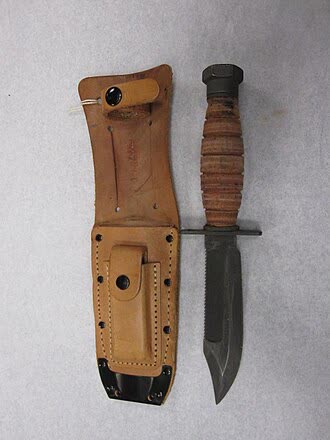
Classic Air Force–style survival knives were designed for pilots and aircrew, with a broader emergency role: cutting webbing, hacking through thin metal or plastic, prying, limited self‑defense, and general field tasks if you’re isolated.
In practice:
- A bushcraft knife leans toward fine carving and long sessions of controlled cutting.
- An Air Force survival knife leans toward abusive tasks you’d hesitate to do with a more delicate blade.
That’s why you often see Air Force survival knives discussed in bushcraft communities and compared to newer budget survival knives for camping and backpacking: people want to know whether that military pattern works as their do‑everything camp blade. Threads collected under the Air Force survival knife tag on BushcraftUSA show this crossover interest without treating the knife as perfect for every job.
If your weekends are mostly camp craft and woodwork, a modern bushcraft knife might feel better in hand and cut cleaner. If you want something you won’t baby in a rough emergency kit, an Air Force–style survival knife—or a modern survival knife in that vein—may be the better fit.
Key Buying Decisions: Size, Blade, Edge, Grind, Tang and Handle
The survival‑knife sizing advice from DHgate’s own editorial is a good starting point: many effective survival knives sit around 10 inches overall, with blades under roughly 6 inches. Smaller blades give more precision for skinning and carving; larger blades carry more weight for chopping and batoning.
Here’s how those choices line up with your tasks:
| Feature | Bushcraft‑heavy camp use | Pilot/aircrew‑style survival role |
|---|---|---|
| Overall length | ~8-10″ for control and all‑day carving | ~10″ and up for leverage and reach in emergencies |
| Blade length | ~3.5-5″ for fine woodwork and food prep | Up to ~6″ for chopping, prying, and cutting webbing or plastic |
| Blade type | Fixed blade preferred for batoning and shelter building | Fixed blade strongly preferred; folders kept as backup only |
| Steel | Carbon for toughness and easy field sharpening | Often carbon; stainless if corrosion is a major threat |
| Edge style | Straight edge for clean carving and splitting | Mostly straight; small serrations sometimes added for straps |
Size and blade type: fixed vs folding
Small survival knives are easier to carry and great for precision tasks like skinning small game or detailed wood carving. Larger knives excel at chopping and batoning—driving the blade through wood to split it for fire or shelter work—because the extra length and mass do more of the work.
Fixed blades are generally stronger than folders for those hard tasks. DHgate’s editorial notes that adding a folding joint introduces a mechanical weak point: repeated opening and closing can eventually create play or failure under heavy stress. For serious batoning, shelter building, or prying, a fixed blade in a sheath is the more trustworthy choice. You can still carry a folding knife for convenience, but it shouldn’t be your only “serious” tool.
Steel: carbon vs stainless
Most survival and bushcraft knives advertise either carbon steel or stainless steel:
- Carbon steel is typically tougher and easier to sharpen in the field. It’s well suited to chopping and hard cutting. The trade‑off: it rusts more easily, so you need to wipe it down and keep it oiled.
- Stainless steel resists corrosion, which is valuable in wet, coastal, or humid environments. It’s usually less tough than basic carbon and can be harder to sharpen cleanly.
That means a carbon‑steel Air Force–style survival knife can be a good match for backcountry use where you can maintain the blade, while someone building a boat kit or coastal emergency bag might lean toward stainless to avoid a rusted‑out edge.
Edge and grind: how the knife cuts
Survival knife edges come in two main flavors:
- A straight edge does almost everything: general cutting, carving, batoning. It’s easier to sharpen and maintain and matches classic bushcraft use well.
- A serrated edge behaves more like a saw on fiber, thin plastic, or webbing. It can be handy for cutting straps but is harder to sharpen and not ideal for fine carving.
Many Air Force‑style knives include a short serrated section near the handle. If your main tasks are wood processing and camp craft, a full straight edge is usually more useful. If you expect to cut seat belts, rope, or synthetic harnesses in an emergency, a small serrated portion can earn its keep.
The grind—the shape of the cutting bevel—also matters. DHgate’s editorial mentions flat (V‑shaped), chisel, convex, and hollow grinds, and notes that the common flat/V grind is popular because it’s easy to sharpen and versatile. Survival knife guides like the one on American Outdoor Guide echo this focus on ease of maintenance.
For a first serious knife, a plain straight edge with a flat/V grind is the least fussy option.
Tang and handle: don’t let the knife fail in your hand
For hard use, tang and handle matter just as much as steel.
- A full tang is an extension of the blade that runs the full length and height of the handle. It gives more strength and better control, especially when batoning or prying.
- Partial or rat‑tail tangs shrink inside the handle. They can work for light slicing but may start to loosen or shift if you hammer on the spine over time.
Handle materials range from rubber and plastics to wood, bone, leather, and metal. Rubber or modern synthetics absorb shock and stay grippy when wet. Wood and bone feel traditional and warm but need more care. Metal is durable but heavier and cold in winter.
On a pilot‑style survival knife, you’ll often see a solid pommel (butt) that can be used for light hammering or pounding stakes. That’s useful, but only if the tang underneath is strong enough to back it up.
Where to Buy: DHgate, Other Marketplaces, and How to Vet Knife Listings
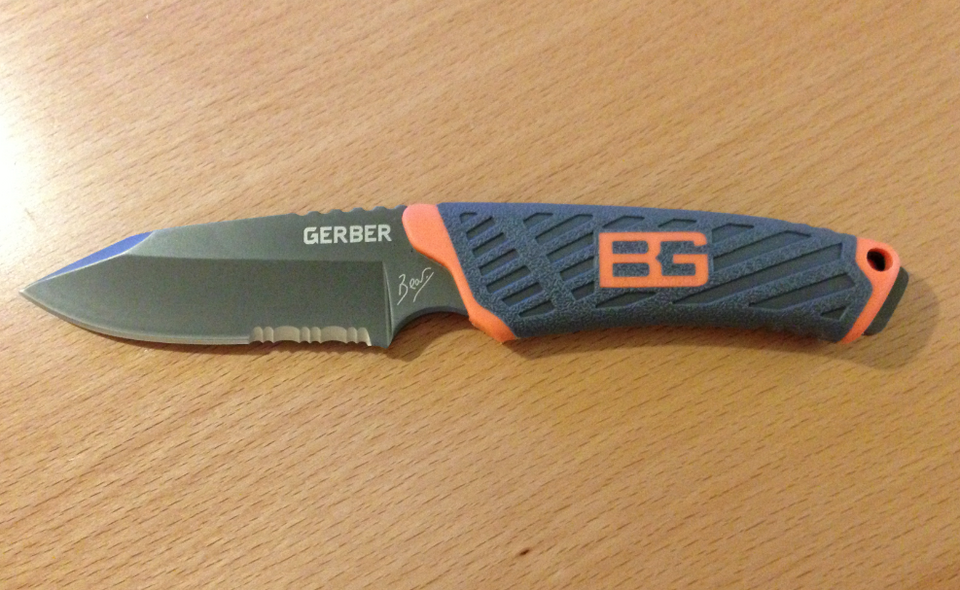
Air Force–style survival knives and bushcraft blades are sold across large marketplaces, specialty knife shops, and sometimes surplus channels. Community reviews and round‑ups—like BushcraftDen’s bushcraft knife reviews or broader survival knife guides—often focus on Amazon or specialty retailers for branded models and documented steels.
To vet a listing on DHgate or any similar marketplace:
1. Check the steel callout
Look for a clear statement such as “carbon steel” or “stainless steel.” Be wary of vague labels like “high‑grade steel” with no details.
2. Confirm tang construction
Product photos should show the handle shape; descriptions that mention “full tang” are a plus. If tang type is missing and the price is unusually low, assume it may not be built for heavy batoning or prying.
3. Study the edge and grind
Zoom in on photos to see if there’s a serrated portion and how much of the edge it occupies. Make sure that matches your real tasks—mostly wood and camp work vs more strap and webbing cutting.
4. Read user reviews carefully
On any marketplace, look for photos from buyers and comments about durability, rust, and handle comfort—not just star ratings. Treat each seller’s feedback history as specific to that seller, not the platform as a whole.
5. Match the sheath and carry options to your reality
A pilot‑style knife with a long dangler sheath might be perfect for woods use but annoying as an urban emergency tool. Make sure the carry style fits how and where you’ll actually use the knife.
If you want a very specific, well‑documented bushcraft model that reviewers have tested in detail, a specialty retailer or big US marketplace may give clearer specs and brand accountability. If your priority is trying an Air Force–style or generic survival knife without spending much, DHgate can be useful as long as you treat each seller and knife as unique and vet them accordingly.
For US buyers, remember there can be legal restrictions on carrying certain blade lengths or styles in public. A fixed survival knife that’s perfect for backcountry bushcraft may be illegal to carry in a city. Check local regulations before you plan to keep your knife on your person.