
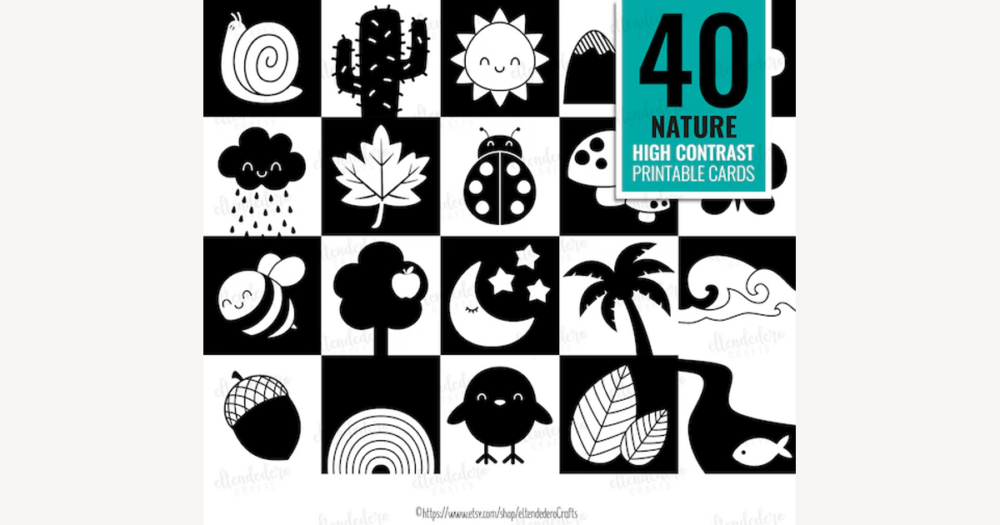
DHgate can be a useful place to research newborn black-and-white high-contrast cards as long as you treat them like ordinary baby accessories and pay close attention to how each listing actually presents the cards—photos, format, size, and set details—before worrying about anything else.
Recognizing newborn black-and-white high-contrast cards on DHgate
On DHgate, newborn black-and-white high-contrast cards are usually small, flat pieces of paper or board printed with bold black-and-white graphics. They are typically sold as sets, with multiple cards showing simple shapes, patterns like stripes or dots, or clear pictures of animals and everyday objects, and are marketed as visual accessories to show to a newborn rather than as medical or developmental tools.
Listings may use many different names for the same basic product, including baby flashcards, contrast cards, visual cards, Montessori cards, baby sensory cards, picture cards, or wall prints. Titles and descriptions can be machine-translated or inconsistent, so it helps to focus on what you see in the photos: flat cards or prints with clear black-and-white images, an indicated set size or number of pieces, and any mention of the age range such as “newborn” or “0–6 months.”
Because descriptions can overpromise, it is safer to treat any claims about boosting vision or brain development as marketing language rather than a reason to buy. Pay more attention to visible, objective details like format, approximate size range, how many cards are in the set, and the specific images shown. I would always choose a listing that explains these basics clearly and shows honest photos over one that leans on vague developmental promises but hides the actual cards.
Checking card design, size, and print clarity in listings
Before buying newborn contrast cards on DHgate, judge how strong and simple the designs look. High-contrast cards show deep black areas against clean white backgrounds, with clear edges and uncomplicated patterns; greyish tones, very busy pictures, or low-contrast details will usually be harder to see. Use the zoom tool on listing photos, look for close-up shots, and check whether lines and shapes look crisp instead of fuzzy or pixelated, then compare a few listings side by side to see which images appear boldest. Buyer-uploaded photos can give extra clues about how sharp the printing looks in real life.
Check the card size in the description, usually given in centimeters or inches, and imagine where you plan to place them—along a crib edge, on a wall, or clipped to a stroller. Cards that are very small may be hard to notice from normal viewing distances, while very large boards can be awkward to position in tight spaces. When measurements are missing, you may still get a rough idea from photos that show the cards next to a hand or another familiar object, but precise dimensions in the listing are more reliable.
Because you cannot touch the cards before ordering, the material and finish details in the description matter. Phrases such as “thick cardboard,” “paperboard,” or “plastic” hint at how resistant the cards may be to bending or tearing, while “laminated” often suggests a wipeable surface. A “matte” finish tends to reduce glare from indoor lights, whereas “glossy” cards can look shiny but may reflect light more strongly. Use both the seller’s text and any buyer photos to infer thickness and finish, and favour listings that describe these traits clearly over those with vague or generic wording. For everyday use, I prefer to pay a little more for cards with clear photos, specific measurements, and several real buyer images rather than gamble on a bare-bones listing that leaves these details to guesswork.
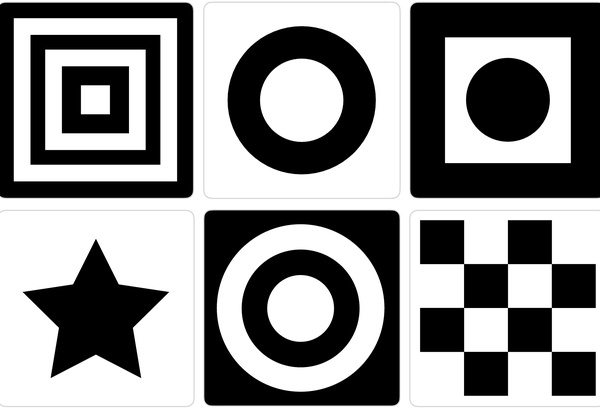
In this example image, several black-and-white flashcards with bold, simple patterns are shown in a close-up view, making it easy to see the strong contrast and sharp edges you should look for in DHgate listing photos.
Materials, edges, and other safety-conscious checks
Newborn contrast cards on DHgate are ordinary baby accessories, but anything you hold near a baby’s face or hands deserves a careful look at materials, corners, and overall sturdiness. Treat them more like small boards than disposable paper: you want cards that feel solid, don’t shred easily, and don’t shed fibers or ink when they’re handled or mouthed briefly.
Listings often describe cards as paper, cardboard, paperboard, laminated board, or plastic. Thicker, bend‑resistant boards generally cope better with everyday handling than very thin paper, and lamination or a coated surface can make them easier to wipe clean. When descriptions simply say “card” without detail, I would treat that as a prompt to look harder at photos and reviews before assuming they’re sturdy enough for frequent use around a newborn.
Some sellers mention “non‑toxic ink” or “safe materials,” which can be reassuring in principle, but online wording alone is not a safety certification. It’s helpful when a listing specifies the broad material type (for example, cardboard with a plastic film), yet very vague or overly grand promises like “totally safe” or “eco‑friendly” without any detail should be read as marketing rather than proof. If you care strongly about this, it’s better to combine any such claims with buyer feedback and, if needed, message the seller with concrete questions about what the cards are made from.
Edges and corners matter because newborns move unpredictably and may brush or grab the cards. Rounded corners or clearly smooth edges in close‑up photos reduce the chance of accidental scratches compared with very sharp, square corners. When several reviews mention sharp edges, peeling lamination, or flaking ink, that’s a clear signal to move on, even if the price is attractive.
Smell and surface feel are also strong clues, and DHgate buyer comments often mention them. Reports of strong chemical odors, sticky surfaces, or ink rubbing off onto fingers suggest that the cards may not be pleasant to use in a small room or near a baby’s mouth. It’s reasonable to plan ahead: if a set arrives with a noticeable chemical smell or loose pigment, airing them out away from the baby and discarding them entirely if the issue persists is a cautious choice.
When you read DHgate reviews, skim specifically for mentions of smell, durability, and ink quality, and check whether buyers upload photos showing corners and edges up close. Listings that pair clear material descriptions with detailed images and several quality‑focused reviews are easier to trust than those that show only distant shots and generic praise. I would personally skip newborn card listings that say almost nothing about materials and have no feedback on quality, even if they’re the cheapest option; if I were on a tight budget, I’d instead spend more time comparing reviews and messaging sellers with direct questions about card thickness, coating, and smell before deciding to buy.
Evaluating DHgate sellers for newborn card listings
- Open the seller’s store page from the newborn card listing and check their overall rating, total number of transactions, and how long they’ve been active. A mid‑to‑high rating combined with a reasonable order volume usually feels more reassuring than a brand‑new store with almost no history, especially for something you want ready in the first months with a baby.
- Read feedback across both recent and older orders, looking for patterns about shipping speed, whether products arrive as described, and how the seller responds when problems occur. A mix of comments is normal; focus on trends, such as repeated notes about slow shipping or many buyers praising accurate descriptions, rather than being swayed by a single very positive or very negative review.
- Compare several of the seller’s listings, particularly for similar baby accessories, to see whether product descriptions, photos, and size or material details line up. When titles, images, and descriptions match each other and feel specific, that consistency supports trust; copied text that contradicts the title or obviously reused descriptions that don’t fit the photos are mild warning signs that the seller may not be paying close attention to details.
- Look for signs that past buyer issues were resolved, such as follow‑up comments mentioning replacements, partial refunds, or polite, helpful responses from the seller. This kind of pattern suggests that even if something goes wrong with a newborn card order, the seller is more likely to work within DHgate’s system to fix it.
- For newborn contrast cards in particular, I would rather pay a little more to buy from a seller with clear descriptions, consistent listings, and steady feedback than chase the very lowest price from a store whose ratings or reviews feel chaotic or thin; a few dollars saved rarely make up for blurry prints, flimsy cards, or a late package meant for a gift or early‑month use.
Understanding payments and buyer protection on DHgate
- Place your order through DHgate and pay only with the platform’s accepted methods—such as credit or debit cards, or supported digital wallets—so the transaction stays inside DHgate’s system rather than going directly to the seller via bank transfer, messaging apps, or other external channels.
- After payment, DHgate manages the funds while the seller prepares and ships the cards; the money is normally released to the seller only after the order is marked received or a set time passes, which gives you a window to check the package before the seller is fully paid.
- If the cards do not arrive or are clearly different from the description—for example, a much smaller set than advertised or noticeably poorer print quality than shown in the listing photos—you can usually use DHgate’s buyer protection framework to open a dispute within the applicable time limit instead of accepting the problem.
- When you open a dispute, DHgate may offer outcomes such as partial or full refunds, returns, or other resolutions depending on the evidence you provide and the platform’s policies; the exact result and timeline vary by case, so treat these tools as a way to seek a fair solution rather than a guaranteed outcome.
- Do not agree to pay off-platform or to confirm receipt before you have inspected the cards; pressure to send money directly or to click “received” early weakens your protection. Personally, I would skip any newborn accessory listing that pushes these arrangements and choose only sellers who are happy to keep payment and confirmation fully inside DHgate.
Shipping, tracking, and delivery expectations for small card sets
- Check the shipping options shown on the listing, comparing methods, costs, and estimated delivery windows, and decide whether the stated timeframe fits how soon you want the cards for newborn or gift use.
- Expect that lightweight, low-cost card sets are often sent by economical shipping services, especially for international orders, which can mean longer transit times and less frequent tracking updates than premium methods.
- Watch the tracking history for high-level status changes—such as shipped, in transit, arrival in the destination country, and delivered—and treat long periods with no movement beyond the listing’s estimated window as a sign that you may need to follow up.
- If the tracking appears stalled or unclear, first message the seller through DHgate to ask politely about the delay or missing scans, and give them a short time to respond with an explanation or updated information.
- When the seller’s response is unhelpful or absent and the buyer-protection period is getting close to its end, consider opening a shipping-related or non-delivery dispute with DHgate, including your tracking history and order details so the platform can review the situation.
- It is reasonable to prefer listings that offer clear shipping methods and realistic delivery estimates over those with very vague or extremely long promises; for something meant for early‑month use with a baby, I would personally choose a slightly higher-cost option that provides more transparent tracking rather than gamble on the cheapest, least-detailed logistics.
Customs, import duties, and local rules for printed cards
For small, low‑value printed card sets ordered through DHgate, customs and import duties are often minimal or may fall under local duty‑free thresholds, but the exact rules depend entirely on your country and can change over time. Treat anything shipped internationally as potentially subject to tax or fees, even if the amount is small, and avoid assuming that cards will always pass through without charges.
On many DHgate listings, the shipping or product description will say whether the buyer or the seller is responsible for customs handling, VAT, or other import charges. Read these sections carefully, looking for phrases about tariffs, duties, or tax collection, and notice whether the seller mentions who pays if border authorities apply a fee or inspect the parcel.
When you move through checkout, pay attention to any DHgate messages about estimated taxes or customs handling; they may highlight extra costs or confirm that the price shown excludes potential border charges. If you are unsure how your country treats printed cards or low‑value parcels, the safest option is to check your local customs or postal guidance directly rather than guessing from other shoppers’ experiences.
The main aim is to avoid surprise costs or delays when the cards reach the border. I would personally prefer listings and shipping methods where responsibility for any customs or import fees is clearly stated, and treat missing or confusing information as a reason to pause, read local rules, or ask the seller for clarification before ordering, especially if timing or budget is tight.
Using DHgate’s after-sales and dispute tools for card quality issues
- Inspect the cards as soon as they arrive, counting how many you received and comparing their size, print clarity, and materials with what the DHgate listing described and showed in photos.
- If you notice a clear problem—such as bent or damaged cards, sets that are much thinner or smaller than stated, or prints that look far blurrier than the listing images—send a message to the seller through DHgate. Explain the issue politely, describe how it differs from the listing, and attach photos so they can see the problem.
- When the seller’s reply is very slow or not helpful, consider opening a dispute within DHgate’s buyer‑protection window. Choose a reason that fits the situation, such as “not as described” or “damaged item,” and follow the prompts to submit your complaint.
- Include clear evidence with your dispute: photos of the cards from multiple angles, any damage to the packaging, and, if useful, screenshots or saved copies of the listing showing the promised quantity, size, or print quality that does not match what you received.
- Be prepared for different possible outcomes. Depending on DHgate’s policies and how the seller responds, the platform may facilitate solutions ranging from partial refunds to full refunds or replacement offers, but no specific result or timing is guaranteed for every case.
- Thorough pre‑purchase checks of listings and sellers reduce the chance of disappointment, but some variation is inevitable. I would rather document any issues carefully and rely on DHgate’s formal dispute tools than accept off‑platform promises or informal arrangements that are not recorded in the system.
Quick checklist for newborn contrast card listings on DHgate
- Clear, unfiltered photos that include at least one close-up, so you can see crisp black-and-white images and simple patterns instead of tiny or heavily edited thumbnails.
- Specific card size measurements in the description, plus at least a basic material label (for example, paperboard, laminated board, or plastic).
- Some mention of thickness or sturdiness, such as “thick card,” “hard board,” or similar wording that suggests the cards won’t bend or crease instantly.
- Visible rounded corners or smooth-looking edges in photos, and any reference to durability or resistance to bending and tearing.
- Multiple buyer reviews rather than none, ideally with customer photos of the actual cards so you can compare them with the seller’s images.
- A seller rating and feedback history that look stable—no pattern of recent unexplained low scores and more than just a handful of completed orders.
- Shipping options and estimated delivery windows that are clearly stated and reasonable for when you need the cards, with at least basic tracking where possible.
- Simple notes in the listing or shipping section about who covers any customs or import charges for cross-border orders, instead of silence or contradictory statements.
- Payment and messaging that stay entirely inside DHgate, with no requests from the seller to pay via bank transfer, messaging apps, or other off-platform channels.
- Treat this checklist as a minimum baseline: I would personally drop any listing that fails several of these points, even if it looks cheaper or has trendier designs, and focus on options that meet most of these signals instead.
FAQ: Edge cases when researching newborn contrast cards on DHgate
Are digital printable contrast cards on DHgate handled differently from physical newborn card sets?
Yes. Digital printables are treated as downloadable files rather than shipped goods, so there is no physical shipping or customs process. When you consider a digital listing, focus on file format (for example, PDF or high‑resolution image files), stated resolution or print size, and any usage rights or licence terms in the description. If something goes wrong, a dispute would usually centre on whether you can access the download and whether the files match the promised quality or size, not on damage in transit. Avoid listings that are vague about formats or rights, and keep all payment and communication on DHgate so any access issues are recorded in the system.
What should I do if reviews are mixed, with some buyers praising quality and others complaining about blurriness or thin cards?
Mixed reviews are common on marketplaces, so look for patterns rather than single comments. Check how many reviews mention blurriness, poor print quality, or flimsy cards, and whether those comments are recent. Buyer photos are especially useful: compare them with the seller’s images to see if the cards usually look as advertised. For something used around a newborn, it’s reasonable to prefer listings where feedback about clarity and sturdiness is consistently positive, even if the price is slightly higher. If the quality complaints are frequent or recent, I would treat that as a signal to choose a different listing or seller rather than accept the risk.
Can I message a DHgate seller before buying to clarify card size, materials, or thickness?
You can and should use DHgate’s messaging tools before purchase if the listing leaves important details unclear. Ask specific questions—such as exact card dimensions, material type (paperboard, laminated board, plastic), and whether the cards are thick or double‑sided—and keep the conversation inside DHgate so it is tied to your account and order. Clear, prompt, and consistent answers are a positive sign that the seller pays attention to their products and understands what they are selling. Evasive, very vague, or contradictory responses are a warning; in those cases, it is sensible to walk away and look for a listing with clearer information and better documented reviews, especially for anything you plan to use near a newborn.
Is it reasonable to skip listings with very mixed feedback or vague seller answers, even if they are cheaper?
Yes. When feedback about print clarity, materials, or durability is very mixed, or when a seller will not give straightforward answers about card size and construction, you are being asked to accept more uncertainty. For newborn use, I would rather pay a bit more for cards backed by clear descriptions, stable reviews, and responsive communication than gamble on the cheapest, most ambiguous option. If you understand how DHgate’s buyer protection and disputes work and you are comfortable with the risk, you may decide to proceed anyway—but treating unclear listings and vague replies as reasons to move on is a cautious, reasonable default.