
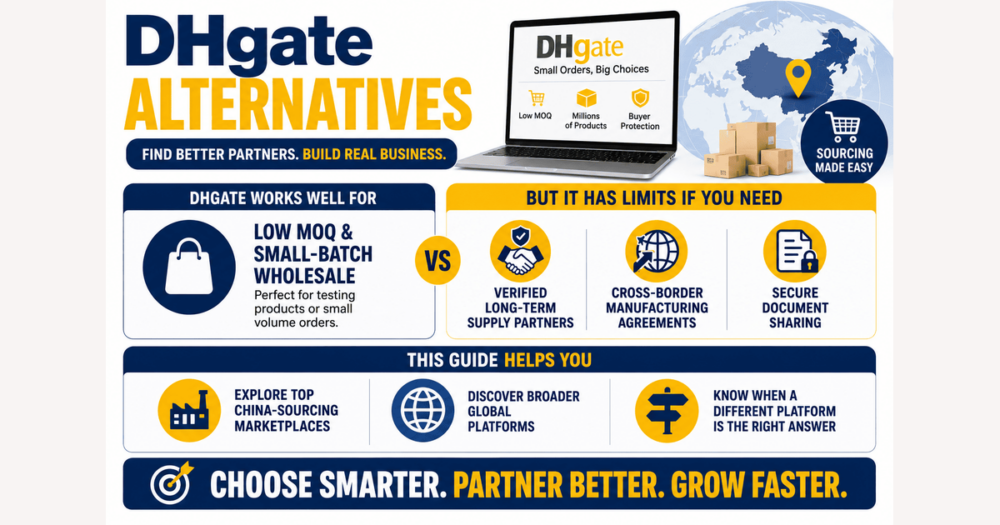
DHgate is a technology‑driven marketplace where many independent sellers, often based in manufacturing regions like China, list products while DHgate provides the digital infrastructure: secure payments, order tracking tools, messaging, and dispute handling. That structure is different from a single online store that owns and ships its own inventory, and it also differs from some familiar marketplaces because DHgate is heavily cross‑border and relies on platform‑managed tools such as escrow‑style payments and formal dispute cases. Once you understand that you’re buying from individual sellers inside this tech‑managed framework, it becomes easier to set realistic expectations about shipping times, customs, and after‑sales support—and to use DHgate’s systems to protect your order at each step.
What is a technology marketplace, and where does DHgate fit?
DHgate is a technology‑driven online marketplace, not a single store. In a regular online store, one retailer owns the inventory, sets prices, and ships directly to you. In a marketplace, many independent sellers list their own products, while the platform mainly provides the website, payment processing, and trading rules.
A technology marketplace is simply a more advanced version of that model. It leans on digital tools—automation, integrated payments, logistics partners, tracking, and dispute features—to coordinate large numbers of sellers and, often, cross‑border orders. The core idea is the same multi‑seller structure, but the technology layer makes it possible to handle more volume and more complex shipping routes.
DHgate fits this technology marketplace pattern by connecting global buyers with many mostly China‑based and other manufacturing‑region sellers. DHgate hosts their listings and provides platform‑level services such as secure payment handling, order status updates, messaging between buyers and sellers, and formal dispute tools. In most cases DHgate does not manufacture or own the products; individual sellers do.
For you as a buyer, two differences stand out compared with a generic marketplace. First, DHgate is strongly cross‑border, so shipping can take longer, customs may be involved, and delivery times and packaging can vary widely between sellers. Second, you rely heavily on DHgate’s built‑in tools—escrow‑style payment flow, on‑platform messaging, and structured disputes—rather than informal arrangements like direct bank transfers or off‑platform chats. You are always choosing specific sellers inside a tech‑managed environment, and later sections will break these differences down into logistics, payments, and after‑sales processes so you can see how they work in practice.
Key ways DHgate’s technology marketplace model differs from regular marketplaces
| Axis | DHgate technology marketplace traits | Generic online marketplace traits | What the buyer actually feels |
|---|---|---|---|
| Sellers and product focus | Many independent sellers, often factory‑linked or wholesale‑oriented and concentrated in manufacturing regions; listings can range from single pieces to bulk orders with varied presentation. | Mix of domestic retailers, brands, and small sellers across different categories; more emphasis on consumer‑ready retail products. | More variation in pricing, minimum order quantities, and listing clarity on DHgate; you need to read listings and seller policies more carefully to know exactly what you’re buying. |
| Logistics and cross‑border shipping | International shipping is common, often via cross‑border carriers or consolidators; transit times can be longer and customs steps may apply, especially for higher‑value or bulk orders. | Shipping often feels like standard domestic e‑commerce, with familiar carriers, shorter transit times, and fewer customs interactions for everyday purchases. | Delivery dates on DHgate are less uniform; you must check shipping methods, estimated delivery windows, and potential import duties instead of assuming local‑style speed. |
| Payment mediation and buyer protection | DHgate handles payments on the platform and uses an escrow‑style flow, holding funds until key order statuses are met and providing a structured buyer protection framework for non‑delivery or major issues. | Payments may be processed directly to the seller or through the platform, with protection tools that vary by site and sometimes rely more on card or wallet providers than marketplace‑specific escrow. | You think less about paying sellers directly and more about following DHgate’s order and confirmation steps, knowing that when problems arise you’ll work through platform‑level protection rules. |
| Dispute handling and platform role | Problems are managed through on‑platform messaging and formal dispute cases; DHgate reviews evidence from both sides and can intervene according to its policies. | Issue resolution may lean more on seller customer service or generic marketplace support, with differing levels of platform mediation and documentation requirements. | When something goes wrong on DHgate, you gather screenshots, tracking information, and messages inside the platform and open a dispute, rather than relying only on informal negotiation with the seller. |
| What stays similar across marketplaces | Multi‑seller environment with profiles, ratings, reviews, and order status updates. | Similar multi‑seller structure with feedback tools and status tracking. | You still compare sellers, read reviews, and watch order updates on both DHgate and other marketplaces; the big differences are DHgate’s cross‑border logistics and the way its platform‑mediated payment and dispute tools shape how you manage risk. |
How a typical DHgate order works from search to delivery
- Browse DHgate and search for what you need, then compare multiple listings for similar items. Check each seller’s ratings, transaction history, and recent reviews so you’re comfortable with who you’re buying from before you go any further.
- Choose your exact options and terms: select size, color, quantity or other variations, and review the shipping methods offered, estimated delivery windows, shipping costs, and any listing notes about customs, duties, or return conditions.
- Submit the order through DHgate’s checkout and pay on the platform rather than sending money directly to the seller. DHgate records the transaction, marks the order with an initial status such as “payment confirmed” or “awaiting shipment,” and uses that status to control what happens next.
- The seller receives the order in their DHgate account, confirms the details, prepares the items, and hands the package to a shipping partner. DHgate mainly provides the digital order record and tools for the seller to update the order status and add tracking information.
- As the parcel moves through the logistics network, you monitor progress from your DHgate order page. Status changes and, where available, carrier tracking numbers are pulled from external logistics systems, so updates can sometimes appear in batches or with gaps—especially on long international routes.
- For cross-border shipments, the package usually passes through customs in the origin and destination countries. Sellers or their logistics partners typically handle export and import paperwork, while buyers in many destinations may have to pay duties or taxes according to local rules and the chosen shipping method.
- Once the carrier delivers the package, you either confirm receipt on DHgate or the system eventually treats the order as delivered after a set period. That completion stage is closely tied to releasing payment from DHgate to the seller under its processes.
- If something goes wrong—no delivery, visible damage, or items that differ significantly from the description—you first contact the seller through DHgate’s messaging tools. If the issue isn’t resolved, you can open a dispute from the order page so DHgate can review messages, photos, and tracking and apply its buyer-protection rules.
- Throughout this journey you mainly interact with DHgate’s interface for search, checkout, statuses, tracking, and disputes, while sellers, carriers, and customs authorities handle inventory and physical movement. Knowing who owns each step helps you decide where to pay closest attention and which records to keep in case you ever need to prove a problem.
This embedded tutorial video walks through a typical DHgate interface flow—from searching and comparing listings to checkout, checking order statuses, finding tracking information, and locating dispute options. Use it to recognize where key tools appear on screen, rather than memorizing exact button labels or layouts, which can change over time.
How DHgate handles payments and buyer protection
On DHgate, you pay through the platform rather than sending money straight to the seller. When you complete checkout, DHgate’s system records the transaction, confirms your payment, and assigns an order status such as “awaiting shipment” or “payment confirmed.” Those statuses define what each party can do next—for example, whether the seller is expected to ship or whether you can still cancel.
Instead of immediately releasing funds, DHgate generally holds the buyer’s money until certain milestones—such as shipment followed by delivery or confirmation—are reached. This escrow-style structure is designed to reduce fraud risk by ensuring the seller isn’t paid in full before they’ve met basic obligations, while still giving them a clear path to get paid once the order is successfully completed.
From a buyer’s perspective, major status changes signal where your order sits in that flow: payment confirmed means DHgate has received your money; seller shipped or in transit indicates the package has been handed to a carrier; completed or closed typically means the transaction has reached its normal end; and a dispute in progress status shows that a formal problem-solving process is underway. These labels reflect both what the seller has done and how DHgate’s systems interpret tracking and timelines.
DHgate’s buyer protection policies are intended to cover issues like non-delivery and items that are significantly not as described, and in some cases certain quality problems. The exact eligibility rules, time limits, and required evidence are defined in DHgate’s official terms and can vary by situation, so it’s important to read those details rather than assuming every inconvenience will qualify for a refund.
If you need to challenge an order, you normally start from the order page: you submit a complaint or dispute, upload evidence such as photos of the item, screenshots of messages, and tracking information, and explain what went wrong. DHgate then reviews what both you and the seller provide and makes a decision under its rules, which can include refunds, partial refunds, or other outcomes tied to how the payment is being held.
Compared with some regular marketplaces that may pass funds to sellers more quickly or lean heavily on each seller’s own refund policy, this platform-managed payment and protection layer is a concrete way DHgate’s technology marketplace model shapes risk. It can work in your favor if you follow deadlines, keep clear records, and understand what the policy does and doesn’t cover, but it isn’t a guarantee that DHgate can recover money or overturn every problem—your success still depends on how well you use the tools and comply with the rules.
Practical checks for using DHgate confidently
- Before you order, review the seller’s reputation: look at overall ratings, the number of completed transactions, and recent reviews. On a multi-seller, cross-border marketplace like DHgate, this helps you avoid sellers with inconsistent quality or slow fulfillment.
- Read the listing carefully: check product specifications, photos, what is included in the package, available variations, and any notes about shipping time, warranty, or returns. This reduces misunderstandings that can be hard to resolve once the item is overseas.
- Confirm the shipping method and delivery estimate. Compare cheaper, slower options with faster services, and expect that cross-border orders on DHgate usually take longer and can be more variable than domestic ecommerce deliveries.
- Consider customs and total cost. Look for any mention of duties or taxes on the listing, and remember that some destinations may charge import fees on arrival depending on local rules and the shipping arrangement.
- Keep all communication on-platform. Use DHgate’s messaging tools for questions or clarifications so there is a clear record linked to your order if something later needs to be reviewed in a dispute.
- After placing an order, monitor order status and tracking. Check that the seller ships within the expected time, watch for tracking updates, and stay aware of buyer protection or confirmation deadlines that affect your ability to open a dispute before funds are released.
- Save evidence as you go, including screenshots of the listing and order details, plus key message threads. Having this ready makes it easier for DHgate to assess what happened if you need platform help.
- If problems arise, first contact the seller via DHgate messaging to try to resolve the issue directly. If it remains unresolved and deadlines are approaching, open a dispute through DHgate with clear evidence so the platform can apply its protection rules.
- Keep in mind why these habits matter: careful listing and shipping review helps manage cross-border logistics and customs expectations, while on-platform communication, status monitoring, and evidence storage ensure DHgate’s payment and protection tools can work as designed when something goes wrong.
Common risks and misconceptions about using DHgate
DHgate technology marketplace FAQs
Is DHgate itself the seller of the products I buy?
No. DHgate mainly operates as a technology marketplace that hosts many independent sellers. Those sellers create listings, set prices, hold inventory, and ship items, while DHgate provides the platform, payment processing, order tracking tools, and dispute mechanisms. When you place an order, you are buying from a specific seller through DHgate’s system, not from DHgate as a retailer, unless a listing explicitly states otherwise in DHgate’s own terms.
Who handles customs paperwork and duties for my order?
In most cross-border DHgate orders, the seller or their logistics partner handles export and import paperwork so the parcel can move through customs. Duties and taxes are set by the destination country’s rules and may be charged to you as the buyer, depending on the shipping method and local regulations. Some services may include duty prepayment, while others expect you to pay on arrival. Always check any customs notes in the listing and DHgate’s current help pages, and consider local import rules before you order.
What should I do if tracking stops updating for a long time?
Start by checking any linked carrier website using the tracking number shown on your DHgate order page; carrier systems sometimes show more detail than the marketplace view. If there is still no movement or the status is unclear, message the seller through DHgate and ask for an update or clarification. If the issue remains unresolved and you are approaching the end of the buyer protection or dispute window, open a dispute from the order page and include your tracking screenshots and message history so DHgate can review the case under its policies.
Can I rely on DHgate for quality control of individual items?
DHgate does not typically inspect or control the quality of every item sold on the platform. Quality and reliability depend on each independent seller and their suppliers. Your main tools for judging quality before ordering are seller ratings, transaction history, detailed reviews, and how clearly the listing describes specifications and inclusions. Use these signals to choose more reliable sellers and be cautious about offers that have limited feedback or vague descriptions.
What happens if a seller does not ship my order at all?
If a seller fails to ship within the timeframe defined by DHgate’s systems, the order status and protection rules usually allow for cancellation or a buyer-initiated dispute that can lead to a refund. In some cases, orders may auto-cancel if no shipment occurs; in others, you may need to open a dispute before protection expires. Watch the order status and estimated shipping time, and check DHgate’s latest buyer protection and order policy pages for the exact conditions and timelines that apply to your country and payment method.
Do DHgate’s answers apply uniformly across all countries and orders?
No. Many details—especially customs handling, who pays duties, dispute deadlines, and refund conditions—depend on DHgate’s current platform policies, the seller’s chosen shipping method, and local laws in the destination country. Treat the principles here as general guidance and always verify the latest DHgate terms, help articles, and your local regulations before assuming the same rules apply to every order or location.