
For Australian buyers used to grabbing Toppik or similar hair fibers from Chemist Warehouse or other local stores, DHgate can look like a tempting way to cut costs—but only if you understand how its overseas marketplace model changes the real price you’ll pay. This guide shows you how to treat DHgate as an alternative source for Toppik-style fibers, comparing total landed cost in AUD, delivery time and risk against your usual chemist options so you can decide when DHgate’s savings are genuinely worth the extra friction.
How this guide helps Australian buyers compare DHgate with local chemists
If you usually pick up Toppik or similar hair fibers from Chemist Warehouse, Priceline, supermarkets, or familiar Australian online stores, you’re not doing anything wrong—that’s the normal starting point for most buyers. Those local options will stay in the background of this guide as comparison points for price, delivery speed, and how easy returns feel, but the focus here is DHgate and other Toppik-style fibers rather than a store-by-store rundown of Australian retailers.
DHgate works differently from a local chemist: instead of one chain setting a single shelf price, you see many independent sellers listing similar hair fiber products, each with their own price, shipping approach, and return terms. That means DHgate can sometimes beat typical chemist prices on a per-bottle or per-use basis, especially if you’re willing to consider alternatives to the Toppik brand, but those savings usually come with trade-offs—slower delivery from overseas, more steps if you ever need a refund, and a stronger need to check seller feedback and listing details before you commit.
This guide is designed to help you compare that total “landed” cost in Australian dollars—including product price, shipping to Australia, and any fees—against your rough expectations for buying locally, without turning into a generic where-to-buy directory. The emphasis is on predictable overall cost, realistic delivery timeframes, and seller transparency rather than chasing the absolute cheapest sticker price at any risk. It explains how DHgate’s marketplace structure creates big differences between listings, how to factor pack size and what’s included into cost per use, and what practical checks on price, shipping, seller feedback, and disputes keep your order from becoming an expensive disappointment.
How DHgate’s marketplace model affects hair fiber prices and value
DHgate isn’t a single store with one official price for hair fibers; it’s a marketplace where many independent sellers list their own versions of Toppik-style products. Each seller sets their own product price, chooses shipping methods to Australia, and decides whether to sell individual bottles, multi-packs, or bundles with extras. That’s why two listings that look similar in a quick search can end up having very different total costs once you factor in shipping and what you actually receive.
Within that multi-seller setup, hair fiber listings commonly vary in bottle size (small trial bottles versus standard sizes and larger refills), colour range to match different hair shades, and whether accessories like applicators or hairline combs are included. Packaging and branding can also differ: some listings use plain, generic packaging, while others aim for more premium-looking designs. These visible differences don’t automatically prove how well a product works or whether it’s right for your hair; what they do change is how many applications you get from each bottle and how convenient the fibers are to apply.
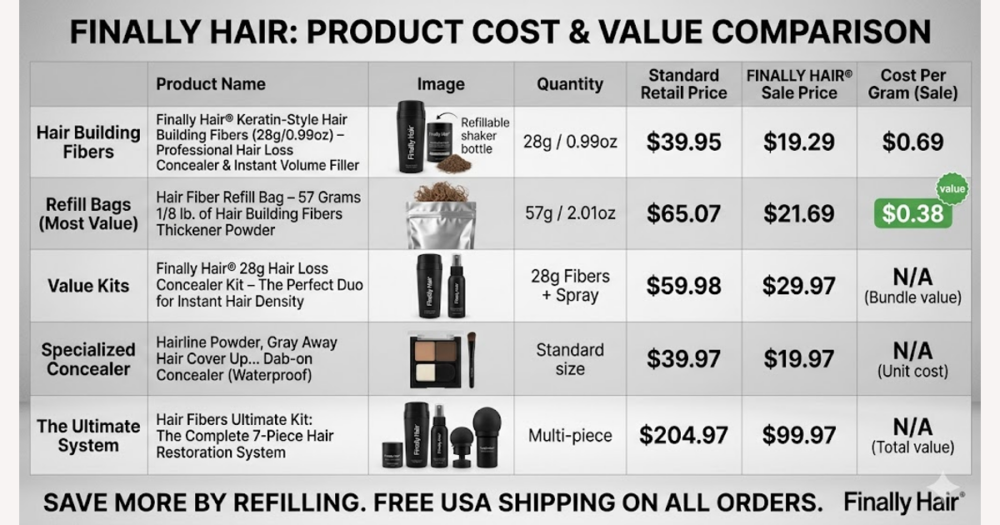
For cost optimisation, the key is unit value rather than the headline bottle price. A listing with a slightly higher upfront cost but a larger bottle, or a bundle that includes an applicator you would otherwise buy separately, can work out cheaper per use than a tiny, low-priced bottle that runs out quickly. Focusing on predictable cost per use—how far a purchase will actually go in your routine—fits better with DHgate’s varied marketplace than simply sorting by the cheapest sticker price. Apply that idea by combining pack size, what’s included, and shipping to Australia into a clearer view of what you’re really paying for each order.
A simple way to compare total landed cost for hair fibers on DHgate
- Identify the basics of the listing: note the bottle size in grams or millilitres and whether any accessories are included, such as an applicator or hairline comb. That tells you what you’re actually getting for the price.
- Look at the item price and, if sizes differ, translate it into a rough cost per gram or millilitre. For example, a slightly more expensive larger bottle may work out cheaper per unit than a small, low-priced one that runs out quickly.
- Add the shipping cost to Australia to the item price. Check whether shipping is free or paid and whether there are different shipping methods with different speeds and prices, then use the combination that makes sense for you.
- Check the estimated delivery window to Australia and decide whether it fits your routine. If you rely on hair fibers daily, factor in what happens if the order takes several weeks and you’re close to running out.
- Where DHgate shows totals in AUD, base your comparison on that figure. If prices appear in another currency, remember that exchange rates and bank conversion fees can move slightly, so leave a small buffer in your budget rather than planning down to the last cent.
- For a single, low-value bottle, border charges such as duties may be unlikely, but if your total order value climbs (for example, multiple bottles shipped together), treat possible import taxes and fees as a variable to check against current Australian rules rather than assuming they never apply.
- Once you have your DHgate landed cost (item price plus shipping, any likely taxes, and delivery time), compare it with your rough memory of what you pay per bottle locally and the convenience of near-immediate availability. Choose the option that gives you a predictable total cost in AUD and a delivery window you’re comfortable with, even if that means accepting a slightly higher unit price instead of chasing the absolute cheapest-looking deal.
When DHgate beats local chemists on hair fibers—and when it doesn’t
The real comparison between DHgate and local chemists or domestic marketplaces comes down to three things: how much you pay per gram of hair fibers, how quickly you receive them, and how simple returns or exchanges feel if something isn’t right. DHgate can offer lower per-unit prices and more variety because multiple sellers compete, but that usually means slower delivery from overseas and more steps if you need to resolve a problem.
DHgate tends to make sense when you’re comfortable waiting longer for delivery, you’re buying enough quantity that savings per gram will add up over time, or you’re exploring alternative brands and bottle sizes that aren’t easy to find on local shelves. If you already know that Toppik-style fibers work for you, using DHgate’s wider range to find a larger refill bottle or a better value bundle can be a reasonable trade-off: you accept slower shipping and a bit more effort upfront in exchange for a lower ongoing cost per use.
Local options often win when timing and simplicity matter more than squeezing the last few dollars out of your budget. If you need fibers quickly for an event next week, prefer familiar Australian consumer protections, or feel uneasy about any uncertainty in packaging, colour, or branding, buying from a local chemist or major pharmacy chain keeps things straightforward: you pay a bit more per bottle, but you get near-immediate delivery and easier in-person returns if the product isn’t what you expected.
In practice, DHgate is most attractive when its savings and variety clearly outweigh the slower shipping and extra friction. Small savings rarely justify a lot of hassle. I would personally skip DHgate listings that look vague, use unclear branding, or don’t explain sizes and colours properly, even if they appear cheaper than local options. In situations where I care more about predictable delivery and clean, simple returns—like topping up before a busy period—I’d be happy to pay local chemist prices rather than gamble on a slightly lower headline figure from a listing that doesn’t feel solid enough.
Checking DHgate listings and sellers for reliable hair fiber orders
Once you’ve decided that DHgate is worth considering for hair fibers, treat each listing as a small risk assessment rather than just a price tag. Start with the product details themselves. Listings that show clear, well-lit photos of the bottle, packaging, and any colour charts make it easier to see what you’re actually buying. Look for specific information about size or weight, how many bottles you get, and straightforward claims about coverage and wear, rather than vague promises or glossy slogans.
Read the description with the same cost-conscious mindset. Consistent colour naming, simple explanations of how the fibers are meant to be used, and clear ingredient information (even if you’re not analysing it in depth) all signal that the seller has put effort into presenting the product honestly. These details don’t guarantee quality, but they reduce the chance that you’ll be surprised by tiny bottles, odd colours, or confusing packaging when the order arrives.
Seller-level signals matter too. On DHgate, independent sellers have their own track records. Pay attention to the overall rating, how many orders the seller has completed, and whether the specific hair fiber listing shows a meaningful number of transactions. Recent reviews that include buyer photos or comments about packaging and delivery are particularly useful, because they give you a sense of how the listing performs in practice, not just in theory.
In practical terms, a moderately priced listing from a seller with plenty of completed orders and detailed, recent reviews is usually a safer bet than an ultra-cheap listing from a new or barely reviewed seller. If I see a listing where the price is low but the seller has a long history and buyers consistently mention getting what they expected, I’m more comfortable trading a small amount of extra cost for that track record instead of chasing the absolute lowest headline figure.
By contrast, treat very low-priced but vague listings as high-risk. Generic or unclear branding, minimal or stock-looking photos, almost no information about bottle size or contents, and obviously exaggerated promises are all warning signs. Inconsistent details between the title, photos, and description—for example, different sizes or colour names—suggest poor quality control. When several of these red flags appear together, it’s sensible to walk away, even if the price looks amazing, and either choose a clearer listing from a more established DHgate seller or default to familiar local chemists.
There are limits to what these signals can tell you. Reviews are anecdotal and can be biased, and even highly rated sellers occasionally have issues. Ratings and feedback don’t guarantee perfection; they simply help you tilt the odds in your favour when combined with listing clarity and realistic expectations.
Given that hair fibers are a recurring purchase, I would rather pay a little more for a transparent listing from a seller with a solid track record than gamble on the very cheapest option that tells me almost nothing. That approach keeps the overall cost predictable and reduces the chance of wasting money on a disappointing order, which matters more to me than shaving off the last dollar on paper.
Payment, currency, and shipping checks before you confirm your DHgate order
- Confirm the total price including shipping in the currency shown. When DHgate displays amounts in AUD, use that figure as your baseline. If the price is shown in another currency, remember that your bank or card provider may add conversion fees or small variations, so allow a little buffer in your budget.
- Check which shipping method is selected by default and whether alternatives are available. A slightly higher shipping fee can be worthwhile if it comes with tracking or a faster, more reliable delivery option to Australia, especially when you plan to rely on these fibers regularly.
- Review the estimated delivery date range for Australia and decide whether it matches when you’ll actually need the fibers. If you want to use DHgate instead of local chemists, ordering earlier than you would domestically helps you avoid last-minute stress when overseas shipping takes longer than expected.
- Verify your delivery address details and any tracking options attached to the order. Accurate address information and active tracking make it easier to monitor the parcel and act quickly if something seems off, such as a stalled shipment or an unexpected routing.
- Use a recognised, secure payment method and keep all order and payment communication inside DHgate. Having everything recorded on the platform makes it simpler to raise a dispute later if the charge or the delivered goods don’t match what was promised.
- Run these checks every time you place a DHgate hair fiber order so the total cost and timing feel predictable rather than risky. The goal isn’t to unlock hidden discounts, but to avoid surprise charges and delivery delays that can erase the savings you were aiming for in the first place.
Using DHgate disputes and refunds if your hair fibers aren’t as described
DHgate’s dispute and refund system is designed to step in when an order doesn’t match what was promised, never shows up, or arrives far outside the stated delivery window. For hair fibers, that typically means you may be able to open a dispute if the product is significantly different from the listing—such as the wrong colour, a noticeably smaller bottle than the size advertised, missing accessories from a bundle, or packaging that arrives badly damaged—if the parcel doesn’t arrive at all, or if it arrives much later than the estimated timeframe shown when you ordered.
When something looks wrong, treat the situation like a small documentation project. Take clear photos of the product and its packaging, ideally next to anything that shows size or quantity. Keep screenshots or saved copies of the original listing details, including colour, weight or volume, and any promised extras like applicators or combs. Hold onto tracking information and delivery confirmations as well. DHgate generally expects both buyer and seller to provide evidence during a dispute, so having everything organised from the start strengthens your case and speeds up the review.
Always handle communication inside DHgate’s messaging system rather than moving to private email, social media, or messaging apps. Start by explaining the issue to the seller through the platform and sharing your evidence there. If you later open a formal dispute, that in‑platform message history becomes part of the record DHgate can review, which is much more useful than screenshots of conversations that took place elsewhere.
Outcomes from disputes vary. In some cases a seller may offer a partial refund to compensate for problems like minor packaging damage or a missing accessory; in others, you might receive a full refund or a replacement shipment if the product is clearly not as described or fails to arrive. The exact result depends on DHgate’s current policies, the strength of the evidence from both sides, and how clearly the issue fits the platform’s buyer protection rules. Even with those protections in place, using the dispute process takes time, patience, and some back‑and‑forth, so it’s best seen as a safety net rather than a guarantee of a friction‑free experience.
All of this connects back to earlier advice: choosing clearer listings with precise size and colour information, realistic photos, and established sellers with solid feedback greatly reduces the chances you’ll need to open a dispute at all. If something does go wrong, that same care—plus good documentation and keeping everything on DHgate—helps you protect the value of what you’ve spent on hair fibers, instead of letting a disappointing order erase the savings you were aiming for.
FAQ: Order size, shipping savings, and sticking with local stores
Are tiny test bottles of hair fibers on DHgate worth the higher cost per gram?
They can be, but only in specific situations. Paying more per gram for a very small bottle makes sense when you’re testing a new colour or unfamiliar formula and don’t want to commit to a full-size product that might sit unused. Once you know you’ll use hair fibers regularly and you’re happy with the type and shade, standard or larger bottles usually offer better value because the cost per use drops and you’re spreading shipping over more product.
Should I combine multiple items or brands in one DHgate order to save on shipping to Australia?
Combining items can lower the apparent shipping cost per product, especially when a seller offers one shipping fee for several bottles or bundles. The trade-off is that the total order value rises, which can make any potential taxes or fees more relevant and means you’re tying up more money in a single shipment. It’s sensible to check how shipping scales for that seller—whether extra items add only a small amount or push you into a higher bracket—and avoid over-ordering just to chase a small saving that doesn’t clearly outweigh the extra spend and risk.
If DHgate only saves a little compared with local chemist prices, is it really worth using?
Not necessarily. If the landed cost difference between DHgate and your usual chemist is modest and you care more about fast delivery, predictable packaging, and simple returns, it’s perfectly reasonable to keep buying locally. In that scenario, treating DHgate as an occasional alternative—such as when you’re planning ahead, ordering larger quantities, or seeing a clearly better-value bundle from a solid seller—lets you use the marketplace when it genuinely helps your budget without turning every refill into a complex cost comparison.
How often should I re-check DHgate prices against local Australian options for hair fibers?
Prices, exchange rates, and promotions change over time, so it’s worth re-running a quick landed-cost comparison when you’re planning a larger restock or notice local prices shifting. For small, routine top-ups, relying on your existing sense of the price gap may be enough. When you’re about to spend more—multiple bottles, accessories, or a higher-value bundle—taking a moment to compare DHgate’s total in AUD (including shipping and timing) with current local prices can prevent you from assuming an old saving still exists when the balance has moved.
How should I decide between DHgate and local stores over the long term for hair fibers?
Think of the choice as a balance between timing, budget, and tolerance for hassle rather than a fixed rule. DHgate tends to make sense when you’re comfortable planning ahead, buying enough quantity for savings to add up, and putting a bit of effort into seller checks and landed-cost calculations. Local chemists and Australian marketplaces tend to win when you value speed, simple returns, and minimal admin. The framework in this guide—looking at cost per use, shipping, seller clarity, and buyer protections—should make those trade-offs easier to see, so you can switch between DHgate and local options depending on what matters most for that particular order.