
At a Glance
Luxury and fashion dupes sit in a grey area between high-end designer pieces and fast fashion. They can be:
- Legal lookalikes that take inspiration from trends and silhouettes without copying logos or protected design elements.
- Illegal counterfeits that misuse trademarks, logos, and brand names to pass off as the real thing.
This guide helps you:
- Understand what dupes are and how they differ from counterfeits.
- Compare discovery routes across platforms (official retail, secondhand, fast fashion, cross-border marketplaces).
- Decide when a marketplace like DHgate is useful for browsing and narrowing options.
- Apply a practical verification checklist before you buy.
Use this as a decision framework: not to encourage risky buying, but to help you recognize safer, legal alternatives and avoid counterfeit traps.
What the Product Category Covers
What is a “Dupe”?
In fashion and luxury, a dupe (short for “duplicate”) usually means:
- A product that resembles a popular designer item in style, color, or silhouette.
- Sold at a much lower price.
- Marketed as “inspired by,” “similar to,” or “lookalike,” not as the original brand.
Examples:
- A structured top-handle bag with a similar shape to a famous luxury bag, but with a different brand name and no copied logo.
- Sunglasses with a comparable frame style to a designer pair, but clearly branded under a different label.
- Heels that echo the shape and heel height of a luxury shoe, but with distinct branding and details.
Dupes vs Counterfeits
A legal dupe:
- Has its own brand name.
- Does not use the original brand’s logo, monogram, or trademark.
- Avoids distinctive protected design elements (like signature patterns or shapes that are trademarked).
- Is marketed as “similar to” or “inspired by,” not as the original.
A counterfeit:
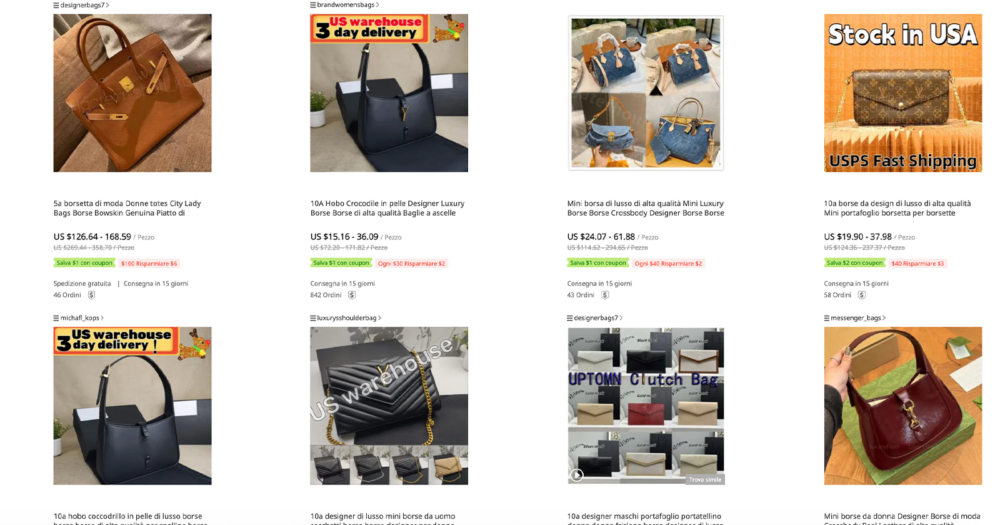
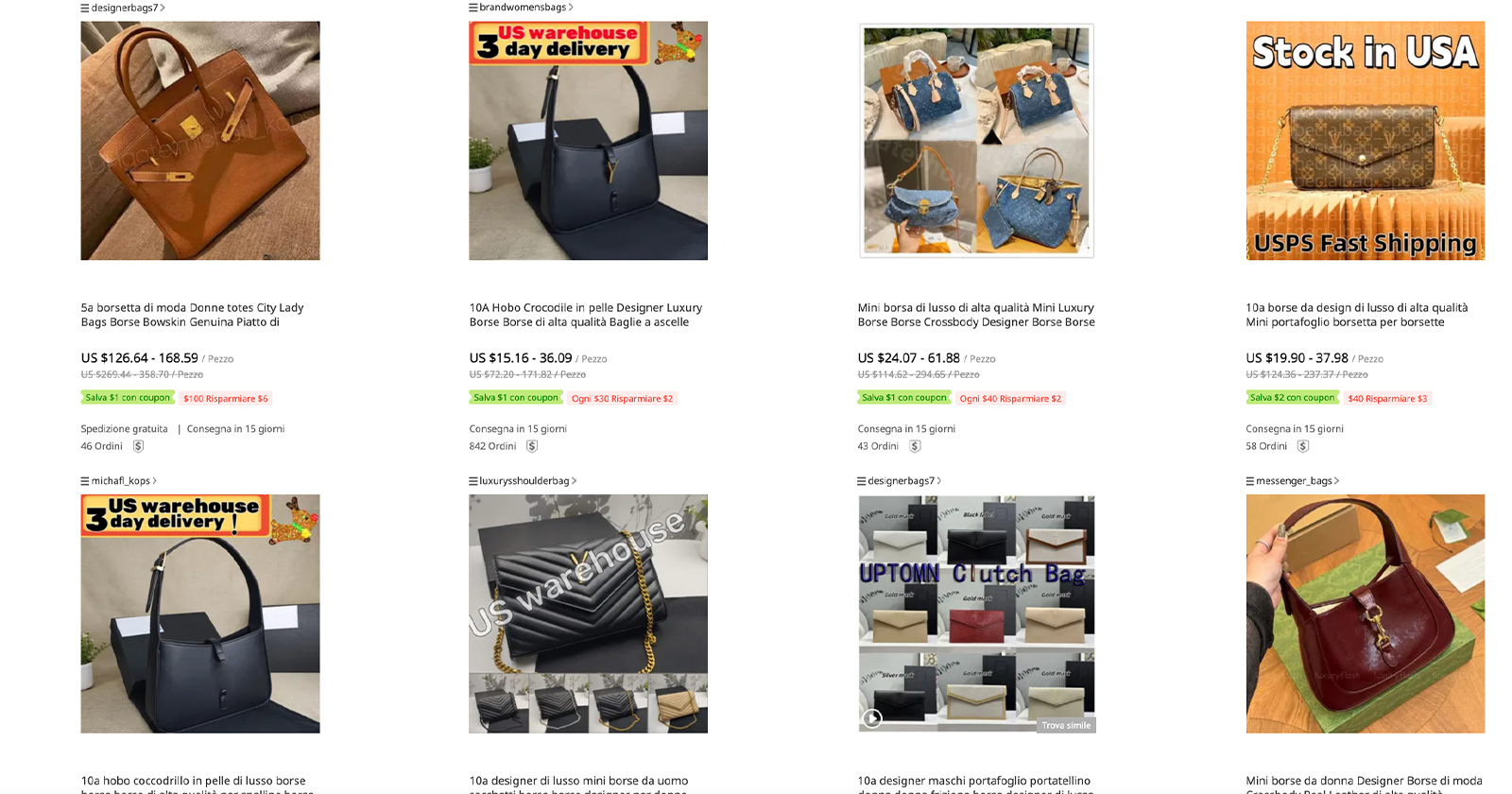
- Uses the same logo, name, or monogram as the original brand without authorization.
- Often copies packaging, tags, and authenticity cards.
- Is marketed or presented as the original brand to mislead buyers.
- Violates trademark and often copyright or design protection laws.
Product Types Commonly “Duped”
You’ll see dupe culture most often around:
- Handbags & small leather goods – structured totes, mini bags, card holders.
- Shoes – sneakers, heels, boots.
- Accessories – sunglasses, belts, scarves, jewelry.
- Apparel – blazers, dresses, knitwear with designer-like cuts or prints.
- Beauty & fragrance “inspired by” – similar scent profiles or packaging aesthetics (with extra caution needed).
Not all “similar” products are dupes. Sometimes brands independently follow the same trend. The key is whether the product is marketed or perceived as a cheaper stand-in for a specific luxury item.
How to Compare Options
When you’re deciding between authentic luxury, dupes, and other alternatives, think in terms of trade-offs:
1. Legality & Risk
-
Authentic from official retail
Lowest legal risk. You’re buying directly from the brand or authorized partners. -
Legal dupes from reputable brands or retailers
Generally low legal risk if they avoid logos and protected design elements. -
Counterfeits from unverified sellers or marketplaces
High legal and ethical risk. In some countries, buying or importing counterfeits can have legal consequences.
2. Price vs Longevity
- Authentic luxury: Highest price, often longest lifespan if cared for.
- Legal dupes: Moderate to low price, quality varies widely.
- Fast fashion lookalikes: Lowest price, often shorter lifespan.
- Secondhand authentic: Mid to high price, but can be good value if verified.
3. Ethics & Sustainability
- Authentic luxury: Often better materials and craftsmanship, but not always transparent on sustainability.
- Legal dupes: Depends on the brand; some are responsible, others are purely trend-driven.
- Counterfeits: Typically poor labor and environmental standards, no accountability.
- Secondhand authentic: Strong sustainability angle (reuse, circular fashion).
4. Shopping Experience & Support
- Official retail: Clear returns, warranties, and after-sales support.
- Major fashion retailers: Standardized customer service and return policies.
- Cross-border marketplaces (including DHgate):
- Wide assortment and price range.
- Experience and support vary by seller and region.
- You must do more self-verification.
5. Style Accuracy vs Safety
- If you want a perfect match to a specific luxury item, you’re more likely to drift into counterfeit territory.
- If you’re happy with “inspired by” style, you can stay in safer, legal dupe territory.

Comparison Matrix
Use this matrix to compare common routes for luxury-inspired fashion.
| Route / Option | Typical Price Range | Style Accuracy vs Designer | Legal / Ethical Risk Level | Quality & Durability | Reviews / Trust Signals | Best For |
|---|---|---|---|---|---|---|
| Official brand retail | Very high | Exact | Very low | High | Brand reputation, official site | Long-term investment, full brand experience |
| Authorized department / specialty store | High | Exact | Very low | High | Store reputation, in-person inspection | Authentic pieces with curated service |
| Verified secondhand / resale platforms | Medium–high | Exact (pre-owned) | Low–medium (depends on authentication) | Medium–high | Authentication tags, platform policies | Value-conscious buyers wanting real designer items |
| Mid-range brands with “inspired” designs | Medium | Moderate | Low (if no logos copied) | Medium | Brand history, retailer reviews | Trendy looks with better quality than fast fashion |
| Fast fashion retailers (designer-inspired) | Low | Low–moderate | Low–medium (watch for logo misuse) | Low–medium | Large volume of reviews, easy returns | Quick trend adoption, low budget |
| Cross-border marketplaces (e.g., DHgate, others) | Very low–medium | Low–high (varies by seller) | Medium–high (risk of counterfeits if not careful) | Highly variable | Seller ratings, buyer photos, external research | Price-sensitive buyers willing to research and compare |
| Independent designers / small labels | Medium–high | Low–moderate (unique twist) | Very low | Medium–high | Brand story, social media presence | Supporting creativity while getting distinctive pieces |
Key takeaway: The more exact the imitation, the higher the risk of crossing into counterfeit territory. Legal dupes usually sit in the “mid-range brands” and “fast fashion inspired” categories, plus some offerings on cross-border marketplaces when they clearly avoid logos and brand names.
Who This Route Fits Best
Choosing dupes or alternatives is about matching your priorities:
1. Style-First, Budget-Conscious
You care most about the look, not the label.
- You’re comfortable with “designer-inspired” pieces.
- You’re willing to compromise on materials and longevity.
- You’ll likely browse fast fashion, mid-range brands, and some marketplace options.
2. Value-First, Brand-Aware
You want the brand story and craftsmanship but at a better price.
- You’re open to secondhand authentic pieces.
- You may mix one or two authentic items with more affordable dupes.
- You’ll spend time verifying authenticity on resale platforms.
3. Risk-Averse, Service-Oriented
You want clear warranties, returns, and minimal hassle.
- You prefer official retail or well-known authorized stores.
- You avoid cross-border marketplaces for high-ticket items.
- You treat dupes as occasional purchases from reputable local or online retailers.
4. Explorer, Comfortable with Research
You enjoy hunting for deals and comparing options across platforms.
- You’re willing to read reviews, check seller histories, and verify details.
- You might use marketplaces like DHgate as discovery tools to understand price ranges and styles.
- You still avoid anything that looks like a counterfeit (logos, brand names misused).
If you’re in group 4, this guide’s marketplace and verification sections will be especially relevant.
Where DHgate Fits Naturally
DHgate is one of several cross-border marketplaces where you can browse a wide range of fashion products from different suppliers. It fits naturally in scenarios where:
1. You’re Comparing Price and Style Across Borders
- You want to see how much similar-looking bags, shoes, or accessories cost from different suppliers.
- You’re curious about global price ranges for designer-inspired silhouettes.
- You treat DHgate as a reference point rather than your only source.
2. You Need Assortment Breadth
- You’re exploring a specific trend (e.g., mini top-handle bags, chunky sneakers).
- You want to see many variations in color, material, and design.
- You use filters and search terms like “structured handbag,” “square-toe heels,” or “chunky sneakers” rather than brand names.
3. You’re Narrowing Down Dupe Options Before Buying Elsewhere
- You browse DHgate to understand what styles exist and what features matter to you (size, strap length, hardware color).
- You then decide whether to buy from a local retailer, a mid-range brand, or a marketplace seller based on your risk tolerance.
4. You’re Comfortable With Extra Verification Steps
- You’re willing to:
- Read seller reviews carefully.
- Examine buyer-uploaded photos.
- Avoid listings that show or mention luxury logos or brand names.
- You understand that quality and legality vary by seller, so you treat each listing as a separate decision.
DHgate is not the best fit when:
- You want official brand warranties or guaranteed authenticity.
- You’re buying high-value items where after-sales support is critical.
- You prefer regulated, brand-authorized channels.
In those cases, official retail, authorized stores, or verified resale platforms are safer routes.
Verification Checklist
Use this checklist whenever you’re considering a dupe or designer-inspired item, especially on marketplaces.
1. Logo & Branding Check
- Does the product show a luxury brand logo or monogram?
- If yes, treat it as likely counterfeit and avoid.
- Does the listing use brand names in the title or description in a way that suggests it’s the original?
- Phrases like “same as [brand]” or “[brand] style” can be red flags.
- Legal dupes should have their own brand name or be clearly unbranded.
2. Listing Photos & Description
- Are photos clear and consistent, or do they look copied from official brand sites?
- Does the product have distinctive differences from the designer item (hardware shape, logo placement, pattern)?
- Is the description focused on materials, dimensions, and features rather than brand comparisons?
3. Seller Reputation
- Check:
- Overall rating.
- Number of transactions.
- Recent reviews (last 3–6 months).
- Look for:
- Buyer photos showing the actual product.
- Comments about quality, shipping time, and accuracy of description.
- Be cautious with new sellers with few reviews, especially for items that resemble luxury products.
4. Price Sanity Check
- Compare the price to:
- Official retail price of the designer item.
- Mid-range brand alternatives.
- If a product claims to be the original brand at a tiny fraction of the usual price, it’s almost certainly counterfeit.
- Legal dupes are cheaper, but not implausibly cheap for the materials used.
5. Platform & Policy Awareness
- Understand the platform’s:
- General stance on counterfeit goods.
- Reporting mechanisms for suspicious listings.
- Don’t rely solely on platform policies; your own judgment is crucial.
6. Personal Risk Tolerance
Ask yourself:
- Am I comfortable with potential quality variation?
- Am I okay if the item doesn’t match the photos perfectly?
- Would I be disappointed if this turns out to be unusable or very low quality?
If your answers lean toward “no,” prioritize more regulated channels.
Decision Framework: Dupes vs Authentic vs Secondhand
Use this simple framework to decide which route makes sense for a specific item.
| Scenario / Priority | Authentic Retail | Verified Secondhand | Legal Dupe (Retail / Marketplace) | Not Recommended |
|---|---|---|---|---|
| You want a long-term investment piece (daily bag, coat) | Strongly consider | Consider | Consider for trend testing | Counterfeits |
| You want a trend piece you’ll wear for one season | Optional | Optional | Strongly consider | Counterfeits |
| You care deeply about brand heritage & craftsmanship | Strongly consider | Strongly consider | Limited fit | Counterfeits |
| You have a strict budget but want the “look” | Rarely feasible | Sometimes feasible | Strongly consider | Counterfeits |
| You prioritize sustainability and ethics | Consider | Strongly consider | Consider responsible brands | Counterfeits |
| You dislike risk and hassle | Strongly consider | Consider (with authentication) | Consider reputable retailers | Counterfeits |
General guidance:
- Start with authentic or secondhand for pieces you’ll use heavily and for many years.
- Use legal dupes for trend-driven items or when you’re testing a style.
- Avoid counterfeits entirely: they carry legal, ethical, and quality risks that rarely justify the savings.
FAQ
Are dupes legal?
Dupes can be legal if they:
- Do not use protected logos, brand names, or monograms.
- Avoid copying distinctive, trademarked design elements.
- Are marketed as separate products, not as the original brand.
However, laws vary by country, and some design elements may be protected even without logos. When in doubt, choose products that clearly have their own identity.
How can I tell if a product is a counterfeit?
Common signs:
- Uses the exact brand logo or name of a luxury brand without being sold through authorized channels.
- Claims to be “authentic” at a price far below normal retail.
- Uses official brand photos or packaging images.
- Seller avoids clear answers about origin or authenticity.
If you see these signs, treat the product as likely counterfeit and avoid.
Is it safe to buy dupes on marketplaces like DHgate?
Safety depends on:
- The specific seller.
- The product type.
- Your verification steps.
To reduce risk:
- Avoid any listing that uses luxury logos or brand names.
- Focus on generic or clearly independent brands.
- Check reviews and buyer photos carefully.
- Accept that quality can vary and that you may need to treat marketplace purchases as experimental rather than guaranteed.
Are “inspired by” fragrances and beauty products okay?
“Inspired by” fragrances and beauty products are common, but:
- They may not match the original in performance or safety.
- Ingredient transparency is crucial, especially for skin-contact products.
- Always check:
- Ingredient lists.
- Brand reputation.
- Regulatory compliance in your region (e.g., EU, US, UK standards).
If you have sensitive skin or allergies, prioritize established brands and consult professionals when needed.
What search terms should I use to avoid counterfeits?
Instead of brand names, use:
What to Do Next
Use this checklist to put the guide into action right away:
| Goal | Quick Actions |
|---|---|
| Avoid counterfeits | Stop searching by brand names + “dupe”; use style-based terms instead. |
| Find legal lookalikes | Search for “structured top handle bag,” “chunky chain loafers,” etc. |
| Test a trend affordably | Use marketplaces like DHgate for generic, logo-free pieces with strong reviews. |
| Build a long-term wardrobe | Prioritize authentic or verified secondhand for daily-use items. |
| Shop marketplaces more safely | Filter by ratings, read buyer photos, and avoid listings showing logos. |
Action steps:
- Pick one item you’re considering (bag, shoes, sunglasses).
- Decide your route using the scenario table: authentic, secondhand, or legal dupe.
- Refine your search terms to describe the style, not the brand.
- Compare 3–5 options across retailers and marketplaces, checking reviews and photos.
- Set your boundaries: no logos, no “authentic” claims at suspicious prices, clear return policy.
By combining smart search habits with careful marketplace use, you can enjoy the look of luxury, stay on the right side of the law, and make purchases that genuinely fit your budget and values.