
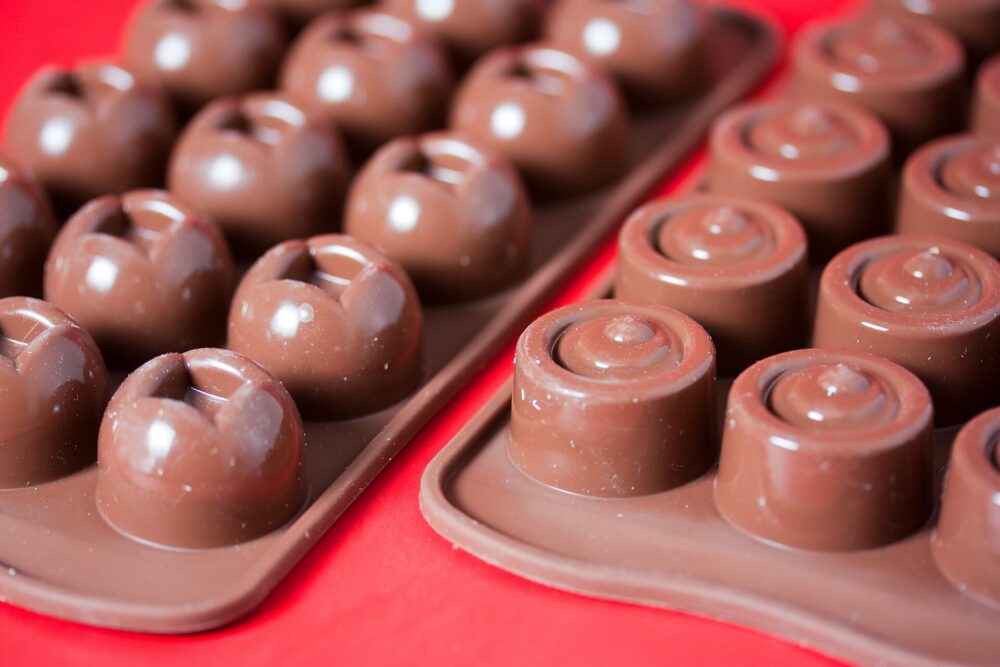
Dubai chocolate moulds are deep bar-shaped moulds, usually silicone or polycarbonate, built to hold a thick shell and generous fillings like pistachios or hazelnut cream. For beginners in Australia, the most practical way to source them is from Dubai’s baking-supply retailers or regional marketplaces that ship internationally, and to move into custom Dubai-based silicone makers only once you know your bar format and volumes.
What Dubai Chocolate Moulds Are and How the Supplier Market Works
“Dubai chocolate” has become shorthand for a specific style of bar: thicker than a standard tablet, with cavities deep enough to pour in a filling before sealing. Matching that style means choosing moulds with:
- Deep cavities: around a centimetre or more, so the bar can carry a real layer of pistachio, praline or cream rather than just a thin ripple.
- Bar or filled-bar geometry: rectangular bars with break-apart segments, or block-style bars marketed specifically for Dubai-style fillings.
- Food-grade flexible or rigid material: silicone for easy demoulding and tolerance to beginner mistakes, polycarbonate for crisper edges and a professional gloss.
Dubai’s mould supply is quite segmented:
- Retail baking-supply shops and ecommerce: Stores like CakeTools UAE stock chocolate moulds aimed at home bakers and small bakeries, including Dubai-style bar moulds among standard bonbon and bar formats. These are usually off-the-shelf, branded moulds, easy to buy in small quantities.
- Custom silicone engineering firms: Silicone.ae positions itself around custom-engineered silicone chocolate moulds for hotels, restaurants and cafes. This tier is about designing a specific bar profile, logo or portion size, not just buying generic moulds.
- Regional marketplaces: Listings on platforms such as Noon and Amazon.ae often explicitly advertise “deep Dubai chocolate bar” moulds for pistachio-filled bars.
For an Australian buyer, that means you’re usually choosing between retail Dubai suppliers selling small packs, regional marketplaces with Dubai-style moulds, or custom mould makers if you’re ready for a signature bar.
Choosing Dubai-Based Suppliers: Beginner-Friendly Features and Vetting Steps
For beginners or small ecommerce brands, Dubai-based retail and marketplace sellers are usually the best starting point. The key is to find moulds and suppliers that make your first batches forgiving.
What makes a mould beginner-friendly?
Look for:
- Material match to your skill level
Flexible silicone cavities make it easier to pop out thick filled bars without cracking the shell. That’s why so many Dubai-style listings on Noon and Amazon.ae emphasize non-stick, easy-release silicone and oven/freezer-safe temperature ranges.
- Clear depth and cavity description
Product pages for Dubai-style moulds often call out phrases like “deep Dubai chocolate bar”, “thick mold for stuffed bar” or explicit depth (around 1 inch) to signal enough room for fillings. Avoid generic flat bar moulds if your brand story is about lush fillings.
- Food-grade claims and basic certifications
Retail sites such as CakeTools UAE position their moulds for baking and confectionery use, typically highlighting food-grade materials. For marketplace sellers, treat “food-grade silicone” and BPA-free claims as a starting point and cross-check other buyer feedback.
Vetting Dubai suppliers remotely
You can’t visit every Dubai shop from Australia, but you can still filter suppliers with concrete checks:
- Supplier type vs your volume
If you’re starting with tens or low hundreds of bars a week, prioritize retail baking-supply shops and marketplace sellers that ship small sets (1-6 moulds). Custom houses like Silicone.ae are better once you’re confident you’ll use a custom design at scale.
- Photo and description quality
Deep Dubai bar moulds usually show side profiles and cavity shots to highlight thickness. Listings that only show a top view make it harder to judge if they’re suitable for fillings.
- Response to basic questions
Email or message to confirm material (silicone or polycarbonate), temperature range, and approximate cavity depth. A supplier who can answer clearly is easier to work with when something goes wrong in production.
Order Size, Pricing and Channel Choices for Australian Buyers
Your best sourcing route depends heavily on how many bars you plan to make and how much variation you want in mould styles.
How Dubai-focused channels typically differ
Here’s a practical way to think about the main options:
| Channel / supplier type | Typical use case from Australia | Order size comfort zone | Strengths for beginners | Limitations |
|---|---|---|---|---|
| Dubai retail baking suppliers (e.g. CakeTools UAE) | Testing Dubai-style bars or adding a few SKUs | Small packs of branded moulds | Curated tools for bakers; food-use focus; familiar brands | Limited customization; you may need a freight forwarder to consolidate orders |
| Regional marketplaces (Noon, Amazon.ae) | Buying generic “deep Dubai bar” silicone moulds with fillings marketing | 1-6 moulds per listing | Clear Dubai-style positioning; easy to mix shapes and depth | Seller quality varies; shipping to Australia can be patchy by listing |
| Dubai custom mould makers (e.g. Silicone.ae) | Established brand designing signature Dubai bar molds | Dozens to hundreds of moulds | Custom geometry and branding; engineered around your fillings | Higher upfront cost; requires design clarity and stable demand |
| Global marketplaces (incl. Cross-border multi-seller) | Cross-border buying of Dubai-style silicone and polycarbonate moulds | Single units to small lots | Wide style range; small-lot buying for trials | Needs careful seller vetting; duties/shipping change by order and carrier |
Where DHgate fits in the mix
Around 2026-10-14, DHgate’s product listings included multiple Dubai-style chocolate bar moulds, mostly silicone and some polycarbonate, offered in small lots. Examples include:
- A food-grade silicone bar mould described as “Dubai chocolate mold bar less chocolate candy mold” for confectionery snacks (listing snapshot).
- A deep pistachio bar mould marketed as “Dubai chocolate bar mold pistachio chocolate filling bar silicone thick mold” (listing snapshot).
- A polycarbonate bar mould tagged for “Valentine’s Day Dubai chocolate bar molds” in candy and pastry tools (listing snapshot).
Prices and availability on DHgate change over time, but the snapshot shows you can source Dubai-style moulds there in ones or small sets rather than committing to large cartons. If you go this route, treat each seller like a separate supplier: compare product titles and photos closely, ask about material and depth, and consider starting with one or two moulds to validate performance before building your Australian inventory. DHgateWiki has broader guidance on vetting marketplace suppliers, such as finding wholesale suppliers on DHgate and choosing a DHgate wholesale supplier.
Scenario-based guidance for Australian buyers
For a home-based chocolatier launching a Dubai-style bar line, it often makes sense to:
- Buy 2-6 silicone deep-bar moulds from Dubai retail or regional marketplaces to prove your recipes and fillings.
- Once you’re happy with the bar profile, add backup moulds from another seller or a global marketplace so a single supplier issue doesn’t halt production.
For a small ecommerce brand planning to scale, you might:
- Use retail and marketplace moulds for R&D and early sales.
- When you know your exact dimensions, engage a Dubai custom mould maker such as Silicone.ae to design a bar around your fillings and production equipment.
If shipping cost or complexity from Dubai into Australia becomes painful for low volumes, you can still replicate the “Dubai-style” bar using deep silicone or polycarbonate moulds from closer markets, as long as the cavity depth and material match the filling-focused design you’re aiming for.