
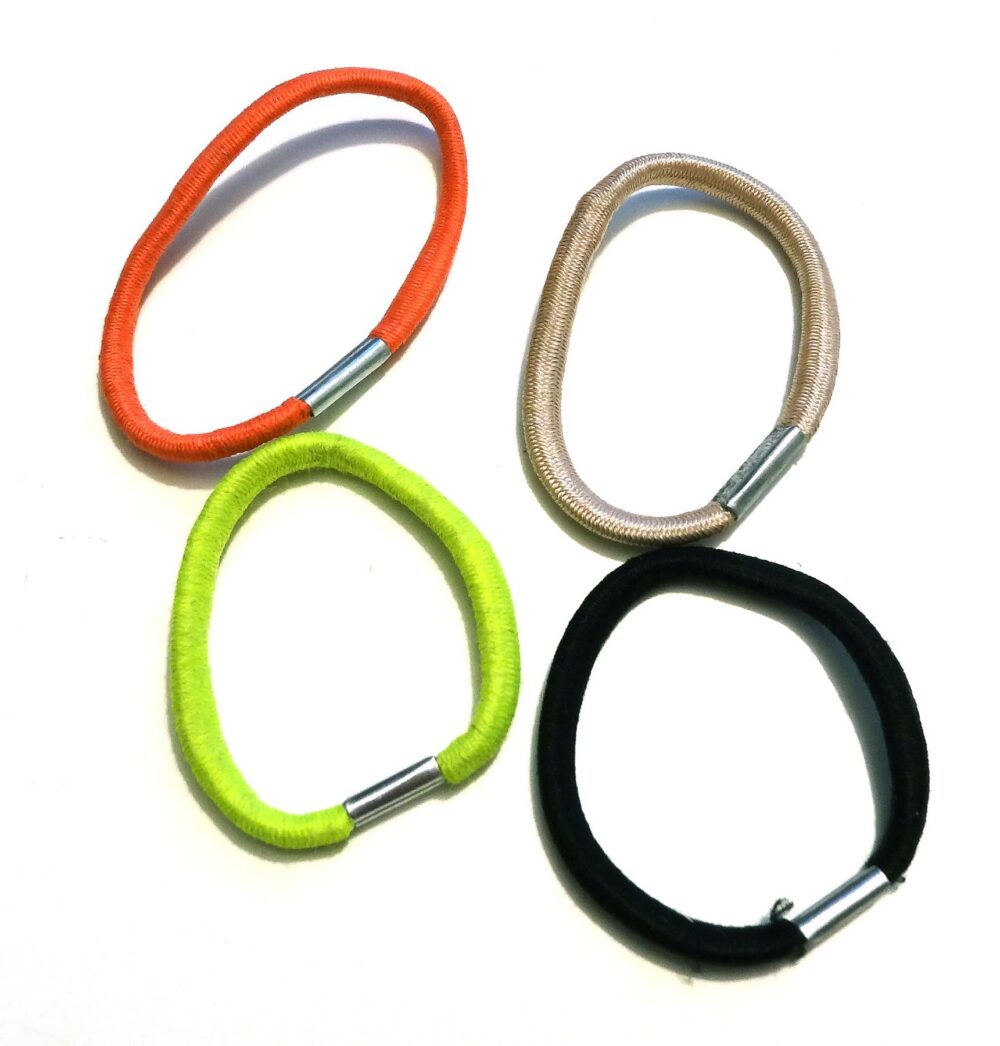
Bulk hair ties and elastic hair accessories are classic “fill-the-basket” items: cheap to buy, easy to misjudge, and very noticeable when they snap or snag. For a US salon, Amazon storefront, or kids’ boutique, the right source depends on how specific your material requirements are (no-metal, no-crease, scrunchie vs coil), how much assortment you need, and how much risk and lead time you’re willing to take on by buying cross-border instead of domestically.
The goal is simple: pick suppliers whose elastic strength, fabric quality, and construction match your customers’ hair types, while keeping unit cost low enough that you can give them away, bundle them, or sell multi-packs profitably.
How Bulk Hair Ties and Elastic Hair Accessories Are Made and Sold
Hair ties are small elastic accessories used to secure hair in styles like ponytails, braids, and buns, and they show up in dozens of forms: plain fabric-covered elastics, scrunchies, plastic coils, ribbon ties, bungees, and decorative ponytail holders. In bulk, you’re usually buying these as high-count packs (50, 100, or more) or wholesale assortments for resale.
Production is concentrated in low-cost manufacturing regions, especially China, but there’s also a domestic wholesale layer in the US. A supplier like Threddies markets itself around bulk headbands, scrunchies, hair ties, and slouch socks for resale, while Etsy hosts boutique makers offering wholesale ribbon hair ties and coordinated sets for events or subscription boxes.
Elastic accessories themselves fall into a few practical types:
- Fabric elastics and scrunchies – cotton, polyester, or nylon elastics wrapped in fabric. Scrunchies add more fabric volume and are generally considered gentler and more comfortable for everyday wear.
- Plastic coil hair ties – spiral-shaped synthetic bands commonly sold as “no-crease” options. DHgate’s blog notes they’re designed not to leave creases and are often waterproof, which matters for swim and fitness customers.
- Ribbon hair ties – flat, stretchy ribbon that can be knotted. They’re popular in boutique assortments because they look more premium and are less likely to tug when removed.
Wholesale packs often mix colors and patterns (e.g., pastels for kids, neutrals for office wear) but keep a consistent base construction so production stays efficient. That’s why your spec choices up front—width of elastic, presence of metal crimps, fabric type—drive both the factory process and your long-term complaint rate.
Material trade-offs in bulk buying
Here’s a compact view of common bulk hair tie types and how they behave:
| Type | Typical material | Comfort & snagging (editorial) | Common bulk use cases |
|---|---|---|---|
| Fabric-covered elastic | Elastic core with cotton/nylon wrap | Usually comfortable; can snag if seams rough | General salon use, everyday multi-packs |
| Scrunchies | Soft fabric around elastic core | Often gentler grip; good for sensitive scalps | Boutiques, gift sets, subscription boxes |
| Plastic coil ties | Molded plastic spiral | Marketed as no-crease; firm grip | Swim/fitness packs, “no-crease” bundles |
| Ribbon hair ties | Stretch ribbon (often knotted) | Usually low-tug, fashion-forward | Bridal parties, branded/boutique assortments |
| Bungee bands | Strong elastic with hooks | Very strong hold; can pinch if misused | Professional styling, thick or braided hair |
These aren’t clinical evaluations, but they do reflect how consumers and stylists talk about them. For bulk sourcing, they translate directly into decisions: scrunchies and ribbon ties for premium customers; stronger elastics or bungees for thick hair; coils where “no-crease” messaging sells.
Choosing and Vetting Suppliers for Bulk Hair Ties
Because hair ties are tiny and cheap, it’s tempting to treat them as a throwaway purchase. For resale, that’s a mistake. Poor elastics mean snapped bands, damaged hair, bad reviews, and piles of returns for pennies of margin.
Think about vetting in three layers: construction, materials, and supplier behavior.
What to look for in construction and materials
When you review sample packs or product photos, focus on how the tie is built:
- Elastic strength and recovery – The band should stretch easily but snap back to its original size after use. DHgate’s editorial guidance on thick hair emphasizes stronger, thicker elastics and durable materials when the tie has to hold braided or heavy hair.
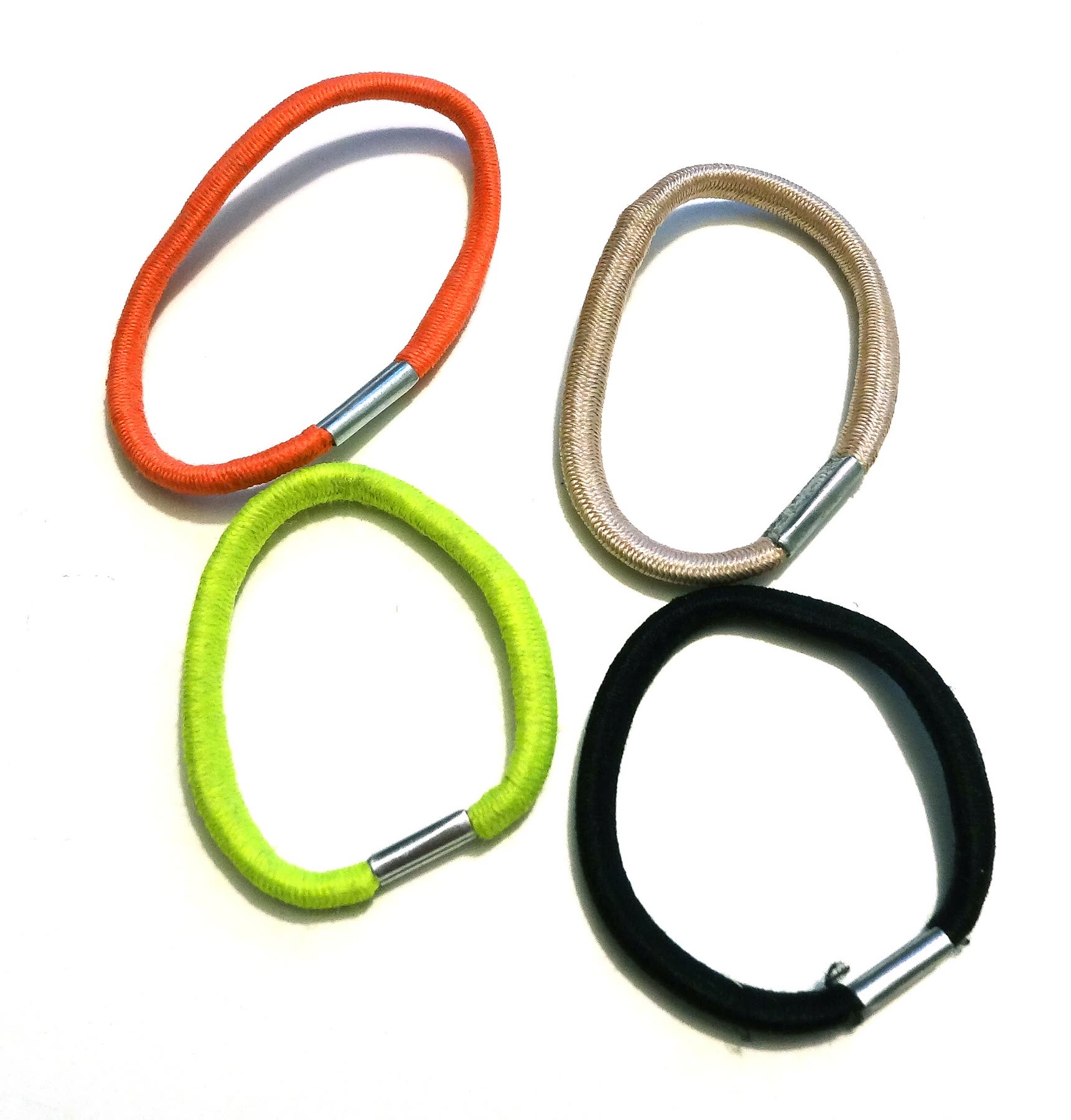
- No-metal or well-covered joints – Metal crimps are still common in ultra-budget elastics, but they’re more likely to snag. Fabric-covered, seamless, or well-fused joints reduce that risk, which Walmart’s beauty copy also hints at when it describes fabric-covered, no-metal hair ties as gentler.
- Soft contact surfaces – For braided or thick hair, soft fabric or silicone bands are widely recommended in consumer guides as less harsh than bare rubber. Treat that as practical guidance: if your customer base has a lot of thick, curly, or protective styles, prioritize soft, wide bands.
A simple sample test you can do in-house:
- Stretch a tie 20-30 times in a row and check if it’s noticeably looser.
- Wrap it around a thick braid or bundle of yarn to mimic dense hair, then remove it slowly. Feel for catching or sharp edges.
- Tug lightly at the seam or knot. If it separates easily, bulk production is likely inconsistent.
Supplier vetting: communication and proof, not trust fall
You don’t need a sourcing degree to weed out weak suppliers. You do need to be specific:
- Ask for real sample assortments that match your intended order (same fabric blend, same factory batch if possible). For ribbon hair ties, for example, a seller like those on Etsy wholesale hair ties will often send color cards or mini sets; cross-border suppliers may send a handful of production samples.
- Request basic QC details: Do they test for colorfastness in sweat/water? How do they check elasticity batch-to-batch? Answers don’t have to be scientific, but they should exist.
- Check product focus: A specialist wholesaler (e.g., Threddies) that lives in hair accessories is more likely to understand scrunchie seams and elastic longevity than a general importer selling thousands of unrelated SKUs.
- Watch for red flags: No willingness to send samples, blurry or obviously lifted catalog photos, or vague answers like “our quality is very good” without specifics. For tiny-margin products, suppliers cutting corners will show up in these ways.
Inline checklist you can actually use:
- Does the supplier specialize in hair/beauty accessories?
- Can they ship representative samples within your timeline?
- Have they explained materials (elastic type, fabric, coatings) clearly?
- Are pack sizes, colors, and assortments documented—not just “mixed”?
If you’re evaluating cross-border sellers, those questions matter even more, since you can’t drop by the warehouse.
Order Size, Pricing, and Channel Choices (Including Marketplaces)
Hair ties are classic bulk products: you’re usually buying dozens or hundreds per pack, and per-unit differences of a few cents can make or break margin. Channel choice—domestic vs cross-border, wholesale vs retail—hinges on how big your order is and how customized it needs to be.
How order size shapes your route
- Micro and test orders (50-200 units total) – For a new online shop or salon test, domestic retail/”bulk buy” options from mass retailers like Walmart or Amazon are often simpler, even if unit cost is higher. You get known brands and faster delivery with minimal paperwork.
- Small wholesale (500-5,000 units, mixed styles) – US wholesalers and boutique makers come into play. A scrunchie and hair tie specialist such as Threddies or ribbon tie suppliers listed on Cyndibands bulk hair ties can provide assortments with predictable quality, plus branding-friendly colors.
- Larger, price-driven orders (thousands+ of simple elastics) – Cross-border marketplaces and direct factories become attractive because they offer massive counts and lower unit prices, assuming you can live with longer lead times and stricter payment terms.
Where marketplaces (including DHgate) fit
Cross-border marketplaces bundle many small and mid-size Chinese suppliers under one roof. On DHgate, for example, around 2026-10-14 we observed listings such as:
- 50-1000pcs Black Hair Ties Elastic Hair Bands Decorative Hair Accessories Set – multi-pack black elastics with a listed price range of about US$13.95-50.98 depending on options.
- Heavy Duty Hair Ties 99 Pack Thick Large No Crease Hair Bands for Women Bulk Elastic Ponytail Holders – 99-pack “heavy duty” elastics, priced roughly US$13.20-15.16.
- Hair Bands Hair Ties for Thick Hair 100PC Seamless Cotton Ponytail Holders – 100-piece cotton, seamless bands aimed at thick hair, with prices in the US$22.42-27.56 band.
- 12pcs Fabric Hair Ties for Women Soft Mini Tube Elastic Hair Bands – smaller 12-piece fabric tie sets, priced roughly US$8.88-29.83 across options.
Prices and availability can change quickly, but snapshots like these show the pattern: multiple suppliers selling varying pack sizes, often with no explicit MOQ in the listing but with the expectation that you’ll order multiple packs for true wholesale.
The upsides of using a marketplace for bulk elastic accessories:
- Wide variety of styles (classic black, colorful sets, scrunchies, kids’ bows) in one place.
- Access to very large pack sizes like 500 or 1000 ties at price levels that are hard for domestic boutique makers to match.
The trade-offs:
- Quality spread – different suppliers, different factories, uneven QC. You must evaluate each listing and seller individually—read all reviews, scrutinize photos, and treat samples as mandatory on anything beyond a test run.
Quick scenarios to anchor your choice
- Local salon stocking “no-crease” ties near the register – You probably don’t need thousands of units or long lead times. Domestic wholesale or Amazon/Walmart bulk packs will keep things simple.
- Online hair-accessory brand building curated scrunchie and ribbon sets – Boutique-focused wholesalers or Etsy/Cyndibands-style makers let you control colors and perceived quality, even at higher unit cost.
- Value-focused Amazon FBA seller listing 500-pack black elastics – Minimizing landed unit cost becomes critical; cross-border suppliers via marketplaces like DHgate or direct factory relationships can work if you manage sampling, QC, and calendar risk.
If you match your channel to your order size and customer expectations—and insist on real samples and material transparency—bulk hair ties and elastic accessories can be one of the lowest-drama products in your inventory instead of a source of daily complaints.