
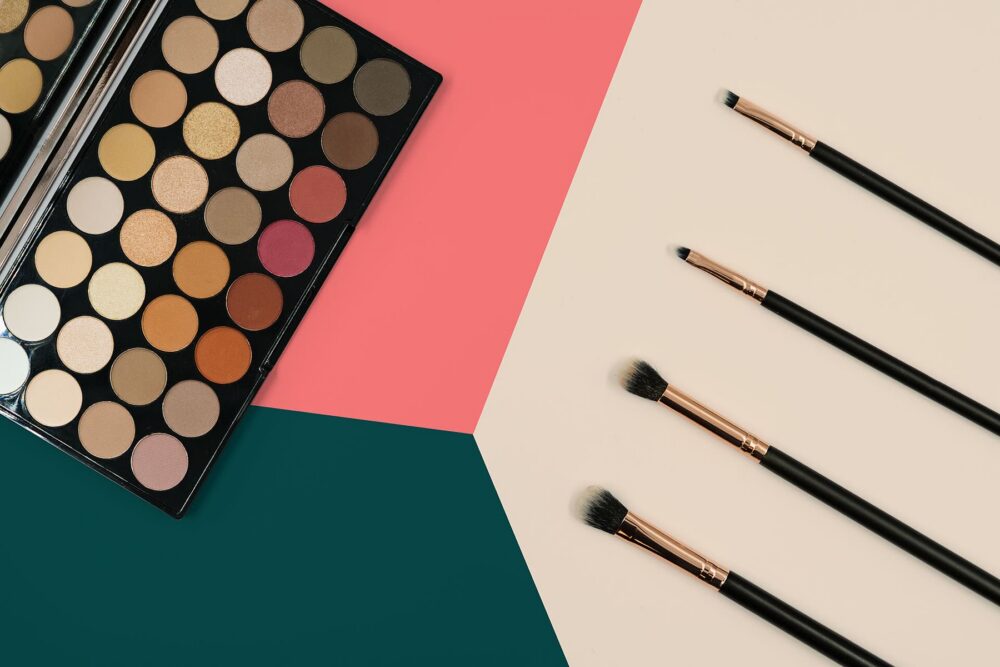
Wholesale cosmetics and private label eyeshadow palettes let US beauty sellers buy palettes in bulk at a low per-unit cost, either under existing brands or with their own branding. The tradeoff is that you move closer to the supply chain: you’re responsible for supplier choice, formula quality, and US compliance. For a small ecommerce beauty brand, the practical decision is whether to work with a low-MOQ private-label specialist, a domestic distributor, or higher-volume cross‑border manufacturers and marketplaces.
How Wholesale and Private Label Eyeshadow Palettes Fit into the Cosmetics Supply Chain
“Wholesale” cosmetics usually means buying finished products like eyeshadow palettes in bulk from a manufacturer or distributor and reselling them. You keep the original brand name, and your main levers are price, volume, and assortment.
“Private label” shifts the role: you buy eyeshadow palettes (or pans and empty palettes) from a producer and sell them under your own brand. The formulas typically stay the supplier’s, but you choose shades, packaging, and artwork.
Specialist private-label palette manufacturers such as those highlighted by Makeup Palette Pro and Craft Eyeshadow illustrate how this market works:
- They maintain curated shade libraries (often well over a hundred shades) that brands can mix into custom palettes.
- They offer ready-made palette formats (e.g., 9-pan, 12-pan, 18+ pans) with options like talc-free or vegan formulas.
- They layer branding options: hot-stamped logos on the compact, printed cartons, inserts.
From there, the supply chain is straightforward: pigment and packaging suppliers feed the factory; the factory assembles palettes; palettes move to either a private-label brand (your logo on the box) or a wholesale distributor that sells branded stock to retailers.
Cross‑border wholesale from China or other lower-cost regions often sits upstream in this chain. Platforms like Made‑in‑China and LightInTheBox, described in DHgate’s editorial overview of makeup suppliers, aggregate many factories offering generic and OEM eyeshadow palettes at wholesale-oriented prices. US sellers then import and either:
- Resell those palettes directly (wholesale resale), or
- Repack/rebrand them if terms allow (quasi–private label).
Choosing and Vetting Eyeshadow Palette Suppliers
Because eyeshadow is applied close to the eye, supplier vetting is more than a price exercise. You’re checking formula quality, production consistency, and whether you’ll be able to label and sell legally in the US.
Start by deciding what type of supplier you’re dealing with:
- US-based wholesale distributors (e.g., those you find via Faire or regional makeup wholesalers) mainly resell branded palettes. Compliance and brand equity are largely pre-handled, but margins are tighter.
- Private-label specialists such as Makeup Palette Pro or Solid Collection’s private-label palettes focus on giving indie brands custom shade/packaging options with relatively low MOQs.
- Cross‑border manufacturers and marketplaces (China, sometimes Europe) that offer OEM/ODM palettes. These often have better unit economics at scale but demand more legwork on compliance and quality oversight.
Concrete vetting steps for palettes:
- Formula and ingredient transparency
Ask for full INCI ingredient lists, not just marketing copy like “vegan” or “talc‑free.” Check for obvious US red flags (e.g., unapproved color additives). If the supplier positions itself around vegan/talc‑free formulas—as some specialist sites do—confirm that claim in writing and understand whether it’s for all palettes or selected lines.
- Shade library and texture samples
Request samples that match the actual shade families and textures you’ll sell: mattes, shimmers, metallics, pressed glitters. Private-label libraries, such as the 200+ shade ranges promoted by palette specialists, can look great online but perform unevenly in person. Swatch pay-off, fallout, and blending behavior are what your customers will judge.
- Packaging and durability checks
Evaluate hinge strength, magnet closure, pan adhesion, and outer carton quality. Empty palettes and filled palettes are often sourced from different plants; ask how they’re assembled and what drop tests or transit checks the supplier runs.
- Regulatory and labeling readiness (US scope)
You’re responsible for FDA-compliant cosmetic labeling in the US, even when buying cross‑border. Confirm that the supplier can at least provide:
- Net weight per palette
- Shade names/IDs mapped to ingredient lists
- Country of origin
You or a consultant can build full labels from there. Treat any “US compliant” assurances as marketing unless backed by documentation.
- Production track record and communication
For private label, ask how many palette projects they’ve completed in the last year, and for what markets. Private-label shops that advertise fast launches for indie brands usually have processes for shade picking, proofing, and artwork handoff; judge those processes alongside their responsiveness.
Risk callout: Cheap, generic palettes from lightly vetted cross-border sources can look attractive on price but expose you to batch inconsistency, mislabeling, or undisclosed ingredients. Always test on a small group, validate ingredient lists, and avoid launching straight into US retail at volume without this step.
MOQ, Pricing, Customization, and Picking a Sourcing Channel
Two realities shape eyeshadow economics: private-label specialists often work at low MOQs with higher per-unit cost; cross‑border wholesale factories prefer high MOQs with lower per-unit cost.
Based on current private-label offers and wholesale platforms, you can expect patterns like:
- Low-MOQ private-label programs often start in the tens of units (for example, a minimum around 50 palettes at some specialists, per Makeup Palette Pro’s private-label program).
- Cross‑border wholesale or OEM suppliers frequently expect hundreds of units per SKU to be interested in customized palettes, occasionally more when you’re altering formulas or tooling.
Here’s a compact way to think about channels:
| Channel type | Typical MOQ pattern (editorial) | Customization depth | Best fit scenario |
|---|---|---|---|
| US wholesale distributor | Low per SKU, but mixed-brand | None (branded stock only) | Test resale of known brands, fast launch |
| Private-label specialist (US/EU/Asia) | Tens of units (e.g., ~50+) | High: shades, palette size, branding | Indie brand launch, curated collections |
| Cross‑border OEM via platforms | Hundreds+ per SKU | High if volume is large | Scaling successful line with margin focus |
These are patterns, not rules. Always confirm exact numbers in writing before planning cash flow.
Private-label specialists usually fold basic customization into their MOQ: you pick from their shade library, choose a palette format, and supply artwork for logo/box. More complex work (custom formulas, specialty packaging) often requires higher volumes or separate fees.
Where Marketplaces Like DHgate Fit (and Where They Don’t)
DHgate’s own editorial blog describes the company as a China‑headquartered B2B/B2C platform that aggregates many wholesale makeup suppliers and operates warehouses in some overseas regions. That puts it in the third channel above: a marketplace gateway to multiple cross‑border OEM and wholesale sellers, including eyeshadow palette offerings.
A quick snapshot of DHgate listings retrieved on 2026-10-13 shows the range:
- Wholesale Eyeshadow Palette Private Label Vegan Pigment Square Eyeshadow Pans DIY Luxury High Pigment Makeup Palettes — positioned as a private-label, vegan pigment palette, with a price range around $23.12–$23.72 in the listing snapshot.
- Eyeshadow Palette, 12 Shades, Blendable Formula, Versatile, Nude, Smoky, Fiery Tones — a 12-shade palette in the Eye Shadow category, with snapshot prices around $3.93–$5.00.
- Professional Makeup 120 Colors Eyeshadow Palette Stage Cosplay Pearlescent Matte Powder Blush Eyebrow Contouring Cosmetics Kit — a large 120-color palette, with snapshot prices around $9.51–$19.51.
- Eyeshadow Palette 40 Colors Nude Eyeshadow Palette Smooth Matte Eye Makeup Palette — 40 nude shades with a snapshot price range around $24.64–$25.27.
DHgate—or any similar marketplace—is most useful when:
- You’re comfortable doing the vetting yourself for each seller (checking company background, sample quality, ingredient lists).
- You’re chasing margin at higher MOQs and willing to navigate imports.
- You want access to a wide palette catalog, including generic and private-label-ready options.
Limitations:
- You must confirm MOQs, customization options, and documentation per listing before committing.
If you decide DHgate is relevant for your project, our articles on finding and judging suppliers—Find wholesale suppliers on DHgate, Find DHgate suppliers, and Choose a DHgate wholesale supplier—focus on the platform mechanics. This page stays focused on whether cross‑border wholesale is a good fit at all for your eyeshadow line.
Putting It Together for a US Indie Beauty Brand
For a small US brand launching its first palette, the practical path often looks like:
- Start with a private-label specialist at low MOQ to validate your aesthetic, pricing, and customer response.
- Use wholesale distributors for recognizable branded palettes if you just want add-on revenue without owning formulas.
- Move to cross‑border OEM via marketplaces or direct factory relationships once you have predictable demand and the budget to handle compliance, freight, and potential quality swings.
Eyeshadow palettes can be a high-margin hero product, but only if the supplier, formula, and labeling choices match your risk tolerance. Treat each channel as a different business model—not just a different price tag—and your sourcing decisions will be much clearer.